
Revolutionary 'Immune Reset' Therapy Puts Severe Lupus Into Drug-Free Remission
An experimental CAR-T cell therapy is successfully 'resetting' the immune systems of patients with severe lupus, offering the prospect of a one-time cure for the chronic autoimmune disease.
By Factlen Editorial Team
- Clinical Researchers
- Focuses on the paradigm shift from chronic immune suppression to a one-time cellular reset, and the potential to apply this to other autoimmune diseases.
- Patients & Advocacy Groups
- Emphasizes the life-changing impact of drug-free remission and escaping the severe side effects of lifelong steroid use.
- Biopharma Industry
- Focuses on the race to scale manufacturing, reduce the massive per-patient costs, and develop off-the-shelf cellular therapies.
What's not represented
- · Health Insurance Providers
- · Patients in Developing Nations
Why this matters
Lupus predominantly affects women and has historically required a lifetime of heavy immunosuppressive drugs. This breakthrough proves that severe autoimmune diseases can potentially be cured with a single treatment that reboots the immune system to a healthy state.
Key points
- A revolutionary CAR-T cell therapy has put severe lupus patients into deep, drug-free remission.
- The therapy involves genetically modifying a patient's own T-cells to destroy malfunctioning B-cells.
- When new B-cells grow back months later, they are healthy, effectively resetting the immune system.
- In a UK NHS trial, five out of six patients on a lower dose achieved complete remission.
- Long-term data from early German cohorts shows patients maintaining remission past the four-year mark.
- The breakthrough could eventually be applied to other autoimmune diseases like multiple sclerosis.
For decades, a diagnosis of systemic lupus erythematosus meant a lifetime of managing symptoms, suppressing the immune system, and bracing for inevitable flare-ups. Now, a revolutionary treatment originally developed for blood cancer is fundamentally rewriting that prognosis. By genetically modifying a patient's own cells to hunt down the root cause of the disease, doctors are achieving what was once considered impossible: deep, drug-free remission. The approach, known as CAR-T cell therapy, appears to effectively "reset" a malfunctioning immune system, offering the first genuine prospect of a cure for severe autoimmune diseases.[1][2]
The latest evidence of this paradigm shift comes from a pioneering clinical trial conducted by the UK's National Health Service. Led by University College London Hospitals (UCLH) and University College London, the Phase I CARLYSLE trial tested the therapy on patients with severe, treatment-resistant lupus. The early results have been staggering. Of the first six patients treated at a lower dose, five achieved complete remission within months. They experienced rapid reductions in disease activity and a stabilization of kidney function, which is often severely damaged by the condition.[3][4]
The human impact of these clinical metrics is profound. Katie Tinkler, one of the first patients treated in the UK trial, had lived with severe lupus for thirty years. Before the therapy, she struggled to walk alongside her children and relied on a heavy regimen of medications just to function. Today, she is entirely off all lupus drugs, experiencing no symptoms, and recently went skiing for the first time in a decade. Her experience underscores the transformative potential of moving away from chronic disease management toward a one-time, curative intervention.[1][2][3]
To understand why this is such a breakthrough, it is necessary to look at how lupus operates. Systemic lupus erythematosus is a chronic autoimmune disease where the body's immune system loses its ability to distinguish between foreign invaders and healthy tissue. It predominantly affects women, who make up roughly 90 percent of all lupus cases, typically striking during their childbearing years. The disease is driven by rogue B cells—a type of white blood cell—that produce autoantibodies. Instead of fighting off infections, these autoantibodies attack the patient's own organs, causing widespread inflammation, debilitating joint pain, and severe damage to the kidneys, heart, and lungs.[1][4][7]

Historically, the only way to treat lupus has been to blunt the entire immune system. Patients are typically prescribed broad immunosuppressants and high doses of corticosteroids. While these drugs can reduce the severity of flare-ups, they do not eliminate the rogue B cells. Furthermore, chronic immunosuppression leaves patients highly vulnerable to infections and carries a host of severe long-term side effects, including osteoporosis, weight gain, and cardiovascular issues. The medical community has long sought a way to selectively eliminate the problematic cells without permanently crippling the patient's natural defenses.[5][6][7]
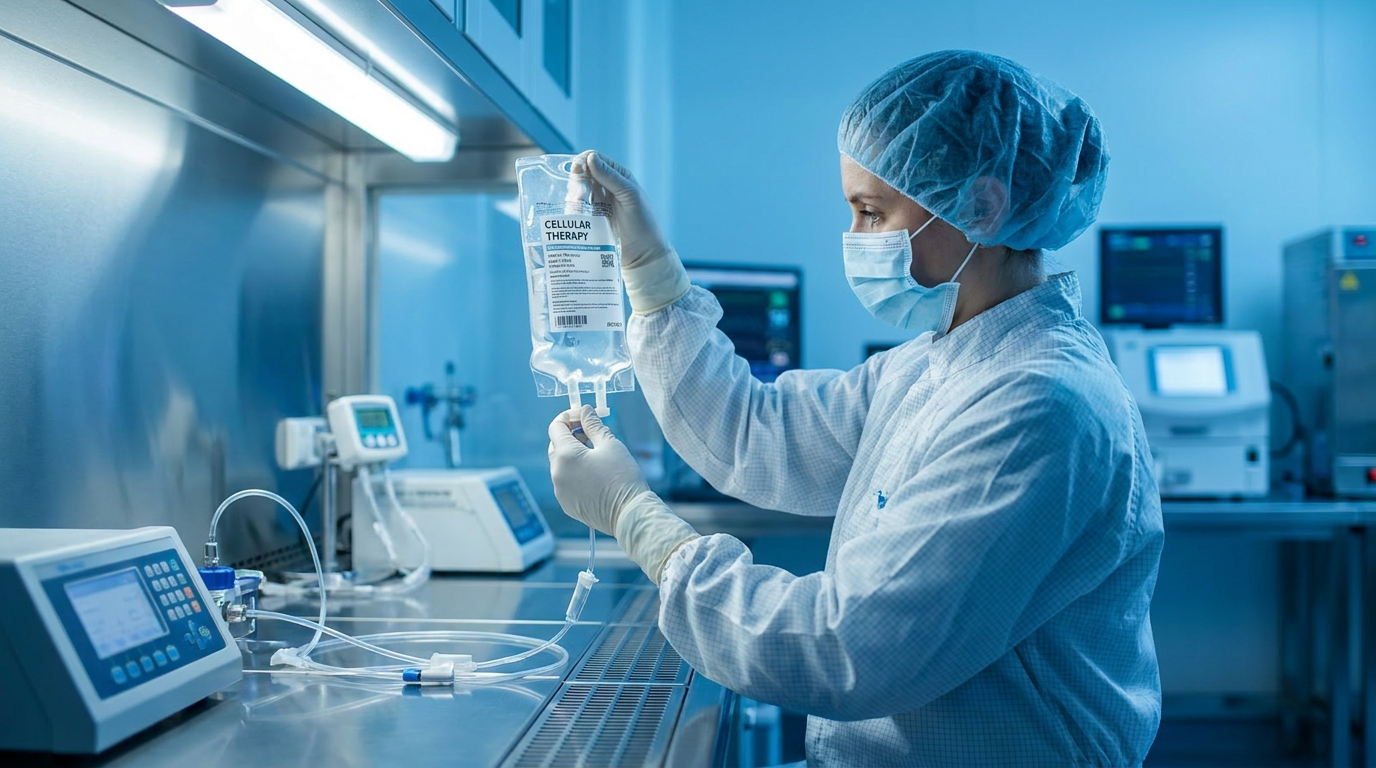
This is where CAR-T cell therapy enters the picture. Chimeric antigen receptor T-cell therapy was initially hailed as a miracle treatment for certain types of leukemia and lymphoma. The process begins by extracting a patient's T cells—the "soldiers" of the immune system—and sending them to a specialized laboratory. There, scientists genetically engineer the T cells to produce synthetic receptors on their surface. In the case of lupus, these receptors are designed to seek out and bind to a specific protein called CD19, which is found almost exclusively on the surface of B cells.[2][6][7]
Chimeric antigen receptor T-cell therapy was initially hailed as a miracle treatment for certain types of leukemia and lymphoma.
Once the engineered T cells are multiplied in the lab, they are infused back into the patient's bloodstream. Armed with their new CD19 receptors, the CAR-T cells act as guided missiles, systematically hunting down and destroying the patient's entire B cell population. This includes the rogue, autoantibody-producing B cells that drive lupus. The immediate result is a rapid and profound depletion of the cells responsible for the autoimmune attack, halting the disease in its tracks and allowing inflamed organs to begin healing.[3][5][7]
The most remarkable phase of the treatment, however, occurs in the months following the infusion. Because the CAR-T cells eventually die off, the patient's bone marrow begins to produce new B cells. Crucially, clinical data shows that when these new B cells emerge, they are healthy, naive, and do not produce the destructive autoantibodies. The immune system has essentially been rebooted to a factory-default state. This "immune reset" is what allows patients to maintain their remission long after the initial therapy has concluded, without the need for ongoing immunosuppressive drugs.[1][3][5]

The foundation for this current wave of optimism was laid in Germany several years ago. In 2020, Dr. Georg Schett and his team at Friedrich Alexander University in Erlangen treated a young woman with severe, refractory lupus using CAR-T cells—the first time the therapy had been used outside of oncology. The patient achieved complete remission within a month. Building on that success, the German team treated a larger cohort of patients, publishing their landmark findings in The New England Journal of Medicine. Their work proved that the deep B cell depletion seen in mice could be safely and effectively replicated in humans with severe autoimmune disease.[6][7]
As time passes, the durability of this immune reset is becoming clearer. At the European Alliance of Associations for Rheumatology (EULAR) 2026 congress, researchers presented long-term follow-up data on some of the earliest patients treated with CAR-T for lupus. The results showed that patients were maintaining sustained, drug-free remission past the four-year mark. They met the strictest criteria for disease clearance, and notably, their rates of general infection actually decreased over time compared to when they were on chronic immunosuppressants, suggesting their reconstituted immune systems were functioning normally.[5]
Despite the overwhelming optimism, researchers caution that CAR-T therapy is not without risks. In cancer patients, the rapid destruction of tumor cells by CAR-T can trigger cytokine release syndrome (CRS)—a severe and potentially life-threatening systemic inflammatory response—as well as neurological toxicities. Fortunately, the safety profile in lupus patients has so far been much more favorable. Because lupus patients have a far lower overall burden of target cells compared to cancer patients, instances of CRS have been overwhelmingly mild, and severe neurotoxicity has been virtually absent in the trials reported to date.[3][6]

The success in lupus is now sparking a gold rush in the biopharmaceutical industry. Recognizing that the underlying mechanism of rogue B cells is shared across multiple conditions, drugmakers are rapidly expanding their clinical trials. CAR-T cell therapy is currently being evaluated for other severe autoimmune disorders, including multiple sclerosis, systemic sclerosis, inflammatory myositis, and rheumatoid arthritis. If the immune reset proves effective across this broader spectrum, it could fundamentally alter the treatment landscape for millions of patients worldwide who currently rely on lifelong disease management.[1][4][6]
Several critical questions remain before CAR-T can become a frontline treatment. The therapy is currently bespoke, requiring a complex, weeks-long manufacturing process for each individual patient, which drives the cost into the hundreds of thousands of dollars. Researchers are also watching closely to see if the disease eventually returns in any of the treated patients, which would indicate whether the reset is a permanent cure or a temporary, albeit lengthy, reprieve. Furthermore, scientists are investigating whether "off-the-shelf" CAR-T therapies, derived from donor cells rather than the patient's own, could eventually make the treatment cheaper and more accessible.[5][6]
For now, the medical community is witnessing a rare and profound shift in how autoimmune diseases are conceptualized. The transition from suppressing the immune system to actively reprogramming it represents one of the most significant advances in rheumatology in decades. For the 90 percent of lupus patients who are women, and who have historically borne the physical and emotional toll of chronic immunosuppression, the prospect of a single-infusion immune reset offers more than just symptom relief. It offers the very real possibility of getting their lives back.[1][2][5]
How we got here
2020
German researchers successfully treat the first lupus patient with CAR-T therapy.
2022
A landmark study published in Nature Medicine confirms deep remission in five patients.
Feb 2024
Long-term follow-up in The New England Journal of Medicine shows sustained drug-free remission.
June 2026
UK NHS CARLYSLE trial reports 5 of 6 patients achieve remission, confirming the therapy's efficacy.
Viewpoints in depth
Clinical Researchers
Focuses on the paradigm shift from chronic immune suppression to a one-time cellular reset.
For decades, rheumatologists have been forced to rely on blunt instruments—broad immunosuppressants and steroids—that manage autoimmune symptoms but leave patients vulnerable to infections and severe side effects. Clinical researchers view CAR-T therapy as a fundamental paradigm shift. By proving that the immune system can be selectively purged of rogue cells and allowed to reboot to a healthy state, researchers believe they have unlocked a blueprint that could eventually cure not just lupus, but multiple sclerosis, systemic sclerosis, and rheumatoid arthritis.
Patients & Advocacy Groups
Emphasizes the life-changing impact of drug-free remission and escaping the severe side effects of lifelong steroid use.
For patients, the true breakthrough is not just the absence of lupus symptoms, but the freedom from the treatments themselves. Chronic steroid use causes weight gain, osteoporosis, and cardiovascular damage, taking a massive physical and emotional toll—particularly on the young women who make up 90 percent of the lupus population. Advocacy groups celebrate the therapy for giving patients their lives back, though they are now pivoting to advocate for broader accessibility, ensuring this expensive treatment doesn't remain limited to a privileged few in clinical trials.
Biopharma Industry
Focuses on the race to scale manufacturing, reduce massive per-patient costs, and develop off-the-shelf cellular therapies.
The biopharmaceutical industry sees the lupus breakthrough as the starting gun for a massive new market in autoimmune cellular therapy. However, the current CAR-T process is highly bespoke, requiring a patient's cells to be extracted, shipped to a lab, engineered, and returned—a process that costs hundreds of thousands of dollars per person. Industry leaders are heavily investing in scaling these manufacturing bottlenecks and developing 'off-the-shelf' allogeneic therapies derived from healthy donors, which could make the treatment cheaper and faster to administer.
What we don't know
- Whether the 'immune reset' is a permanent, lifelong cure, or if the disease will eventually return decades later.
- How healthcare systems will afford to scale a highly bespoke cellular therapy that currently costs hundreds of thousands of dollars per patient.
- Why a small minority of patients do not achieve complete remission after receiving the modified cells.
Key terms
- Systemic Lupus Erythematosus (SLE)
- A chronic autoimmune disease where the body's immune system mistakenly attacks healthy tissue and organs.
- CAR-T Cell Therapy
- A treatment that genetically engineers a patient's own immune cells to hunt down and destroy specific disease-causing cells.
- B Cells
- White blood cells that normally produce antibodies to fight infection, but malfunction in lupus to attack the body.
- T Cells
- The 'soldier' cells of the immune system that are extracted and modified during CAR-T therapy.
- CD19
- A specific protein found on the surface of B cells that the engineered CAR-T cells are programmed to target.
- Cytokine Release Syndrome (CRS)
- A potentially dangerous systemic inflammatory response that can occur when engineered immune cells rapidly destroy target cells.
Frequently asked
What is CAR-T cell therapy?
It is a treatment that involves extracting a patient's own immune T-cells, genetically modifying them in a lab to attack specific targets, and infusing them back into the body.
How does this therapy cure lupus?
The modified cells destroy the malfunctioning B cells that cause lupus. When the body eventually produces new B cells, they are healthy and do not attack the patient's organs.
Is the treatment currently available to everyone?
No. It is currently only available through clinical trials for patients with severe, treatment-resistant lupus, as researchers work to confirm its long-term safety and scale manufacturing.
What are the side effects?
While it can cause an inflammatory response called cytokine release syndrome, trials so far show these side effects are much milder in lupus patients compared to cancer patients.
Sources
Source coverage
7 outlets
3 viewpoints surfaced







[1]BBCPatients & Advocacy Groups
'I've never been this good' – revolutionary immune reset puts lupus in remission
Read on BBC →[2]The GuardianBiopharma Industry
Lupus patients in remission after revolutionary therapy that alters cells
Read on The Guardian →[3]University College London HospitalsClinical Researchers
Pioneering clinical trial shows early promise for severe lupus
Read on University College London Hospitals →[4]ITV NewsPatients & Advocacy Groups
Patients given 'immune reset' treatment on NHS go into remission
Read on ITV News →[5]RheumNowClinical Researchers
CAR-T Therapy Shows Sustained Remission in SLE at 4 Years
Read on RheumNow →[6]BioPharma DiveBiopharma Industry
Cell therapy's potential to treat lupus and other inflammatory conditions
Read on BioPharma Dive →[7]Lupus Research AlliancePatients & Advocacy Groups
CAR T Cell Therapy Induces Remission in Lupus
Read on Lupus Research Alliance →
More in health
See all 119 stories →Longevity Science
The Emerging Science of VO2 Max and Grip Strength as Primary Predictors of Men's Longevity
7 sources

Medical Breakthrough
Revolutionary 'Immune Reset' Therapy Puts Severe Lupus into Remission in UK Trial
7 sources

Psychiatric Interventions
The Evidence for Exercise as a Primary Prescription for Depression and Anxiety
7 sources

Biomimetic Dentistry
The End of the Drill: How Biomimetic Gels Are Learning to Regrow Tooth Enamel
7 sources
Every angle. Every day.
Get health stories with full source coverage and perspective breakdowns delivered to your inbox.