
How Universal Free School Meals Are Reshaping Education and State Budgets in 2026
As New York becomes the ninth state to permanently fund universal free school meals, early data shows significant drops in food insecurity and student suspensions, though logistical and fiscal challenges remain.
By Factlen Editorial Team
- Progressive Policy Advocates
- Argue that school meals are a fundamental public good that should be guaranteed to all students.
- Researchers & Analysts
- Focus on the measurable outcomes of universal meal programs on student well-being and community resources.
- Fiscal Conservatives
- Warn against the financial inefficiency and state budget strain of subsidizing meals for affluent families.
What's not represented
- · School cafeteria workers managing increased daily meal volumes
- · Local farmers and agricultural suppliers contracting with school districts
Why this matters
The shift toward universal free school meals represents one of the largest expansions of the American social safety net in decades. For families, it means saving thousands of dollars a year in grocery costs, while for taxpayers, it raises new questions about the efficiency and cost of subsidizing food for all income brackets.
Key points
- New York has become the ninth state to permanently implement universal free school meals for the 2025-2026 academic year.
- The policy replaces the traditional means-tested system, which required families to apply for free or reduced-price meals based on income.
- Recent studies show universal meals reduce out-of-school suspensions by up to 10% and lower family food insecurity by 12%.
- Expanding school meals eases the burden on local food banks, allowing charities to redirect resources to other vulnerable groups.
- Critics argue the policy is fiscally inefficient, subsidizing affluent families and potentially exacerbating cafeteria plate waste.
- Schools face administrative challenges in replacing the poverty data previously collected through meal applications, which is tied to education funding.
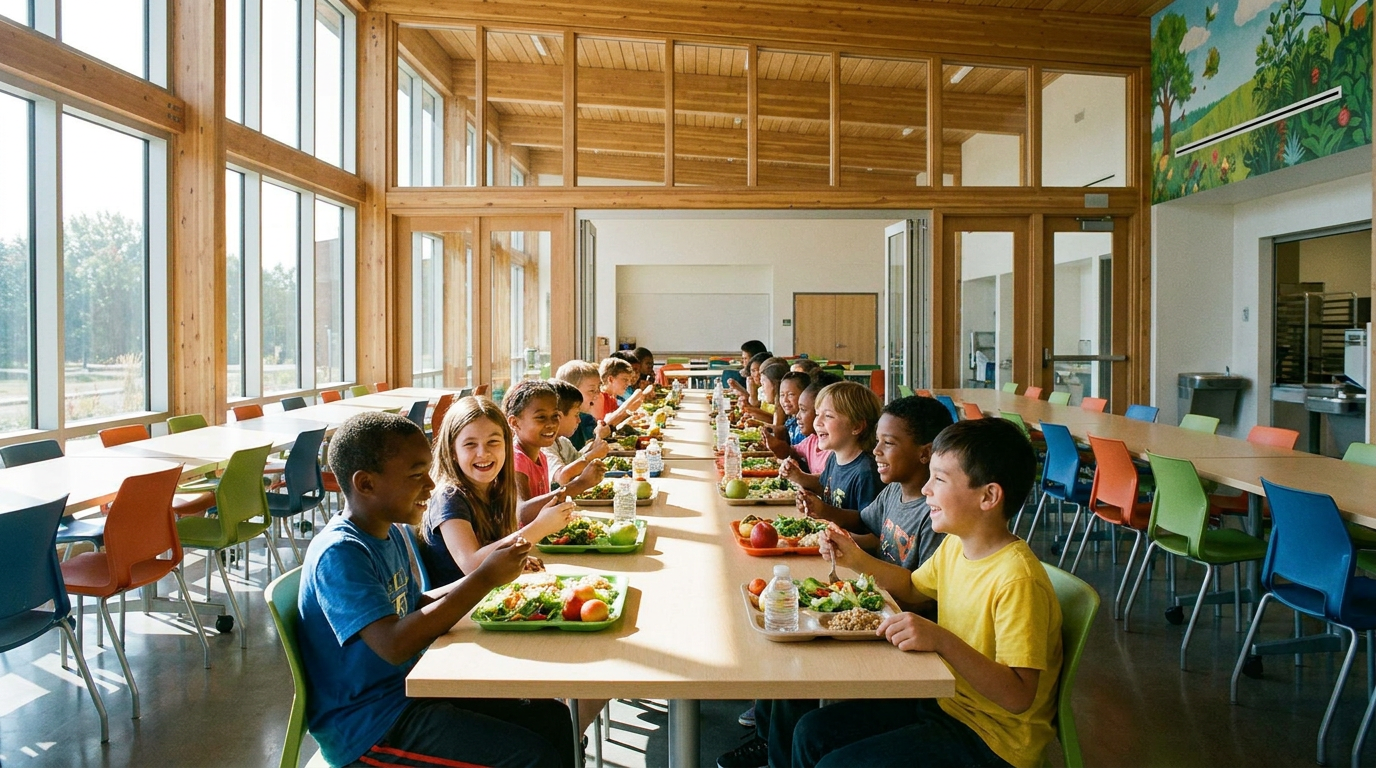
In cafeterias across New York this fall, the familiar sound of cash registers ringing up student lunches has gone quiet. The 2025–2026 academic year marks the inaugural rollout of the state’s universal free school meals program, an ambitious initiative that provides breakfast and lunch to all 2.7 million public school students at no cost, regardless of their family's household income. New York is the ninth state to permanently adopt the policy, joining a growing progressive movement that includes California, Colorado, Maine, Massachusetts, Michigan, Minnesota, New Mexico, and Vermont. Born out of temporary pandemic-era federal waivers that expired in the summer of 2022, the push for universal meals has successfully transitioned from a temporary emergency measure into a sustained, state-by-state legislative campaign aimed at fundamentally reshaping how America feeds its children during the school day.[1][2]
For progressive policymakers and anti-hunger advocates, the core argument driving this movement is philosophical as much as it is nutritional. They argue that food is a fundamental prerequisite for learning, and that meals should be provided as a universal public good—no different than textbooks, school buses, or the desk a child sits at. To understand the magnitude of this shift, one must look at the traditional, means-tested approach to school nutrition that has dominated for decades. Historically, families had to submit detailed income applications to qualify for federal assistance. Children from households earning at or below 130 percent of the Federal Poverty Level received free meals, while those earning up to 185 percent qualified for reduced-price meals. Everyone else in the cafeteria paid full price, creating a visible economic divide right at the lunch line.[4][8]
Advocates have long argued that this tiered system creates a dangerous "hunger cliff" for working-class families. Federal income thresholds often fail to account for the exorbitant cost of living in states like California, Massachusetts, or New York, leaving many struggling families who earn just dollars above the cutoff forced to foot the bill. Furthermore, the administrative burden of chasing down applications and collecting unpaid lunch debt drains vital resources from school districts. The universal model bypasses this friction entirely by leveraging the federal Community Eligibility Provision (CEP) alongside dedicated state funding. Under CEP, schools with a high percentage of low-income students can serve free meals to the entire student body with federal backing. States that pass universal meal laws then step in to cover the remaining financial gap for schools that do not fully qualify for maximum federal reimbursement.[2][4][8]

Because the federal government does not foot the entire bill for universal access, the funding mechanisms for these programs vary significantly by state. Colorado voters, for instance, approved a ballot measure to fund their program by limiting tax deductions for high earners. Massachusetts relies on its "millionaires tax"—a 4 percent surcharge on incomes over $1 million—to generate the necessary revenue for school nutrition and other educational initiatives. New York allocated a historic $340 million in its 2025 budget to subsidize the effort, a move that state officials estimate will save participating families approximately $165 per child each month in grocery and meal prep costs. By removing the financial barriers at the point of service, these states are betting that the upfront investment will pay massive dividends in public health and educational outcomes.[1][8]
As these state-level programs mature, a robust body of empirical evidence is emerging to support their efficacy in the classroom. A May 2026 study published in the journal Economic Inquiry found that adopting universal free meals meaningfully improves overall school climate and student behavior. Researchers documented a 10 percent decrease in out-of-school suspensions for elementary students and a 6 percent drop for middle and high schoolers following the implementation of universal meals. The data suggests that well-fed students exhibit better emotional regulation, experience less physiological stress, and are far less likely to act out in ways that result in exclusionary discipline. For educators, this transforms the cafeteria from a mere feeding station into a critical component of behavioral intervention.[3]

The nutritional safety net provided by universal school meals extends far beyond the schoolyard, fundamentally altering the economic realities of vulnerable households. A recent evaluation conducted by the University of California Agriculture and Natural Resources compared states with universal meals to those maintaining the traditional tiered system. The study revealed a striking 12 percent reduction in food insecurity among families residing in states that offer universal meals. By guaranteeing that children receive up to two nutritious meals a day, five days a week, parents are able to stretch their grocery budgets further, ensuring that the entire household has better access to food during evenings and weekends.[4]
The nutritional safety net provided by universal school meals extends far beyond the schoolyard, fundamentally altering the economic realities of vulnerable households.
This reduction in household financial strain creates a positive, measurable ripple effect throughout the local charitable sector. According to September 2025 research from the Scholars Strategy Network, expanding access to schoolwide free meals significantly reduces reliance on local food banks and community pantries. The study found that the largest reductions in food bank usage occurred in low-poverty areas where the new access to school meals had the greatest reach. By absorbing the daily nutritional needs of children through the public school system, the public safety net allows private charities to redirect their limited resources, funding, and volunteer hours toward other vulnerable populations, such as the elderly or unhoused individuals.[5]
Yet, the transition to universal meals is not without friction, and researchers are quickly discovering that access alone does not guarantee participation. A 2026 study by Temple University researchers examining Philadelphia schools found that logistical constraints and persistent social dynamics heavily influence a student's decision to eat a school meal. While universal programs are explicitly designed to eliminate the stigma of the "poor kids' line," researchers found that social anxieties persist. This is particularly true among middle and high school students, who still fear being perceived as low-income by their peers if they eat cafeteria food instead of bringing lunch from home or buying food off-campus.[6]
Infrastructure limitations also severely hamper the implementation and appeal of these expanded programs. Many older urban schools lack full-service kitchens and must rely on satellite systems where meals are prepared off-site, delivered in bulk, and merely reheated before service. When the quality, temperature, or visual appeal of the food suffers due to these logistical hurdles, student participation naturally drops. This dynamic can threaten the financial viability of the entire program, since federal reimbursements are strictly tied to the number of meals actually served to students. If participation wanes, districts are left covering the fixed overhead costs of cafeteria staff and equipment without the corresponding federal revenue.[6]

A more systemic administrative hurdle involves the unintended loss of crucial socioeconomic data. For decades, Free and Reduced-Price Meal (FRPM) applications have served as a reliable, standardized proxy for neighborhood poverty levels. State and federal governments rely heavily on this specific data to allocate billions of dollars in Title I education funding, technology grants, and specialized academic support. Without parents filling out these forms—since meals are now free for everyone—school districts are scrambling to find alternative metrics. Many are turning to direct certification through Medicaid or SNAP enrollment to prove their financial need to the government, but the transition has created administrative headaches for district officials trying to protect their funding streams.[8]
Meanwhile, fiscal conservatives and libertarian think tanks, such as the Cato Institute, raise fundamental philosophical and economic objections to the universal approach. They argue that expanding free meals to all students is a highly inefficient use of taxpayer dollars. From their perspective, universal programs effectively subsidize middle- and upper-income families who can easily afford to feed their own children, while simultaneously straining state budgets that are already facing long-term deficits. Critics argue that a targeted approach—expanding eligibility thresholds slightly rather than making the program entirely universal—would be a far more responsible way to address child hunger without ballooning the size of government entitlement programs.[7]
Critics also point to the persistent and costly issue of plate waste in American cafeterias as a reason to reconsider the universal model. Federal nutrition standards strictly mandate that students take certain items, such as fruits and vegetables, to qualify the meal for federal reimbursement, even if the child has no intention of eating them. USDA data indicates that students throw out approximately 31 percent of vegetables and 29 percent of milk. Skeptics warn that providing food entirely free of charge to all students may exacerbate this waste, as families and children might view the meals as disposable commodities rather than valuable resources that they paid for out of pocket.[7]

Despite these fiscal and logistical critiques, the political momentum behind universal school meals shows little sign of slowing down. Lawmakers in states like Connecticut, Maryland, and New Jersey are actively debating similar legislation for their upcoming sessions, hoping to join the ranks of the early adopters. At the federal level, progressive lawmakers continue to push for the Universal School Meals Program Act, which would permanently enshrine the policy nationwide and eliminate the state-by-state disparities. Until such federal action is taken, the map of the United States remains a patchwork of nutritional access, where a student's zip code ultimately determines whether their lunch comes with a bill.[2][8]
How we got here
March 2020
The USDA issues pandemic waivers allowing all public schools to serve free meals nationwide.
June 2022
Congress allows the federal pandemic-era universal meal waivers to expire, returning schools to the tiered pricing system.
August 2022
California and Maine become the first states to implement permanent statewide universal school meals.
November 2022
Massachusetts voters pass a 'millionaires tax' to help fund permanent free school meals and other educational initiatives.
September 2025
New York officially launches its universal free school meals program, becoming the ninth state to do so.
Viewpoints in depth
Progressive Policy Advocates
Argue that school meals are a fundamental public good that should be guaranteed to all students.
This camp views means-testing as an artificial barrier that creates a "hunger cliff" for working-class families and stigmatizes low-income children. They point to data showing that universal access improves academic performance, reduces behavioral issues, and saves families thousands of dollars a year. For progressives, feeding children is a core function of the public education system, akin to providing textbooks or transportation.
Public Health & Education Researchers
Focus on the measurable outcomes of universal meal programs on student well-being and community resources.
Researchers emphasize the empirical benefits of universal meals, noting significant reductions in household food insecurity and out-of-school suspensions. They also highlight how these programs relieve pressure on local food banks. However, this camp is acutely aware of implementation hurdles, frequently studying how infrastructure limits, such as satellite kitchens, and lingering social stigma in high schools can suppress student participation rates.
Fiscal Conservatives
Warn against the financial inefficiency and state budget strain of subsidizing meals for affluent families.
Fiscal conservatives and libertarian analysts argue that universal programs are an inefficient use of taxpayer dollars. They maintain that the government should target its limited resources toward children who genuinely need assistance, rather than paying for the lunches of middle- and upper-income students. This camp also frequently highlights the high rates of plate waste in cafeterias, arguing that free meals exacerbate the disposal of unwanted food.
What we don't know
- How the permanent loss of Free and Reduced-Price Meal application data will alter the long-term distribution of Title I education funding.
- Whether the reduction in school suspensions seen in early studies will hold true across all adopting states over a longer time horizon.
- If states relying on general budget surpluses to fund universal meals will be able to sustain the programs during future economic downturns.
Key terms
- Universal Free School Meals (UFSM)
- A policy approach where all enrolled students in a school receive breakfast and lunch at no cost, regardless of their family's household income.
- Means-Testing
- A method of determining eligibility for government assistance based on whether an individual or family possesses the means to do without that help.
- Community Eligibility Provision (CEP)
- A federal program that allows the nation's highest poverty schools and districts to serve breakfast and lunch at no cost to all enrolled students.
- Food Insecurity
- The condition of not having access to sufficient food, or food of an adequate quality, to meet one's basic needs.
- Plate Waste
- The edible portions of food that are served to students but are thrown away uneaten.
Frequently asked
What is the Community Eligibility Provision (CEP)?
The CEP is a federal meal service option that allows schools in high-poverty areas to serve breakfast and lunch at no cost to all enrolled students without collecting household applications.
Do wealthy families benefit from universal free school meals?
Yes. Because universal programs eliminate income thresholds, students from middle- and upper-income families receive the same free meals as low-income students, a point of contention for fiscal conservatives.
How do schools track poverty without meal applications?
Districts are increasingly relying on direct certification, which automatically identifies low-income students through their enrollment in other assistance programs like SNAP or Medicaid.
Does free lunch improve academic performance?
Research indicates that universal free meals are associated with improved attendance, better emotional regulation, and a significant reduction in out-of-school suspensions.
Sources
Source coverage
8 outlets
3 viewpoints surfaced








[1]NYC Food Policy CenterProgressive Policy Advocates
New York Commits to Universal School Meals in 2025 Budget: A Transformative Step for Educational and Health Equity
Read on NYC Food Policy Center →[2]Center for Science in the Public InterestProgressive Policy Advocates
Healthy school meals for all
Read on Center for Science in the Public Interest →[3]Economic InquiryResearchers & Analysts
Universal free meals and school suspensions
Read on Economic Inquiry →[4]UC Agriculture and Natural ResourcesResearchers & Analysts
Universal School Meals: A Powerful Strategy to Combat Food Insecurity
Read on UC Agriculture and Natural Resources →[5]Scholars Strategy NetworkResearchers & Analysts
Universal School Meals Lighten the Load for Families and Food Banks
Read on Scholars Strategy Network →[6]Temple UniversityResearchers & Analysts
Why universal school meals matter and how Temple researchers are addressing barriers to participation
Read on Temple University →[7]Cato InstituteFiscal Conservatives
Cutting School Food Subsidies
Read on Cato Institute →[8]Factlen Editorial TeamResearchers & Analysts
Synthesis by Factlen editorial team
Read on Factlen Editorial Team →

More in perspectives
See all 17 stories →Classical Education
The Quiet Resurgence of Classical Education: Inside the Traditional Schooling Boom
8 sources

Deliberative Democracy
How 'Civic Lotteries' and Citizen Assemblies Are Breaking Political Gridlock
8 sources

Labor Policy
The 4-Day Workweek Moves From Fringe Idea to Empirical Reality
8 sources

Future of Work
The Four-Day Workweek: What Global Trials and Experts Reveal About Working Less
7 sources

Every angle. Every day.
Get perspectives stories with full source coverage and perspective breakdowns delivered to your inbox.