
The Science of Eccentric Training: Why Lowering the Weight Matters More Than Lifting It
Sports scientists and longevity researchers are increasingly focused on the 'eccentric' phase of movement—the controlled lengthening of muscle. Evidence shows that emphasizing this phase can uniquely remodel tendons, increase muscle fascicle length, and preserve mobility in aging populations.
By Factlen Editorial Team
- Sports Scientists & Biomechanists
- Focus on the mechanical efficiency of eccentric movements and structural muscle adaptations.
- Clinical Rehabilitation Specialists
- Emphasize eccentric loading as the gold standard for treating tendinopathy.
- Gerontologists & Longevity Researchers
- Highlight the preservation of eccentric strength in aging as a vital tool to prevent falls.
- Strength & Conditioning Coaches
- Focus on practical implementation to maximize athletic performance and hypertrophy.
What's not represented
- · Physical Therapy Patients
- · Recreational Bodybuilders
Why this matters
By understanding and applying eccentric training, readers can build muscle more efficiently, rehabilitate stubborn tendon injuries, and—most importantly—preserve the specific type of strength needed to prevent falls and maintain independence as they age.
Key points
- Eccentric contractions occur when a muscle lengthens under tension, generating more force with less metabolic cost than concentric lifting.
- Recent meta-analyses show eccentric training increases muscle fascicle length by adding sarcomeres in series, improving injury resilience.
- Heavy slow eccentric loading is currently the clinical gold standard for rehabilitating stubborn tendon injuries.
- Eccentric strength is uniquely preserved during the aging process, making it an ideal therapeutic target for fall prevention in older adults.
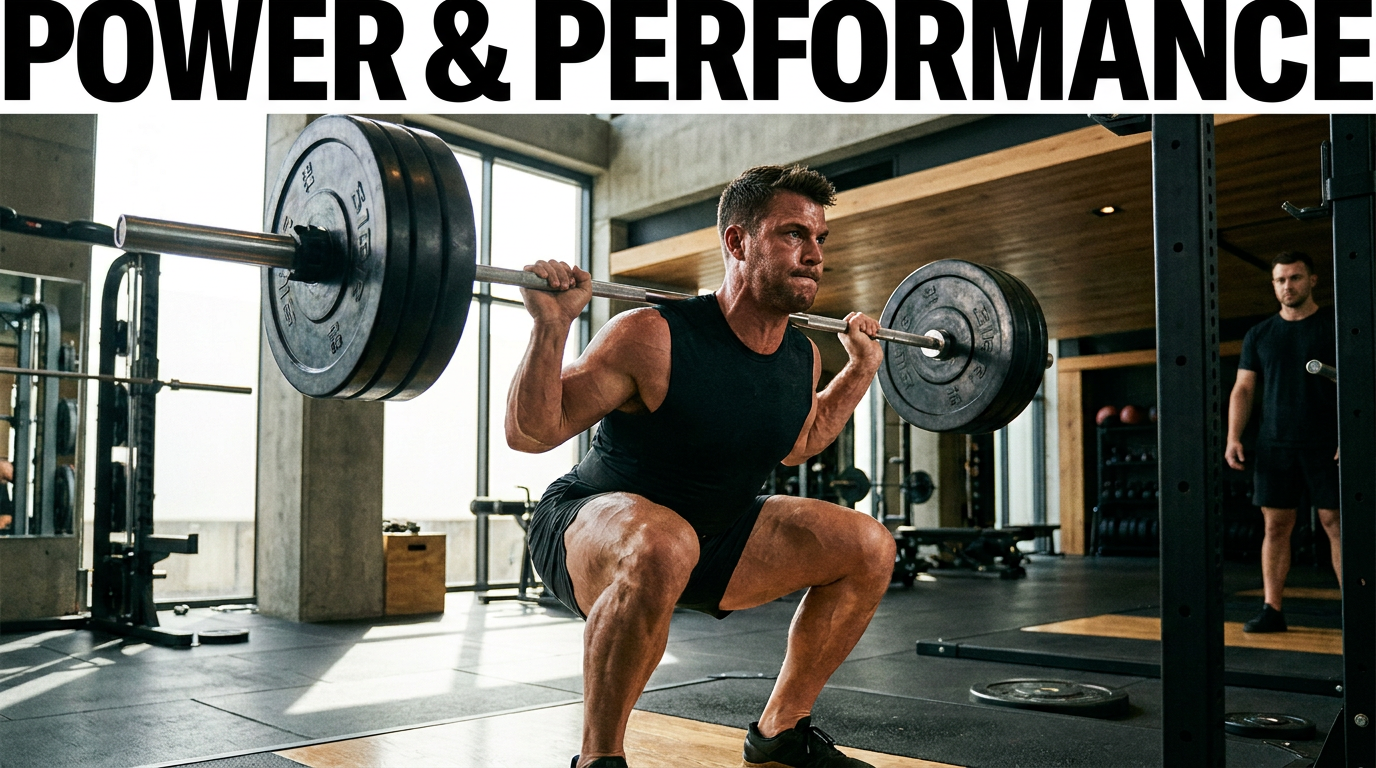
Walk into any commercial gym, and the focus is almost entirely on the battle against gravity. The culture of strength training celebrates the "lift"—pushing a barbell off the chest, pulling a chin over a bar, or standing up from a heavy squat. This upward, shortening phase of muscle action is known as a concentric contraction. However, a growing consensus among sports scientists, biomechanists, and longevity researchers suggests that we have been prioritizing the wrong half of the movement. The true catalyst for structural remodeling, injury prevention, and long-term mobility lies in the lowering phase, scientifically termed the eccentric contraction.[6]
An eccentric contraction occurs when a muscle generates force while actively lengthening under a load. In everyday life, this happens when walking downstairs, lowering a heavy box to the floor, or sitting down slowly into a chair. In the gym, it is the controlled descent of a bicep curl or the downward phase of a push-up. While it may feel like a passive yielding to gravity, the muscle is actually engaged in a complex, high-tension braking mechanism that triggers unique physiological adaptations.[1]
The defining characteristic of eccentric movement is a fascinating biological paradox: it generates significantly more force than concentric movement, yet requires substantially less metabolic energy. Studies consistently show that human muscles can produce 20% to 40% more force during an eccentric contraction than they can concentrically. At the same time, the cardiovascular and metabolic cost—measured by oxygen consumption and ATP depletion—is remarkably low.[2]

This efficiency is largely driven by the molecular architecture of the muscle fiber. During a concentric contraction, muscle filaments actively slide past one another, burning ATP with every microscopic pull. During an eccentric contraction, the muscle relies heavily on passive elastic structures. A giant, spring-like protein called titin winds up as the muscle lengthens, creating immense passive tension. This allows the muscle to resist heavy loads mechanically, sparing the chemical energy that would otherwise be required.[1]
For decades, bodybuilders have utilized "negatives"—heavy eccentric-only repetitions—under the assumption that they produce vastly superior muscle growth. Recent comprehensive meta-analyses published in 2024 and 2025 have added nuance to this belief. When researchers compared pure eccentric training to pure concentric training, they found that the overall increase in muscle volume was actually quite similar between the two modalities.[5]
However, while the total amount of muscle gained may be similar, the structural architecture of that growth is fundamentally different. Concentric training tends to add muscle tissue in parallel, increasing the girth of the muscle belly. Eccentric training, by contrast, adds sarcomeres in series, physically increasing the length of the muscle fascicles. This longitudinal growth is a critical factor in injury prevention, as it allows the muscle to operate safely and generate force at longer, more stretched positions.[1][5]
Beyond the muscle belly, eccentric loading is profoundly effective for the connective tissues that anchor muscle to bone. Tendons are notoriously slow to adapt and heal due to their poor blood supply, making tendinopathies—such as Achilles or patellar tendon pain—some of the most stubborn injuries in sports. Traditional rest and anti-inflammatory approaches often fail to resolve the underlying tissue degradation.[3]
Beyond the muscle belly, eccentric loading is profoundly effective for the connective tissues that anchor muscle to bone.
Clinical rehabilitation specialists now consider heavy eccentric loading to be the gold standard for treating tendinopathy. The high mechanical strain generated during the lowering phase acts as a potent signaling mechanism for tenocytes, the cells responsible for maintaining the tendon. This strain upregulates the synthesis of type I collagen and helps reorganize the extracellular matrix, effectively rebuilding the tendon's structural integrity and stiffness.[3]

The benefits of eccentric training extend far beyond athletic performance, offering a vital intervention for the aging population. As humans age, they naturally lose muscle mass and strength, a condition known as sarcopenia. This decline leads to frailty, a loss of independence, and a drastically increased risk of catastrophic falls. But the age-related loss of strength is not uniform across all types of muscle action.[4]
Gerontologists have identified a phenomenon known as the "eccentric paradox" of aging. While concentric strength—the ability to push or pull—declines steeply as individuals enter their 70s and 80s, eccentric strength is remarkably preserved. Older adults retain a much higher capacity to absorb force and lower weight than they do to lift it, providing a unique physiological window for therapeutic exercise.[4]
This preservation is highly functional, as the majority of falls in older adults occur during eccentric tasks, such as descending a flight of stairs or lowering the body into a chair. By specifically training the eccentric phase, older adults can directly target the braking strength required to arrest a fall. Furthermore, because eccentric exercise carries a lower metabolic and cardiovascular cost, frail individuals or those with respiratory conditions like COPD can tolerate the mechanical loads necessary to build muscle without overtaxing their heart and lungs.[2][4]

In elite sports and advanced clinical settings, the application of eccentric training has been revolutionized by "flywheel" devices. Instead of lifting a static weight against gravity, the user pulls a strap attached to a heavy metal flywheel. As the wheel spins, it builds inertia. When the user finishes the concentric pull, the wheel violently yanks the strap back, forcing the user to brake against the accumulated momentum. This creates a state of "eccentric overload" that is impossible to achieve with traditional free weights.[2]
For the everyday gym-goer, the most accessible way to harness these benefits is through "tempo training." By simply altering the cadence of a standard exercise—taking three to four seconds to lower the weight, followed by a one-second explosive lift—individuals can dramatically increase the time their muscles spend under eccentric tension. This approach requires no specialized equipment and can be applied to squats, pull-ups, and pressing movements.[6]

There is one significant caveat to eccentric training: it is the primary culprit behind Delayed Onset Muscle Soreness (DOMS). Because eccentric contractions generate such high forces while the muscle is stretching, they cause microscopic disruptions to the muscle fibers. This micro-trauma triggers an inflammatory response, leading to the stiff, aching muscles experienced one to two days after a heavy workout.[1]
Fortunately, the human body possesses a remarkable defense mechanism known as the "repeated bout effect." After just a single session of unaccustomed eccentric exercise, the muscle rapidly fortifies its cellular structure. When the same eccentric workout is performed a week later, the resulting muscle damage and soreness are drastically reduced. This rapid adaptation means that the initial discomfort of eccentric training is a temporary hurdle rather than a chronic feature.[1]
As exercise science continues to evolve, the traditional focus on lifting weight is expanding to include a deep respect for lowering it. Whether the goal is to rehabilitate a stubborn tendon, build resilient muscle architecture, or preserve independent mobility into the ninth decade of life, the eccentric contraction offers a uniquely powerful stimulus. By leaning into the resistance of gravity, we can build bodies that are not just stronger, but fundamentally more durable.[6]
Viewpoints in depth
Sports Scientists & Biomechanists
Focus on the mechanical efficiency of eccentric movements and structural muscle adaptations.
This camp studies the molecular mechanisms that allow muscles to produce 20% to 40% more force while lengthening. They emphasize the role of the giant protein titin, which acts as a molecular spring to provide passive tension. Biomechanists also highlight how eccentric overload uniquely alters muscle architecture by adding sarcomeres in series, which increases fascicle length and protects against muscle tears during high-speed athletic movements.
Clinical Rehabilitation Specialists
Emphasize eccentric loading as the gold standard for treating tendinopathy.
For physical therapists and clinicians, eccentric exercise is primarily a tool for tissue repair. Because tendons have poor blood supply, they rely on mechanical strain to stimulate healing. This camp advocates for heavy, slow resistance protocols that force tenocytes to upregulate collagen synthesis, effectively rebuilding the degraded extracellular matrix in conditions like Achilles and patellar tendinopathy.
Gerontologists & Longevity Researchers
Highlight the preservation of eccentric strength in aging as a vital tool to prevent falls.
Researchers studying aging focus on the 'eccentric paradox'—the fact that while older adults rapidly lose the ability to lift weight concentrically, their ability to lower weight eccentrically is remarkably preserved. Because most catastrophic falls occur during eccentric tasks like descending stairs, this camp views eccentric-focused exercise as the ultimate therapeutic intervention to maintain independence and combat sarcopenia without overtaxing the cardiovascular system.
Strength & Conditioning Coaches
Focus on practical implementation to maximize athletic performance and hypertrophy.
In the weight room, coaches are concerned with how to safely apply eccentric overload to drive muscle growth and power. This camp utilizes advanced tools like flywheel devices to push athletes beyond their concentric limits. For everyday trainees, they advocate for tempo training—deliberately slowing the lowering phase of an exercise to three or four seconds—to maximize time under tension and stimulate hypertrophy without needing specialized equipment.
What we don't know
- Whether eccentric-only training provides superior long-term hypertrophy compared to a mix of concentric and eccentric movements in highly trained populations.
- The exact molecular threshold of mechanical strain required to optimize tendon collagen synthesis without causing excessive micro-trauma.
- How the 'repeated bout effect' changes at a cellular level in adults over the age of 80.
Key terms
- Eccentric Contraction
- The phase of an exercise where the active muscle lengthens under load, such as lowering a dumbbell or walking downstairs.
- Concentric Contraction
- The phase of an exercise where the active muscle shortens to overcome resistance, such as lifting a dumbbell.
- Sarcopenia
- The age-related loss of skeletal muscle mass, strength, and physical function.
- Titin
- A giant, spring-like protein within muscle fibers that provides passive tension and elasticity during eccentric lengthening.
- Fascicle Length
- The physical length of muscle fiber bundles; eccentric training increases this by adding muscle units in series, improving flexibility.
- Tenocyte
- The primary cell type found in tendons, responsible for synthesizing collagen and maintaining the tendon's structural matrix.
Frequently asked
What is the difference between concentric and eccentric?
A concentric contraction occurs when a muscle shortens to lift a weight, while an eccentric contraction happens when the muscle lengthens under tension to lower a weight.
Why does eccentric training make me so sore?
Eccentric movements generate high forces that cause microscopic tears in muscle fibers. This triggers inflammation and Delayed Onset Muscle Soreness (DOMS), though the body adapts quickly after one session.
Can older adults safely do eccentric training?
Yes. In fact, it is highly recommended because eccentric strength is naturally preserved during aging, and the movements require less cardiovascular effort than traditional lifting.
Do I need special equipment for eccentric training?
While elite athletes use specialized flywheel devices, anyone can benefit by simply slowing down the lowering phase of standard exercises to three or four seconds.
Sources
Source coverage
6 outlets
4 viewpoints surfaced






[1]Frontiers in PhysiologySports Scientists & Biomechanists
The contribution of chronic concentric vs. eccentric loading to muscle hypertrophy
Read on Frontiers in Physiology →[2]Sports MedicineStrength & Conditioning Coaches
Eccentric Exercise: Adaptations and Applications for Health and Performance
Read on Sports Medicine →[3]Journal of Sports Science & MedicineClinical Rehabilitation Specialists
Eccentric training for tendinopathies in athletes: A scoping review
Read on Journal of Sports Science & Medicine →[4]National Institutes of HealthGerontologists & Longevity Researchers
Eccentric Exercise in Older Adults: A Review of the Literature
Read on National Institutes of Health →[5]Journal of Strength and Conditioning ResearchSports Scientists & Biomechanists
Comparison between eccentric vs. concentric muscle actions on hypertrophy: a systematic review and meta-analysis
Read on Journal of Strength and Conditioning Research →[6]Factlen Editorial TeamStrength & Conditioning Coaches
Synthesis by Factlen editorial team
Read on Factlen Editorial Team →

Every angle. Every day.
Get fitness stories with full source coverage and perspective breakdowns delivered to your inbox.