
The New Global Tax Reality: A Guide to the UN Tax Convention, Taxing the Rich, and the Global South's Mandate
The United Nations is drafting a legally binding framework to overhaul international tax rules, shifting power away from the OECD. Driven by the Global South, the convention aims to implement unitary taxation, curb illicit financial flows, and establish new mechanisms for taxing the ultra-wealthy.

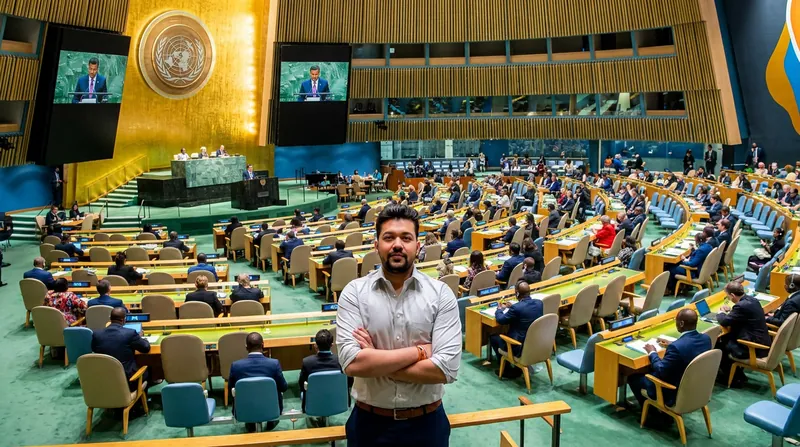
- Global South & UN Proponents
- Argue that a UN-led convention is essential for an inclusive, democratic tax system that fairly allocates revenue to developing nations.
- Developed Economy Defenders
- Maintain that the OECD is the most effective body for tax cooperation and warn that the UN process threatens established bilateral treaties.
- Institutional Observers
- Document the procedural shift in global tax governance without advocating for a specific economic outcome.
Common questions
Why is the UN taking over global tax rules from the OECD?
Developing nations argued that the OECD, a group of mostly wealthy countries, created rules that favored corporate headquarters over the countries where economic activity actually occurs. The UN provides a forum where all 193 member states have an equal vote.
What is the 'pay-where-you-play' tax model?
Also known as unitary taxation, this model allocates a multinational company's global profits to different countries based on where they actually make sales, employ workers, and operate facilities, rather than where they register their intellectual property.
Will this convention create a global wealth tax?
While it won't instantly create a single global tax rate, the convention includes a dedicated protocol aimed at establishing coordinated mechanisms to tax high-net-worth individuals and close offshore loopholes.
Why did the United States vote against the UN Tax Convention?
The U.S. and several other wealthy nations argue that the UN process duplicates existing OECD efforts, threatens established bilateral tax treaties, and represents an 'unwelcome overreach' into sovereign tax policy.
The short answer
- The UN is drafting a legally binding tax convention to shift global tax governance away from the OECD.
- The framework aims to implement unitary taxation, allocating corporate profits based on real economic activity rather than headquarters location.
- Early protocols focus on taxing cross-border digital services and establishing mechanisms to tax high-net-worth individuals.
- The initiative is driven by the Global South to reclaim billions lost to tax havens and illicit financial flows.
- A bloc of wealthy nations, including the United States, strongly opposes the convention, warning of a fractured global tax system.
For anyone living in a country struggling to fund public services, the rules governing how multinational corporations are taxed might seem like distant bureaucratic trivia. But those rules dictate whether billions of dollars stay in local economies to build schools and hospitals or vanish into offshore tax havens. A historic shift is now underway to rewrite that reality. The United Nations is drafting a legally binding Framework Convention on International Tax Cooperation, a move that promises to fundamentally alter how global wealth is tracked and taxed.[2]
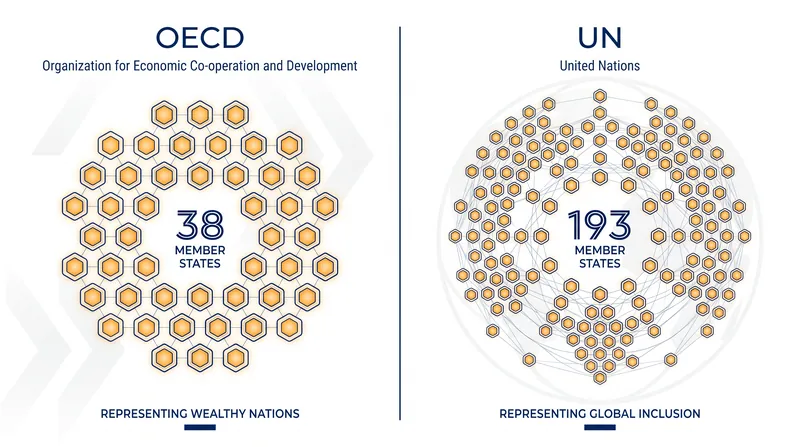
The core of this overhaul is a transfer of power. For over sixty years, international tax standards have been largely dictated by the Organisation for Economic Co-operation and Development (OECD), a group of 38 mostly wealthy nations. Developing countries—often referred to as the Global South—have long argued that this system inherently favors the nations where corporations are headquartered over the countries where the actual economic activity takes place.[2]
By moving the rule-making process to the UN, the new framework gives all 193 member states an equal vote. This transition, initiated by a successful 2022 resolution led by the Africa Group, aims to create a more inclusive, transparent, and democratic forum for global tax governance. The goal is not just to tweak existing rules, but to build an entirely new architecture that aligns tax policy with sustainable development and human rights.
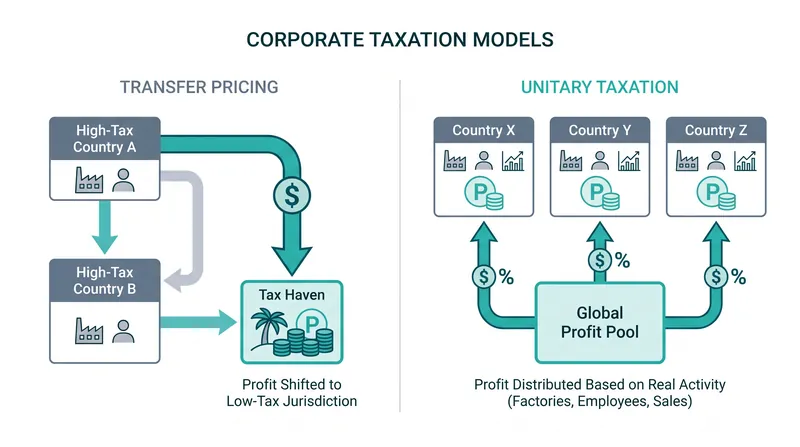
To understand why this matters, you have to look at the mechanics of the current system. Under the traditional OECD model, multinational companies often use complex accounting techniques—like transfer pricing—to shift profits from high-tax jurisdictions where they operate to low-tax or no-tax jurisdictions where they maintain shell headquarters. This legal loophole drains an estimated hundreds of billions of dollars from global public revenues every year.[2]
The UN Tax Convention proposes a radical alternative: unitary taxation. Instead of treating a multinational enterprise as a web of separate independent entities trading with each other, unitary taxation treats the corporation as a single global firm. Its total global profits are then apportioned to different countries based on a formula that reflects real economic activity—such as sales, employment, and physical assets in each jurisdiction.[2]
This "pay-where-you-play" mechanism is designed to ensure that if a company extracts resources, manufactures goods, or sells digital services in a developing nation, that nation gets a fair cut of the tax revenue. Early estimates suggest that shifting to a global unitary taxation model could allow countries worldwide to collect an additional $500 billion in corporate tax annually without raising baseline tax rates.[2]
Beyond corporate profits, the convention is also targeting the ultra-wealthy. A dedicated protocol on the taxation of high-net-worth individuals is being championed by several Latin American countries. This initiative seeks to establish broad-based wealth taxes and close the loopholes that allow billionaires to conceal assets in offshore trusts and shell companies.
Beyond corporate profits, the convention is also targeting the ultra-wealthy.
The framework also prioritizes the fight against illicit financial flows. For many nations in the Global South, the capital lost to tax evasion, money laundering, and aggressive tax avoidance exceeds the total amount they receive in foreign development assistance. The UN convention aims to mandate automatic exchanges of information, establish beneficial ownership registries, and create a global asset register to track hidden wealth.[2]
Another critical component being negotiated is the taxation of cross-border digital services. In the modern digital economy, tech giants can generate massive revenues from users in a country without ever establishing a physical presence there. The first early protocol of the convention specifically addresses this gap, seeking to establish new nexus rules that grant source countries the right to tax digital income generated within their borders.
The second early protocol focuses on dispute prevention and resolution. Currently, unresolved tax disputes tie up billions in corporate profits globally. The UN framework aims to create a comprehensive and equitable dispute resolution system that provides legal certainty while respecting the sovereignty of developing nations, moving away from mandatory binding arbitration that often favors corporate investors.
Unsurprisingly, this sweeping reform has met fierce resistance. During the adoption of the convention's Terms of Reference in late 2024, a small bloc of wealthy nations—including the United States, the United Kingdom, Japan, and Australia—voted against the measure. These countries argue that the UN process duplicates the ongoing work of the OECD and threatens to upend decades of established bilateral tax treaties.[1]

The United States has been particularly vocal in its opposition. U.S. representatives have stated that the goals of the UN framework represent "unwelcome overreach" and have indicated that they will reject the outcomes of the process. This raises the prospect of a bifurcated global tax system, where a UN-led framework operates in parallel—or in direct conflict—with the established OECD norms.[1]
Despite this opposition, the negotiations are moving forward rapidly. The Intergovernmental Negotiating Committee (INC) is holding multiple substantive sessions throughout 2025 and 2026, transitioning from procedural debates to line-by-line drafting of the treaty text. The timeline is aggressive, with the final convention and its first two protocols scheduled for submission to the UN General Assembly in 2027.
For policymakers, tax professionals, and citizens, the next few years will be critical. The UN Tax Convention is not just a technical legal document; it is a battleground for economic justice. If successful, it will represent the most significant reform of international tax governance in over a century, fundamentally redistributing the power to tax and the resources needed to fund the future.[2]
Why it matters
For decades, global tax rules have been shaped by a small club of wealthy nations, allowing multinational corporations to shift profits and depriving developing countries of billions in revenue. This UN-led overhaul could fundamentally change where companies pay taxes and how extreme wealth is regulated, directly impacting global public funding for infrastructure and climate adaptation.
Competing readings
The Global South and Civil Society
Advocates for a democratic overhaul of international tax rules to ensure developing nations receive a fair share of corporate revenues.
For developing economies, the UN Tax Convention is a matter of sovereign survival. Proponents argue that the OECD's historic focus on bilateral treaties inherently favors capital-exporting nations, allowing multinational corporations to extract wealth from the Global South while shifting profits to low-tax jurisdictions. By moving negotiations to the UN, these nations seek to replace transfer pricing loopholes with a unitary taxation model that directly funds local infrastructure, healthcare, and climate adaptation.
Wealthy Nations and the OECD
Defenders of the current system who warn that a UN-led process threatens decades of established tax cooperation.
A bloc of developed nations, led prominently by the United States, views the UN framework as an unwelcome overreach that duplicates the OECD's ongoing Base Erosion and Profit Shifting (BEPS) project. These countries argue that the OECD possesses the technical expertise necessary to manage complex global tax standards. They warn that abandoning consensus-based decision-making for majority voting at the UN will result in a fractured international system, where competing tax regimes create massive compliance burdens and legal uncertainty for global businesses.
Multinational Corporations
Businesses facing the prospect of a radically altered global compliance landscape and new tax liabilities.
While not directly voting at the UN, multinational enterprises are closely monitoring the shift toward unitary taxation and new digital service taxes. Corporate stakeholders are primarily concerned with the risk of double taxation if the UN and OECD frameworks diverge. The prospect of having global profits apportioned by a UN-mandated formula—rather than traditional arm's-length transfer pricing—represents a fundamental threat to the tax optimization strategies that many global firms have relied upon for decades.
The sequence
1920s-2020s
The OECD and its predecessors dominate international tax rule-making, focusing on bilateral treaties that favor countries where corporations are headquartered.
November 2022
The Africa Group successfully tables a UN General Assembly resolution calling for a UN-led tax process, marking a historic breakthrough.
December 2023
The UN General Assembly establishes an Ad Hoc Committee to draft the Terms of Reference for a new legally binding tax convention.
August 2024
The Ad Hoc Committee finalizes the Draft Terms of Reference, outlining the convention's objectives, principles, and early protocols.
December 2024
The UN General Assembly formally adopts the Terms of Reference, despite opposition from a small bloc of wealthy nations.
2025-2026
The Intergovernmental Negotiating Committee (INC) holds substantive sessions to draft the convention text and its first two protocols.
September 2027
Target deadline for the final text of the UN Tax Convention and early protocols to be submitted for adoption.
Jargon, explained
- Unitary Taxation
- A method that treats a multinational corporation as a single global entity and apportions its total profits to different countries based on real economic activity, such as sales and employment.
- Transfer Pricing
- The rules and methods for pricing transactions within and between enterprises under common ownership or control, often exploited to shift profits to low-tax jurisdictions.
- Global South
- A term broadly referring to developing and emerging economies, primarily located in Africa, Latin America, Asia, and Oceania, which have historically been marginalized in global tax governance.
- Illicit Financial Flows
- The illegal or abusive movement of money across borders, including tax evasion, money laundering, and aggressive tax avoidance strategies.
- Nexus Rules
- The legal criteria that determine whether a country has the right to tax a foreign business, traditionally based on physical presence but increasingly updated for the digital economy.
What’s still unclear
- Whether the United States and other opposing wealthy nations will ultimately sign the convention or boycott the new framework entirely.
- How the UN will enforce compliance with unitary taxation models if major corporate headquarters jurisdictions refuse to participate.
- The exact mathematical formula that will be used to apportion multinational profits across different countries.
Sources
Source coverage
2 outlets
3 viewpoints surfaced


[1]United States Mission to the United NationsDeveloped Economy Defenders
Statement at the Session for the Intergovernmental Negotiating Committee on the UN Framework Convention on International Tax Cooperation
Read on United States Mission to the United Nations →[2]Factlen Editorial TeamGlobal South & UN Proponents
Synthesis by Factlen editorial team
Read on Factlen Editorial Team →
Comments

Every angle. Every day.
Get guides stories with full source coverage and perspective breakdowns delivered to your inbox.