
Years-Long Drought Triggers Mass Displacement and Deepening Famine in Somalia
Consecutive failed rainy seasons and severe funding shortfalls have pushed millions of Somalis into displacement camps, with malnutrition rates reaching critical levels. Aid organizations warn that the country is on the brink of famine as international support drops by more than 80 percent.

- Humanitarian Organizations
- Advocate for immediate, scaled-up emergency funding to prevent famine.
- International Donors
- Balance global aid commitments amid competing geopolitical crises and budget constraints.
- Affected Communities
- Focus on immediate survival, water access, and the loss of agricultural livelihoods.
Perspectives this story doesn't cover
- Local Somali farmers
- Displaced pastoralists
Fast facts
- More than half a million Somalis were displaced in the first three months of 2026 due to severe drought.
- A medical survey in Baidoa found that 50 percent of screened children are acutely malnourished.
- International funding to tackle malnutrition in Somalia has dropped by more than 80 percent this year.
- The United States and other major donors have significantly reduced their emergency aid to the region.
- Aid agencies warn that waiting for an official famine declaration will result in massive, preventable loss of life.
- Forecasted El Niño rains later in the year threaten to cause destructive flooding and disease outbreaks.
Why this matters
The convergence of climate shocks and a collapse in international humanitarian funding is pushing Somalia toward a catastrophic famine. Without immediate intervention, hundreds of thousands of children face severe malnutrition and preventable death, destabilizing an already fragile region.
After walking for nearly two weeks across the parched terrain of the Middle Jubba region, Luul Mohamed and her five children arrived in the southwestern city of Baidoa with no food and no clear prospect of relief. Her family is part of a massive demographic shift currently underway in Somalia, where more than half a million people were displaced in the first three months of 2026 alone. Driven from their homes by consecutive failed rainy seasons, these families are converging on sprawling displacement camps that are rapidly exceeding their capacity to provide basic necessities.[5]
The medical data emerging from these settlements points to a systemic collapse in food security. A July 2026 survey conducted by Doctors Without Borders (MSF) across 14 displacement sites in Baidoa revealed that one in every two children screened was acutely malnourished, with one in four classified as severely malnourished. The survey found that one-third of the families in these camps are surviving on a single meal per day, while only two percent can afford three meals.[1][4]
"The world cannot wait for a famine declaration before acting," said Allara Ali, an MSF project coordinator in Somalia. The organization has warned that the threshold for an extremely critical emergency has already been surpassed, and that waiting for official famine metrics to be met will result in widespread, preventable fatalities.[1]
The current crisis is the downstream consequence of a multi-year environmental shock intersecting with a fragile agricultural economy. Somalia has endured repeated cycles of prolonged drought, which have systematically eroded the pastoral and farming livelihoods that sustain the rural population. The United Nations estimates that approximately 6 million people—roughly one-third of the country's population—are currently facing severe food shortages.[1][3]
Within that broader population, nearly 2 million people are experiencing emergency levels of food insecurity. The UN Food and Agriculture Organization and the World Food Programme have placed Somalia in the highest-risk category for worsening hunger, noting that the severe depletion of water sources and the lowest seasonal crop harvest in three decades have left communities with no domestic safety net.[2][3]
Within that broader population, nearly 2 million people are experiencing emergency levels of food insecurity.
Compounding the environmental disaster is a sharp contraction in international humanitarian funding. Major donor nations, facing competing geopolitical crises and domestic economic pressures, have significantly reduced their financial commitments to the region. According to MSF, funding to address acute malnutrition in parts of Somalia has dropped by more than 80 percent this year.[5]
The financial retreat is stark when compared to previous interventions. During a similar near-famine situation in 2022, international donors mobilized approximately $2.2 billion in aid for Somalia. This year, the available donor funding stands at roughly $300 million. The United States, which provided $70 million to aid agencies in the country last year, has cut its funding entirely for these specific programs in 2026, forcing health systems to absorb a crisis far beyond their operational limits.[5]
This funding shortfall is forcing organizations to scale back operations precisely when the infrastructure is most needed. The World Food Programme warned that its emergency assistance could halt entirely without an immediate injection of capital, noting that current resources allow them to reach only one in ten people who require urgent support. Other agencies have reported closing health and nutrition centers due to the lack of operating funds.[2][4]
The displacement driven by these compounding factors is overwhelmingly affecting the most vulnerable demographics. Women and children account for 85 percent of the displaced population moving into urban hubs like Baidoa. Without adequate therapeutic feeding and clean water, these populations face a high risk of disease outbreaks, including cholera and measles, which thrive in overcrowded and unsanitary camp conditions.[1]
Looking ahead, the region's hydrology presents a secondary threat. Meteorological models indicate a high probability of El Niño conditions intensifying during Somalia's October-to-December rainy season. While precipitation is desperately needed to recharge aquifers, intense downpours on severely degraded, parched earth carry a high risk of destructive flash flooding. Such an event would likely wash away remaining agricultural infrastructure, contaminate drinking water supplies, and trigger further waves of displacement.
Sources
Source coverage
5 outlets
3 viewpoints surfaced




- [1]Doctors Without BordersHumanitarian Organizations
The world must not wait for a famine declaration in Somalia before acting
Read on Doctors Without Borders → - [2]World Food ProgrammeHumanitarian Organizations
Somalia is facing one of its most complex hunger crises in years, driven by drought
Read on World Food Programme → - [3]UN OCHAHumanitarian Organizations
Severe drought continues to persist across Somalia, deepening humanitarian needs
Read on UN OCHA → - [4]ReliefWebHumanitarian Organizations
One in every two children screened in displacement sites in Baidoa is acutely malnourished
Read on ReliefWeb → - [5]ReutersInternational Donors
Somalia malnutrition response hit by more than 80% funding drop as child hunger surges
Read on Reuters →
Comments
More in Environment
See all →Nile Basin Hydropolitics
Egyptian PM Calls Nile Water Security an 'Existential Issue' at UN, Rejecting GERD 'Fait Accompli'
5 sources
Statehood Law
UN General Assembly Adopts First Declaration Affirming Statehood for Island Nations Facing Sea Level Rise
6 sources
High Seas Treaty
High Seas Treaty Reaches 100 Ratifications, Cementing Global Momentum for Ocean Protection
4 sources
Biodiversity Target
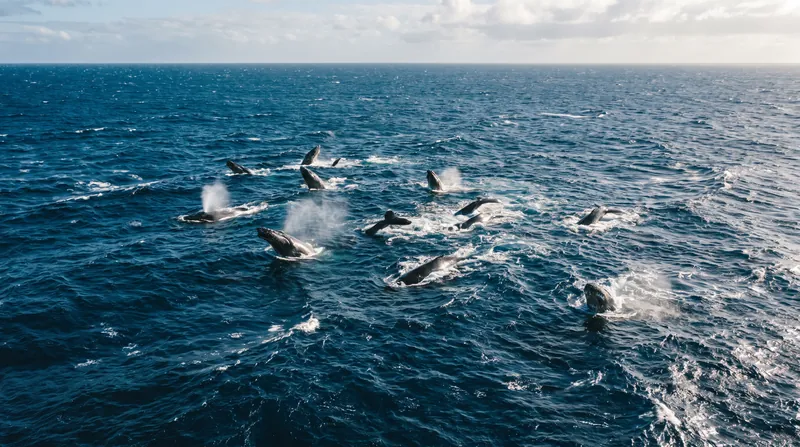
Global 30x30 Goal Remains Achievable, But Ocean Protection Lags Severely With Commitments Only Reaching 12%
4 sources
Every angle. Every day.
Get Environment stories with full source coverage and perspective breakdowns delivered to your inbox.