
Iranian Court Subjects Singer Parastoo Ahmadi and Troupe to 74 Lashes Over Unveiled Online Concert
Authorities in Tehran carried out public floggings against a female vocalist and four band members after they recorded a performance without mandatory head coverings. The sentences mark an escalation in the judiciary's enforcement of dress codes in digital spaces.
Share this story
Iranian judicial authorities executed sentences of 74 lashes each against vocalist Parastoo Ahmadi and four of her bandmates this week. The physical punishments followed the distribution of an online concert video in which Ahmadi performed without the legally mandated hijab, marking a severe escalation in state enforcement.[1][2]
The sentences were carried out in a Tehran judicial facility, signaling a rigid new approach to how the state polices digital content. While authorities have routinely fined, detained, or restricted the travel of women for public dress code violations throughout 2026, subjecting an entire musical ensemble to corporal punishment for a private recording represents a distinct and calculated shift in policy.[2][6]
The performance in question was recorded entirely without a live audience and distributed across various social media platforms earlier this autumn. Court documents cited by state media described the broadcast as a "vulgar" display that deliberately undermined national moral standards and promoted Western cultural infiltration.[3][5]
According to human rights monitors tracking the prosecution, the five musicians were summoned to the courthouse on Sunday to receive the lashes. The swift execution of the sentence bypassed the lengthy appellate delays typically seen in media-related prosecutions, underscoring the judiciary's desire to make an immediate public example of the ensemble.[1][6]
Expanding enforcement to digital spaces
The prosecution of Ahmadi's troupe highlights a widening net of digital surveillance operated by the Ministry of Culture and Islamic Guidance. Throughout the first ten months of 2026, regulators have increasingly targeted content creators who bypass official licensing channels to reach audiences directly, utilizing automated scanning tools to flag unauthorized broadcasts.[7]
In previous years, female singers performing without head coverings online typically faced account suspensions, financial penalties, or temporary travel bans. The application of 74 lashes—a penalty historically reserved for severe public order offenses or violent crimes—demonstrates a significantly lower tolerance for artistic defiance in the current political climate.[2][4]
Ahmadi, an independent artist known for blending traditional Persian vocal techniques with contemporary acoustic arrangements, had built a substantial following of over 400,000 listeners on platforms like Instagram. Her recent broadcasts frequently featured her performing without the mandatory headscarf, drawing both widespread domestic praise and intense regulatory scrutiny.[7]
The specific charge levied against the group involved "encouraging public corruption" through the production and dissemination of unauthorized audiovisual materials. Legal analysts note that prosecuting the male instrumentalists alongside the female vocalist establishes a dangerous new precedent for collective liability within the Iranian arts sector.[1][3]
The international response was swift and highly critical. Mahmood Amiry-Moghaddam, director of the Norway-based Iran Human Rights organization, condemned the sentences on Monday. He described the flogging as a "medieval punishment" explicitly designed to instill fear across the broader artistic community.[2]
The mechanics of the prosecution
The judicial process moved with unusual speed following the video's viral circulation in late October, which garnered millions of views within days. Security forces initially detained the ensemble during a coordinated raid on a private rehearsal studio in northern Tehran, confiscating their instruments, hard drives, and recording equipment.[7]
Following a brief 48-hour detention period, the musicians were released on bail before facing a closed-door tribunal in early November. Defense attorneys were reportedly granted highly restricted access to the evidentiary files, which consisted primarily of engagement metrics and comment threads from the band's social media accounts.[1][7]
The presiding judge ultimately handed down identical sentences of 74 lashes for all five defendants, rejecting any distinction between the vocalist and her accompanists. The ruling explicitly dismissed defense arguments that a performance recorded in a private studio without a physical audience should fall outside the jurisdiction of public morality statutes.[3][6]
Iranian law mandates that women cover their hair and wear loose-fitting clothing in public spaces, a requirement strictly enforced since the 1979 Islamic Revolution. However, the legal definition of a "public space" has increasingly been interpreted by conservative judges to include any digital broadcast accessible to the general population.[2][4]
The execution of the sentences was confirmed by domestic news agencies on Monday morning, sending immediate ripples through the capital. State-aligned outlets framed the severe punishment as a necessary and proportionate measure to protect societal values from organized cultural subversion orchestrated by foreign adversaries.[5]
Public and international backlash
News of the flogging immediately triggered widespread condemnation across Iranian social media networks, despite ongoing internet throttling by state telecom providers. Supporters of the band circulated older, officially licensed recordings of Ahmadi's performances, using trending hashtags to demand accountability for the judicial officials who authorized the corporal punishment.[7]
The incident has also drawn sharp criticism from international artistic coalitions and human rights organizations. Several European musicians' unions released joint statements on Tuesday morning, calling on global cultural institutions to sever any remaining ties with Iranian state-sponsored arts programs until the safety of independent artists can be guaranteed.[2][6]
Despite the severe physical toll of the punishment, sources close to the ensemble indicated that the musicians are currently recovering at their respective homes in Tehran. Medical personnel were reportedly present during the administration of the lashes, as required by judicial protocols, though independent verification of their condition remains impossible.[1][7]
The government has maintained a strict, defensive posture regarding the case amid the growing outcry. Officials from the judiciary's media center issued a brief statement asserting that the sentences were carried out in strict accordance with the Islamic Penal Code and warning against further dissemination of the "vulgar" video.[3][5]
This hardline approach aligns with a broader legislative push currently moving through the Iranian parliament to codify harsher penalties for dress code violations. A pending bill would formally mandate severe corporal and financial punishments for digital content creators who flout the rules, effectively closing existing legal loopholes.[2]
Chilling effect on the arts sector
The flogging of Ahmadi and her bandmates has sent a profound shockwave through Tehran's vibrant but heavily monitored underground music scene. Several independent studios have reportedly halted operations entirely this week, fearing similar raids by morality enforcement units looking to make further examples of unauthorized creators.[7]
Female vocalists in Iran already navigate a complex web of restrictions, including absolute bans on performing solo in front of mixed-gender live audiences. Many have relied exclusively on digital platforms and virtual private networks to sustain their careers, generate income, and connect with international listeners.[1][4]
The criminalization of the backing band introduces a severe new risk matrix for instrumentalists and technical staff. Session musicians and audio engineers who previously viewed accompanying female singers as a low-risk professional engagement must now weigh the credible threat of physical punishment before accepting studio work.[2][7]
Industry observers expect a sharp decline in unauthorized musical releases in the coming months as artists reassess their digital footprints. The state's willingness to execute corporal punishment on relatively high-profile artists serves as a potent, highly visible deterrent against future acts of digital defiance.[6]
The long-term impact on Iran's cultural output remains uncertain, as the state continuously adjusts its enforcement mechanisms to counter digital circumvention. While the immediate effect is a suppression of independent releases, historical precedents suggest that artistic communities often develop new, more secure methods of anonymous distribution in response to severe crackdowns.[7]
Key points
- Vocalist Parastoo Ahmadi and four band members received 74 lashes each for an online performance where she appeared without a hijab.
- The swift execution of the sentences marks a severe escalation in how Iranian authorities police digital content and private studio recordings.
- Judicial officials applied the punishment uniformly across the ensemble, establishing a new precedent of collective liability for backing musicians.
- The crackdown has triggered widespread condemnation and prompted several independent recording studios in Tehran to halt operations out of fear.
Unanswered questions
- It remains unclear if the musicians face additional financial penalties or long-term bans on future artistic production.
- The exact mechanisms authorities used to track and raid the private rehearsal space have not been disclosed.
- It is unknown how international music streaming platforms will respond to the Iranian government's escalating pressure on independent creators.
How we got here
Late October 2026
Parastoo Ahmadi's ensemble releases a studio performance video online featuring the vocalist without a mandatory headscarf.
Early November 2026
Security forces raid the band's rehearsal space, confiscating equipment and briefly detaining the five musicians.
Mid-November 2026
A closed-door tribunal sentences all five members to 74 lashes for encouraging public corruption.
November 23, 2026
The physical punishments are carried out at a judicial facility in Tehran and confirmed by state media.
- Human Rights Monitors
- Views the corporal punishment as a severe human rights violation and an attempt to crush independent expression.
- State Judiciary
- Argues that digital broadcasts constitute public space and must adhere strictly to the Islamic Penal Code.
- Independent Artists
- Sees the collective punishment of the band as a tactic to isolate female vocalists by intimidating their collaborators.
Perspectives this story doesn't cover
- Independent legal counsel for the musicians
- Families of the band members
Sources
Source coverage
7 outlets
3 viewpoints surfaced







- [1]CNNHuman Rights Monitors
Iran flogs female singer and four members of concert team over her performance without hijab
Read on CNN → - [2]The GuardianHuman Rights Monitors
Iranian singer and four others receive lashes after performance without hijab
Read on The Guardian → - [3]The NationalState Judiciary
Iran lashes female singer and her team 74 times each over 'vulgar' concert with no audience
Read on The National → - [4]The Times of Israel
Iranian singer lashed 74 times over online concert without hijab
Read on The Times of Israel → - [5]The HinduState Judiciary
Iran carries out flogging of singer and her team, Iranian website says
Read on The Hindu → - [6]CBC NewsHuman Rights Monitors
Iranian singer subjected to 74 lashes for performing without her hijab
Read on CBC News → - [7]Iran InternationalIndependent Artists
Flogging of Iranian singer Parastoo Ahmadi sparks outrage on social media
Read on Iran International →
More in News & Politics
See all →Constitutional Law
Privy Council Overturns Longstanding Trinidad and Tobago Ban on Consensual Same-Sex Relations
5 sources

Humanitarian Crisis
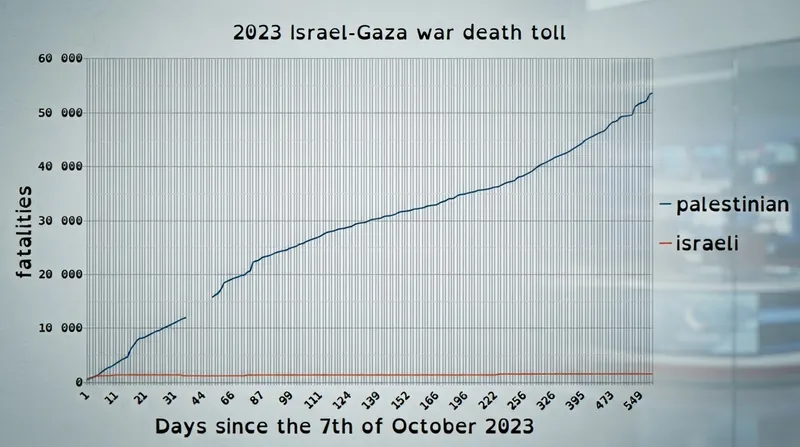
Torrential Rains Inundate Gaza Tent Encampments, Displacing Tens of Thousands
3 sources
Religious Extremism
Kenyan Court Sentences Cult Leader Paul Mackenzie to 200 Years for 191 Starvation Murders
4 sources

Cost of Living
Italy Deploys Troops to Milan After Cost-of-Living Protests Escalate Into Violence
5 sources

Comments
Every angle. Every day.
Get News & Politics stories with full source coverage and perspective breakdowns, free every day.