
Trump Administration Rejects California's Key Water Plan, Citing Restrictions on Federal Pumping
The U.S. Bureau of Reclamation has labeled California's updated Bay-Delta water management plan 'unworkable,' threatening to withdraw from cooperative agreements. The federal agency argues the state's new river flow mandates would severely reduce water deliveries to Central Valley farms.
By Marina Lopez

Share this story
The U.S. Bureau of Reclamation asserts that California's newly updated water management plan will devastate Central Valley agriculture by withholding up to 175,000 acre-feet of water from federal pumps. California state regulators counter that their framework is a necessary, science-based compromise to halt the ecological collapse of the Sacramento-San Joaquin River Delta while maintaining supply reliability. The clash escalated on September 4, 2026, when the federal agency formally labeled the state's draft Bay-Delta Water Quality Control Plan "unworkable" and threatened to withdraw funding for joint habitat restoration projects.[1][2]
The dispute centers on the State Water Resources Control Board's August 19, 2026, draft update to the Bay-Delta Plan. The estuary serves as the hub for both the federally run Central Valley Project and the State Water Project, which together supply water to 30 million people and 4 million acres of farmland. The state's proposal introduces new flow requirements for the Sacramento and San Joaquin river systems, aiming to leave more water in the rivers to support declining native fish populations, such as Chinook salmon and Delta smelt.[2]
In a letter signed by Principal Deputy Commissioner Aubrey J.D. Bettencourt, the Bureau of Reclamation quantified its objections. The agency calculated that the state's new flow mandates would force the federal and state water projects to reduce exports by 125,000 acre-feet in dry and below-normal years, and by up to 175,000 acre-feet in above-normal years. The Bureau also objected to a default standard requiring 55 percent of "unimpaired flow"—water that would naturally run through the system without upstream dams—to remain in the rivers.[2]
The federal government warned that these restrictions threaten the "entire fabric of California's agricultural economy." If the state board adopts the plan as written, the Bureau stated it will not participate in the state's "Healthy Rivers and Landscapes" program, a framework of voluntary agreements where water agencies commit to specific river flows and fund habitat restoration in exchange for regulatory certainty.[1][2][5]
The Central Valley's Westlands Water District, the largest agricultural water supplier in the United States, immediately followed the federal government's lead. On September 4, Westlands announced it would end its participation in the voluntary program. The district argued that the August 19 draft abandoned commitments negotiated in a March 2022 Memorandum of Understanding.[1][4]
"The state substantially has changed the terms and walked away," Westlands General Manager Allison Febbo stated, adding that the final draft departed from the collaborative spirit of the 2022 agreement. Westlands indicated it would pull its funding for habitat restoration if the state proceeds with the current regulatory approach.[1][4]
The Newsom administration defended the updated plan as a balanced solution. The California Department of Water Resources called the collaborative program "a critical step forward to protect future water supplies while improving environmental conditions across our largest river systems." State officials noted that if water agencies fail to meet their commitments under the voluntary agreements, they would be subject to traditional regulations—a fallback mechanism the Trump administration explicitly rejected.[1]
Environmental and tribal organizations argue the state's plan is already too lenient on agricultural interests. The Delta Tribal Environmental Coalition and groups like Restore the Delta have criticized the reliance on privately negotiated voluntary agreements, arguing they lack enforceable, science-based protections for water quality. Gary Bobker, program director for Friends of the River, warned that the Trump administration's opposition is designed to weaken environmental safeguards entirely, resulting in conditions "even more harmful than the current status quo."[2][3]
The State Water Resources Control Board will accept public comments on the draft plan until September 18, 2026. Regulators are scheduled to consider final adoption during a public meeting on October 28 and 29. If the board approves the plan over federal objections, the conflict is expected to move immediately into federal court, setting up a protracted legal battle over who controls the pumps that sustain California's agricultural heartland.[1][2]
Viewpoints in depth
Federal & Agricultural View
The U.S. Bureau of Reclamation and major irrigation districts argue the state has reneged on a 2022 compromise.
Federal water managers and the Westlands Water District maintain that the August 2026 draft plan fundamentally alters the terms negotiated in a 2022 Memorandum of Understanding. By mandating that 55 percent of unimpaired flow remain in the rivers and reducing exports by up to 175,000 acre-feet, they argue the state is prioritizing environmental targets over the survival of Central Valley farms. Consequently, these agencies are threatening to pull their participation and funding from the 'Healthy Rivers and Landscapes' habitat restoration program, arguing the regulatory certainty they were promised has vanished.
State Regulators' View
California officials defend the plan as a collaborative, science-based approach to a deteriorating ecosystem.
The Newsom administration and the Department of Water Resources view the updated Bay-Delta Plan as the only viable path to halt the ecological collapse of the state's largest estuary. State officials emphasize that the voluntary agreements offer water agencies a choice: commit to specific river flows and fund habitat restoration, or face traditional, stricter pumping regulations. They argue this dual-path approach provides flexibility while ensuring that minimum environmental baselines are met to protect endangered species like the Chinook salmon.
Environmental & Tribal View
Advocates argue the voluntary framework is a flawed compromise that fails to protect the Delta.
Organizations such as the Delta Tribal Environmental Coalition and Friends of the River have consistently opposed the 'Healthy Rivers and Landscapes' program, arguing that privately negotiated deals with water contractors lack scientific rigor and enforceability. They contend that the state's plan already concedes too much water to agricultural interests, and that the Trump administration's intervention is an attempt to dismantle environmental safeguards entirely. For these groups, the federal pushback illustrates the inherent weakness of relying on voluntary compliance to manage a critical natural resource.
Key points
- The U.S. Bureau of Reclamation formally objected to California's August 2026 draft Bay-Delta Plan, calling it 'unworkable.'
- Federal officials estimate the plan would reduce water exports to Central Valley farms by up to 175,000 acre-feet in above-normal years.
- Westlands Water District announced it will withdraw from the state's voluntary habitat restoration program, citing a departure from 2022 agreements.
- Environmental and tribal groups argue the state's voluntary agreements already lack enforceable protections for declining fish populations.
- Federal & Agricultural Interests
- Argue the state's updated plan violates prior agreements and severely threatens the agricultural economy by withholding necessary water.
- State Regulators
- Maintain that the framework is a necessary, balanced compromise to protect future water supplies while halting ecological decline.
- Environmental & Tribal Advocates
- Contend that the voluntary agreements concede too much to agricultural districts and lack enforceable protections for native fish and water quality.
Perspectives this story doesn't cover
- Municipal water districts in Southern California that rely on Delta exports
Sources
Source coverage
5 outlets
3 viewpoints surfaced





- [1]LA TimesEnvironmental & Tribal Advocates
Trump administration tells California its key water plan is 'unworkable'
Read on LA Times → - [2]The AG CenterEnvironmental & Tribal Advocates
Trump Administration Threatens to Blow Up California's Bay-Delta Water Control Plan And Central Valley Farms Are Caught in the Crossfire.
Read on The AG Center → - [3]Maven's NotebookEnvironmental & Tribal Advocates
DELTA COALITION: Voluntary agreements fail as federal and state partners pull out of updated Bay-Delta Plan.
Read on Maven's Notebook → - [4]Westlands Water DistrictFederal & Agricultural Interests
Westlands Water District to End Participation in Bay-Delta Program Absent Reversal by the State
Read on Westlands Water District → - [5]Water Education FoundationFederal & Agricultural Interests
Wednesday Top of the Scroll: Trump administration tells California its key water plan is 'unworkable'
Read on Water Education Foundation →
More in Environment
See all →Seismic Event
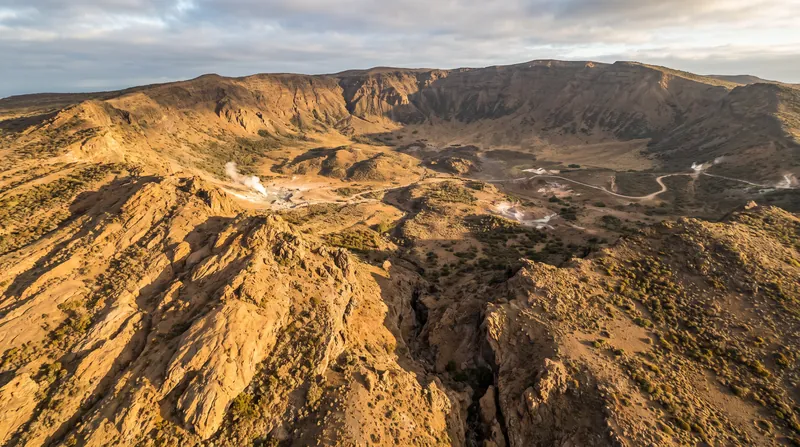
Magnitude 6.4 Earthquake Strikes Papua New Guinea's Eastern Highlands
4 sources
Infrastructure Stress
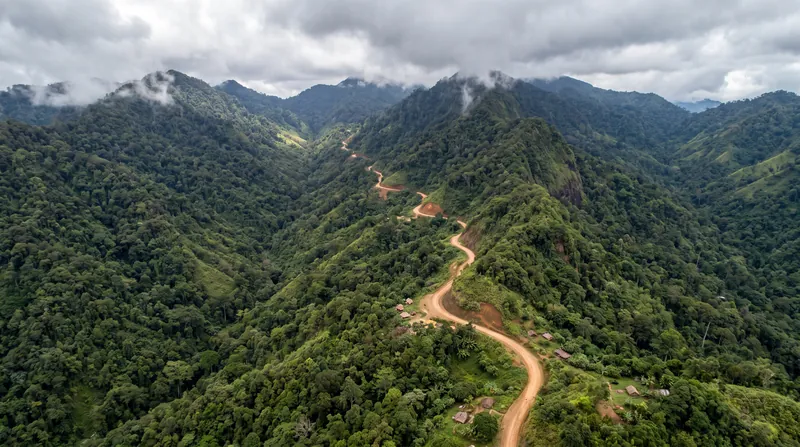
Torrential Rainfall Triggers Flash Flooding and Highway Mudslides Across Southern Minnesota
4 sources
Vietnam Floods
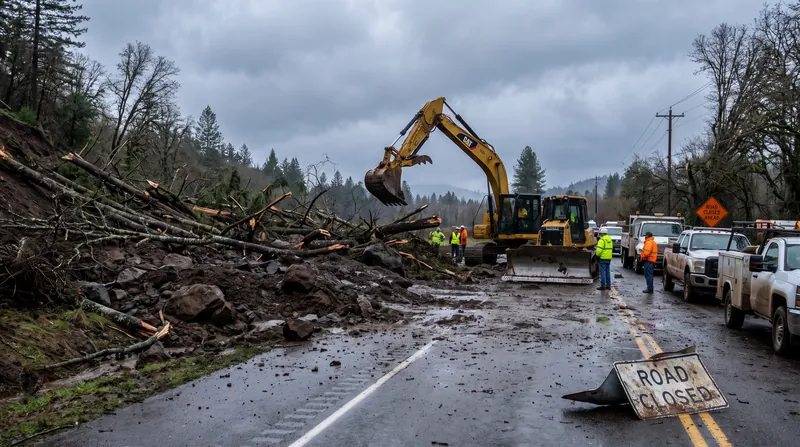
Record 52 Inches of Rain Triggers Deadly Vietnam Floods, Submerging 16,300 Homes
4 sources
Earthquake Mechanics
The Stored Elastic Strain Energy That Causes Earthquakes
8 sources
Comments
Every angle. Every day.
Get Environment stories with full source coverage and perspective breakdowns, free every day.