
full timeline
East Asia Air Defense Incursions
Japan and South Korea deployed fighter jets early Tuesday after Russian military aircraft breached Japanese territorial airspace and entered the Korean Air Defense Identification Zone.
Follow East Asia Air Defense Incursions in the Factlen app and get an alert when there is news. Get the app
Share this story
Latest report
Japan and South Korea Scramble Fighter Jets After Russian Military Aircraft Incursions
Japan and South Korea deployed fighter jets early Tuesday after Russian military aircraft breached Japanese territorial airspace and entered the Korean Air Defense Identification Zone. The coordinated incursions prompted a stern diplomatic protest from Tokyo and heightened regional tensions ahead of a major geopolitical summit.
- Two suspected Russian military aircraft entered Japanese airspace near Fukuoka's Okinoshima island for about three minutes early Tuesday.
- Japan's Air Self-Defense Force scrambled jets and issued warnings, while Tokyo lodged a formal diplomatic protest with Moscow.
- South Korea separately deployed fighters after detecting several Russian aircraft entering its air defense identification zone over the East Sea.
- The incursions occurred days before a scheduled trilateral summit between the leaders of Russia, China, and the United States in Shenzhen.
Japan and South Korea scrambled fighter jets early Tuesday morning after Russian military aircraft conducted coordinated flights near their respective borders. The maneuvers included a direct violation of Japanese sovereign airspace and an unannounced entry into South Korea’s air defense identification zone. The dual incidents triggered immediate tactical responses and diplomatic protests, escalating regional security concerns.[1][4]
The most severe breach occurred just after 4:00 a.m. local time, when two suspected Russian military aircraft crossed into Japanese territorial airspace. The planes flew near Okinoshima island in southwestern Fukuoka Prefecture, remaining inside the sovereign boundary for approximately three minutes. The incursion prompted Japan’s Air Self-Defense Force to deploy interceptors immediately into the dark skies.[1][3]
"The violation of our national airspace by Russian aircraft is not only a grave infringement of our country's sovereignty, but also a threat to our security and is completely unacceptable," Chief Cabinet Secretary Minoru Kihara stated during a press briefing. He confirmed that Japanese fighter jets issued radio warnings and took unspecified tactical measures to force the aircraft out.[3][7]
Following the airspace violation, the Russian aircraft continued on a complex southern trajectory that tested multiple regional defense networks. According to Japan's Defense Ministry, the planes navigated through the Tsushima Strait before passing between Okinawa Prefecture's Yonaguni Island and Taiwan. They eventually headed toward the western Pacific Ocean, maintaining a flight path that skirted sensitive geopolitical boundaries.[1][8]
South Korea's preemptive scramble
Simultaneously, South Korea faced its own aerial challenge as several Russian military aircraft approached its Korea Air Defense Identification Zone over the East Sea. South Korean military radar detected the incoming formation well before it crossed the boundary. This early warning allowed commanders to deploy Air Force fighter jets in preparation for any contingencies.[4][5]
The Russian aircraft briefly entered the identification zone before departing, without crossing into South Korea's sovereign airspace. South Korea's Joint Chiefs of Staff confirmed the sequence of events but declined to specify the exact number or models of the Russian planes involved. The preemptive deployment of South Korean fighters ensured the airspace remained secure throughout the encounter.[4][5]
An air defense identification zone acts as a security buffer extending beyond a nation's territorial airspace, giving military forces time to identify approaching aircraft. While international law does not strictly mandate compliance, foreign military planes are generally expected to submit flight plans before entering. Russia consistently rejects the legal basis of South Korea's zone, citing international airspace freedoms.[3][4]
Because the Russian planes did not breach South Korea's 12-nautical-mile territorial limit, Seoul's response remained tactical rather than diplomatic. Tokyo, however, faced a direct violation of its sovereign borders. The Japanese government lodged a "very stern protest" with Moscow through formal diplomatic channels, demanding immediate measures to prevent any recurrence of the November 17 incident.[1][6]
A pattern of regional incursions
Tuesday's flights represent the latest chapter in a growing pattern of Russian and Chinese aerial activity around the Korean Peninsula and the Japanese archipelago. The Korean encounter marked the third reported entry into its identification zone by Russian aircraft in 2026. Each incident has placed recurring demands on regional air defense networks and alert crews.[4][5]
In June 2026, approximately ten military aircraft from China and Russia conducted a joint strategic patrol that penetrated the identification zones over both the East Sea and the South Sea. That four-hour operation prompted South Korea's Ministry of National Defense to summon defense attachés from both nations. A subsequent Russian flight in August triggered another South Korean scramble.[4][5]
Japan has also faced repeated pressure on its aerial borders over the past few years, requiring constant vigilance from its Air Self-Defense Force. In September 2024, Tokyo lodged a formal protest after a Russian military patrol aircraft violated its airspace three separate times during a single mission. The November 2026 breach near Okinoshima underscores a persistent strategy of probing Japanese defense readiness.[3][7]
Military analysts note that unannounced flights serve multiple strategic purposes beyond simple navigation and pilot training. By approaching or breaching sensitive boundaries, operators can measure the response times, radar capabilities, and tactical procedures of neighboring states. The parallel responses from Tokyo and Seoul illustrate the operational strain these unannounced flights place on allied defense forces.[5]
Geopolitical stakes ahead of APEC
The timing of the incursions carries significant diplomatic weight, occurring just days before a highly anticipated geopolitical summit. Russian President Vladimir Putin, Chinese President Xi Jinping, and United States President Donald Trump are scheduled to hold an unprecedented trilateral meeting on Thursday. The leaders will convene on the sidelines of the Asia-Pacific Economic Cooperation forum in Shenzhen.[3]
Regional observers view the aerial maneuvers as a potential display of military coordination and strategic signaling ahead of the Shenzhen talks. By projecting power across the East Sea and the Tsushima Strait, Moscow demonstrates its operational reach in the Pacific theater. Tokyo and Seoul are closely monitoring the summit for any shifts in regional security dynamics.[3][5]
Ties between Russia and Japan have deteriorated sharply in recent months, exacerbating the tension surrounding the airspace violation. Moscow recently detained a Japanese reporter over alleged espionage and seized the regional assets of Japan Tobacco. These bilateral disputes provide a contentious backdrop to the military posturing near Fukuoka Prefecture, complicating any potential diplomatic resolution.[3]
The flight path between Yonaguni Island and Taiwan also highlights the interconnected nature of East Asian security architectures. Taiwan's defense ministry reported detecting the Russian aircraft off its east coast as they transited toward the Pacific. The route effectively linked the airspace concerns of Japan, South Korea, and Taiwan in a single continuous military flight.[1][8]
Tactical readiness and allied coordination
The successful interception and monitoring of the Russian aircraft relied on advanced early warning systems and rapid deployment protocols. South Korea's ability to detect the incoming flight before it reached the identification zone demonstrates the effectiveness of its upgraded radar networks. This preemptive capability prevents potential airspace violations before they occur, giving commanders crucial decision-making time.[4][5]
Japan's Air Self-Defense Force similarly proved its readiness by intercepting the aircraft within minutes of the 4:07 a.m. breach. The rapid scramble of fighter jets in darkness highlights the demanding operational tempo maintained by Japanese pilots. Both nations rely heavily on continuous combat air patrols to secure their maritime borders against unannounced incursions.[1][3]
While South Korea and Japan managed the November 17 incidents independently, the overlapping flight paths underscore the value of intelligence sharing. The two nations, alongside the United States, have increasingly integrated their regional defense strategies to counter coordinated maneuvers by Moscow and Beijing. Shared radar data allows for a more comprehensive picture of foreign military flights.[5]
Despite the tactical success of the scrambles, the diplomatic standoff remains unresolved, with neither side showing a willingness to de-escalate. Russia has not publicly acknowledged the airspace violation or responded to Tokyo's formal protest regarding the Okinoshima incident. The lack of communication from Moscow further complicates efforts to establish reliable crisis management protocols between the neighboring militaries.[1][6]
Historically, Russian forces have utilized Tu-95 strategic bombers and Su-35 fighter escorts for long-range patrols in the Asia-Pacific region. While the exact airframes involved in the November 17 incursions remain undisclosed, the flight profile matches previous long-endurance missions. Identifying the specific aircraft types remains a priority for allied intelligence analysts reviewing the radar signatures.[4][5]
The financial and logistical costs of maintaining constant interceptor readiness also weigh heavily on regional defense budgets. Scrambling twin-engine fighters like the F-15K or F-15J requires significant maintenance hours and accelerates airframe fatigue. By increasing the frequency of these border approaches, Russia forces its neighbors to expend valuable military resources simply to maintain the status quo.[1][4]
As the Russian aircraft disappeared into the western Pacific Ocean, the immediate tactical threat subsided, but the strategic implications linger. The incursions force Japan and South Korea to maintain heightened alert levels while navigating complex diplomatic channels. The upcoming trilateral summit in Shenzhen will likely dictate whether this pattern of aerial pressure intensifies or recedes in the coming months.[3][8]
Sources
- [1]The Japan Times — Japan scrambles fighters after suspected Russian military planes enter airspace Read on The Japan Times →
- [2]CNA — Japan scrambles jets after suspected Russian planes enter airspace Read on CNA →
- [3]Kyiv Post — Russian Aircraft Violate Japanese Airspace, Triggering Fighter Jet Scramble Read on Kyiv Post →
- [4]The Chosun Daily — Russian Military Aircraft Enter KADIZ, South Korea Responds with Fighter Jets Read on The Chosun Daily →
- [5]Defence Security Asia — South Korea Scrambles Jets Over Russian Aircraft, Japan Reports Airspace Breach Read on Defence Security Asia →
- [6]Times of Oman — Japan lodges protest against Russia over alleged airspace violation Read on Times of Oman →
- [7]Xinhua — Japan protests after suspected Russian military planes enter territorial airspace Read on Xinhua →
- [8]Internazionale — Taiwan says two Russian military aircraft detected off its east coast Read on Internazionale →
What to watch
- A scheduled trilateral summit between the leaders of Russia, China, and the United States is set to take place in Shenzhen.
Charts, maps and images
Timeline
November 2026
Japan and South Korea Scramble Fighter Jets After Russian Military Aircraft Incursions
June 2026
South Korea and Japan Scramble Fighter Jets as Chinese and Russian Warplanes Enter Air Defense Zones
How the story developed
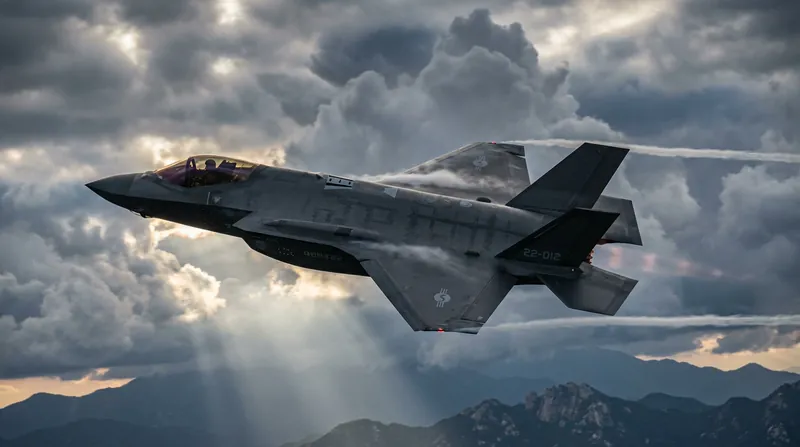
Tensions regarding airspace in East Asia escalated on a Saturday in June 2026, when a joint patrol of Chinese and Russian military aircraft approached the Korean peninsula. More than 10 warplanes from the two nations entered South Korea's air defense identification zone.
The formation consisted of fighter escorts accompanying strategic bombers, specifically identified as H-6 and Tu-95 aircraft. During this maneuver, no sovereign territorial airspace was violated by the Chinese and Russian planes.
The presence of the bombers and fighter escorts prompted immediate responses from neighboring nations. Both South Korea and Japan scrambled fighter jets to monitor the joint patrol as it moved through the region.
Following the flight, China stated that the maneuver was a routine joint strategic patrol intended to safeguard regional peace. The operation was widely viewed as a countermeasure to the deepening military alliance between the United States, Japan, and South Korea.