
full timeline
ASEAN response to Myanmar crisis
Southeast Asian leaders are exploring a progress-based approach to re-engage with Myanmar's military government, though top junta officials remain barred from high-level summits.
Follow ASEAN response to Myanmar crisis in the Factlen app and get an alert when there is news. Get the app
Share this story
Latest report
ASEAN Weighs Calibrated Re-Engagement With Myanmar Junta While Maintaining Leadership Ban
Southeast Asian leaders are exploring a progress-based approach to re-engage with Myanmar's military government, though top junta officials remain barred from high-level summits. The bloc aims to accelerate the stalled Five-Point Consensus peace plan.
- ASEAN leaders endorsed a "calibrated engagement" strategy to interact with Myanmar's junta based on measurable progress.
- The bloc's strict ban on top military officials, including Min Aung Hlaing, attending high-level summits remains firmly in place.
- The new framework ties any restoration of diplomatic privileges to the junta's implementation of the stalled Five-Point Consensus.
- Technical discussions will prioritize securing localized ceasefires to allow the delivery of urgently needed humanitarian aid.
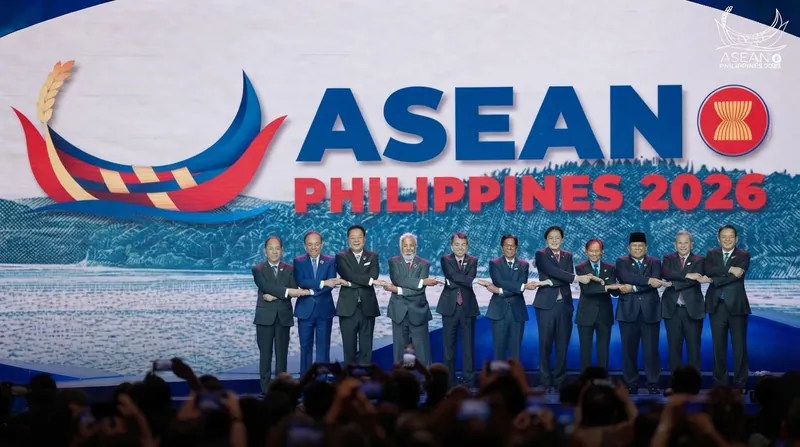
Southeast Asian leaders have agreed to pursue a "calibrated engagement" strategy with Myanmar's military government, opening a narrow diplomatic pathway while keeping the bloc's highest-level doors firmly shut. The decision emerged during the 49th Association of Southeast Asian Nations (ASEAN) Summit in Manila.[1][3]
Despite the shift in tone, the regional bloc will maintain its strict ban on Myanmar's top generals attending key summits. The junta's coup president and military chief Min Aung Hlaing remain barred from the plenary sessions, extending an unprecedented diplomatic freeze that began in late 2021.[6][8]
The new framework represents a subtle pivot from total isolation toward a "progress-based approach," designed to incentivize the military regime to reduce violence. ASEAN officials hope this conditional re-engagement will break the deadlock that has paralyzed regional diplomacy for nearly five years.[4][5]
"We are maintaining the restrictions, but we are also opening the path to a political return if measurable steps are taken," a senior ASEAN diplomat noted during the summit's opening weekend. The bloc is demanding concrete implementation of the stalled Five-Point Consensus peace plan.[5][7]
The Five-Point Consensus
Adopted in April 2021, just months after the military seized power in Naypyidaw, the Five-Point Consensus was intended to halt the escalating civil war. It called for an immediate cessation of violence, constructive dialogue among all parties, and unhindered humanitarian access.[3][8]
For years, the junta has largely ignored the agreement, launching widespread airstrikes and artillery campaigns against ethnic armed organizations and pro-democracy militias. In response, ASEAN took the historic step of downgrading Myanmar's participation to "non-political representation," effectively leaving its summit chair empty.[6][8]
The rigid exclusion policy, however, has yielded little behavioral change from the military regime, prompting frustration among neighboring states that share porous borders with Myanmar. Thailand, in particular, has pushed for more direct dialogue to address cross-border crime, refugee flows, and economic disruption.[2][7]
Under the newly endorsed calibrated engagement model, lower-level ASEAN envoys and working groups will be authorized to interact more frequently with junta ministries. These technical discussions will focus strictly on humanitarian aid delivery and transnational security issues, rather than conferring political legitimacy.[1][4]
A Progress-Based Pathway
The Jakarta Globe reports that any elevation of Myanmar's diplomatic status will now be tied directly to verifiable benchmarks on the ground. If the junta facilitates safe humanitarian corridors and halts offensives in designated zones, ASEAN may incrementally restore its meeting privileges.[4]
"This is not a blank check for Naypyidaw to return to the fold," the ASEAN special envoy reaffirmed ahead of the leaders' retreat. "Engagement will be strictly calibrated against their willingness to implement the Five-Point Consensus in good faith."[7]
The strategy reflects a delicate compromise between ASEAN's hardline members—such as Indonesia, Malaysia, and the Philippines—and those favoring accommodation. The hardliners successfully defended the leadership ban, ensuring that the junta cannot use the summit for domestic propaganda.[5][8]
Meanwhile, the engagement advocates secured a mechanism to keep communication channels open, arguing that isolating a heavily armed regime only pushes it closer to external backers like Russia and China. The resulting policy attempts to balance moral condemnation with geopolitical pragmatism.[2][5]
Junta's Weakening Position
The diplomatic overture arrives at a critical juncture for Myanmar's military, which is currently facing its most severe battlefield setbacks since the 2021 coup. An alliance of ethnic armies has seized control of vast territories in the north and east, including lucrative border crossings.[2][6]
Depleted by casualties and mass surrenders, the junta has resorted to enforcing a deeply unpopular conscription law, further alienating the civilian population. Regional analysts suggest the military's growing vulnerability might make it more receptive to ASEAN's conditional offers than it was two years ago.[1][6]
The economic collapse following the military takeover has further eroded the junta's ability to govern effectively. Inflation has soared, foreign investment has evaporated, and the national currency has plummeted in value, leaving the regime struggling to fund its extensive military operations.[2][4]
This internal instability has spilled across Myanmar's borders, creating a surge in transnational organized crime that directly threatens neighboring ASEAN states. Massive cyber-scam compounds and illicit narcotics networks now operate with impunity in border regions where the junta's authority has entirely collapsed.[2][7]
However, the Irrawaddy notes that the junta's recent actions contradict any narrative of de-escalation. Just days before the Manila summit, military aircraft bombed a displacement camp in Rakhine State, killing at least 12 civilians and drawing widespread international condemnation.[6]
Such incidents underscore the immense challenge ASEAN faces in verifying compliance with the Five-Point Consensus. The bloc currently lacks an independent monitoring mechanism inside Myanmar, relying instead on reports from humanitarian agencies and the junta's own heavily censored state media.[3][8]
Humanitarian Priorities
The immediate focus of the calibrated engagement will be expanding the reach of the ASEAN Coordinating Centre for Humanitarian Assistance (AHA Centre). Millions of displaced civilians remain cut off from food and medical supplies due to military blockades and ongoing combat.[1][4]
By engaging directly with junta-appointed regional commanders, ASEAN hopes to negotiate localized ceasefires that would allow aid convoys to pass safely. This localized approach bypasses the broader political deadlock, prioritizing life-saving interventions over comprehensive peace settlements.[3][7]
Pro-democracy groups, including Myanmar's shadow National Unity Government (NUG), have expressed cautious skepticism about the new ASEAN framework. They warn that any engagement with the military risks legitimizing a regime responsible for widespread atrocities, urging the bloc to consult the opposition directly.[2][6]
"If calibrated engagement means talking only to the generals, it will fail just like previous efforts," a civil society representative stated outside the summit venue. The NUG continues to demand that ASEAN formally recognize it as the legitimate representative of the Myanmar people.[2][8]
The Road Ahead
The success of the progress-based approach will largely depend on the incoming ASEAN chair, Malaysia, which takes over the rotating leadership in 2027. Kuala Lumpur has historically taken a firm stance against the junta, suggesting the engagement parameters will be strictly enforced.[4][5]
For now, the empty chair at the 49th ASEAN Summit serves as a stark visual reminder of the region's fractured unity. While the bloc has managed to preserve its institutional cohesion by finding a middle ground, the crisis in Myanmar remains a profound test of its diplomatic credibility.[5][8]
The Manila Bulletin reports that working groups will spend the next three months drafting specific, measurable indicators for the junta's compliance. These metrics will be presented at the ASEAN Foreign Ministers' Retreat early next year, setting the baseline for any future diplomatic upgrades.[1]
If the military fails to meet these initial benchmarks, the calibrated engagement could quickly revert to total isolation. ASEAN leaders have made it clear that the burden of proof rests entirely on Naypyidaw to demonstrate that it is a reliable partner for peace.[3][7]
The shift from a static boycott to a dynamic, conditional relationship represents ASEAN's acknowledgment that the status quo is unsustainable. Whether this nuanced diplomatic maneuver can alter the trajectory of Myanmar's devastating civil war remains the region's most pressing unanswered question.[2][4]
Sources
- [1]Manila Bulletin — ASEAN leaders to pursue 'calibrated engagement' over Myanmar's situation Read on Manila Bulletin →
- [2]Taipei Times — ASEAN seeks Myanmar engagement Read on Taipei Times →
- [3]DZRH News — ASEAN to pursue “calibrated engagement” with Myanmar on 5PC implementation Read on DZRH News →
- [4]Jakarta Globe — ASEAN Takes 'Progress-Based Approach' on Myanmar's Return Read on Jakarta Globe →
- [5]The Star — Asean keeps Myanmar restrictions but opens the path to political return Read on The Star →
- [6]The Irrawaddy — Myanmar's Coup President Barred From Upcoming 49th ASEAN Summit Read on The Irrawaddy →
- [7]The Nation Thailand — ASEAN envoy reaffirms Myanmar stance before leaders' summit Read on The Nation Thailand →
- [8]Inquirer.net — Asean keeps Myanmar off key meetings pending peace plan progress Read on Inquirer.net →
What to watch
- Technical discussions will prioritize securing localized ceasefires to allow the delivery of urgently needed humanitarian aid.
- The restoration of diplomatic privileges for Myanmar's junta depends on its implementation of the stalled Five-Point Consensus.
Charts, maps and images
Timeline
November 2026
ASEAN Weighs Calibrated Re-Engagement With Myanmar Junta While Maintaining Leadership Ban
Southeast Asian Leaders and Global Powers Convene in Manila as 49th ASEAN Summit Opens
How the story developed
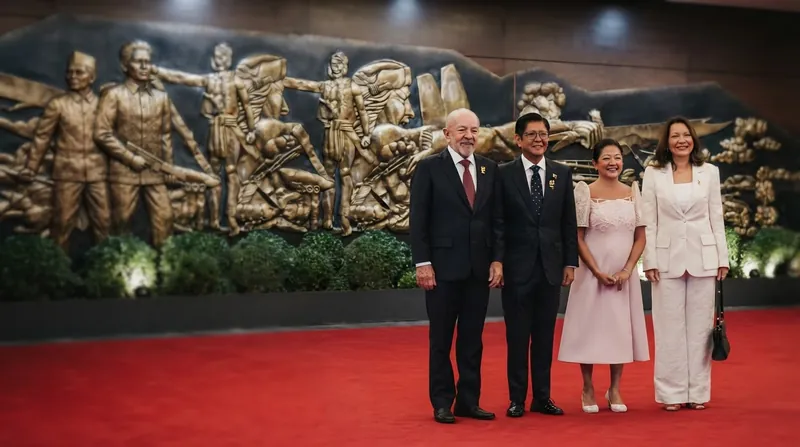
The diplomatic focus on Myanmar's ongoing civil war took center stage as nineteen world leaders arrived in Manila, Philippines, on November 15 for the 49th ASEAN Summit. The annual meetings convened to navigate economic integration, maritime disputes, and the region's strategic neutrality.
During the summit, the 11-member bloc sought to leverage its $4.4 trillion economy to secure foreign direct investment amid global supply chain shifts. Negotiations heavily featured the Myanmar crisis alongside the stalled South China Sea code of conduct.
The gathering tested Southeast Asia's diplomatic centrality as major global powers, including the United States and China, utilized sideline bilateral meetings to advance competing security architectures.
The presence of global powers and the focus on regional security architectures provided the backdrop for the bloc's internal deliberations on how to handle the ongoing civil war in Myanmar and the military government's status within the organization.