
Southeast Asian Leaders and Global Powers Convene in Manila as 49th ASEAN Summit Opens
Nineteen world leaders have gathered in the Philippines for the annual bloc meetings, navigating maritime disputes and economic integration. The summit tests Southeast Asia's strategic neutrality as major powers hold sideline negotiations.
Share this story
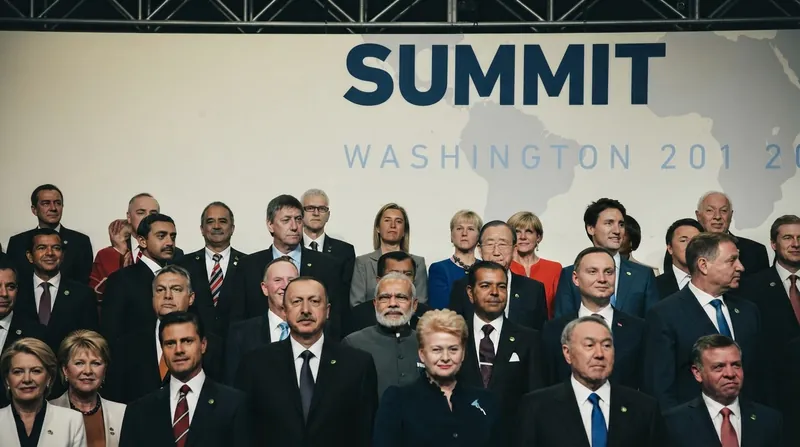
Philippine President Ferdinand Marcos Jr. opened the 49th Association of Southeast Asian Nations (ASEAN) Summit in Manila on Sunday, November 15. The gathering brings together heads of state from the 11-member bloc and representatives from major global powers.[2][4]
"We have 19 world leaders confirmed to attend the ASEAN Summit in Manila," the Philippine Department of Foreign Affairs announced ahead of the opening ceremony. The roster includes dialogue partners from Washington, Beijing, and allied nations navigating the region's complex security architecture.[1][5]
The summit convenes as Southeast Asia manages overlapping crises, from maritime territorial disputes to internal conflict. Delegates are scheduled to address the stalled Myanmar peace process and the framework for a South China Sea code of conduct over the next three days.[6]
Economic gravity also anchors the agenda, as the bloc leverages its position as a primary alternative for global supply chains. The region currently represents a $4.4 trillion combined economy and a rapidly expanding consumer base of 700 million people.[7]
Navigating maritime territorial disputes
The South China Sea remains the most volatile security issue on the official summit schedule this week. Philippine vessels and Chinese maritime militia have engaged in repeated physical confrontations near contested shoals throughout the past year, raising fears of a broader conflict.[6]
Manila has utilized its chairmanship to push for a binding Code of Conduct, a framework that has languished in negotiations for years. Beijing claims nearly the entire waterway, which facilitates trillions of dollars in annual global trade.[6]
Other ASEAN member states, including Vietnam and Malaysia, hold their own overlapping claims and have expanded their defensive postures. However, the bloc operates on a consensus model, which frequently dilutes joint statements regarding Chinese actions in the corridor.[6]
Diplomatic officials in Manila indicated that the host nation seeks stronger language affirming international maritime law. Previous summits have seen member states with closer economic ties to Beijing block direct condemnations of specific territorial incursions.[4][6]
The presence of Chinese Premier Li Qiang at the summit adds immediate pressure to the maritime discussions. Regional analysts expect bilateral sideline meetings to serve as the primary venue for de-escalation efforts between Manila and Beijing.[7]
The stalled Myanmar peace process
Beyond maritime security, the ongoing civil war in Myanmar presents a severe internal challenge to ASEAN's political cohesion. The military junta that seized power in 2021 has lost substantial territory to a coalition of ethnic armed organizations and resistance forces.[6]
ASEAN previously established a Five-Point Consensus aimed at halting the violence and facilitating immediate humanitarian aid. That framework has yielded virtually no progress on the ground, prompting deep frustration among member states bearing the brunt of cross-border refugee outflows.[6]
The bloc has maintained its policy of barring senior military figures from Myanmar from attending high-level summits. Instead, the country is represented by non-political figures, a compromise that isolates the junta without formally expelling the nation from the organization.[6]
Human rights organizations and displaced communities have urged ASEAN leaders to establish formal contact with the shadow National Unity Government. Member states remain divided on whether to abandon the consensus model to take more punitive action against Naypyidaw.[6]
The internal conflict has displaced millions of civilians and destabilized border regions, particularly in neighboring Thailand. Summit deliverables are expected to include renewed commitments to humanitarian corridors, though concrete enforcement mechanisms remain entirely absent from the current drafts.[6]
Economic integration and supply chains
While security issues dominate the headlines, economic integration forms the core of the formal plenary sessions. Southeast Asia has positioned itself as the primary beneficiary of multinational corporations diversifying their manufacturing bases away from China.[7]
The 11-member bloc is currently projected to become the world's fourth-largest economy by the year 2030. Leaders in Manila are finalizing technical agreements to streamline cross-border digital payments and reduce persistent non-tariff barriers among the member states.[7]
Foreign direct investment into the region reached record highs in the previous fiscal year, driven by semiconductor manufacturing and green energy projects. Vietnam, Malaysia, and the Philippines have aggressively competed for capital from the United States and Japan.[3][7]
The summit will also feature the ASEAN Business and Investment Summit, connecting regional heads of state with major corporate executives. Discussions there focus on standardizing artificial intelligence regulations and securing critical mineral supply chains across the sprawling archipelago.[4]
Global powers on the margins
The formal ASEAN schedule is heavily supplemented by sideline meetings involving external dialogue partners. The convergence of global powers in Manila tests the bloc's foundational principle of strategic centrality and non-alignment.[3][7]
US President Donald Trump and Chinese Premier Li Qiang are both scheduled to hold separate bilateral engagements with regional leaders. Their presence forces Southeast Asian nations to carefully balance security guarantees from Washington against deep economic integration with Beijing.[7]
Other notable attendees include Canadian Prime Minister Mark Carney and Brazilian President Luiz Inácio Lula da Silva. Their participation highlights the summit's role as a premier venue for middle powers to negotiate trade and climate agreements outside the UN framework.[7]
A highly anticipated minilateral meeting of the Quad—comprising the United States, Japan, India, and Australia—is also scheduled on the margins. While not an ASEAN event, the gathering underscores the overlapping security architectures operating within the same geographic theater.[3]
ASEAN leaders have historically expressed concern that such minilateral groupings could undermine the bloc's diplomatic authority. The host committee in Manila has deliberately structured the schedule to keep the primary focus on ASEAN-led plenary sessions.[4][5]
Financing the energy transition
Climate finance represents another critical pillar of the multilateral negotiations taking place in the Philippine capital. Southeast Asian nations are highly vulnerable to extreme weather events and rising sea levels, driving urgent demands for adaptation funding.[7]
Several member states are currently negotiating Just Energy Transition Partnerships with Western dialogue partners to phase out coal reliance. These agreements require billions of dollars in public and private capital to modernize regional power grids and deploy renewable generation.[3]
Environmental advocates attending the summit margins have criticized the slow disbursement of previously pledged climate funds. Leaders are expected to issue a joint declaration calling for expanded access to concessional financing from multilateral development banks.[6]
Measuring summit outcomes
The success of the 49th ASEAN Summit will be measured by the specific language adopted in the final Chairman's Statement. Drafting committees are currently negotiating the exact phrasing regarding international maritime law and the Myanmar conflict.[1][6]
Economic deliverables are significantly more certain, with several memorandums of understanding on digital trade ready for signature. These technical agreements represent the incremental, consensus-based progress that sustains the organization despite its deep political divisions.[4]
Economic deliverables are significantly more certain, with several memorandums of understanding on digital trade ready for signature.
Key points
- Nineteen world leaders arrived in Manila for the 49th ASEAN Summit, testing the bloc's diplomatic centrality.
- Negotiations heavily feature the stalled South China Sea code of conduct and the ongoing civil war in Myanmar.
- The 11-member bloc leverages its $4.4 trillion economy to secure foreign direct investment amid global supply chain shifts.
- Major powers, including the US and China, are utilizing sideline bilateral meetings to advance competing security architectures.
What we don’t know
- The exact wording the drafting committees will agree upon for the final Chairman's Statement regarding the South China Sea.
- Whether ASEAN will alter its policy on Myanmar's representation ahead of the 2027 summit cycle.
- The specific deliverables that will emerge from the Quad minilateral meeting held on the summit's margins.
How we got here
2021
Myanmar's military junta seizes power, triggering a civil war that ASEAN attempts to mediate via a Five-Point Consensus.
2025–2026
Physical confrontations escalate between Philippine vessels and Chinese maritime militia in the contested South China Sea.
Nov 11, 2026
Foreign delegations begin arriving in Manila for the preliminary ministerial meetings.
Nov 15, 2026
The 49th ASEAN Summit officially opens with plenary sessions addressing regional security and economic integration.
- Regional Security Advocates
- Prioritizes a unified ASEAN stance against territorial incursions and demands a binding maritime code of conduct.
- Non-Aligned Pragmatists
- Seeks to balance relations between Washington and Beijing to maximize economic investment without triggering conflict.
- Global Strategic Observers
- Views the summit primarily as a theater for major external powers to secure alliances and counter rival influence.
Perspectives this story doesn't cover
- Myanmar National Unity Government
- Local environmental NGOs
Sources
Source coverage
7 outlets
3 viewpoints surfaced






- [1]Philippine News AgencyRegional Security Advocates
19 world leaders confirmed to attend ASEAN Summit in Manila – DFA
Read on Philippine News Agency → - [2]Manila StandardGlobal Strategic Observers
Global leaders in Manila as ASEAN Summit opens
Read on Manila Standard → - [3]Arab NewsGlobal Strategic Observers
Global powers converge on Manila as ASEAN summit kicks off
Read on Arab News → - [4]PhilstarRegional Security Advocates
Manila to host world leaders for 49th ASEAN summit
Read on Philstar → - [5]Philippine Daily InquirerRegional Security Advocates
Foreign leaders start arriving in Manila for 49th Asean Summit
Read on Philippine Daily Inquirer → - [6]CNANon-Aligned Pragmatists
ASEAN leaders gather in Manila with South China Sea, Myanmar in focus
Read on CNA → - [7]SCMPNon-Aligned Pragmatists
Asean’s neutrality set to be tested as Philippines welcomes world leaders
Read on SCMP →
More in News & Politics
See all →Diplomatic Transitions
Russian Ambassador to the United States Alexander Darchiev Dies Suddenly at 66
6 sources

Arctic Security
Greenland Parliament Ratifies US Security Pact, Authorizing Two New American Military Bases
5 sources

Tech War
China Urges US to Withdraw Proposed Limits on Outbound Tech Investment
4 sources
US-Cuba Relations
Rubio Solicits Direct Cuban Cooperation With CIA Following Maduro Government Collapse
5 sources
Comments
Every angle. Every day.
Get News & Politics stories with full source coverage and perspective breakdowns, free every day.