full timeline
Federal health coverage restrictions
Under provisions of the 2025 Reconciliation Law, federal Medicaid eligibility for certain noncitizen groups expires on October 1, forcing states to either fund coverage themselves or disenroll…
Follow Federal health coverage restrictions in the Factlen app and get an alert when there is news. Get the app
Share this story
Latest report
Hundreds of Thousands of Lawfully Present Immigrants and Refugees Set to Lose Federal Health Coverage on October 1
Under provisions of the 2025 Reconciliation Law, federal Medicaid eligibility for certain noncitizen groups expires on October 1, forcing states to either fund coverage themselves or disenroll vulnerable populations.
- Federal Medicaid funding for hundreds of thousands of lawfully present immigrants expires on October 1, 2026.
- The cutoff is a direct result of eligibility restrictions enacted under the 2025 Reconciliation Law.
- States must now choose between funding the coverage entirely from their own budgets or disenrolling affected populations.
- Healthcare providers and local agencies are preparing for an anticipated surge in uninsured patients seeking emergency care.
On October 1, 2026, federal Medicaid funding will officially terminate for hundreds of thousands of lawfully present immigrants, including refugees and asylum seekers, executing a central provision of the 2025 Reconciliation Law. The cutoff ends a long-standing federal match that states have relied on to provide healthcare to noncitizens who hold legal status but have not yet met the standard five-year waiting period for federal benefits.[4][5][8]
The Kaiser Family Foundation (KFF) estimates the eligibility restriction will affect a significant portion of the noncitizen population currently enrolled in Medicaid. According to a September 22 policy brief, the changes mandate that states either disenroll these individuals or transition them to state-funded programs without federal matching dollars.[5]
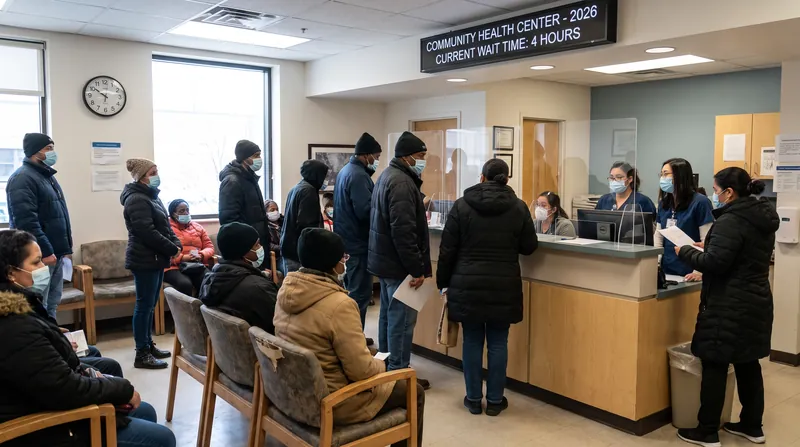
Local agencies are already bracing for the fiscal impact. In Ohio, Signal Cleveland reported on September 15 that legal immigrants in Cuyahoga County will soon lose their Medicaid coverage, forcing community health centers to prepare for an influx of uninsured patients.[2]
Similarly, the International Examiner noted that local agencies are scrambling to find solutions as the legislation cuts Medicaid for tens of thousands of refugees and asylum seekers in their region. Without federal backing, the financial strain falls entirely on municipal and state safety nets.[1]
Several states are attempting to bridge the gap using their own budgets. New York State of Health has issued guidance on upcoming changes to Medicaid coverage, directing affected enrollees to state-funded alternatives where available.[6]
The Kentucky Health Benefit Exchange (KHBE) similarly published notices regarding changes coming to Medicaid and Marketplace coverage, warning enrollees that their eligibility status will be re-evaluated ahead of the October 1 deadline.[7]
Healthcare providers are directly notifying patients of the impending cliff. Priority Health, a major managed care organization, issued a provider manual update stating that "beginning October 1, some noncitizens will lose Medicaid coverage," instructing doctors to verify active coverage before rendering non-emergency services.[3]
The U.S. Committee for Refugees and Immigrants (USCRI) published a September 24 explainer detailing the implications for refugee communities. The organization warned that the sudden loss of coverage will disrupt ongoing medical treatments and push vulnerable populations toward emergency rooms for basic care.[4]
The 2025 Reconciliation Law, which passed Congress last year, tightened the eligibility criteria by strictly enforcing the five-year bar on federal means-tested public benefits for all qualified aliens, removing previous exemptions that had allowed states to cover lawfully residing children and pregnant women with federal matching funds.[5][8]
As the October 1 deadline arrives, state health departments face a binary choice: absorb the full cost of continuing coverage through state-only funds, or proceed with mass disenrollments. The immediate consequence will be tested in emergency departments, which remain bound by the Emergency Medical Treatment and Labor Act (EMTALA) to stabilize patients regardless of their insurance status.[5][8]
Sources
- [1]International Examiner — With H.R. 1 cutting Medicaid for tens of thousands of refugees and asylum seekers, local agencies scramble to find solutions Read on International Examiner →
- [2]Signal Cleveland — Legal immigrants in Cuyahoga County will soon lose Medicaid Read on Signal Cleveland →
- [3]Priority Health — Beginning October 1, some noncitizens will lose Medicaid coverage Read on Priority Health →
- [4]USCRI — Medicaid Policy Explainer: Implications for Refugee and Immigrant Communities Read on USCRI →
- [5]KFF — Implementation of Medicaid Immigrant Eligibility Restrictions Under the 2025 Reconciliation Law: Issues to Consider Read on KFF →
- [6]NY State of Health — Changes to Medicaid Coverage Read on NY State of Health →
- [7]KHBE — Changes Coming to Medicaid and Marketplace Coverage Read on KHBE →
- [8]Factlen Editorial Team — Synthesis by Factlen editorial team Read on Factlen Editorial Team →
Charts, maps and images
Timeline
September 2026
Hundreds of Thousands of Lawfully Present Immigrants and Refugees Set to Lose Federal Health Coverage on October 1
AI
August 2026
OBBBA Medicaid Work Requirements to Cut $1 Trillion as Millions Risk Losing Coverage
AI