
Israeli Strike Kills Senior Hamas Commander Samir Abu Younis in Khan Younis
The Israel Defense Forces successfully targeted the head of the Al-Qassam Brigades' southern command during a weekend operation in the Gaza Strip. The 53-year-old militant leader had been a central architect of the group's military strategy for over three decades.

Share this story
An Israeli precision drone strike in the Al-Mawasi area of Khan Younis killed Samir Abu Younis, the commander of Hamas's Rafah brigade, on Saturday. The targeted assassination removes a key military figure from the southern Gaza Strip and underscores the persistent volatility of the region.[1][2]
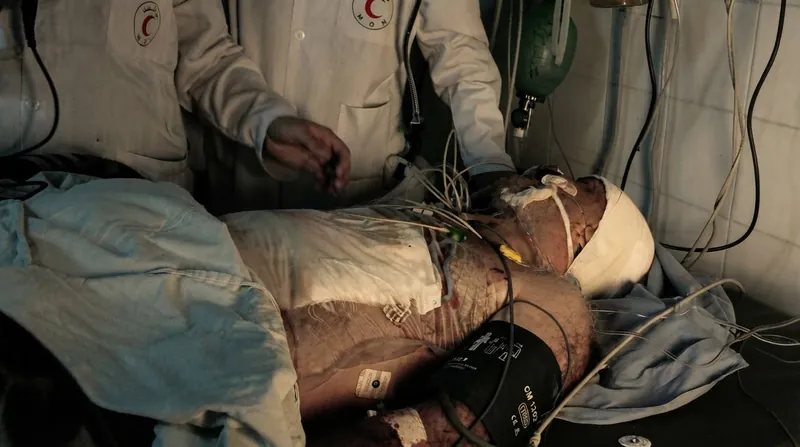
The 53-year-old commander was struck on a busy street within the designated humanitarian zone where displaced civilians reside. Palestinian medics at the Nasser Medical Complex confirmed his death and reported that the airstrike wounded at least two other people in the immediate vicinity of the blast.[2][3]
The Israel Defense Forces and the Shin Bet security agency issued a joint statement confirming the intelligence-led operation. The military announced it had successfully targeted a "senior terrorist in Hamas's military wing," though it initially withheld his specific identity pending further operational assessments.[4][5]
Hamas's armed wing, the Al-Qassam Brigades, formally acknowledged the assassination in a statement released early Sunday morning. The militant group announced that "Abu Younis, a member of its General Military Council, was killed in the Al-Mawasi area of Khan Younis," scheduling his public funeral for Sunday afternoon.[1][2]
The strike demonstrates Israel's continued intelligence penetration in the enclave, successfully locating a high-ranking militant commander within the densely populated Al-Mawasi area. Hundreds of thousands of displaced Palestinians currently shelter in the coastal zone, complicating the logistics of targeted military operations.[2][4]
Decades in the military wing
Abu Younis was a veteran operative who joined the Al-Qassam Brigades in 1991 during the group's formative years. Over three decades, he rose through multiple senior operational roles in the southern Gaza Strip before assuming formal command of the Rafah brigade.[1][3]
He was appointed to lead the Rafah brigade recently, succeeding former commander Nael Abu Obeid. Abu Obeid was killed in a separate Israeli airstrike in Khan Younis on September 15, 2026, forcing a sudden leadership transition within the southern command structure.[2]
Israeli intelligence identified Abu Younis as a central architect of the militant group's broader military strategy. Officials state he helped plan and oversee the October 7, 2023, attacks on southern Israel that precipitated the ongoing, multi-year war in the Palestinian enclave.[1][3]
His position on the General Military Council made him one of the highest-ranking Hamas officials still operating in the southern sector. The council serves as the primary decision-making body for the Al-Qassam Brigades' tactical operations and long-term strategic planning across Gaza.[2]
The assassination removes a critical tactical node for Hamas in Rafah, an area that has seen intense Israeli military focus over the past year. The militant group must now appoint a third commander to the southern sector in less than three months.[2][3]
The Al-Mawasi strike zone
The attack occurred in a coastal safe zone where displaced civilians have lived in makeshift tents since the early months of the war. The Nasser Medical Complex reported that the drone strike hit a busy thoroughfare, causing immediate panic among the sheltering population.[2]
The use of a precision drone strike in a crowded civilian area highlights the ongoing tactical reality in Gaza. Militant commanders and displaced populations remain in close proximity, complicating military operations and significantly increasing the risk of collateral damage to bystanders.[1][4]
Hamas has consistently condemned such strikes as severe violations of international law, accusing Israel of deliberately endangering civilians. Conversely, Israel maintains that the militant group illegally embeds its leadership and military infrastructure within protected humanitarian zones to shield its operatives.[4][5]
The immediate aftermath of the strike saw Palestinian firefighters rushing to extinguish a vehicle engulfed in flames on the street. Emergency responders quickly transported the casualties to nearby medical facilities, where Abu Younis was officially pronounced dead upon arrival.[1][2]
The successful targeting of a high-profile October 7 architect provides a tangible operational victory for the Israeli government. It reinforces the military's stated objective of systematically dismantling the Hamas leadership structure, regardless of the time elapsed since the initial attacks.[3][5]
A fragile 2025 ceasefire
The killing of Abu Younis occurs against the backdrop of an October 2025 ceasefire agreement. The internationally brokered truce formally halted major ground offensives but has failed to end the violence or secure a permanent political resolution to the conflict.[1][2]
The agreement was intended to freeze the conflict and facilitate the delivery of critical humanitarian aid. However, it did not secure the disarmament of Hamas or stop Israel from conducting targeted intelligence-driven assassinations against the group's senior leadership cadre.[1]
According to figures released by the Gaza Health Ministry, Israeli military operations have killed 1,643 Palestinians since the ceasefire took effect late last year. The ongoing aerial strikes continue to strain the fragile truce and provoke international diplomatic concern.[2]
During that same period, five Israeli soldiers have been killed in isolated clashes. The casualty figures underscore the asymmetric but persistent nature of the hostilities that continue to plague the enclave despite the formal cessation of major combat operations.[1][2]
The total death toll since the war began in October 2023 has surpassed 74,000 Palestinians, according to local health authorities. The initial Hamas-led assault that triggered the conflict killed approximately 1,200 people in southern Israel and resulted in numerous hostages.[1][2]
Strategic implications for Hamas
The loss of the Rafah brigade commander forces another sudden leadership transition within the Al-Qassam Brigades. The militant group faces severe operational strain as it attempts to maintain command and control in the heavily monitored southern sector of Gaza.[2][3]
Abu Younis's death further depletes the veteran cadre that has directed Hamas's military strategy for decades. The systematic elimination of experienced commanders leaves younger, potentially more radicalized fighters to fill the leadership void and dictate future tactical decisions.[1][3]
Israeli military analysts argue that these high-level assassinations significantly degrade Hamas's ability to coordinate complex attacks. The loss of institutional knowledge and operational experience hampers the group's efforts to reconstitute its forces and plan large-scale offensives against Israeli targets.[4][5]
However, Hamas has historically demonstrated a resilient ability to rapidly replace assassinated leaders. The group maintains a decentralized command structure specifically designed to survive individual losses and continue localized resistance operations without relying on a single central authority.[1][2]
The continued tempo of targeted killings raises serious questions about the long-term viability of the 2025 ceasefire. Regional mediators struggle to enforce the parameters of the truce as both sides engage in persistent, low-level hostilities that threaten broader stability.[1][4]
Regional and political fallout
The strike in Khan Younis coincides with broader regional instability and shifting diplomatic priorities. International observers have warned that the persistent cycle of assassinations and militant retaliation threatens to completely unravel the fragile security architecture established in Gaza.[3][4]
As Hamas prepares to bury Abu Younis on Sunday, the group's leadership faces mounting internal pressure. They must carefully balance the desire for immediate retaliation against the severe risk of triggering a renewed, full-scale Israeli ground invasion of the enclave.[1][2]
The Israeli defense establishment views the operation as a necessary preemptive measure to prevent Hamas from rebuilding its military capabilities. Officials argue that leaving senior commanders in place poses an unacceptable, long-term security risk to communities in southern Israel.[4][5]
The international community continues to call for restraint, urging both parties to strictly adhere to the established ceasefire framework. Diplomats warn that isolated tactical strikes could easily escalate into a broader regional confrontation if the cycle of violence accelerates.[2][3]
The international community continues to call for restraint, urging both parties to strictly adhere to the established ceasefire framework.
The immediate future of the Rafah brigade remains highly uncertain following the assassination. The Al-Qassam Brigades must now reorganize its southern command structure while navigating the constant, pervasive threat of Israeli aerial surveillance and precision drone strikes.[1][2]
The assassination also complicates ongoing indirect negotiations regarding the exchange of remaining hostages and prisoners. Mediators from Qatar and Egypt have repeatedly cautioned that high-profile military actions undermine the trust required to advance diplomatic solutions and secure further releases.[1][4]
Key points
- An Israeli drone strike in Khan Younis killed Samir Abu Younis, the commander of Hamas's Rafah brigade.
- The 53-year-old veteran operative helped plan the October 7 attacks and sat on the group's General Military Council.
- The assassination occurred in the Al-Mawasi humanitarian zone, killing Abu Younis and wounding at least two bystanders.
- The strike highlights the fragility of the October 2025 ceasefire, which has failed to halt targeted killings or secure Hamas's disarmament.
What we don’t know
- Who the Al-Qassam Brigades will appoint as the next commander of the Rafah brigade.
- Whether Hamas will launch a retaliatory military response that breaks the parameters of the 2025 ceasefire.
- The exact intelligence methods Israel used to locate Abu Younis within the densely populated Al-Mawasi safe zone.
How we got here
Oct 2023
Hamas launches a major assault on southern Israel, triggering a multi-year war.
Oct 2025
A formal ceasefire agreement halts major ground offensives but fails to end targeted strikes.
Sep 15, 2026
Israeli forces kill Nael Abu Obeid, the previous commander of the Rafah brigade.
Nov 14, 2026
An Israeli drone strike in Al-Mawasi kills Samir Abu Younis, Abu Obeid's successor.
Nov 15, 2026
The Al-Qassam Brigades formally announces Abu Younis's death and schedules his funeral.
- Israeli Defense Establishment
- Views targeted assassinations as essential for national security and dismantling militant infrastructure.
- Hamas Leadership
- Frames the assassinations as illegal acts of aggression that justify continued armed resistance.
- International Mediators
- Warns that the cycle of tactical strikes undermines long-term diplomatic resolutions.
Perspectives this story doesn't cover
- Displaced civilians in Al-Mawasi
- Humanitarian aid organizations operating in Gaza
Sources
Source coverage
5 outlets
3 viewpoints surfaced





- [1]Middle East EyeHamas Leadership
Hamas commander Samir Abu Younis killed in Israeli strike on Khan Younis
Read on Middle East Eye → - [2]Anadolu AgencyHamas Leadership
Al-Qassam Brigades announces death of Samir Abu Younis after Israeli military said it targeted senior Hamas figure in Gaza
Read on Anadolu Agency → - [3]Hindustan TimesInternational Mediators
Samir Abu Younis, Hamas commander who led group's Rafah brigade, killed in Israeli strike: Report
Read on Hindustan Times → - [4]Arab NewsIsraeli Defense Establishment
Israeli military says it struck senior armed Hamas commander
Read on Arab News → - [5]The Times of IsraelIsraeli Defense Establishment
IDF says 'senior terrorist in Hamas's military wing' targeted in Gaza strike
Read on The Times of Israel →
More in News & Politics
See all →Indo-Pacific Security
Quad Leaders Schedule In-Person Summit in Manila on ASEAN Sidelines
8 sources

Myanmar Conflict
Myanmar Junta Airstrike Kills 12 at Displacement Camp in Rakhine State
5 sources

Human Rights
UN Rights Chief Demands Houthis Return Body of Staff Member Who Died in Custody
5 sources

Anti-Corruption Probes
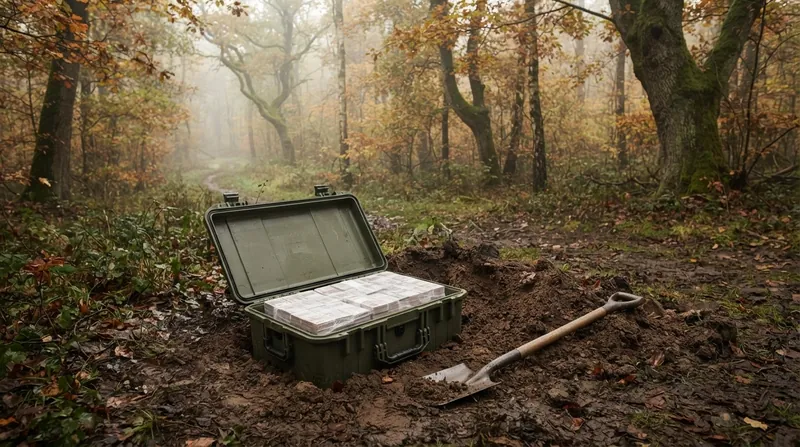
Hungarian Police Unearth $19.5 Million in Buried Cash During Orbán-Era Corruption Raids
5 sources
Comments
Every angle. Every day.
Get News & Politics stories with full source coverage and perspective breakdowns, free every day.