
full timeline
Dangote Refinery IPO
A consortium of South African and Nigerian pension administrators has submitted a combined $1 billion bid for shares in the Dangote Refinery.
Follow Dangote Refinery IPO in the Factlen app and get an alert when there is news. Get the app
Share this story
Latest report
African Pension Funds Bid $1 Billion for Stake in Dangote Refinery IPO
A consortium of South African and Nigerian pension administrators has submitted a combined $1 billion bid for shares in the Dangote Refinery. The institutional commitment covers two-thirds of the facility's $1.5 billion public listing target.
- A consortium of South African and Nigerian pension funds has bid $1 billion for a stake in the Dangote Refinery.
- The joint institutional commitment covers two-thirds of the facility's $1.5 billion initial public offering target.
- South Africa's Public Investment Corporation is seeking approximately 8.4 billion rand in shares as part of the bid.
- The investment signals a major shift toward utilizing domestic African capital to fund the continent's mega-infrastructure projects.
Institutional capital from across the continent is moving to secure ownership in Africa's largest industrial project. A consortium of South African and Nigerian pension funds has formally bid $1 billion for a stake in the Dangote Refinery.[1][2]
The combined offer accounts for two-thirds of the $1.5 billion the refinery aims to raise in its upcoming initial public offering. The move represents one of the largest cross-border equity commitments by domestic African funds in the region's history.[3][4]
South Africa's Public Investment Corporation is seeking approximately 8.4 billion rand in shares, joining a coalition of Nigerian pension fund administrators. The joint approach signals a strategic pivot toward retaining infrastructure yields within the continent.[5]
Structuring the Institutional Bid
The capital deployment highlights the growing financial muscle of regional retirement systems. Nigerian pension funds, which manage trillions of naira in domestic savings, are aggressively diversifying their portfolios away from standard government securities.[1][2]
By targeting the 650,000-barrel-per-day facility, these funds are securing long-term exposure to a productive asset that generates hard currency. The refinery's output capacity makes it a critical piece of regional energy infrastructure.[3]
South African participation introduces a massive pool of institutional liquidity to the Lagos listing. The Public Investment Corporation manages the bulk of the South African government's employee pension assets, making it the largest asset manager on the continent.[5]
Cross-border financial integration of this scale has historically been rare in sub-Saharan equity markets. The joint bid demonstrates that domestic capital can coordinate to absorb mega-cap listings without relying entirely on Western or Asian institutional investors.[2][4]
While the involved pension fund administrators have not released direct public statements regarding the specific valuation multiples, the scale of the capital commitment indicates strong confidence in the asset. The sources reporting the bid did not include direct quotations from the fund managers.[1][5]
The Asset Driving the Demand
The underlying asset driving this unprecedented capital mobilization is a facility that has fundamentally altered the Atlantic Basin's energy trade. The Dangote Refinery began operations in early 2024 and has steadily ramped up its processing volumes throughout 2025 and 2026.[1][3]
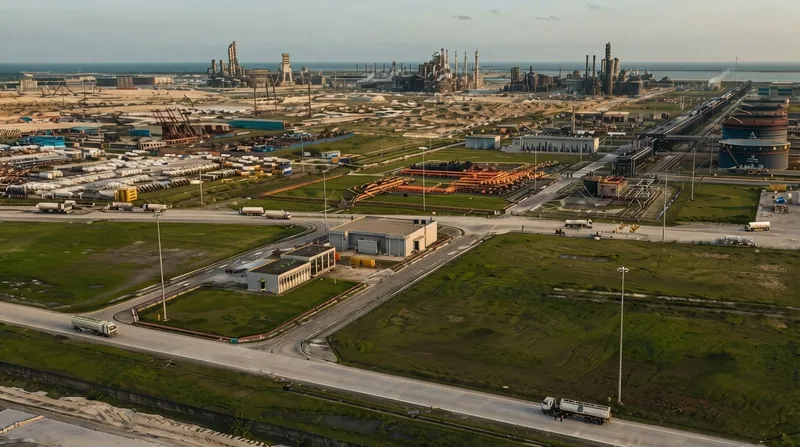
Located in the Lekki Free Zone outside Lagos, the complex was built at an estimated cost of $20 billion. It holds the title of the world's largest single-train refinery, designed to process multiple grades of crude oil.[2]
For decades, Nigeria exported raw crude while spending billions of dollars annually to import refined petroleum products. The facility reverses that dynamic, producing enough gasoline, diesel, and aviation fuel to meet domestic demand and export the surplus.[3][4]
Institutional investors are pricing in the refinery's structural advantage in the regional market. By eliminating the freight and logistics costs associated with European fuel imports, the plant captures a significant margin that flows directly to its bottom line.[1][2]
The facility also includes a dedicated power plant and a deep seaport, insulating its operations from local infrastructure deficits. These integrated assets provide the operational reliability that conservative pension fund managers require before committing capital.[4]
Reshaping African Capital Markets
The $1.5 billion public listing is poised to be a landmark event for the Nigerian Exchange. A successful offering of this magnitude will significantly expand the market capitalization and daily trading liquidity of the Lagos bourse.[1][2]
Regional equity analysts note that the $1 billion institutional floor drastically reduces the execution risk of the IPO. With two-thirds of the target capital already spoken for by anchor investors, the offering is heavily insulated against retail market volatility.[3][5]
The transaction also establishes a template for funding future mega-projects across the continent. When domestic pension funds prove they can absorb billion-dollar equity tranches, it lowers the cost of capital for subsequent industrial developers.[2][4]
Regulatory frameworks in both South Africa and Nigeria have gradually evolved to permit greater allocations to alternative assets and cross-border equities. This regulatory easing was a necessary precondition for the joint $1 billion bid to materialize.[1][5]
Currency dynamics play a complex role in the transaction's structure. The South African rand and the Nigerian naira have both experienced significant volatility against the US dollar throughout 2025 and 2026, complicating cross-border valuation models.[2][3]
Navigating the Listing Process
The refinery's management must now finalize the regulatory filings required to execute the public listing. The Nigerian Securities and Exchange Commission is reviewing the prospectus to ensure compliance with domestic listing standards.[1][4]
Pricing the shares remains the most critical variable for the retail portion of the offering. While the institutional consortium has anchored the demand, the final share price will determine how much of the company the $1 billion actually purchases.[2][5]
The remaining $500 million of the IPO target is expected to be marketed to retail investors, regional high-net-worth individuals, and international emerging-market funds. The strong institutional backing is likely to serve as a catalyst for broader retail participation.[1][3]
Dividend policy will be a central focus during the investor roadshow. Pension funds require predictable cash flows to meet their liability obligations, meaning the refinery will need to commit to a robust and sustainable payout ratio.[4][5]
The listing also introduces a new level of corporate transparency to the Dangote conglomerate. Public market investors will demand quarterly earnings reports, operational updates, and strict governance standards from the facility's management team.[2][3]
Strategic Implications for the Continent
Beyond the financial mechanics, the transaction carries significant geopolitical weight. It demonstrates that African savings can be effectively mobilized to finance African industrialization, reducing reliance on the International Monetary Fund or foreign bondholders.[1][4]
The refinery's success directly impacts the energy security of the entire West African sub-region. By securing ownership stakes, South African and Nigerian pensioners are effectively tying their retirement yields to the continent's industrial self-sufficiency.[2][5]
Global energy markets are closely monitoring the facility's ramp-up, as its output displaces European refineries that previously supplied the West African market. The shift in trade flows is already forcing structural adjustments in the Atlantic Basin refined products market.[3]
Sources
- [1]Nairametrics — South African, Nigerian pension funds seek $1 billion stake in Dangote Refinery IPO Read on Nairametrics →
- [2]BusinessDay Nigeria — Dangote Refinery IPO draws nearly $1bn demand from African pension funds - Businessday NG Read on BusinessDay Nigeria →
- [3]Peoples Gazette — South African, Nigerian pension funds seek $1 billion stake in Dangote refinery Read on Peoples Gazette →
- [4]The Trumpet — South African, Nigerian Pension Funds Seek $1bn Stake in Dangote Refinery IPO Read on The Trumpet →
- [5]Moneyweb — SA's biggest asset manager joins Nigerian pension-fund administrators seeking nearly $1bn in Africa's largest planned IPO Read on Moneyweb →
What to watch
- The order book is scheduled to open on September 14, 2026, on the Nigerian Exchange.
Timeline
November 2026
African Pension Funds Bid $1 Billion for Stake in Dangote Refinery IPO
September 2026
Dangote Refinery IPO Aims to Raise $1.5 Billion in Landmark African Market Listing
How the story developed
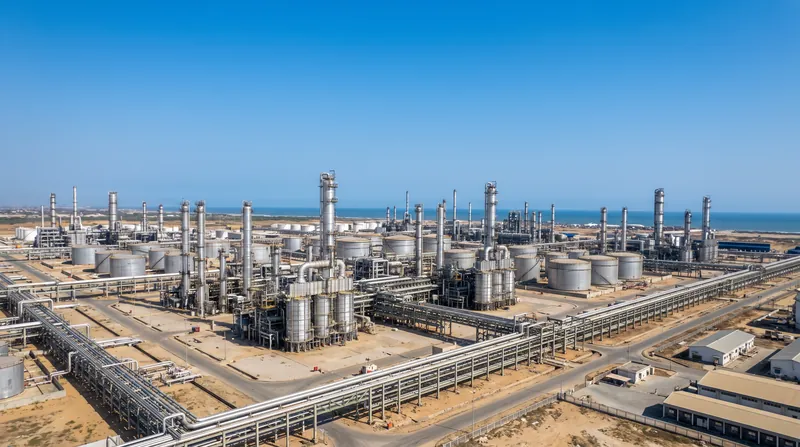
On September 7, 2026, Africa's largest single-train refinery announced preparations to float 4.1 billion shares on the Nigerian Exchange. The initial public offering targets a valuation of $47 billion for the facility.
The company aims to raise $1.5 billion in capital by offering the shares at a price of 525 naira each. The listing has the potential to increase the total market capitalization of the Nigerian Exchange by up to 40 percent.
Proceeds from the capital raise are earmarked to fund a major expansion of the facility. The project will increase the refinery's capacity from 700,000 barrels per day to 1.4 million barrels per day, which could make it the world's largest refining complex.
To address currency volatility, the company established a plan to pay dividends to shareholders in United States dollars.