
full timeline
Canada–Stellantis Brampton plant dispute
The Canadian government has served Stellantis with a notice of default, demanding the return of hundreds of millions in federal subsidies.
Follow Canada–Stellantis Brampton plant dispute in the Factlen app and get an alert when there is news. Get the app
Share this story
Latest report
Canada Threatens to Sue Stellantis Over Brampton Plant Sale and Relocated Jeep Production
The Canadian government has served Stellantis with a notice of default, demanding the return of hundreds of millions in federal subsidies. The dispute follows the automaker's decision to sell its Brampton assembly facility and shift planned Jeep Compass production to the United States.
- Ottawa served Stellantis with a notice of default, demanding the return of hundreds of millions in federal subsidies.
- The dispute stems from the automaker's sale of its Brampton assembly plant to defense contractor Roshel.
- Stellantis scrapped plans to build the Jeep Compass in Ontario, shifting production to Illinois amid U.S. tariff concerns.
- The company has offered a $24 million settlement, which the Canadian government immediately rejected as insufficient.
The Canadian government has formally declared Stellantis in default of a major federal funding agreement, escalating a bitter dispute over automotive manufacturing jobs. Officials have threatened to launch a lawsuit to recover hundreds of millions of dollars in taxpayer subsidies.[2][4]
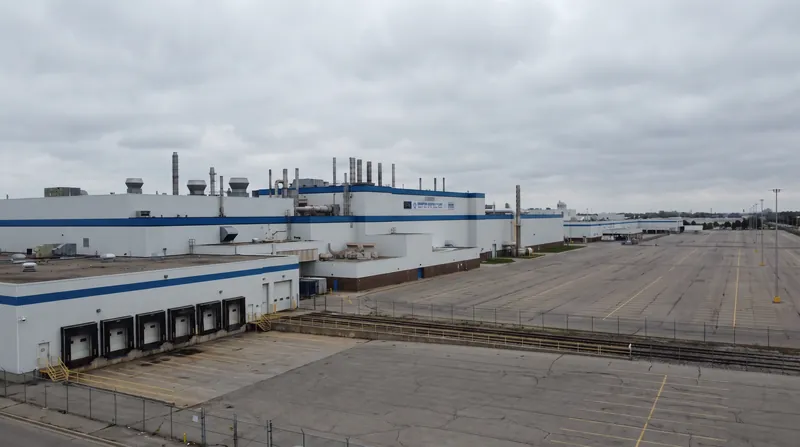
The confrontation centers on the automaker's recent decision to sell its Brampton, Ontario, assembly plant to the defense contractor Roshel. That facility was originally slated to build the next-generation Jeep Compass before corporate production plans abruptly changed.[4][9]
"I'm fed up," Canadian Minister Mélanie Joly stated during a press briefing on Thursday, confirming the government's aggressive stance. She emphasized that Stellantis must repay the funds it received from Ottawa or face immediate legal action in federal court.[3]
The Brampton Facility Sale
The notice of default arrives just days after Stellantis finalized an agreement to offload the sprawling Brampton manufacturing site. Roshel, a rapidly growing manufacturer of armored vehicles, intends to repurpose the factory for defense production.[4][8]
Ottawa argues that this sale violates the core terms of a financial support package awarded to the automaker to secure long-term civilian vehicle production in Canada. The original agreement included strict employment guarantees and capital investment milestones that now appear abandoned.[2][5]
Stellantis has countered the government's massive clawback demand with a significantly smaller settlement proposal. According to federal officials, the multinational corporation offered to return just $24 million, a figure Ottawa immediately rejected as entirely insufficient.[2]
The financial gap between the two sides remains vast, with the government insisting that the total owed stretches into the hundreds of millions. Neither party has publicly released the exact unredacted text of the original subsidy contract.[2][6]
Shifting Jeep Production South
The Brampton plant's fate is closely tied to broader shifts in North American automotive strategy. Stellantis had previously committed to retooling the Ontario facility to produce electric and hybrid versions of the popular Jeep Compass.[9]
Those plans were scrapped earlier this year as the company pivoted to consolidate its manufacturing footprint within the United States. Future production of the Jeep Compass will now be shifted to an assembly plant in Belvidere, Illinois.[9]
Industry analysts attribute this sudden relocation to the looming threat of aggressive U.S. auto tariffs. With shifting trade policies reshaping the border, automakers are increasingly prioritizing domestic American production to avoid potential import penalties.[9]
The relocation to Illinois secures thousands of union jobs in the American Midwest, fulfilling a key agreement Stellantis reached with the United Auto Workers. However, it leaves the Canadian government scrambling to justify the massive subsidies it previously paid to anchor those same jobs in Ontario.[9]
Labor and Economic Fallout
For the workers in Brampton, the transition from a global automaker to a specialized defense contractor introduces significant uncertainty. While Roshel plans to hire locally, the scale and compensation structure of armored vehicle manufacturing differs notably from mass-market automotive assembly.[4][8]
Unifor, the union representing Canadian auto workers, has expressed deep frustration over the broken production promises. Union leadership had championed the original Stellantis investment as a generational victory for Ontario's manufacturing sector.[3]
The federal government is now under immense political pressure to demonstrate that corporate subsidies come with enforceable strings attached. Allowing a major manufacturer to walk away from job commitments without a severe financial penalty would set a dangerous precedent for future industrial policy.[5][6]
"We expect companies to honor their agreements with the Canadian people," Joly told reporters, reiterating that the government's patience has expired. The formal notice of default serves as the mandatory first step before filing a comprehensive civil lawsuit.[3][7]
The Subsidy Clawback Mechanism
Corporate subsidy agreements typically include specific clawback provisions designed to protect taxpayer funds if a company fails to meet its obligations. These clauses trigger automatic repayment demands if employment numbers fall below a certain threshold or if key assets are sold.[2][5]
Stellantis maintains that it has fulfilled a portion of its obligations under the agreement, which justifies its lower $24 million settlement offer. The company argues that earlier investments and production cycles at the Brampton plant should be credited against the total subsidy package.[2]
Government auditors strongly disagree with that accounting methodology. They assert that the core purpose of the funding was to secure the facility's future through the electric vehicle transition, a goal that the sale to Roshel definitively terminates.[2][4]
The dispute highlights the escalating risks of the global subsidy race, where governments compete fiercely to attract multinational manufacturing investments. When corporate strategies shift, taxpayers are often left holding the bill for abandoned industrial projects.[5][9]
Looming Legal Battle
If Stellantis does not increase its repayment offer to satisfy the notice of default, the dispute will move to the courts. A high-profile lawsuit would likely expose the confidential details of how Canada structures its corporate incentive packages.[6][7]
Legal experts suggest that the government has a strong contractual basis for its demands, assuming the employment guarantees were clearly defined. However, international corporate litigation can drag on for years, delaying any actual recovery of the funds.[1][5]
The standoff also threatens to chill future relations between Ottawa and Stellantis, which still operates other significant facilities in Canada. The automaker is currently building a massive electric vehicle battery plant in Windsor, Ontario, backed by billions in separate government support.[4][9]
Officials have carefully avoided linking the Brampton default to the ongoing Windsor battery project, treating them as distinct legal entities. Nevertheless, the public breakdown in trust casts a shadow over the broader partnership between the automaker and the state.[3][4]
Trade Tensions Escalate
The backdrop of this dispute is a rapidly deteriorating trade environment across North America. As the United States signals a return to protectionist manufacturing policies, Canada is fighting to maintain its integrated role in the continental auto supply chain.[9]
The loss of the Jeep Compass production line to Illinois is a direct casualty of these shifting trade dynamics. Automakers are calculating that the cost of breaking Canadian subsidy agreements is lower than the potential cost of future U.S. border tariffs.[9]
Sources
- [1]AP News — Canada threatens to sue Stellantis over auto plant sale Read on AP News →
- [2]CBC News — Feds say Stellantis owes 'hundreds of millions' in subsidies, company offers $24M Read on CBC News →
- [3]Global News — 'I'm fed up': Mélanie Joly says Stellantis must repay Ottawa, or it will sue Read on Global News →
- [4]CTV News — Industry Minister Mélanie Joly says Ottawa is prepared to sue Stellantis to return the “hundreds of millions of dollars” the automaker received as part of a federal funding agreement after the company signed a deal to sell its Brampton, Ont. assembly plant to defence contractor Roshel Read on CTV News →
- [5]iPolitics — Ottawa has served Stellantis with a notice of default on its federal funding agreement after the automaker signed a deal to sell its Brampton, Ont. assembly plant to defence contractor Roshel Read on iPolitics →
- [6]QP Briefing — Ottawa declares Stellantis in default over Brampton plant sale Read on QP Briefing →
- [7]Western Standard — Joly declares Stellantis in default over Brampton plant sale Read on Western Standard →
- [8]Barrie 360 — Ottawa serves Stellantis notice of default on funding agreement after Roshel deal Read on Barrie 360 →
- [9]CNBC — ‘We will sue them’: Canada threatens Stellantis as Trump trade war reshapes Jeep production plans Read on CNBC →
What to watch
- Whether the Canadian government will proceed with a lawsuit against Stellantis to recover the hundreds of millions in federal subsidies.
Timeline
November 2026
Canada Threatens to Sue Stellantis Over Brampton Plant Sale and Relocated Jeep Production

August 2026
Stellantis Weighs Sale of Brampton Assembly Plant Amid North American Footprint Shift
How the story developed
The dispute originates from the idling of the 269-acre Brampton Assembly Plant in Ontario in late 2023. Stellantis cancelled a planned retooling of the facility that was originally intended for the production of the Jeep Compass.
Following the cancellation, the automaker shifted the planned production of the Jeep Compass to a facility in Illinois. This relocation was executed in response to the threat of United States tariffs on Canadian-made vehicles.
On August 18, Stellantis informed the Unifor union that it was seriously considering the permanent closure and sale of the Brampton facility. At the time, specific automotive zoning protections on the site complicated any potential sale to residential real estate developers.
The situation escalated by November 13, when it was revealed that Stellantis had proceeded with selling the Brampton assembly plant to defense contractor Roshel. This sale, along with the relocated Jeep production, prompted the Canadian government to issue the notice of default to recover its federal subsidies.