
Gary Gensler Warns AI Circular Financing Bubble Could Trigger Recession Before 2028
Former SEC Chair Gary Gensler cautions that the $800 billion annual AI infrastructure buildout is fueled by unsustainable debt. He predicts a dot-com scale retrenchment that will bankrupt specialized cloud providers and soften the broader economy.
Share this story
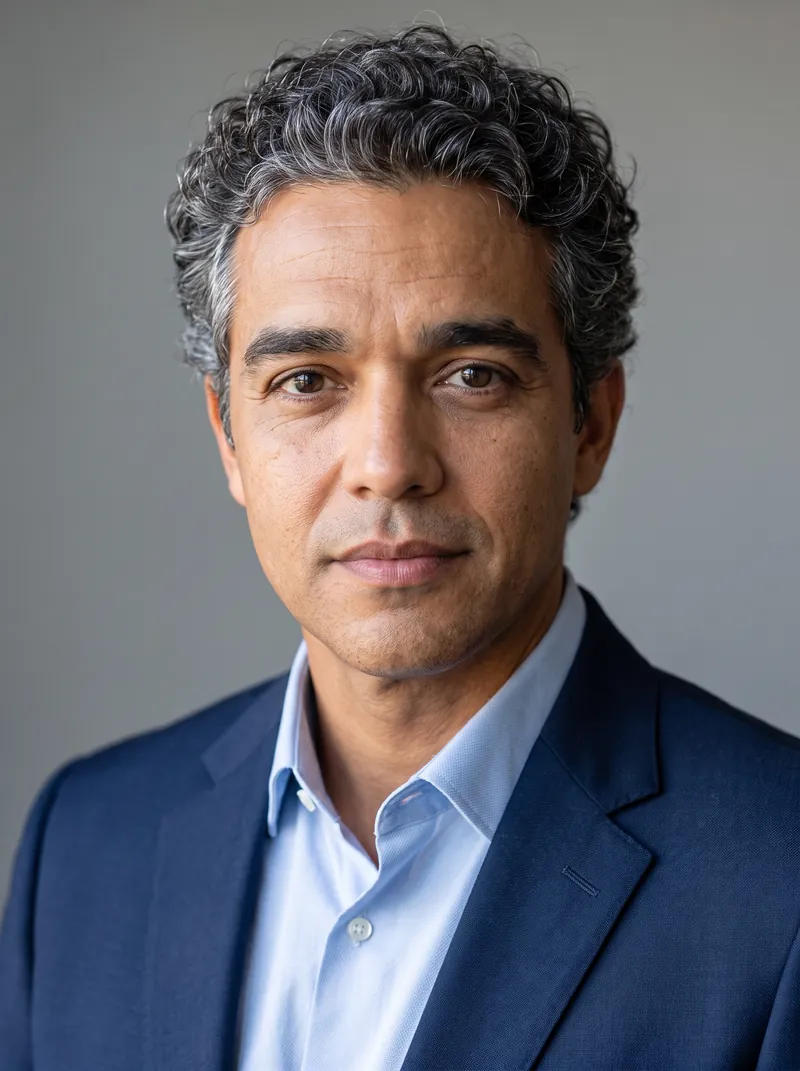
Former Securities and Exchange Commission Chair Gary Gensler has warned that the artificial intelligence infrastructure boom is a bubble poised to burst, potentially triggering a recession before the November 2028 presidential election. Speaking in a CNN interview, the Massachusetts Institute of Technology professor stated that the sector's massive capital expenditures are becoming unsustainable.[1][2]
"It's already a bubble," Gensler said, pointing to estimates that the industry is pouring approximately $800 billion annually into AI infrastructure. He noted that major technology companies are spending five times more in 2026 than they did just three years ago, racing to secure data centers and advanced computer chips.[2][3]
The warning arrives during a period of acute turbulence for the sector's leading hardware providers. Nvidia shares fell nearly 4 percent in premarket trading on Monday as investors continued to price in the fallout from the abrupt resignation of Chief Executive Officer Jensen Huang.[6]
Gensler argued that the core vulnerability lies not just in the sheer volume of capital, but in how the buildout is being funded. He highlighted the proliferation of circular financing arrangements and intricate off-balance-sheet structures that obscure the true exposure of lenders and investors.[1][2]
The Mechanics of Circular Financing
The financing models supporting the AI expansion have drawn increasing scrutiny from global financial institutions. International Monetary Fund Chief Kristalina Georgieva recently warned that AI circular financing has surpassed $1 trillion globally, estimating that two-thirds of that capital is debt-funded.[5]
In these arrangements, hardware manufacturers often provide financial backing or guarantees to the specialized data center operators purchasing their equipment. This structure can artificially inflate demand signals while relocating the underlying credit risk onto the balance sheets of the hardware giants and private credit markets.[1][5]
"I think history will show that they loaned too much money, too fast," Gensler said. He cautioned that these complex deals make it difficult for the broader market to assess which entities actually hold the risk if demand for computing capacity softens.[1]
The former regulator identified "neocloud" companies—specialized firms that lease supercomputing capacity to AI developers—as the most exposed layer of the ecosystem. Many of these providers have borrowed heavily to acquire the necessary equipment, leaving them highly vulnerable to any shift in pricing or financing conditions.[2][3]
"The major companies will survive," Gensler noted, referring to the hyperscale cloud providers with diversified revenue streams and massive cash reserves. "It's these neocloud companies where we're going to see some breakage and bankruptcies as the market adjusts."[2]
Historical Parallels and Plateaus
To contextualize the current trajectory, Gensler compared the AI infrastructure race to previous technological buildouts, including the expansion of railroads, the electrification of the 1920s, and the internet boom of the 1990s. Each era brought profound technological change, but also excessive investment that eventually required a painful correction.[2][3][4]
"History tells us that when you have a new technology and a significant investment... you come to a point where it plateaus. It retrenches," Gensler explained. He emphasized that infrastructure is routinely built on expectations of future revenue that take longer to materialize than investors anticipate.[2]
The scale of the anticipated correction, according to Gensler, could rival the bursting of the dot-com bubble in the early 2000s. However, he does not expect the fallout to reach the systemic severity of the subprime mortgage collapse that triggered the 2008 global financial crisis.[1][2]
"The only question is if it's a soft recession or something more dramatic," Gensler said. He predicted that a broad repricing of assets and a subsequent softening of the macroeconomic environment would likely materialize within the next two years.[1][3]
"I can't say exactly when and how stormy, but I would be battening down some hatches," he advised. The former chairman suggested that investors and policymakers need to prepare for a period of retrenchment as the initial deployment phase concludes.[2]
Counter-Arguments and Market Reality
Not all market analysts share Gensler's timeline or his assessment of the systemic risk. Ed Yardeni, president of Yardeni Research, acknowledged that the scenario is plausible but argued that the market is already adjusting without the need for a catastrophic collapse.[2]
"It's a self-correcting bubble," Yardeni said, pointing to the recent cooling of valuations across the semiconductor sector. He noted that major chipmakers are currently trading at lower price-to-earnings multiples than the broader market average, suggesting that extreme speculative premiums have already been compressed.[2]
"There is no irrational exuberance in valuations," Yardeni added. His perspective aligns with investors who view the recent volatility in AI stocks as a healthy rotation rather than the onset of a structural crisis that threatens the broader economy.[2]
The debate over valuations is occurring against a backdrop of shifting leadership at the top of the industry. Nvidia's interim CEO Colette Kress is preparing to lead the company's first earnings call since Huang's departure, facing intense scrutiny over forward guidance and the sustainability of revenue growth.[7]
Kress and the Nvidia board must reassure markets that the underlying demand for their hardware remains robust, even as major customers begin to scrutinize the return on their AI investments. The company's performance serves as the primary bellwether for the entire $800 billion infrastructure ecosystem.[2][7]
Navigating the Next Phase
For corporate boards and institutional investors, the conflicting signals present a complex capital allocation challenge. Companies must balance the risk of overextending their balance sheets against the competitive threat of falling behind in the deployment of generative AI capabilities.[1][5]
The IMF's Georgieva has characterized the recent market swings as orderly, suggesting that financial systems currently have the resilience to absorb the localized shocks emanating from the technology sector. However, the sheer scale of the debt involved leaves little room for error.[5]
During his tenure at the SEC from 2021 to 2025, Gensler frequently highlighted the systemic risks posed by concentrated technological dependencies. His current warnings from academia reflect a continuation of that thesis, emphasizing that financial stability is often compromised when a single asset class absorbs too much debt too quickly.[2][3][4]
As the 2028 election cycle approaches, the economic implications of the AI buildout will likely become a central policy issue. If the anticipated retrenchment materializes, policymakers may be forced to address the fallout in the private credit markets that have heavily subsidized the data center expansion.[1][3]
Ultimately, the resolution of the AI financing debate will depend on whether the application layer can generate sufficient cash flow to service the debt accumulated by the infrastructure layer. Until those revenues materialize at scale, the tension between aggressive capital deployment and the risk of a dot-com style retrenchment will define the market.[1][2]
Key points
- Former SEC Chair Gary Gensler warns the $800 billion annual AI infrastructure buildout is a bubble that could trigger a recession before 2028.
- The IMF estimates AI circular financing has surpassed $1 trillion globally, with two-thirds of the capital funded by debt.
- Gensler predicts specialized neocloud providers will face bankruptcies as the market retrenches, though major technology companies will survive.
- Market analysts like Ed Yardeni counter that the sector is experiencing a self-correcting rotation, noting that chipmaker valuations remain below broader market averages.
What we don’t know
- Exactly when the anticipated plateau in AI infrastructure spending will occur.
- The full extent of private credit exposure to off-balance-sheet neocloud debt.
- Whether enterprise AI applications can scale revenue fast enough to service the sector's accumulated debt.
- Macroeconomic Skeptics
- Analysts warning that debt-funded AI infrastructure spending poses systemic recession risks.
- Market Optimists
- Investors who believe the AI sector is undergoing a healthy, self-correcting rotation.
- Industry Operators
- Hardware providers maintaining that massive capital expenditures are necessary to meet enterprise demand.
Perspectives this story doesn't cover
- Private credit lenders funding the data centers
- Neocloud executives facing bankruptcy predictions
Sources
Source coverage
7 outlets
3 viewpoints surfaced





- [1]BenzingaMacroeconomic Skeptics
'Soft Recession or Something More Dramatic:' Former SEC Chair Gary Gensler Warns AI Boom Could End in Dot-Com-Scale Bust — 'They Loaned Too Much Money, Too Fast'
Read on Benzinga → - [2]QuartzMarket Optimists
Former SEC chair Gary Gensler warns AI bubble is likely to cause recession before 2028 election
Read on Quartz → - [3]SSBCrack NewsMacroeconomic Skeptics
Former SEC Chair Gary Gensler Warns AI Bubble Could Burst Before 2028 Election
Read on SSBCrack News → - [4]DemokratisMacroeconomic Skeptics
Gensler Warns AI Bubble Could Trigger Recession by 2028
Read on Demokratis → - [5]QuartzMarket Optimists
IMF chief warned AI circular financing tops $1 trillion as Nvidia fallout rattles markets
Read on Quartz → - [6]CNBCIndustry Operators
Nvidia stock falls nearly 4% as investors price in fallout from Jensen Huang's resignation
Read on CNBC → - [7]CNBCIndustry Operators
Nvidia's Colette Kress confronts key questions in first earnings report since Jensen Huang’s exit
Read on CNBC →
More in Business
See all →Yuan Internationalization
Hong Kong Launches First Benchmark Index for $88 Billion Offshore Yuan Bond Market
8 sources
Currency Markets
Indonesian Rupiah Sinks to Record Low Against Dollar Amid Hawkish Fed Bets
8 sources

Economic Growth
Thailand's Third-Quarter GDP Rebounds to 2.9% on Resilient Exports and AI Investment
5 sources

Semiconductor Supply Chain
SK Hynix Commits $1.35 Billion to Support South Korean AI Chip Suppliers
3 sources

Comments
Every angle. Every day.
Get Business stories with full source coverage and perspective breakdowns, free every day.