
Bank of America Launches $250 Billion Infrastructure Initiative to Capitalize on AI Boom
Bank of America has committed $250 billion to finance U.S. digital, energy, and core infrastructure projects over the next 18 months. The initiative aims to address the massive computing and power demands generated by the artificial intelligence buildout.
By Madison Lane

- Wall Street Lenders
- View infrastructure modernization as a massive fee-generating opportunity and a necessary step to support U.S. technological leadership.
- Local Municipalities
- Focus on the physical realities of the buildout, including zoning fights, power grid strain, and excessive water usage.
- Tech Infrastructure Developers
- Focus on securing the capital and permits needed to build data centers and power generation at an unprecedented scale.
Summary
- Bank of America will deploy $250 billion into U.S. infrastructure over an 18-month period ending July 2027.
- The initiative targets digital infrastructure, energy generation, and core transportation systems.
- The capital mobilization is largely driven by the massive power and computing demands of the AI buildout.
- The move follows similar trillion-dollar infrastructure pledges from Morgan Stanley and JPMorgan Chase.
- Funds will be deployed through lending, investments, capital markets services, and advisory work.
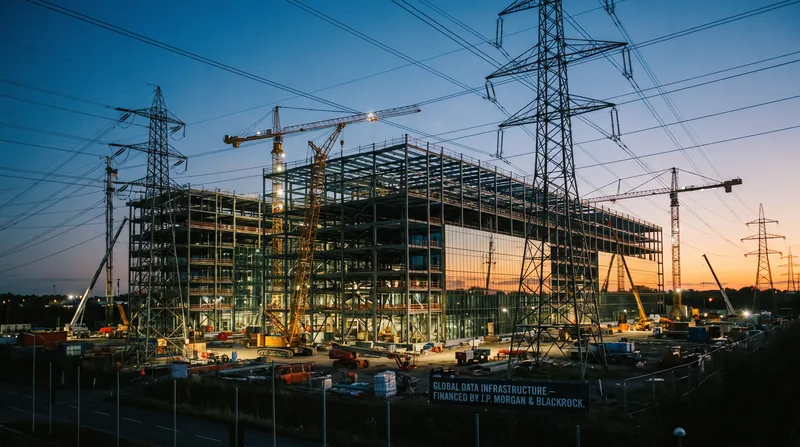
The artificial intelligence buildout is colliding with the physical limits of the U.S. electrical grid. Across the country, local communities and regulators are increasingly pushing back against the construction of massive data centers, citing noise, water usage, and the threat of skyrocketing residential power bills. As permitting delays mount and zoning fights intensify, some commercial lenders have begun tightening their underwriting standards for AI infrastructure projects, wary of the rising execution risks and community opposition.[5]
Yet the sheer scale of projected demand for computing power is forcing Wall Street to look past those localized bottlenecks and underwrite the broader ecosystem. On Wednesday, Bank of America launched a $250 billion "Critical Infrastructure Finance Initiative" designed to modernize the underlying plumbing of the U.S. economy. The 18-month program, which runs from January 2026 through July 4, 2027, will deploy capital across digital networks, energy grids, and core transportation systems to support the physical requirements of the AI era.[1][2][3]
The $250 billion figure represents a massive mobilization of capital, but it is not a single direct-investment check. Instead, Bank of America will deploy the funds through a combination of primary market lending, balance-sheet investments, capital markets services, and advisory transactions. The bank's global infrastructure and sustainable finance teams will structure the deals, acting as the financial bridge between project developers, corporate clients, and private capital providers looking for yield in hard assets.[2][3]
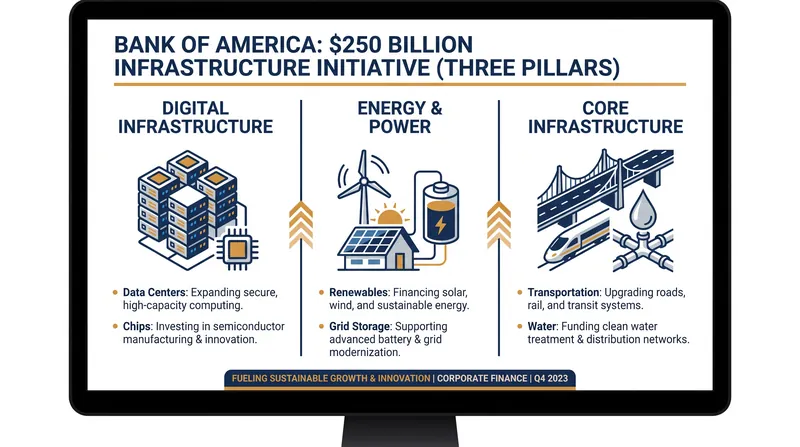
The initiative is explicitly structured around three interconnected pillars, the first of which is digital infrastructure. This category covers the direct hardware of the AI boom: hyperscale data centers, computing facilities, telecommunications networks, and semiconductor manufacturing plants. As tech giants race to secure processing capacity, the demand for these specialized facilities has created a lucrative market for banks capable of structuring complex, multi-billion-dollar project finance deals.[1][3]
The initiative is explicitly structured around three interconnected pillars, the first of which is digital infrastructure.
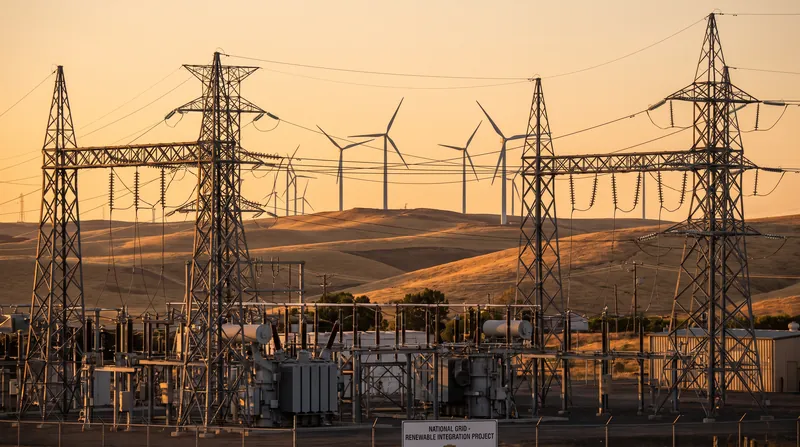
The second pillar addresses the critical energy bottleneck, funneling capital into conventional and renewable power generation, energy storage, and electricity transmission. Data centers require enormous, uninterrupted streams of electricity, and the current U.S. grid is ill-equipped to handle the load. Without a parallel expansion in power generation and grid modernization, the projected global AI spending—estimated by some analysts to exceed $6 trillion through 2030—cannot physically come online.[3][6]
The third pillar focuses on core infrastructure, including transportation networks, water systems, and the mining of critical minerals. This broader scope acknowledges that the AI supply chain does not exist in a vacuum. Building a multi-billion-dollar data center campus requires upgraded roads for construction logistics, vast water resources for advanced cooling systems, and secure domestic supply chains for the raw materials used in advanced microchips and battery storage.[2][3]
Bank of America's commitment is part of a wider Wall Street pivot toward domestic industrial policy and hard assets. The announcement follows Morgan Stanley's recent pledge to facilitate $1.5 trillion in financing for U.S. innovation and infrastructure over the next decade. Last year, JPMorgan Chase launched a similar $1.5 trillion initiative focused on economic resilience and national security. These mega-commitments reflect a consensus among major financial institutions that modernizing aging U.S. infrastructure is now a primary growth engine for corporate banking.[2][5]
The practical stakes for this capital deployment depend heavily on execution. While the financing is now available, the physical buildout remains constrained by regulatory approvals, supply chain bottlenecks, and the availability of a highly skilled workforce to construct and maintain these facilities. If the capital successfully navigates these local hurdles, it promises to accelerate U.S. technological leadership and create tens of thousands of jobs. If it stalls in permitting purgatory, the AI supercycle could face a hard ceiling dictated not by software limitations, but by a lack of concrete and copper.[3][5]
Definitions
- Hyperscale Data Center
- A massive computing facility designed to support robust, scalable applications, often used by major cloud providers and AI developers.
- Primary Market Lending
- The issuance of new loans directly from a bank to a borrower, rather than trading existing debt on the secondary market.
- Capital Markets Services
- Financial services that help corporations raise funds by issuing debt or equity, including underwriting and structuring complex deals.
- Project Finance
- The long-term financing of infrastructure and industrial projects based upon the projected cash flows of the project rather than the balance sheets of its sponsors.
- Grid Modernization
- Upgrading the electrical grid with new technologies and expanded transmission capacity to handle increased demand and integrate renewable energy sources.
Chronology
October 2023
JPMorgan Chase launches a $1.5 trillion initiative focused on U.S. economic resilience and national security.
August 2026
Morgan Stanley announces a $1.5 trillion pledge to facilitate financing for U.S. innovation and infrastructure over the next decade.
August 12, 2026
Bank of America unveils its $250 billion Critical Infrastructure Finance Initiative, targeting the AI and energy buildout.
Analysis by camp
Major Financial Institutions
Banks view infrastructure modernization as a massive fee-generating opportunity and a necessary step to support the AI boom.
For Wall Street's largest players, the AI supercycle represents a generational opportunity to deploy capital into hard assets. Banks like Bank of America, Morgan Stanley, and JPMorgan Chase are positioning themselves as the indispensable middlemen between tech giants that need physical infrastructure and private capital providers seeking stable, long-term yields. By structuring complex project finance deals for data centers and power plants, these institutions can generate substantial advisory fees and interest income while aligning themselves with broader U.S. industrial policy goals.
Local Communities & Regulators
Municipalities are increasingly concerned about the environmental and economic externalities of hyperscale data centers.
While Wall Street focuses on the financial upside, local governments are grappling with the physical realities of the AI buildout. Hyperscale data centers require vast amounts of land, millions of gallons of water for cooling, and uninterrupted electricity. In major hubs like Northern Virginia, regulators and consumer advocates warn that the unprecedented strain on the power grid could lead to skyrocketing utility bills for residential customers. This friction has led to permitting delays, zoning battles, and a tightening of lending standards as banks assess the risk of community opposition stalling multi-billion-dollar projects.
Tech & AI Developers
Tech companies are desperate for the physical infrastructure and power generation required to deploy their models at scale.
For the companies actually building artificial intelligence, capital mobilization is the primary bottleneck. The software and chip designs exist, but deploying them requires a physical footprint that the current U.S. electrical grid cannot support. Tech developers view initiatives like Bank of America's $250 billion pledge as critical lifelines. Without a massive, coordinated expansion of both data center capacity and the renewable or conventional energy required to power it, the industry's ambitious growth projections will hit a hard physical ceiling.
Questions & answers
What is Bank of America's $250 billion infrastructure initiative?
It is an 18-month program to deploy $250 billion through lending, investments, and advisory services to modernize U.S. digital, energy, and core infrastructure.
Why is Wall Street investing so heavily in infrastructure now?
The rapid development of artificial intelligence requires a massive expansion of data centers and power generation, creating a lucrative opportunity for banks to finance the physical buildout.
Will Bank of America be writing a single $250 billion check?
No. The $250 billion target represents a mobilization of capital across various financial services, including loans, balance-sheet investments, and advisory transactions for corporate clients.
What specific types of projects will receive funding?
The capital will target three areas: digital infrastructure (like data centers and chips), energy and power (like renewables and grid storage), and core infrastructure (like transportation and water systems).
Limits of the evidence
- How much of the $250 billion target will represent entirely new capital versus the repackaging of existing lending commitments.
- Whether local zoning boards and utility regulators will approve new data centers and power plants fast enough to deploy the capital within the 18-month window.
- How the costs of upgrading the electrical grid to support AI data centers will ultimately be divided between tech companies and residential ratepayers.
Significance
The artificial intelligence boom is physically constrained by a lack of data centers and electricity. By mobilizing a quarter-trillion dollars, Wall Street is stepping in to finance the concrete, copper, and power generation required to keep the U.S. at the forefront of the global tech race.
Sources
Source coverage
6 outlets
3 viewpoints surfaced






[1]AxiosWall Street Lenders
Bank of America sets $250B initiative for infrastructure
Read on Axios →[2]Financial PostWall Street Lenders
BofA to Plow $250 Billion Into Critical Infrastructure Projects
Read on Financial Post →[3]Banking DiveTech Infrastructure Developers
Bank of America pledges $250B toward US infrastructure update
Read on Banking Dive →[4]MorningstarWall Street Lenders
Bank of America to Deploy $250 Billion to Bolster AI and Energy Infrastructure
Read on Morningstar →[5]MarketScreenerLocal Municipalities
Bank of America pledges $250 billion for US infrastructure financing
Read on MarketScreener →[6]EnergyNowTech Infrastructure Developers
BofA to Plow $250 Billion Into Critical Infrastructure Projects
Read on EnergyNow →
Comments

Every angle. Every day.
Get finance stories with full source coverage and perspective breakdowns delivered to your inbox.