
Is the Permanent Rise of State Interventionism the Quiet End of the Global Laissez-Faire Era?
As governments worldwide embrace industrial policy and massive subsidies, the decades-long consensus of free-market neoliberalism is being replaced by a new era of state-directed capitalism.

- Economic Nationalists
- Argue that state intervention is necessary to secure critical supply chains and counter geopolitical rivals.
- Pragmatic Interventionists
- Support targeted state action to correct market failures and address crises, provided governments can 'let losers go.'
- Free-Market Traditionalists
- Warn that industrial policy leads to rent-seeking, misallocation of resources, and global protectionism.
Perspectives this story doesn't cover
- Developing nations lacking the fiscal space to compete in a global subsidy race
- Small-to-medium enterprises that are often excluded from mega-subsidies designed for corporate giants
In April 2023, U.S. National Security Advisor Jake Sullivan stood at a podium at the Brookings Institution and effectively pronounced the death of a four-decade economic orthodoxy. He outlined what has since been dubbed the "New Washington Consensus," a framework that explicitly rejects the idea of market omnipotence. For decades, the prevailing wisdom in Western capitals was that governments should step out of the way, lower tariffs, deregulate industries, and allow capital to flow freely across borders. Sullivan's speech marked a stark reversal, arguing that this laissez-faire approach had hollowed out domestic manufacturing and frayed the socioeconomic foundations of democratic societies.[1]
This rhetorical shift at the highest levels of the U.S. government was not an isolated incident, but rather the formal acknowledgment of a global macroeconomic pivot. Across the world, governments are aggressively returning to the business of business. The era of neoliberalism—a term often used to describe the market-fundamentalist policies popularized in the 1980s by Ronald Reagan and Margaret Thatcher—is being quietly replaced by an era of state interventionism. Policymakers are increasingly utilizing subsidies, export controls, and targeted investments to steer their economies, prioritizing national security and supply chain resilience over pure economic efficiency.[1]
The mechanism driving this shift is known as "industrial policy," a broad term for government efforts to shape the economy by encouraging specific industries. While industrial policy never truly vanished—especially in East Asia—it was largely taboo in Western economic circles for the past forty years. Today, it is the primary tool of statecraft. Rather than relying on the invisible hand of the market to allocate resources, states are using the very visible hand of the treasury to build semiconductor fabrication plants, subsidize electric vehicle supply chains, and fund quantum computing research.[1]
The evidence of this transition is staggering in its scale. According to recent research from the International Monetary Fund (IMF), state aid and industrial policy interventions have steadily risen over the past decade, accelerating sharply in response to the pandemic and energy shocks. Initiatives like the European Green Deal and the European CHIPS Act demonstrate a clear willingness to deploy public capital to secure strategic technological autonomy. The IMF notes that this marks a profound departure from the post-Cold War consensus, with governments now actively shaping market outcomes to achieve geopolitical goals.[2]
The United States has matched this interventionist fervor with landmark legislation of its own. The CHIPS and Science Act and the Inflation Reduction Act represent hundreds of billions of dollars in direct government subsidies and tax incentives designed to reshore manufacturing and accelerate the green energy transition. These policies are explicitly designed to alter market outcomes, directing private capital toward sectors that the government deems critical for national security and future prosperity. The sheer volume of this spending has forced allied and rival nations alike to respond with their own subsidy packages, triggering a global race for industrial supremacy.[1]
China's economic model provides the crucial backdrop for this Western policy reversal. For decades, Beijing has employed a highly successful, state-directed capitalist model, utilizing massive subsidies and state-owned enterprises to dominate global manufacturing and emerging technologies. The National Bureau of Economic Research has extensively documented how China's industrial policies have allowed it to capture critical nodes in global supply chains, from solar panels to critical minerals. Western policymakers, recognizing that free-market principles alone cannot compete with heavily subsidized state champions, have concluded that they must adopt similar tactics to survive.[3]
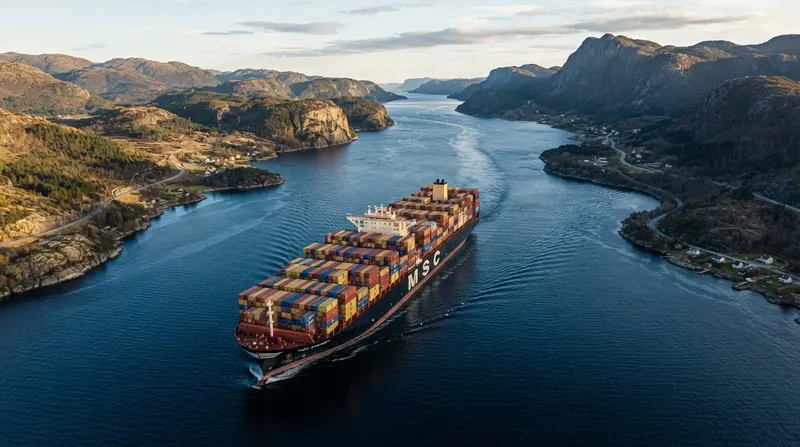
However, the return of state interventionism is not merely a defensive reaction to geopolitical rivals; it is also a response to the systemic vulnerabilities exposed by recent global crises. The COVID-19 pandemic laid bare the fragility of hyper-optimized, just-in-time global supply chains. When borders closed and factories shuttered, nations suddenly realized the danger of relying on distant countries for essential medical supplies and basic manufactured goods. Academic analyses from the London School of Economics and the University of Technology Sydney note that the pandemic forced governments to resurrect neo-Keynesian policies, stepping in to pay wages and support industries in ways that would have been condemned as socialism just a few years prior.[6]
The COVID-19 pandemic laid bare the fragility of hyper-optimized, just-in-time global supply chains.
This realization has fundamentally altered how governments calculate economic risk. The old Washington Consensus prioritized efficiency and low consumer prices above all else, assuming that global trade would naturally foster peace and stability. The new paradigm prioritizes resilience and redundancy. Policymakers are now willing to accept higher costs and lower immediate efficiency if it means securing domestic production capabilities for critical goods. This represents a profound philosophical shift: the state is no longer just a referee in the economic game, but an active player and investor.[5]
Yet, the embrace of industrial policy is fraught with economic and political peril. The most common critique of state intervention is that governments are notoriously bad at "picking winners." When bureaucrats attempt to direct capital, they often misallocate resources, funding inefficient projects based on political considerations rather than market viability. Economists warn that poorly designed industrial policies can cause severe distortions to the domestic economy, particularly if they encourage rent-seeking behavior where companies spend more effort lobbying for government handouts than innovating.[2]
Harvard economist Dani Rodrik, a long-time proponent of sensible industrial policy, argues that the focus on "picking winners" misses the point. According to Rodrik, uncertainty ensures that even optimal policies will lead to mistakes. The true measure of a successful industrial policy is not the ability to avoid errors, but the political capacity to "let the losers go." Governments must be willing to withdraw support from failing initiatives before they become permanent drains on the public purse. This requires a level of bureaucratic agility and political courage that is often lacking in democratic systems, where subsidized industries quickly form powerful lobbying blocs.[4]
Furthermore, the new era of state interventionism risks exacerbating global inequality. Wealthy nations in the Global North have the fiscal space to borrow billions of dollars to subsidize their domestic industries. Developing nations in the Global South, already burdened by high debt and rising interest rates, cannot compete in this subsidy arms race. As the United States and Europe pull manufacturing back within their borders, developing economies that relied on export-led growth may find themselves locked out of the new global economic architecture, leading to a more fragmented and unequal world.
The shift toward state capitalism also raises profound questions about the future of international trade. The World Trade Organization (WTO) was built on the premise of reducing tariffs and eliminating state subsidies to create a level playing field. As major powers openly flout these rules to protect their own industries, the global trading system risks breaking down into a series of protectionist blocs. The IMF has repeatedly cautioned that this geopolitical fragmentation could reduce global economic output, as the benefits of comparative advantage are sacrificed on the altar of national security.[2]
Despite these risks, the momentum behind the new interventionism appears unstoppable. The political consensus in many Western capitals has shifted decisively against pure free-market economics. Progressive advocates applaud the use of state power to combat climate change and empower labor, while conservative nationalists support industrial policy as a means of countering foreign adversaries and rebuilding domestic manufacturing. This rare bipartisan alignment suggests that the era of big government in the economic sphere is not a temporary pandemic-era anomaly, but a permanent structural shift.[5]
Ultimately, the success or failure of this new economic era will depend on execution. If governments can design transparent, time-bound interventions that correct genuine market failures—such as the underinvestment in green energy or the fragility of semiconductor supply chains—they may succeed in building more resilient and equitable economies. However, if industrial policy devolves into a system of permanent corporate welfare, shielding inefficient incumbents from competition, the cure may prove worse than the disease.[4]
What is undeniably clear is that the global economy has crossed a Rubicon. The decades-long experiment with unconstrained globalization and laissez-faire capitalism has ended, replaced by a messy, contested, and highly interventionist reality. As the state reclaims its central role in directing economic development, businesses, investors, and citizens must adapt to a world where political priorities, rather than pure market forces, increasingly dictate the flow of capital and the shape of the future.[1]
Key points
- Governments worldwide are abandoning decades of free-market orthodoxy in favor of state-directed industrial policy.
- The shift is driven by a desire to secure critical supply chains, combat climate change, and counter geopolitical rivals.
- Massive subsidy programs like the U.S. CHIPS Act and the European Green Deal represent a new era of state capitalism.
- Economists warn that this interventionism risks misallocating resources, fueling protectionism, and leaving developing nations behind.
Why this matters
The shift from free-market globalization to state-directed industrial policy fundamentally alters how technologies are developed, where jobs are created, and how global supply chains operate. Understanding this transition helps readers navigate a world where government subsidies, rather than pure market forces, increasingly dictate economic winners and losers.
Key terms
- Industrial Policy
- Targeted government intervention, such as subsidies or tax breaks, designed to encourage the development and growth of specific sectors of the economy.
- Neoliberalism
- An economic philosophy popularized in the late 20th century that advocates for free-market capitalism, deregulation, and a reduction in government spending.
- Washington Consensus
- A set of free-market economic policy prescriptions originally promoted by institutions like the IMF and World Bank as the standard reform package for developing countries.
- Rent-seeking
- When an entity seeks to gain wealth without creating any new wealth, often by lobbying the government for subsidies, grants, or favorable regulations.
Frequently asked
What is the New Washington Consensus?
It is a recent policy framework that rejects pure free-market economics in favor of state intervention, industrial policy, and supply chain resilience to protect national security and domestic manufacturing.
Why are governments returning to industrial policy?
Recent crises, including the COVID-19 pandemic and geopolitical tensions, exposed the fragility of global supply chains, prompting governments to subsidize domestic production of critical goods like semiconductors and green energy.
How does this shift affect developing nations?
Developing nations often lack the fiscal space to match the massive subsidies offered by wealthy countries, risking their exclusion from new supply chains and exacerbating global economic inequality.
What are the risks of state interventionism?
Economists warn that government intervention can lead to the misallocation of resources, corporate rent-seeking, and a breakdown of the global free-trade system into protectionist blocs.
Sources
Source coverage
6 outlets
3 viewpoints surfaced






- [1]Factlen Editorial TeamEconomic Nationalists
Synthesis by Factlen editorial team
Read on Factlen Editorial Team → - [2]International Monetary FundFree-Market Traditionalists
Industrial Policy Since the Great Financial Crisis
Read on International Monetary Fund → - [3]National Bureau of Economic ResearchEconomic Nationalists
Decoding China's Industrial Policies
Read on National Bureau of Economic Research → - [4]Project SyndicatePragmatic Interventionists
The Return of Industrial Policy
Read on Project Syndicate → - [5]Progressive Political EconomyPragmatic Interventionists
Coronavirus, Crisis, and the End of Neoliberalism
Read on Progressive Political Economy → - [6]University of Technology SydneyPragmatic Interventionists
The End of Neoliberalism? The Response to COVID-19: An Australian Geopolitical Perspective
Read on University of Technology Sydney →
Comments
More in Opinion
See all →Seismology
The Gutenberg-Richter Law: Why Small Earthquakes Are Exponentially More Common Than Large Ones
7 sources

Stellar Physics
The Eddington Limit: Why Radiation Pressure, Not Fuel, Sets the Maximum Mass of a Star
8 sources

Tribology
The Archard Equation: Why Wear Volume Is Proportional to Load, Not Contact Area
3 sources

Wind Energy Physics
The 400 TW Geophysical Limit: Why Atmospheric Drag, Not the Betz Formula, Sets the Ceiling for Global Wind Energy
7 sources
Every angle. Every day.
Get Opinion stories with full source coverage and perspective breakdowns delivered to your inbox.