
California DMV Finalizes AV Deployment Rules, Requiring 100,000 Autonomous Miles for Robotaxis
California has finalized the nation's most comprehensive autonomous vehicle regulations, opening the state to heavy-duty driverless trucks while imposing strict new mileage gates and local enforcement tools. The rules require robotaxis to log 100,000 test miles and heavy trucks to log 1,000,000 miles before commercial deployment.
By Derya Kaplan

- California Regulators & City Planners
- Prioritize strict safety gates, local municipal control, and emergency responder authority over rapid deployment.
- AV Industry & Fleet Operators
- Welcome the regulatory clarity and the opening of the heavy-duty market, but face massive capital costs to meet the mileage gates.
- Labor & Commercial Drivers
- Fiercely oppose the inclusion of heavy-duty autonomous trucks due to the threat of widespread job displacement.
The competing cases
Option 1: The California 'Crawl, Walk, Run' Model
A highly regulated, mileage-gated approach that prioritizes local municipal control and emergency responder authority.
The case for: Mandating 100,000 test miles for robotaxis and 1,000,000 miles for heavy-duty trucks ensures that autonomous systems are exposed to a massive dataset of edge cases before commercialization. Empowering police to issue direct manufacturer tickets and granting fire departments two-minute geofencing overrides solves the accountability void that previously frustrated city planners. The case against: The sheer capital required to log a million test miles creates an insurmountable moat for smaller startups, consolidating the market among tech giants. It also delays the deployment of safety-enhancing ADAS and autonomous freight efficiency by years. The evidence: Waymo and Zoox spent over four years gathering sufficient data to meet previous California benchmarks, while Sunbelt deployments moved twice as fast. Fits well when: A densely populated municipality prioritizes absolute safety, emergency responder control, and public trust over rapid technological adoption. Does not fit when: A region relies on rapid freight logistics and needs to quickly alleviate supply chain bottlenecks or driver shortages.
Option 2: The Sunbelt 'Fast-Track' Model
A permissive regulatory environment used by states like Texas and Arizona that allows rapid commercial deployment with fewer local hurdles.
The case for: Removing arbitrary mileage gates allows AV companies to deploy as soon as their internal safety cases and simulation data prove the technology is ready. This accelerates the economic benefits of autonomous freight, reduces supply chain costs, and provides immediate relief to the ongoing commercial driver shortage. The case against: Stripping local municipalities of the ability to geofence emergency zones or directly ticket driverless vehicles leaves cities powerless when the technology fails or obstructs traffic. The evidence: Texas has become the undisputed hub for autonomous trucking, with companies like Aurora and Kodiak launching commercial freight routes years ahead of California's projected 2027 timeline. Fits well when: The operational design domain consists of long, predictable interstate highway stretches where the primary goal is maximizing freight throughput and economic efficiency. Does not fit when: Vehicles must navigate complex, unpredictable urban grids with high pedestrian density and frequent emergency responder activity.
What’s at stake
For local commuters, these rules mean driverless cars can finally be ticketed for blocking traffic, and fire departments can force them out of emergency zones. For the logistics industry, it opens the massive California freight market to autonomous 18-wheelers—but only if companies can afford to log a grueling one million test miles first.
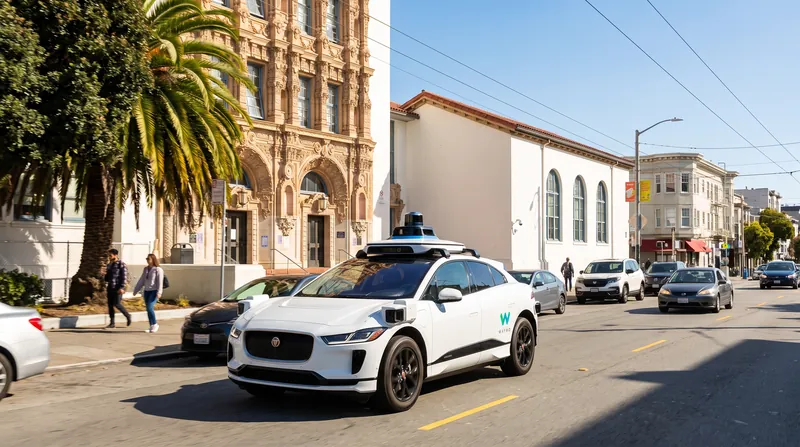
Everyone assumes that because Waymo and Cruise are already operating in San Francisco and Los Angeles, California is a free-for-all for autonomous vehicles. The reality is the exact opposite. While Sunbelt states like Texas have rolled out the red carpet for driverless semi-trucks and rapid robotaxi scaling, California has quietly been drafting the most restrictive, high-barrier autonomous vehicle regulations in the country. On April 28, 2026, the California Department of Motor Vehicles finalized those rules, creating a grueling "crawl, walk, run" gauntlet that fundamentally changes how self-driving cars interact with local laws, police, and the public.[1][2]
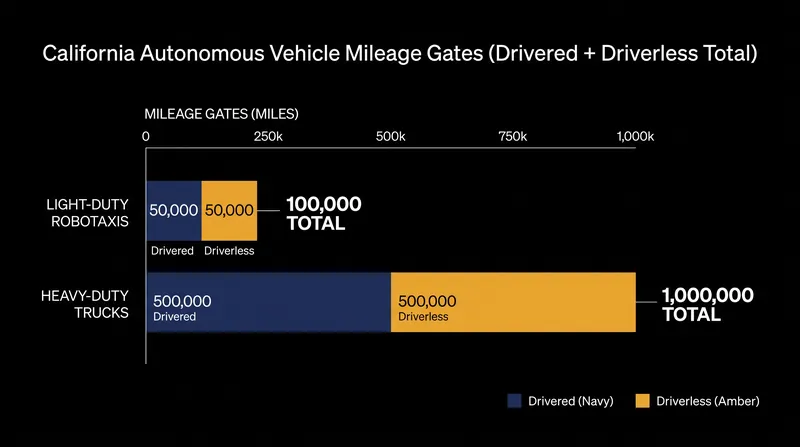
The finalized framework establishes massive mandatory mileage gates before any company can charge for a driverless ride or haul commercial freight. For light-duty robotaxis, manufacturers must log 50,000 miles with a human safety driver, followed by another 50,000 miles completely driverless, just to apply for commercial deployment. For heavy-duty autonomous trucks—which are legally allowed on California roads for the first time under these rules—the barrier is staggering. Trucking operators must accumulate 500,000 drivered miles and 500,000 driverless miles, with at least 100,000 of those miles occurring within California state lines.[1][5]
But the mileage gates are only the baseline. For the local commuter or neighborhood resident, the most immediate change is how these vehicles will be policed. Previously, a glaring legal loophole meant that a driverless car running a red light or blocking an intersection could not be ticketed, because there was no human driver to cite. The new DMV regulations close this gap entirely. Law enforcement officers can now issue a "Notice of Autonomous Vehicle Noncompliance" directly to the manufacturer. Companies have 72 hours to respond, and repeat offenses can trigger fleet-wide permit suspensions.[2][4]
Emergency response protocols have also been radically overhauled, addressing a major pain point for city planners and fire departments. Local emergency officials now possess the authority to issue electronic "do not enter" geofencing directives around active fire scenes, accident sites, or natural disasters. When a digital perimeter is broadcast, every autonomous vehicle in the area has exactly two minutes to exit the zone, and no new driverless vehicles may enter. Furthermore, AV operators must maintain a two-way communication link that guarantees a response to first responders within 30 seconds.[1][3]
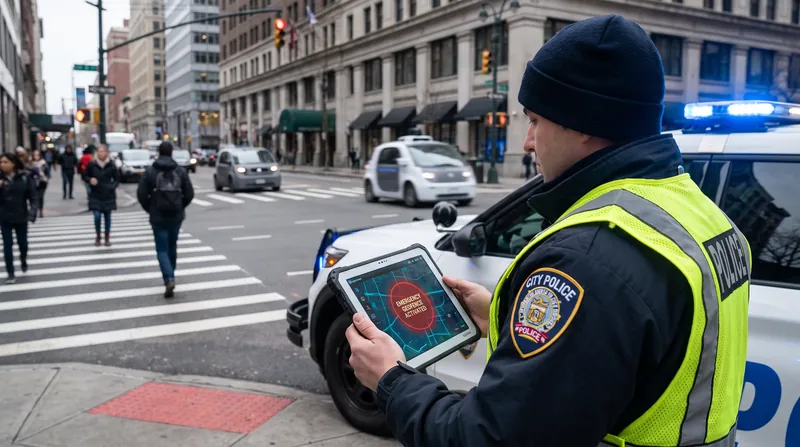
Emergency response protocols have also been radically overhauled, addressing a major pain point for city planners and fire departments.
For the actual buyer or fleet operator looking at the logistics market, these rules force a hard calculation. The opening of California to heavy-duty autonomous trucks is a massive unlock for freight routes connecting the ports of Los Angeles and Long Beach to the rest of the country. However, the one-million-mile testing requirement means that commercial deployment of driverless 18-wheelers in the Golden State is likely pushed out to 2027 or 2028. Companies that have been testing in Texas will have to bring their rigs back to California to satisfy the in-state mileage minimums before they can haul commercial loads.[2][5]
The labor implications are equally concrete, anchoring the abstract debate over AI directly to local jobs. The California Teamsters union has fiercely opposed the inclusion of heavy-duty trucks in the new regulations, pointing to the potential displacement of hundreds of thousands of commercial driving jobs across the state's massive logistics sector. While the DMV's mandate focuses strictly on road safety and operational metrics, the economic ripple effects for independent owner-operators and union drivers will be profound as fleet owners weigh the massive capital costs of AV deployment against long-term labor savings.[2][4]
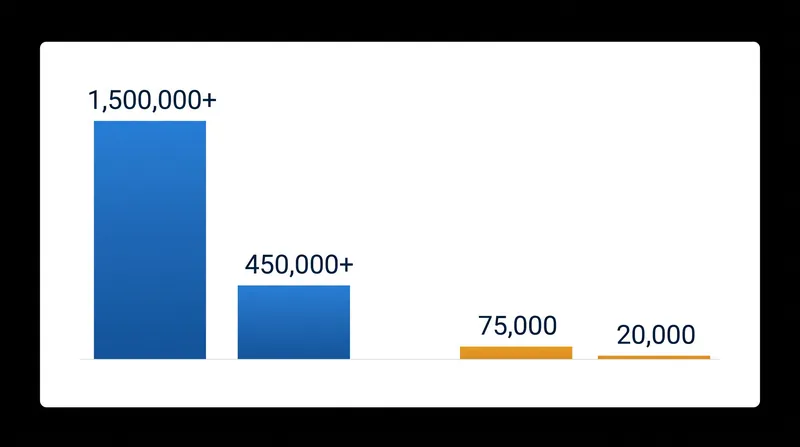
Contrast this with the regulatory environment in states like Texas and Arizona, where the absence of strict mileage gates and local geofencing mandates has allowed companies to accelerate their commercial timelines. California's approach is a deliberate rejection of that fast-track model. By forcing companies to prove their safety cases through exhaustive, quantified road hours and granting unprecedented override powers to local police and fire departments, the state is betting that a slower, hyper-regulated rollout will prevent the kind of high-profile accidents that erode public trust.[3][5]
Ultimately, the DMV's finalized rules represent a paradigm shift in how artificial intelligence is governed in the physical world. For the everyday Californian, it means the robotaxis sharing their commute are now subject to the same traffic tickets and emergency detours as human drivers. For the industry, it establishes a grueling but clear regulatory moat. Companies that can afford to burn millions of dollars logging 100,000 to a million test miles will secure access to the largest transportation market in the United States, while smaller startups may be forced to remain in the more permissive Sunbelt.[1][2]
Key takeaways
- California's finalized DMV rules open the state to heavy-duty autonomous trucks for the first time.
- Robotaxis must complete 100,000 test miles, while heavy-duty trucks face a 1,000,000-mile requirement.
- Law enforcement can now issue traffic citations directly to autonomous vehicle manufacturers.
- Emergency officials gain the power to geofence active incident zones, forcing AVs to exit within two minutes.
- The strict regulations stand in stark contrast to the faster, less restrictive deployment models in Texas and Arizona.
Unsettled ground
- How quickly the DMV will process the massive 'safety case' submissions required for commercial deployment permits.
- Whether the California Teamsters' promised legal action will successfully delay the rollout of heavy-duty autonomous trucks.
- How smaller AV startups will fund the millions of dollars required to meet the new 1,000,000-mile heavy-duty testing threshold.
Sources
Source coverage
5 outlets
3 viewpoints surfaced





[1]California DMVCalifornia Regulators & City Planners
New autonomous vehicle (AV) regulations were approved today covering both light-duty and heavy-duty vehicles
Read on California DMV →[2]Covington & Burling LLPAV Industry & Fleet Operators
California's New AV Rules Open Door to Heavy-Duty Deployment While Imposing Significant New Compliance Obligations
Read on Covington & Burling LLP →[3]Inside Global TechCalifornia Regulators & City Planners
California's New AV Rules Open Door to Heavy-Duty Deployment While Imposing Significant New Compliance Obligations
Read on Inside Global Tech →[4]Global Policy WatchLabor & Commercial Drivers
California's new autonomous vehicle regulations create the state's first pathway for testing and deploying heavy-duty AVs
Read on Global Policy Watch →[5]FreightWavesAV Industry & Fleet Operators
California DMV releases new autonomous vehicle regulations
Read on FreightWaves →
Comments

Every angle. Every day.
Get automotive stories with full source coverage and perspective breakdowns delivered to your inbox.