
The Science of Driver Fatigue: How Modern ADAS Actually Reduces Road Trip Exhaustion
Advanced Driver Assistance Systems like adaptive cruise control and lane centering are fundamentally changing the cross-country road trip by drastically reducing a driver's cognitive load.
By Adrien Caron

- Human Factors Researchers
- Focus on cognitive load reduction and the psychology of automation trust.
- Public Health Advocates
- Focus on the sheer danger of drowsy driving and the need for systemic safety solutions.
- Automotive Engineers
- Focus on the technical implementation of sensor fusion and ADAS capabilities.
Perspectives this story doesn't cover
- Long-haul commercial truck drivers
- Drivers of older vehicles without ADAS
Why it matters
For car buyers evaluating their next vehicle, understanding how Advanced Driver Assistance Systems (ADAS) actually reduce cognitive load can transform a grueling cross-country drive into a manageable, safer journey.
When a prospective buyer test-drives a new vehicle, they typically evaluate the plushness of the seats, the legroom in the back, and the smoothness of the suspension to gauge road trip comfort. But the biggest factor in how exhausted a driver will feel after a 500-mile cross-country journey is rarely physical. It is almost entirely cognitive.[1]
Driving at highway speeds is an intensely demanding mental exercise that requires constant, high-stakes micro-corrections. The human brain is forced to process thousands of data points per minute, calculating lane position, the following distance of the car ahead, the speed of adjacent vehicles, and the trajectory of the road.[1]
Human factors researchers categorize the mental effort of driving into three distinct levels of cognitive load. The strategic level involves high-level decisions like route planning and navigation. The tactical level involves systematic decisions like speed variations, maintaining following distances, and overtaking. Finally, the operational level involves the physical control of the vehicle's stability and lane position.[1]
On a long road trip, the strategic load is often handled by a GPS, leaving the driver to manage the relentless tactical and operational loads. This continuous, low-level mental processing drains energy over hours, leading to deep mental fatigue and the phenomenon commonly known as "highway hypnosis."[1]
The consequences of this cognitive drain are severe. The National Highway Traffic Safety Administration (NHTSA) estimates that drowsy driving is a factor in roughly 100,000 police-reported crashes annually, resulting in tens of thousands of injuries.[2]
Public health data paints an even starker picture. According to the National Safety Council, driving after being awake for 20 hours produces a level of cognitive impairment equivalent to a blood-alcohol concentration of 0.08 percent—the legal limit for intoxication in the United States.[4]
Furthermore, a comprehensive report by the Governors Highway Safety Association (GHSA) suggests that federal statistics drastically undercount the problem, estimating that drowsy driving may actually contribute to over 6,000 fatalities each year, as fatigue leaves no physical evidence to test after a crash.
This is where modern Advanced Driver Assistance Systems (ADAS) fundamentally change the equation. While these technologies are primarily marketed for their active safety and crash-avoidance capabilities, their most profound day-to-day impact on a road trip is the massive reduction in a driver's cognitive workload.[1]
Adaptive Cruise Control (ACC) is the cornerstone of this fatigue-reduction strategy. Unlike traditional cruise control, which simply holds a static speed and forces the driver to constantly intervene when approaching slower traffic, ACC utilizes forward-facing radar and cameras to monitor the road ahead.[1]
Adaptive Cruise Control (ACC) is the cornerstone of this fatigue-reduction strategy.
By automatically modulating the throttle and brakes to maintain a pre-set following distance, ACC effectively eliminates the tactical load of speed management. The driver no longer has to continuously calculate the closing speed of the vehicle ahead or perform the repetitive physical actions of braking and accelerating in variable traffic.[1]
Complementing ACC is Lane Centering Assist (LCA), which tackles the operational load. Using high-resolution cameras to read painted lane markings, LCA provides continuous, gentle steering inputs to keep the vehicle perfectly centered in its lane.[1]
Without LCA, a driver must make hundreds of tiny steering adjustments every hour to counter crosswinds, road camber, and alignment drift. Eliminating these micro-corrections significantly reduces the physical tension in the driver's arms and shoulders, while simultaneously freeing up mental bandwidth.[1]
When ACC and LCA are engaged simultaneously—often marketed as Level 2 highway assist—the vehicle essentially shares the driving load. The human behind the wheel transitions from being an active, continuous operator to a supervisor overseeing the system's performance.[1]
However, this supervisory role introduces a new challenge: ensuring the driver remains attentive enough to intervene if the system encounters a situation it cannot handle. To solve this, automotive engineers have integrated Driver Monitoring Systems (DMS) into the cabin.[1]
Using infrared cameras mounted on the steering column or dashboard, a DMS continuously tracks the driver's eye movements, blink duration, and head position. If the system detects the telltale physiological signs of drowsiness—such as extended eye closure or a nodding head—it will issue escalating auditory and visual warnings.[1]
If the driver fails to respond to these alerts, some advanced systems will pulse the brakes, tug the seatbelt, or eventually bring the vehicle to a controlled stop with the hazard lights activated. This creates a vital safety net for the moments when fatigue overwhelms human willpower.[1]
It is important to note that the fatigue-reducing benefits of ADAS are highly context-dependent. While these systems excel on well-marked, predictable interstate highways, they can actually increase cognitive load in complex urban environments.[1]
In city traffic, where lane markings are often faded and pedestrians behave unpredictably, an ADAS may issue false warnings or brake unexpectedly. This forces the driver to constantly second-guess the system, replacing the physical effort of driving with the mental stress of monitoring an unreliable co-pilot.[1]
Therefore, the true value of these systems is unlocked when drivers understand their operational design domains. Trusting the system on a long, monotonous stretch of interstate allows the driver to conserve their mental energy for the complex, high-stakes driving required when they finally exit into a busy city.[1]
For consumers evaluating their next vehicle purchase, a robust highway assist suite is no longer just a luxury convenience. It is a fundamental shift in the road trip experience, transforming a grueling endurance test into a manageable journey where drivers arrive at their destination refreshed, alert, and safe.[1]
What to know
- Driving at highway speeds requires constant micro-corrections that drain cognitive energy over time.
- Drowsy driving causes cognitive impairment equivalent to a blood-alcohol concentration of 0.08 percent.
- Adaptive Cruise Control (ACC) eliminates the tactical load of speed management and following distance.
- Lane Centering Assist (LCA) removes the need for hundreds of tiny steering adjustments per hour.
- Driver Monitoring Systems (DMS) track eye movement to ensure drivers remain attentive while using ADAS.
Key terms
- Cognitive Load
- The total amount of mental effort being used in the working memory during a task like driving.
- Adaptive Cruise Control (ACC)
- A system that automatically adjusts vehicle speed to maintain a safe following distance from vehicles ahead.
- Lane Centering Assist (LCA)
- A technology that provides continuous steering inputs to keep the vehicle in the center of its lane.
- Driver Monitoring System (DMS)
- In-cabin cameras and sensors that track a driver's eye movements and head position to detect fatigue or distraction.
- Highway Hypnosis
- A trance-like state where a driver operates the vehicle in a safe manner but has no recollection of doing so, often caused by monotony and fatigue.
Reader questions
Does adaptive cruise control actually make you less tired?
Yes. By automating the repetitive tactical tasks of speed adjustment and following distance, ACC significantly reduces the cognitive load on the driver, preserving mental energy over long distances.
Can I sleep while using these systems?
No. Current ADAS features require the driver to remain fully attentive and ready to take control at any moment. They are designed to assist, not replace, the human driver.
Why do these systems sometimes feel stressful in the city?
In complex urban environments with unpredictable pedestrians and poor lane markings, ADAS can behave unexpectedly. This forces the driver to constantly monitor the system's decisions, which actually increases cognitive load.
Sources
Source coverage
4 outlets
3 viewpoints surfaced




- [1]Factlen Editorial TeamHuman Factors Researchers
Synthesis by Factlen editorial team
Read on Factlen Editorial Team → - [2]National Highway Traffic Safety AdministrationPublic Health Advocates
Drowsy Driving
Read on National Highway Traffic Safety Administration → - [3]WikipediaAutomotive Engineers
Sleep-deprived driving
Read on Wikipedia → - [4]National Safety CouncilPublic Health Advocates
Fatigued Driving
Read on National Safety Council →
Comments

More in Automotive & Transportation
See all →Suspension Dynamics
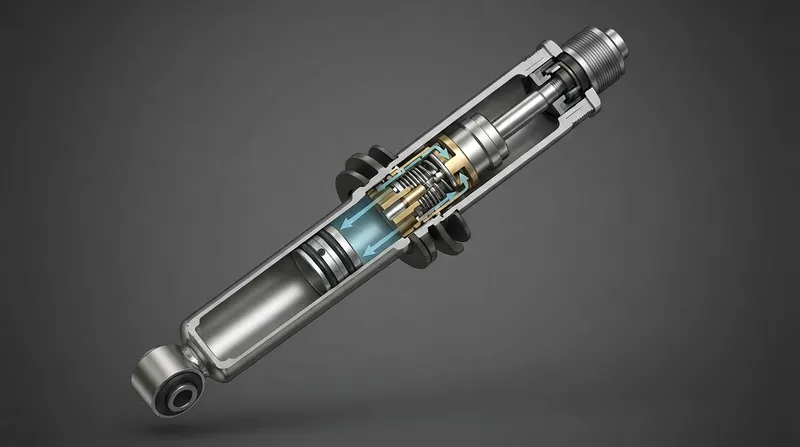
The Trade-Off Between High-Frequency and Low-Frequency Damping: How Shock Absorber Valving Dictates Ride and Handling
7 sources
Infrastructure Standard
Geely Takes 30 Percent Stake in Nio Power at $2.4 Billion Valuation to Expand Battery Swapping
7 sources

Charging Infrastructure
CCS, CHAdeMO, and GB/T: The Three Global Standards for EV Charging Connectors
6 sources

Solid-State Batteries
China Unveils National 5-Year Plan to Lead Global Solid-State Battery Mass Deployment by 2030
8 sources

Every angle. Every day.
Get Automotive & Transportation stories with full source coverage and perspective breakdowns delivered to your inbox.