
How Grocery-Anchored Fast Charging Is Reshaping the EV Adoption Curve
EVgo and Regency Centers are deploying over 400 new fast-charging stalls at grocery-anchored shopping centers nationwide. The expansion aligns with new data showing that visible, convenient charging infrastructure is now the primary driver of American consumer interest in electric vehicles.

Share this story
American drivers weighing the switch to an electric vehicle face a practical math problem: where the car will sit while they run their weekly errands. The next time they sign a lease or buy a vehicle, the deciding factor is increasingly the infrastructure built into their local grocery store parking lot. On Wednesday, charging network EVgo and real estate developer Regency Centers announced a massive expansion to deploy more than 400 new fast-charging stalls across the United States.[1]
The scale of the buildout targets the exact locations where drivers already spend their time. The new stalls will be installed at retail centers in metropolitan areas across Colorado, Florida, Illinois, New Jersey, New York, Pennsylvania, Texas, and Virginia. Regency Centers operates more than 480 shopping plazas nationwide, with over 80 percent of its portfolio anchored by major supermarkets like Publix, Kroger, and Whole Foods.
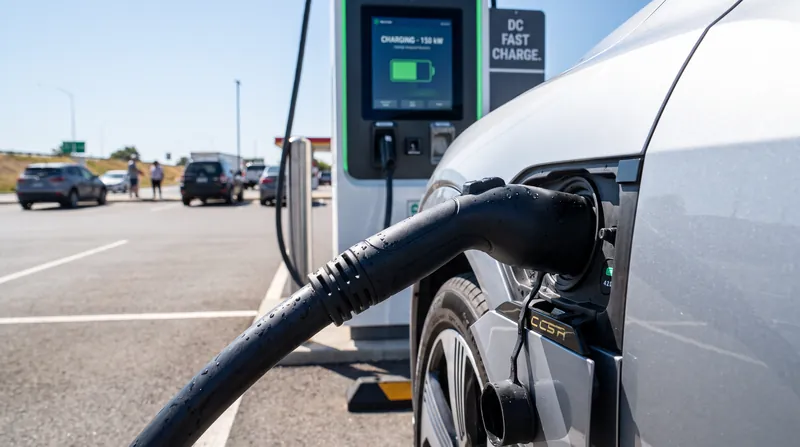
Each new EVgo site will feature up to 24 high-power chargers capable of delivering a full charge in as little as 15 minutes, depending on the vehicle's battery architecture. This hardware specification is deliberately matched to consumer behavior. According to Food Institute data cited by the companies, the average American household visits a grocery store two to three times per week, with an average dwell time of 23 minutes—creating a natural window for a fast charge without requiring a dedicated trip.
"EV drivers are looking for convenient charging options where they already spend their time, like grocery-anchored shopping centers," Scott Levitan, EVgo's executive vice president of growth, said in the announcement. The expansion will increase Regency's overall EV charging footprint by more than 20 percent, building on a partnership that began with a single charger in 2020 and has since grown to over 150 stalls.[1]
This real estate strategy arrives at a critical moment for the automotive market. While national EV market share dipped slightly to 5.37 percent in 2026, consumer interest is paradoxically moving in the opposite direction. The newly released HERE-SBD EV Index 2026 reveals that 53 percent of U.S. drivers are now more open to purchasing an EV than they were a year ago.[2][3][4]
The primary catalyst for that optimism is visible infrastructure. According to the HERE Technologies and SBD Automotive study, positive perceptions of public charging availability jumped from 28 percent to 47 percent over the past year. The United States added 31,600 public charge points during that window, representing a 13 percent increase in total ports and a massive 47 percent surge in total charge power, which climbed from 14.1 gigawatts to 20.7 gigawatts.[4]
"While EV uptake may be slowing, the findings suggest continued investment in charging infrastructure is starting to translate into greater consumer confidence," noted Robert Fisher, senior consulting manager at SBD Automotive. Among drivers considering an EV, 31 percent specifically cited charging infrastructure as a key factor driving their interest, while 35 percent pointed to improving range and charging speeds.[2][4]
For regional road trips, grocery-anchored charging fundamentally alters route planning. Instead of navigating to isolated charging hubs along interstate corridors, drivers can plan stops at suburban plazas that offer restrooms, food, and supplies. EVgo reports that roughly half of the drivers who stop at their charging sites enter the adjacent retail or food establishments, creating a dual benefit for the property owners hosting the hardware.
The shift toward retail-integrated charging also addresses a major hurdle for urban drivers and renters. The CEO of Xeal Energy, a firm specializing in multi-family charging, recently noted that reliable infrastructure at apartment complexes remains a primary bottleneck for adoption. By placing 24-stall fast-charging hubs at the supermarkets these residents already visit, the industry provides a viable alternative to home charging.[3]
Despite the physical expansion, the network must still overcome reliability hurdles. The J.D. Power 2026 U.S. Electric Vehicle Experience Public Charging Study, released in August, found that while satisfaction with DC fast chargers improved by 12 points to 666 on a 1,000-point scale, broken hardware remains a frustration. However, the study noted that the public charging failure rate has fallen to an all-time low of 12 percent, driven largely by newer, better-maintained networks entering the market.[5]
The financial mechanics of the EVgo and Regency Centers deal reflect a broader commercial real estate trend. Landlords are no longer viewing EV chargers as a niche amenity, but as a core utility that drives foot traffic and extends dwell time. When a driver plugs in for 20 minutes, they become a captive audience for the plaza's tenants.[1]
The trajectory of American EV adoption is now tethered to these local infrastructure deployments. The next barrier to clear is not the engineering of the battery, but the speed at which developers can secure grid interconnections and pour concrete in suburban parking lots.[4]
Viewpoints in depth
Charging Network Operators
Prioritizing high-utilization retail locations over isolated highway corridors.
For networks like EVgo, the economics of fast charging rely heavily on utilization rates. By placing 24-stall hubs in grocery-anchored plazas, operators capture drivers who are already running errands, eliminating the friction of a dedicated charging stop. This strategy also leverages the existing grid infrastructure of large commercial centers, which can sometimes accommodate high-power installations more easily than remote highway rest stops.
Commercial Real Estate Developers
Leveraging EV infrastructure to increase tenant foot traffic and property value.
Landlords like Regency Centers no longer view EV chargers as a niche amenity, but as a strategic asset. Industry data shows that roughly half of the drivers who stop to charge will enter the adjacent retail or food establishments. When a driver is tethered to a location for 20 to 30 minutes, they become a captive audience for the plaza's tenants, directly boosting sales for grocery anchors and adjacent restaurants.
EV Consumers
Demanding reliability and seamless integration into daily routines.
For the average driver, the transition to electric vehicles hinges on convenience. While early adopters were willing to navigate broken chargers and isolated locations, the mainstream market requires charging to be as effortless as buying groceries. The surge in consumer confidence tracked by the HERE-SBD EV Index reflects this shift: as chargers become highly visible fixtures in local supermarket parking lots, the perceived barrier to entry drops significantly, especially for renters who cannot charge at home.
Key points
- EVgo and Regency Centers are adding over 400 fast-charging stalls at grocery-anchored shopping plazas across the U.S.
- Each new site will feature up to 24 high-power chargers capable of a 15-minute charge.
- The 23-minute average grocery store dwell time naturally accommodates high-speed charging sessions.
- A new study shows 53 percent of U.S. drivers are more open to EVs than a year ago.
What we don’t know
- The exact timeline for when all 400 new charging stalls will be fully operational.
- How local utility grids will handle the sudden demand spikes of 24-stall high-power hubs operating simultaneously.
How we got here
2020
EVgo installs its first fast charger at a Regency Centers property.
August 2026
J.D. Power reports that public charging failure rates have fallen to an all-time low of 12 percent.
September 2026
The HERE-SBD EV Index reveals that 53 percent of U.S. drivers are more open to EVs than a year ago.
September 2026
EVgo and Regency Centers announce a massive expansion to add over 400 new fast-charging stalls nationwide.
- Charging Network Operators
- Prioritizing high-utilization retail locations over isolated highway corridors.
- Commercial Real Estate Developers
- Leveraging EV infrastructure to increase tenant foot traffic and property value.
- EV Consumers
- Demanding reliability and seamless integration into daily routines.
Perspectives this story doesn't cover
- Independent gas station owners losing foot traffic to grocery-anchored charging hubs
- Utility companies managing the localized grid strain of 24-stall high-power charging sites
Sources
Source coverage
5 outlets
3 viewpoints surfaced




- [1]InsideEVsCommercial Real Estate Developers
EVgo Is Adding More Fast Chargers Where You Buy Groceries
Read on InsideEVs → - [2]InsideEVsCommercial Real Estate Developers
More And More Americans Are Interested In EVs: Study
Read on InsideEVs → - [3]ForbesEV Consumers
Study Shows More U.S. Drivers Open To EVs Despite Sales Slump
Read on Forbes → - [4]GlobeNewswireEV Consumers
Americans warming up to EVs as charging infrastructure confidence grows, HERE-SBD EV Index 2026 finds
Read on GlobeNewswire → - [5]J.D. PowerEV Consumers
Public EV Charging Improves as OEM-Backed Networks Gain Traction
Read on J.D. Power →

More in Automotive & Transportation
See all →Vehicle Safety Standards
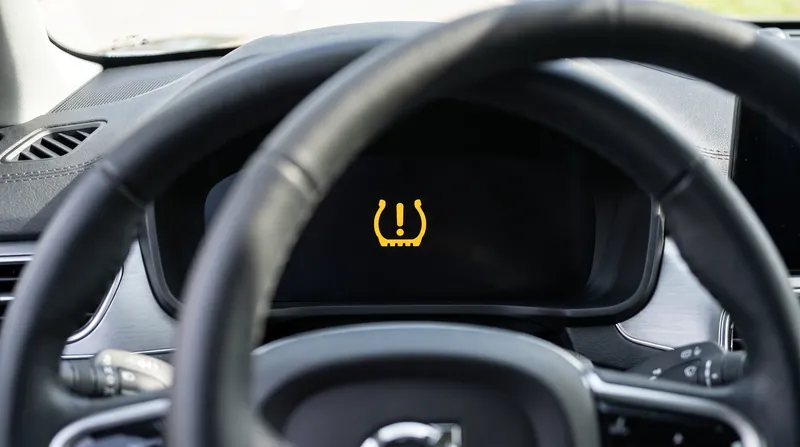
The 25 Percent Threshold: How Federal Standard 138 Dictates When Your Car's Tire Pressure Light Illuminates
8 sources
EV Charging Tech
The 30-Second Rule: How the SAE J2894 Standard Defines the Maximum Time an EV Can Sustain Peak DC Fast Charging Power
5 sources
F-150 Recall
Ford Begins Mailing Recall Letters to 223,000 F-150 Owners Over Fuel Tank Detachment Risk
4 sources
Tire Physics
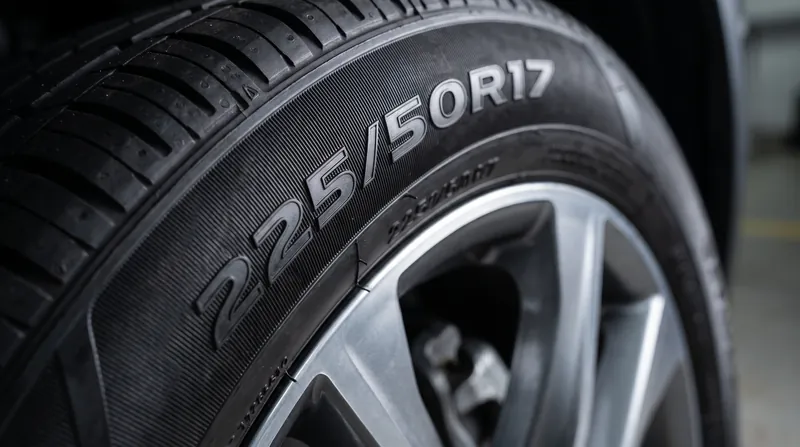
The 5-to-1 Ratio: How Tire Aspect Ratio Dictates Cornering Stiffness and Ride Comfort
9 sources
Comments
Every angle. Every day.
Get Automotive & Transportation stories with full source coverage and perspective breakdowns, free every day.