
CATL Begins Mass Production of Sodium-Ion EV Batteries, Launching First Cold-Weather-Optimized Passenger Car
Chinese battery giant CATL and Changan Automobile have launched the world's first mass-produced passenger EV powered by sodium-ion batteries, promising extreme cold-weather resilience and lower costs.
By Dev Anand

For drivers in cold climates, the electric vehicle transition has always come with a freezing-point caveat: winter weather guts battery range. That limitation is now being engineered out of existence. In a major milestone for automotive technology, Chinese battery giant CATL and automaker Changan have officially launched the world's first mass-production passenger vehicle powered by sodium-ion batteries. The vehicle, widely identified as the Changan Nevo A06, is slated to reach consumers by mid-2026, transitioning a chemistry that has spent a decade in the laboratory onto public roads.[1][4]
The rollout marks a fundamental shift in how electric vehicles are powered. During its recent Tech Day Event, CATL confirmed that its new sodium-ion battery line, branded as "Naxtra," has overcome the manufacturing bottlenecks that previously kept the technology from scaling. The company resolved critical engineering hurdles—including extreme water control, gas generation in hard carbon, and aluminum foil adhesion—to achieve gigawatt-hour-level industrialization.[3][4]
For the consumer, the most immediate impact of the Naxtra battery is its extreme temperature resilience. Traditional lithium-ion cells suffer severe performance degradation in freezing conditions, forcing owners to sacrifice range to keep the cabin and battery warm.
CATL's sodium-ion cells, however, are designed to operate efficiently in temperatures as low as minus 20 to minus 30 degrees Celsius. In extreme testing, the chemistry has demonstrated the ability to retain roughly 90 percent of its capacity even at minus 40 degrees Celsius, effectively neutralizing winter range anxiety for buyers in northern latitudes.[5]
Beyond weather resilience, the shift to sodium fundamentally alters the economics of electric vehicle production. Sodium is one of the most abundant elements on Earth, easily extracted from salt, bypassing the volatile, expensive, and geographically concentrated lithium supply chain. By utilizing widely available precursors, CATL is dramatically lowering the raw material entry threshold for automakers. This cost advantage positions sodium-ion as the ideal chemistry for entry-level passenger vehicles and urban commuters, where affordability is the primary barrier to adoption.[2][6]
The performance metrics of the new mass-produced cells are already competitive with established budget chemistries. The Naxtra batteries achieve an energy density of up to 175 watt-hours per kilogram, placing them on par with mainstream lithium iron phosphate (LFP) batteries. Vehicles equipped with these first-generation mass-market packs are expected to offer a cruising range of up to 400 to 500 kilometers. While this trails the ultra-long-range capabilities of premium lithium-nickel-manganese-cobalt packs, it is more than sufficient for daily commuting and regional travel.[3][5]
The scale of the initial deployment signals that this is not a pilot program, but a full commercial pivot. CATL executives expect between 10,000 and 20,000 electric vehicles to be fitted with the company's sodium-ion battery packs this year alone. As the world's largest manufacturer of EV batteries, CATL's commitment to the technology all but guarantees its rapid proliferation across the broader automotive sector.[5][6]
To support this rollout, CATL is also integrating sodium-ion technology into its broader infrastructure plans. The company is actively adapting the chemistry for commercial vehicles, grid-scale energy storage, and its expanding battery-swapping network. By 2026, CATL plans to open more than 3,000 Choco-Swap battery stations across China, with a heavy concentration in colder northern regions, ensuring that early adopters of sodium-ion vehicles have immediate access to rapid energy replenishment.[1][2]
Ultimately, the arrival of mass-market sodium-ion vehicles represents the beginning of a dual-chemistry ecosystem. Rather than replacing lithium entirely, sodium is poised to dominate the affordable, cold-weather, and utility segments, freeing up high-density lithium supplies for heavy-duty trucks and luxury long-range models. For the everyday car buyer, it means the electric vehicle market is about to become significantly more accessible, resilient, and immune to the supply shocks of the past decade.[1]
Perspectives explored
Battery Manufacturers' Strategy
Viewing sodium-ion as a necessary parallel chemistry to stabilize supply chains.
For battery giants like CATL, the push into sodium-ion is fundamentally about supply chain security and market segmentation. By developing a chemistry that relies on one of the Earth's most abundant elements, manufacturers can insulate themselves from the extreme price volatility of lithium and cobalt. They view the future not as a winner-take-all battle between chemistries, but as a dual-track ecosystem where sodium handles entry-level and cold-weather demands, reserving high-density lithium for premium, long-range applications.
Automakers' Affordability Push
Leveraging cheaper batteries to unlock the mass-market consumer segment.
Automakers see sodium-ion technology as the key to breaking the affordability barrier that has stalled EV adoption among middle- and lower-income buyers. Because the raw materials are drastically cheaper, car companies can produce profitable entry-level vehicles without relying on government subsidies. Furthermore, the inherent cold-weather resilience of sodium cells allows brands to market these vehicles aggressively in northern climates where traditional lithium-ion EVs have struggled to gain a foothold due to winter range degradation.
Industry Analysts' Cautious Optimism
Acknowledging the breakthrough while noting the remaining energy density gap.
Market analysts and industry observers recognize the launch of mass-produced sodium-ion cars as a watershed moment for the EV sector, particularly for cold-weather performance. However, they caution that the technology is still in its first commercial generation. With an energy density of 175 Wh/kg, sodium-ion currently matches older lithium iron phosphate (LFP) cells but trails the advanced ternary lithium packs used in luxury vehicles. Analysts predict that while sodium will dominate the budget and urban commuter segments, it will take several more years of refinement before it can compete in the heavy-duty or long-haul markets.
Key points
- CATL and Changan Automobile have launched the world's first mass-produced passenger EV powered by sodium-ion batteries.
- The new Naxtra battery cells retain up to 90 percent of their capacity in extreme sub-zero temperatures, eliminating winter range anxiety.
- By replacing expensive lithium with abundant sodium, the technology significantly lowers the raw material costs for entry-level vehicles.
- Up to 20,000 electric vehicles are expected to be fitted with the new sodium-ion battery packs by the end of the year.
Timeline
2016
CATL begins dedicated research and development into sodium-ion battery chemistries.
2021
The company unveils its first-generation sodium-ion cell in a laboratory setting.
April 2025
CATL launches the Naxtra brand, signaling the transition from lab concept to commercial product.
February 2026
Changan and CATL officially unveil the first mass-production passenger vehicle equipped with the technology.
Mid-2026
The first wave of sodium-ion powered EVs is scheduled to reach consumer markets.
- Battery Manufacturers
- Viewing sodium-ion as a necessary parallel chemistry to stabilize supply chains.
- Automakers
- Leveraging cheaper batteries to unlock the mass-market consumer segment.
- Industry Analysts
- Acknowledging the breakthrough while noting the remaining energy density gap.
Perspectives this story doesn't cover
- Lithium Mining Industry
- Legacy Western Automakers
Sources
Source coverage
6 outlets
3 viewpoints surfaced






- [1]CATL OfficialBattery Manufacturers
CHANGAN Automobile, in partnership with CATL, today unveiled the world's first mass-production passenger vehicle equipped with sodium-ion batteries
Read on CATL Official → - [2]CarNewsChinaAutomakers
CATL will launch a series of mass-produced sodium-ion battery products this year
Read on CarNewsChina → - [3]ElectrekIndustry Analysts
CATL is bringing sodium-ion batteries to EVs in 2026
Read on Electrek → - [4]New AtlasAutomakers
CATL's Naxtra sodium-ion battery powers the Changan Nevo A06, offering extreme cold performance
Read on New Atlas → - [5]CnEVPostBattery Manufacturers
An executive at CATL expects 10,000 to 20,000 electric vehicles to carry the company's sodium-ion batteries this year
Read on CnEVPost → - [6]The CooldownIndustry Analysts
CATL says 2026 may be the year sodium-ion cells begin appearing in production vehicles
Read on The Cooldown →
More in Automotive & Transportation
See all →Auto Trade War
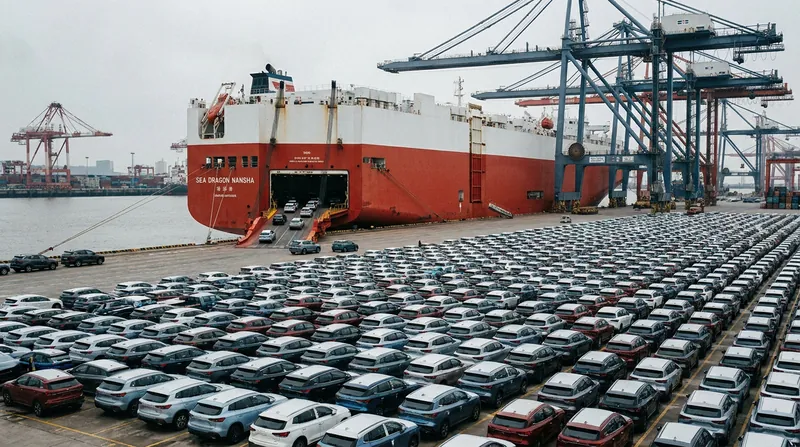
Stellantis Splits Global Auto Strategy, Isolating U.S. Market From Chinese Partnerships
3 sources

Automotive Restructuring
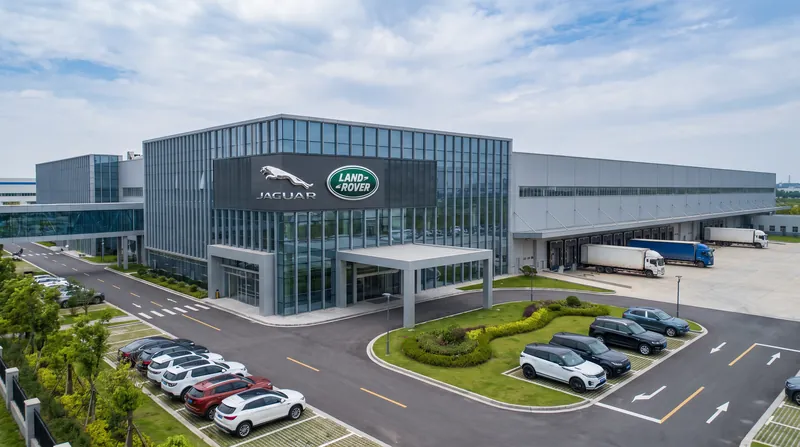
Jaguar Land Rover to Cut 4,000 Jobs in Pivot to Lower-Volume Luxury EVs
6 sources
Auto Exports
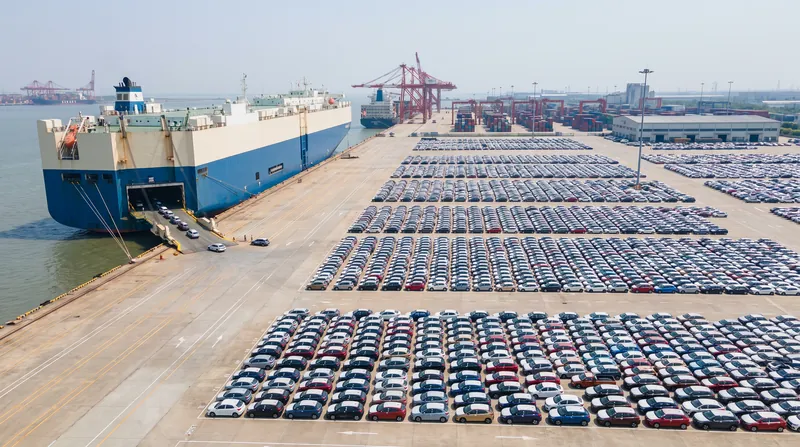
Chinese Automakers' Exports Surge 67% to 6.14 Million Units, Reshaping Global Market
5 sources
Labor Relations
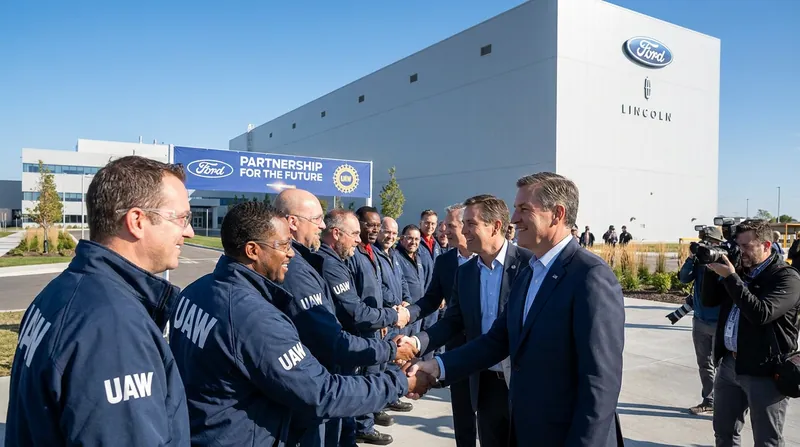
Ford and Unifor Reach Tentative Labor Agreement, Averting Canadian Auto Strike
4 sources
Comments
Every angle. Every day.
Get Automotive & Transportation stories with full source coverage and perspective breakdowns, free every day.