
Ford and Unifor Reach Tentative Labor Agreement, Averting Canadian Auto Strike
A last-minute tentative agreement between Ford and Canada's largest private-sector union secures thousands of jobs and establishes a baseline for upcoming negotiations with General Motors and Stellantis.

Share this story
The threat of a crippling shutdown in the Canadian auto sector has been neutralized. Late Tuesday evening, Ford Motor Company and Unifor—Canada’s largest private-sector union—announced a tentative collective bargaining agreement, narrowly averting a strike that would have sidelined over 5,600 workers.[1][2]
The breakthrough arrived just hours before a midnight strike deadline, bringing a collective sigh of relief to North American supply chains. Had workers walked off the job at Ford’s Oakville Assembly Complex and Windsor engine plants, the ripple effects would have stalled production lines across the United States within days.[4]
To understand why this single deal matters so much, one must look at the mechanics of "pattern bargaining." In the auto industry, unions rarely negotiate with all three major automakers—Ford, General Motors, and Stellantis—simultaneously. Instead, they select one "target" company to set the benchmark.
By focusing all their leverage on Ford, Unifor established a baseline contract. Now, the union will pivot to GM and Stellantis, demanding they match the economic terms established in the Ford agreement. If the pattern holds, this single handshake dictates the future for nearly 20,000 Canadian auto workers.
While the full ratification vote is pending, early details reveal substantial economic gains for the workforce. The tentative agreement reportedly includes base wage increases approaching 18% over the three-year life of the contract, addressing years of inflationary pressure that had eroded worker purchasing power.[1][2]
Beyond immediate hourly wages, the negotiations heavily featured retirement security. Unifor leadership had drawn a hard line on restoring defined-benefit pension elements and improving transition supports for older workers, signaling a shift back toward long-term worker retention.
However, the most complex puzzle at the bargaining table wasn't just about money; it was about the existential shift to electric vehicles. As automakers retool factories for battery-electric architectures, fewer moving parts mean fewer traditional assembly jobs.[3]
Ford’s Oakville plant is currently undergoing a massive transformation into a high-volume EV manufacturing hub. Unifor’s primary objective was securing ironclad job guarantees during this retooling phase, ensuring that workers displaced by the transition are either retrained, compensated, or guaranteed placement in the new battery-centric ecosystem.[3][4]
For Ford, the agreement represents a calculated investment in stability. The automaker is pouring billions into its electrification strategy and cannot afford the cash-burn of a prolonged work stoppage. Securing labor peace allows Ford to maintain its aggressive production timelines for next-generation EVs without the looming threat of picket lines.[3]
The broader economic implications are massive. The North American automotive supply chain is highly integrated, with parts crossing the US-Canada border multiple times before a vehicle is finished. A strike in Windsor, which produces critical V8 engines for Ford's highly profitable F-Series trucks assembled in the US, would have choked off the company's primary revenue engine.[1][4]
The tentative deal now goes to the rank-and-file membership for ratification. Unifor will hold a series of informational meetings over the coming weekend, culminating in a binding vote. Historically, deals endorsed by the national bargaining committee pass, though recent years have seen increasingly vocal pushback from local chapters demanding more.[2]
Assuming ratification, the clock immediately restarts. Unifor will formally declare its next target—likely Stellantis, given its massive footprint in Windsor and Brampton—and present the Ford contract as the non-negotiable floor.
This labor victory in Canada mirrors a broader global resurgence in organized labor within the manufacturing sector. From the UAW strikes in the United States to industrial actions in Europe, workers are successfully leveraging the fragile, post-pandemic supply chain to claw back concessions made during previous financial crises.[4]
Ultimately, the Ford-Unifor agreement is a blueprint for managing industrial transition. It proves that the shift to electric mobility—often framed as a threat to traditional manufacturing jobs—can be navigated collaboratively, preserving the middle-class foundation of the auto industry while modernizing its output.[3]
Perspectives explored
Unifor Leadership & Workers
Securing the middle class through the EV transition.
For the union, this negotiation was about survival in a changing industry. Unifor leadership recognized that the transition to electric vehicles—which require fewer parts and less labor to assemble—posed an existential threat to their membership. By securing strict job guarantees and transition support during plant retooling, the union aims to ensure that the green energy transition does not come at the expense of middle-class manufacturing jobs. Additionally, clawing back wage increases was seen as a non-negotiable remedy for years of high inflation.
Ford Management
Buying stability during a costly technological pivot.
From the automaker's perspective, a strike in 2026 would have been disastrous. Ford is currently spending billions to retool its facilities and develop next-generation electric architectures. A prolonged shutdown of its Windsor engine plant would have starved its highly profitable internal-combustion truck lineup, cutting off the cash flow needed to fund the EV pivot. Management viewed the generous wage increases as a necessary premium to buy labor peace and maintain predictable production schedules.
Industry Analysts
Watching the ripple effects on competitors and consumers.
Market watchers are primarily focused on what this means for General Motors and Stellantis. Because of pattern bargaining, Ford's competitors will now be forced to accept similar labor cost increases, leveling the playing field but raising the overall cost of manufacturing in Canada. Analysts warn that while the deal stabilizes the supply chain in the short term, automakers will likely attempt to pass these increased labor costs onto consumers through higher vehicle prices in the coming model years.
Open questions
- Whether the rank-and-file membership will vote to ratify the tentative agreement this weekend.
- Which automaker (GM or Stellantis) Unifor will target next for pattern bargaining.
- Exactly how much the increased labor costs will impact the final consumer price of Ford's upcoming vehicles.
- Organized Labor
- Emphasizes fair compensation for inflation and protecting jobs during the EV transition.
- Automakers
- Prioritizes predictable labor costs and avoiding production halts while investing heavily in new technology.
- Economic Analysts
- Focuses on the macroeconomic impact, supply chain stability, and the ripple effects across North America.
Sources
Source coverage
4 outlets
3 viewpoints surfaced




- [1]ReutersEconomic Analysts
Ford, Unifor reach tentative deal to avert Canadian strike
Read on Reuters → - [2]UniforOrganized Labor
Unifor Reaches Tentative Agreement with Ford Motor Company
Read on Unifor → - [3]Ford Media CenterAutomakers
Ford Commits to Canadian Manufacturing Future in New Labor Agreement
Read on Ford Media Center → - [4]BloombergEconomic Analysts
Auto supply chains stabilize following Canadian labor breakthrough
Read on Bloomberg →

More in Automotive & Transportation
See all →Telluride Recall
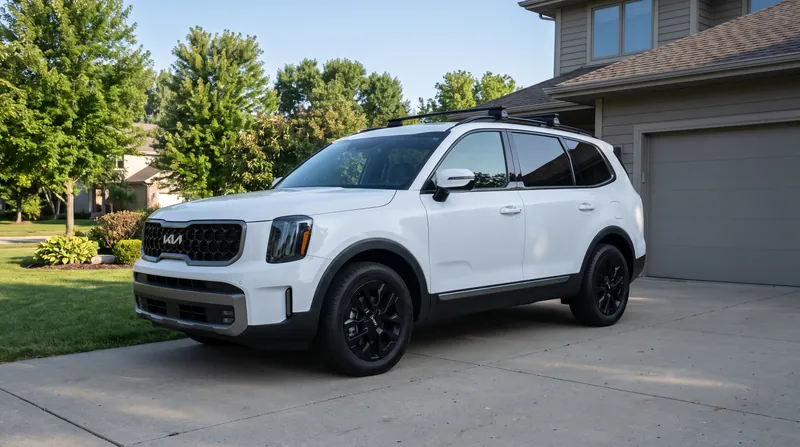
Kia Issues Second Recall for 460,000 Telluride SUVs After Previous Fire-Risk Fix Fails
8 sources
EV Market
Honda Kills U.S. Prologue EV After Just Three Years, Pivots Strategy to Hybrid Models Amid Slowing Demand
6 sources

Auto Industry Shift
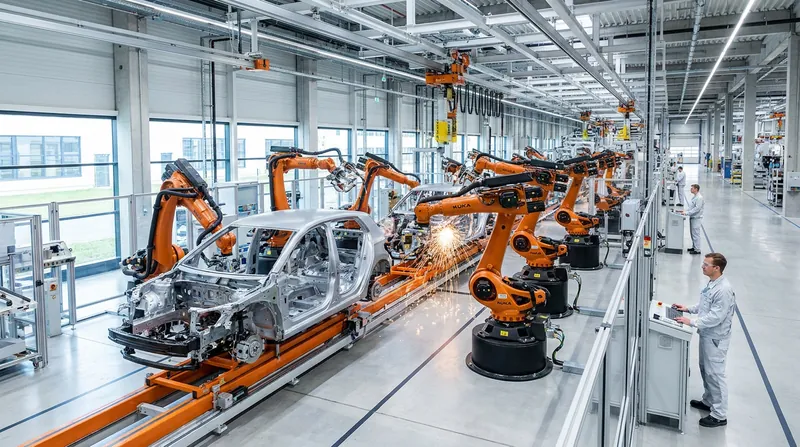
Why Volkswagen Plans to Close Four German Factories and Cut Up to 100,000 Jobs
5 sources
EV Tech
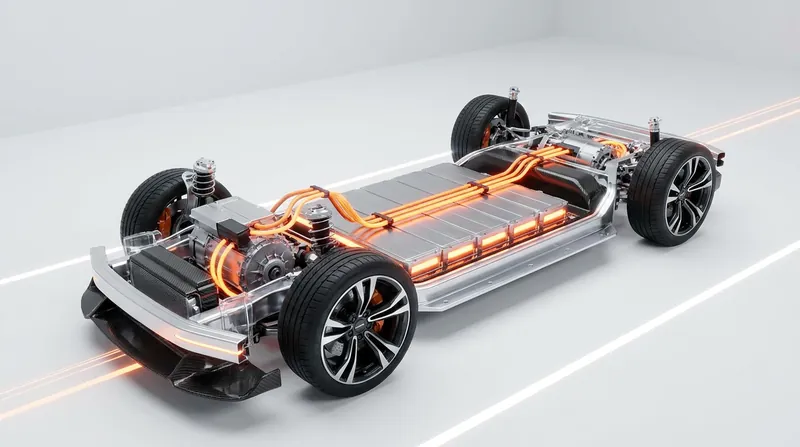
Why 800-Volt EV Systems Cut Heat and Weight to Enable Faster Charging
2 sources
Comments
Every angle. Every day.
Get Automotive & Transportation stories with full source coverage and perspective breakdowns, free every day.