
The Mechanics of the New European Wall: How the ETIAS Mandate Reshapes US Access to the 30-Country Schengen Zone
Starting in late 2026, the European Union will require U.S. citizens to secure a digital ETIAS travel authorization before boarding flights to the Schengen Zone. The €20 pre-screening system marks the end of frictionless, passport-only access to the continent.

- European Border Authorities
- EU officials view the mandate as a necessary security modernization that aligns Europe with global standards.
- The Travel Industry
- Tourism operators are bracing for a wave of passenger confusion and boarding denials during the initial rollout.
- US Diplomatic Guidance
- State Department guidance focuses on ensuring citizens are aware of and compliant with the new entry requirements.
How we got here
2016
The European Commission first proposes the ETIAS system to improve security across the Schengen Area.
Sep 2018
The European Parliament and Council formally establish the ETIAS regulation, initially targeting a 2021 launch.
2020–2024
Technical challenges and the integration of the Entry/Exit System (EES) cause multiple multi-year delays.
Late 2025
The EES biometric tracking system is scheduled to begin implementation at European borders.
Q4 2026
The ETIAS mandate is officially scheduled to go live, requiring digital pre-authorization for visa-exempt travelers.
Why it matters
Starting in late 2026, the decades-old norm of frictionless, passport-only European travel ends for Americans. Anyone planning a trip to the 30-country Schengen Zone will need to secure digital pre-authorization and pay a fee before they are allowed to board their flight.
Stepping off a transatlantic flight in Paris, Rome, or Reykjavik has long meant a quick passport stamp and a frictionless welcome to Europe. For decades, the United States passport has served as a golden ticket, granting its holder immediate, unquestioned access to the continent's most iconic destinations. But starting in the fourth quarter of 2026, that era of completely open access is getting a digital checkpoint. The European Union is fundamentally reshaping its borders, introducing a mandatory pre-travel clearance system that will alter how millions of Americans plan and execute their European vacations.[1]
The new mandate is known as the European Travel Information and Authorisation System, or ETIAS. It is designed for visitors from over sixty currently visa-exempt countries, including the United States, Canada, and the United Kingdom. While European officials are careful to clarify that ETIAS is not a traditional visa, it functions as a strict electronic waiver that screens travelers before they are ever allowed to board a flight or cruise ship bound for the Schengen Zone. The system covers thirty European nations, encompassing the entire Schengen Area as well as countries like Cyprus that are in the process of joining.[1][3][4][6]
The mechanics of the new system are straightforward, yet they represent a structural shift in transatlantic travel habits. Before booking a cycling tour through the Alps or a Mediterranean sailing charter, travelers will need to log onto the official European Union portal or a dedicated mobile app. The application requires applicants to input basic biographical data, passport details, and their intended first country of entry. It also mandates answers to a standardized set of background questions regarding criminal history, past European travel, and specific security concerns. For families traveling together, parents or legal guardians will need to complete the digital forms on behalf of their minor children, ensuring every single member of the party is cleared before departure.[1][4][5][6][8]
Securing this digital authorization will come with a mandatory fee set at €20, which is approximately $22 depending on exchange rates. This price point is a recent adjustment from the originally proposed €7 fee, a change European authorities attribute to inflation and the integration of advanced technical features since the system was first conceived in 2018. The fee applies to most adults, though travelers under the age of 18 or over the age of 70 are expected to be exempt from the financial charge while still being required to complete the authorization process.[1][4][6]

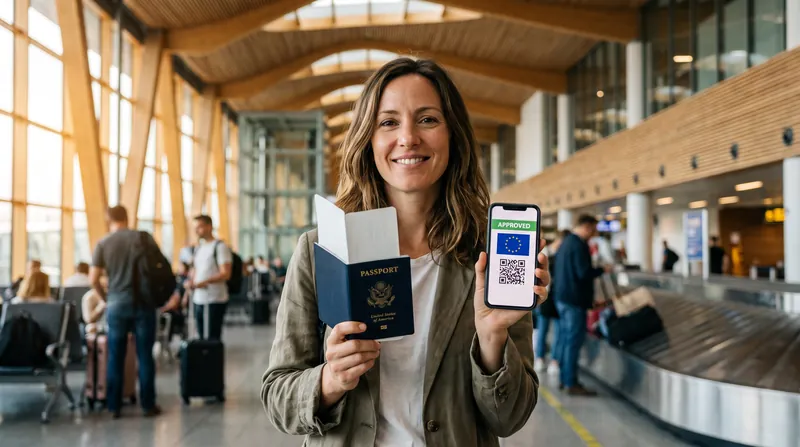
For the vast majority of American vacationers, the approval process will be nearly instantaneous. Once the online form is submitted, automated systems will immediately cross-reference the applicant's data against a network of European and international security databases, including Europol and Interpol watchlists. If the system detects no red flags or matching records, the ETIAS authorization is granted within minutes. The approval is entirely digital, linking directly to the traveler's passport chip without the need for physical paperwork or embassy visits.[1][5][7][8]
For the vast majority of American vacationers, the approval process will be nearly instantaneous.
Once approved, an ETIAS waiver offers significant longevity. The authorization remains valid for three consecutive years, or until the passport used to apply expires—whichever event occurs first. This multi-year validity is a crucial feature for frequent travelers, meaning that business professionals and annual vacationers will not need to reapply or pay the fee for every single trip. It preserves a degree of the spontaneity that has long characterized travel to Europe, provided the initial digital hurdle has been cleared.[3][4][5][6]
However, the mandate introduces a rigid new hard stop at the departure gate that travelers have never faced before when heading to Europe. Airlines, maritime carriers, and international coach operators will be legally required to verify a passenger's ETIAS status before allowing them to board their vessel. Arriving at an American airport without an approved ETIAS will result in an immediate denial of boarding, regardless of how much was spent on the ticket. There will be no option to bypass the airline check or attempt to sort out the paperwork upon arrival at a European immigration desk; the digital wall begins in the traveler's home country, shifting the burden of compliance entirely onto the passenger before they even check their luggage.[1][4][5][8]
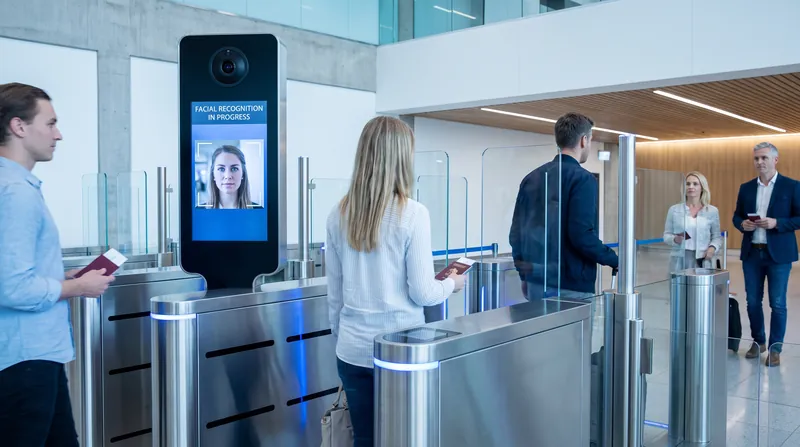
The ETIAS rollout is not an isolated policy, but rather one half of a massive, multi-billion-euro overhaul of Europe's external border infrastructure. It works in direct tandem with the Entry/Exit System (EES), a separate biometric tracking program scheduled to begin implementation in late 2025. While ETIAS handles the pre-screening of travelers before they arrive, the EES will replace traditional physical passport stamps with digital biometric tracking at the border, recording facial images and fingerprints to strictly monitor the 90-day Schengen stay limit.[6][7][8]
European policymakers emphasize that this digital transformation is not intended to deter tourism, which remains a foundational pillar of the continent's economy. Instead, it is framed as a necessary modernization to close long-standing security loopholes and manage irregular migration in an increasingly complex global landscape. By identifying high-risk individuals before they reach European soil, authorities argue that the physical border crossing will actually become faster and safer for the millions of legitimate travelers who visit each year.[1][6][7][8]
Despite the streamlined technology, the transition will inevitably come with significant growing pains for the international travel sector. Travel advisors and tour operators are already bracing for a wave of passenger confusion during the initial months of the Q4 2026 launch. Because generations of Americans are accustomed to booking last-minute flights with nothing but a valid passport, industry experts warn that thousands of casual vacationers may arrive at airports entirely unaware of the new digital requirement. This lack of awareness is expected to lead to missed flights, disrupted itineraries, and severe customer service bottlenecks at departure gates, prompting the European Union to plan extensive public awareness campaigns in the lead-up to the rollout.[1][4][5]
For the American adventurer, the era of the completely open European shore is drawing to a close, replaced by a managed, digitized gateway. The continent's mountains, cities, and coastlines remain as accessible as ever, but the price of entry has fundamentally changed. It now includes a €20 fee, a brief online background check, and the new reality that European border control no longer begins when you land in Paris or Rome—it begins the moment you start packing your bags at home.[1][2][5]
What to know
- Starting in late 2026, U.S. citizens and other visa-exempt travelers will need an approved ETIAS waiver to enter 30 European countries.
- The digital application costs €20 and requires travelers to provide biographical data and answer background security questions.
- Most applications will be approved within minutes, and the authorization remains valid for three years or until the traveler's passport expires.
- Airlines and cruise ships will be legally required to verify ETIAS approval before allowing passengers to board their vessels.
Where opinion splits
European Border Authorities
EU officials view the mandate as a necessary security modernization that aligns Europe with global standards.
For European policymakers, ETIAS is the missing piece in a comprehensive border security overhaul. By pre-screening visa-exempt travelers against Europol and Interpol databases, authorities can identify individuals tied to terrorism, serious crime, or irregular migration before they reach European soil. Officials emphasize that this digital wall actually facilitates smoother travel for the vast majority of legitimate tourists, moving the security friction away from the physical border and into a quick, automated online process.
The Travel Industry
Tourism operators are bracing for a wave of passenger confusion and boarding denials during the initial rollout.
While the travel industry broadly supports secure borders, operators are highly concerned about the transition period. Because ETIAS is checked at the departure gate, airlines and cruise ships bear the operational burden of turning away non-compliant passengers. Industry advocates warn that despite public awareness campaigns, thousands of casual vacationers accustomed to last-minute, passport-only travel will inevitably arrive at U.S. airports unaware of the new €20 digital requirement, leading to ruined trips and customer service bottlenecks.
Sources
Source coverage
8 outlets
3 viewpoints surfaced








[1]European Union ETIAS PortalEuropean Border Authorities
European Travel Information and Authorisation System (ETIAS)
Read on European Union ETIAS Portal →[2]US Department of StateUS Diplomatic Guidance
Schengen Area Countries - Travel Requirements
Read on US Department of State →[3]WikipediaUS Diplomatic Guidance
European Travel Information and Authorisation System
Read on Wikipedia →[4]Schengen Visa InfoThe Travel Industry
ETIAS - European Travel Information and Authorisation System
Read on Schengen Visa Info →[5]Factlen Editorial TeamThe Travel Industry
Synthesis by Factlen editorial team
Read on Factlen Editorial Team →[6]European CommissionEuropean Border Authorities
Smart Borders: European Travel Information and Authorisation System
Read on European Commission →[7]European CouncilEuropean Border Authorities
ETIAS: The EU's new travel authorisation system
Read on European Council →[8]European ParliamentEuropean Border Authorities
Management of the external borders
Read on European Parliament →
Comments

Every angle. Every day.
Get travel stories with full source coverage and perspective breakdowns delivered to your inbox.