
Department of Education Rescinds Disparate Impact Standard from Title VI Regulations
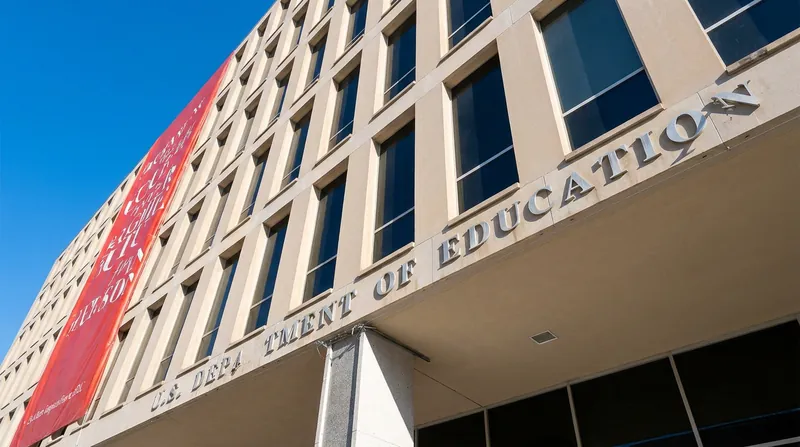
The U.S. Department of Education has eliminated "disparate impact" liability from its civil rights enforcement, meaning schools will now only face federal investigation for intentional discrimination.
By Hui Lin

- Civil Rights Advocates
- Emphasize the need for legal tools to combat systemic, unintentional discrimination in school policies.
- Federal Deregulators
- Focus on aligning enforcement with statutory text and eliminating liability based purely on statistical outcomes.
- Legal & Compliance Advisors
- Focus on the practical implications for school liability and the shift toward state-level enforcement.
Fast facts
- The Education Department eliminated 'disparate impact' liability from its Title VI regulations.
- Federal investigators will now only pursue civil rights cases involving intentional discrimination.
- The rule change took effect immediately without a standard public comment period.
- Civil rights groups warn the move will make it harder to challenge unequal school discipline.
- Schools remain bound by state-level civil rights laws and local equity policies.
Why this matters
This rule change drastically raises the burden of proof for federal civil rights complaints in education, meaning schools will no longer face federal penalties for policies that unintentionally burden minority students. For parents and advocates, challenging unequal school discipline or zoning will now largely require relying on state laws rather than federal intervention.
The U.S. Department of Education has eliminated the "disparate impact" standard from its Title VI regulations, meaning schools will now only face federal civil rights investigations if there is proof of intentional discrimination. Published in the Federal Register and effective immediately without a prior public comment period, the final rule drastically narrows the federal compliance risks for K-12 districts and universities.[1][4]
For decades, the disparate impact framework allowed federal investigators to challenge facially neutral school policies if demographic data showed they disproportionately burdened students of a particular race, color, or national origin. Under this standard, a Title VI civil rights violation could be established without proving discriminatory intent, provided the policy in question caused unjustified statistical disparities in areas like school discipline, attendance boundaries, or access to advanced coursework.[3][4]
The regulatory change aligns the Education Department with Executive Order 14281, a broader administration directive aimed at eliminating disparate-impact liability across all federal agencies. In its official announcement, the department argued that the previous standard lacked statutory justification under the Civil Rights Act of 1964 and effectively forced educational institutions to engage in "racial balancing" to avoid federal scrutiny and the potential loss of funding.[2][4]
Department officials explicitly criticized past enforcement strategies, stating that previous administrations had "weaponized" the disparate impact tool. The agency argued that the Office for Civil Rights (OCR) had previously found schools guilty of violating Title VI for even-handedly applying race-neutral policies solely because the resulting data indicated that minority students were disciplined at higher rates.[2][4]
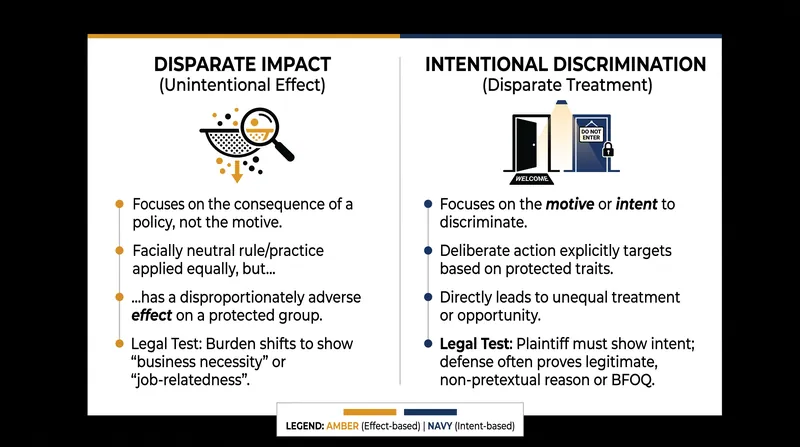
For school administrators, the actionable takeaway is a shift in federal liability. OCR will no longer mandate corrective actions against schools based solely on the unintended discriminatory effects of facially neutral policies. Legal analysts advise that institutions with pending OCR matters relying exclusively on disparate-impact allegations will likely see those cases dismissed or narrowed.[3]
For school administrators, the actionable takeaway is a shift in federal liability.
However, schools must still navigate a complex web of state and local regulations. While the federal government has stepped back, Title VI's ban on intentional discrimination remains intact, and OCR will continue to investigate complaints of deliberate bias and discriminatory harassment. More importantly, institutions remain fully bound by state-level civil rights laws and local school board equity policies, meaning districts cannot simply abandon their data-tracking or equity initiatives without risking state-level litigation.[3][4]
Education leaders have echoed this sentiment, urging districts to maintain equitable practices regardless of the federal posture. The National School Boards Association issued a statement clarifying that the federal administrative change does not supersede state constitutional guarantees or local duties. The organization emphasized that state legislatures and local boards must continue to ensure robust civil rights protections remain firm in their communities.[4]
The rescission has drawn sharp condemnation from a coalition of 60 civil rights and education advocacy organizations. These groups argue that discrimination in the modern era is rarely explicit or documented in official policy, making intentional bias exceedingly difficult to prove. By removing the disparate impact standard, advocates warn that the government is stripping away a vital mechanism for identifying and correcting systemic exclusion.[1][4]

The impact of this rule change is expected to be most pronounced in the realm of school discipline. Across the country, demographic data consistently shows that Black, Latino, and Native American students are disproportionately subjected to exclusionary punishments, such as suspensions, expulsions, and transfers to alternative schools. The disparate impact standard was the primary legal lever used to force districts to revise disciplinary codes that produced these unequal outcomes.[1][5]
The Education Department's move is part of a coordinated, government-wide shift away from statistical liability. Over the past year, the Justice Department, the Department of Energy, and the Equal Employment Opportunity Commission have all rescinded their respective disparate impact guidance, fundamentally reshaping the federal government's approach to civil rights enforcement across housing, employment, and education.[1][3]
Because the Education Department issued the final rule immediately and bypassed the standard advance notice-and-comment process, legal experts anticipate imminent challenges in federal court. Advocacy groups are likely to argue that the abrupt regulatory change violates the Administrative Procedure Act, setting the stage for a protracted legal battle over the limits of executive authority in civil rights enforcement.[3][4]
Ultimately, the policy shift places the burden of proof squarely on demonstrating deliberate discriminatory intent. While federal regulators step back from policing statistical outcomes and systemic disparities, the responsibility for ensuring equitable educational access now falls heavily on state education agencies, local school boards, and private litigation under state laws.[1][4]
Viewpoints in depth
The Federal Administration's View
The Education Department argues the previous standard exceeded statutory authority and forced racial balancing.
Federal officials contend that the disparate impact standard was 'weaponized' to penalize schools for applying race-neutral policies even-handedly. By relying solely on statistical outcomes, the administration argues that the old framework effectively forced districts to engage in racial balancing to avoid federal investigations and the potential loss of funding. The new rule is framed as a return to the original statutory text of the Civil Rights Act, ensuring that federal law targets actual, intentional prejudice rather than statistical disparities.
Civil Rights Advocates' View
Advocacy groups warn that removing the standard strips away the primary tool for fighting systemic discrimination.
A coalition of 60 civil rights organizations argues that modern discrimination is rarely explicit or documented in official policy. They maintain that facially neutral policies—such as zero-tolerance discipline codes or restrictive attendance boundaries—often carry deep, systemic biases that disproportionately harm Black, Latino, and Native American students. By requiring proof of intentional bias, advocates argue the federal government is creating an impossibly high burden of proof that will allow discriminatory practices to flourish unchecked.
Local School Boards' View
School board associations emphasize that local and state equity mandates remain fully in effect.
For local administrators, the federal rollback does not erase their obligations to their communities. Organizations like the National School Boards Association have publicly stated that federal administrative changes do not supersede state constitutional guarantees or local equity policies. They urge districts to continue monitoring their own demographic data and revising policies that create unnecessary barriers for marginalized students, noting that state-level civil rights laws still provide avenues for disparate-impact litigation.
Sources
Source coverage
5 outlets
3 viewpoints surfaced





[1]AP NewsCivil Rights Advocates
Education Department rescinds disparate impact rule, a key tool used to assess school discrimination
Read on AP News →[2]U.S. Department of EducationFederal Deregulators
U.S. Department of Education Removes Disparate-Impact from Title VI Regulations
Read on U.S. Department of Education →[3]Nixon PeabodyLegal & Compliance Advisors
Department of Education ends disparate-impact enforcement under Title VI
Read on Nixon Peabody →[4]Higher Ed DiveCivil Rights Advocates
The U.S. Department of Education's Office for Civil Rights announced Thursday that it has rescinded regulations to implement disparate impact provisions
Read on Higher Ed Dive →[5]Los Angeles TimesCivil Rights Advocates
Education Department rescinds disparate impact rule, a key tool used to assess school discrimination
Read on Los Angeles Times →
Comments



Every angle. Every day.
Get education stories with full source coverage and perspective breakdowns delivered to your inbox.