
How Waymo's Sixth-Generation Robotaxis Are Engineered to Conquer Winter Weather
Waymo is expanding its driverless ride-hailing service to Denver, deploying a new fleet of purpose-built vehicles equipped with advanced sensors designed to navigate snow and ice.
By Derya Kaplan

Everyone assumes autonomous vehicles are strictly a Sun Belt phenomenon, confined to the perfect, predictable weather of Phoenix or Los Angeles. But the evidence points to a massive shift: the next phase of the robotaxi race is tackling the hardest problem in driving—winter.[1]
The catalyst for this shift is Waymo's recent expansion into four new markets: San Diego, Las Vegas, Tampa, and crucially, Denver. While the first three fit the traditional warm-weather mold, Denver represents a deliberate push into a climate that experiences freezing temperatures, black ice, and heavy snowfall.[1][7]
For a local commuter, this isn't just an abstract technological milestone; it dictates whether they can rely on an autonomous vehicle to get to work in a January blizzard. Snow has historically been the ultimate blind spot for self-driving cars, scattering LiDAR laser beams and obscuring the lane markings that vision systems rely on.[6]
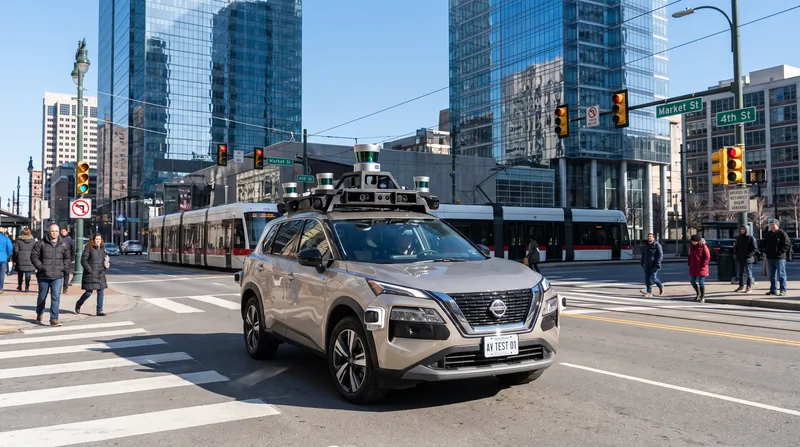
To solve this, Waymo is deploying its sixth-generation "Waymo Driver" system, housed in a new, purpose-built vehicle called the Ojai. Manufactured in partnership with Zeekr and upfitted in Mesa, Arizona, the Ojai abandons the Jaguar I-Pace platform in favor of a boxy, minivan-like silhouette designed specifically for ride-hailing.[2][4]
The hardware overhaul is significant. The sixth-generation system actually reduces the total number of cameras from 29 to 13, while cutting back on LiDAR and radar units. Instead of relying on sheer volume, the system uses a 17-megapixel core sensor that captures higher-resolution images and maintains stability across extreme temperature fluctuations.[3][6]
When a rider summons an Ojai in a Denver snowstorm, the vehicle relies on integrated cleaning mechanisms that actively clear raindrops, road grime, and ice from the camera lenses. If visual sensors are still compromised by whiteout conditions, the system's next-generation imaging radar—powered by custom algorithms—takes over to track the distance and speed of surrounding objects.[3][5]
The vehicle also incorporates external audio receivers positioned around its perception dome. These sensors localize critical sounds like emergency sirens or train crossings, filtering out the acoustic interference caused by high winter winds to ensure the vehicle responds appropriately to its environment.[5]
Waymo didn't develop these capabilities in a simulator alone. The software was trained through extensive winter testing in Michigan's Upper Peninsula, upstate New York, and the Sierra Nevada mountains. This real-world data allows the system to differentiate between a harmless snowdrift and a solid obstacle.[1]
Beyond the weather tech, the Ojai's interior is designed around the passenger experience. It features dual-sliding elevator-style doors, a completely flat floor, and a higher ceiling. For riders with mobility challenges, the vehicle includes seat-integrated support handles, embedded braille, and screen-reader compatibility.[2]
The economics of the Ojai are equally critical to Waymo's expansion. By utilizing a lower-cost base vehicle and reducing the sensor count, the new platform is projected to cost less than half of the outgoing Jaguar models. This cost reduction is what makes scaling to tens of thousands of units financially viable, even with the tariffs applied to Chinese-built EV chassis.[4][6]
As Waymo targets one million weekly trips by the end of 2026, the Denver deployment serves as the ultimate proving ground. If the sixth-generation driver can reliably navigate a Rocky Mountain winter, the geographic limitations on autonomous ride-hailing will effectively disappear, opening the door to nationwide adoption.[7][8]
Where opinion splits
Autonomous Mobility Advocates
Argue that scaling into harsh weather proves the viability of robotaxis as a year-round transit solution.
This camp views the Denver expansion as the definitive answer to the industry's biggest critique: that self-driving cars are merely fair-weather novelties. By successfully deploying the sixth-generation driver in snow and ice, advocates argue that autonomous networks can finally offer equitable, 24/7 mobility to cities that experience all four seasons. They point to the millions of test miles logged in Michigan and upstate New York as proof that the software is ready for the rigors of a Rocky Mountain winter.
Automotive Tech Analysts
Focus on the hardware economics, noting that the 6th-gen system reduces sensor counts and costs.
For industry analysts, the real breakthrough isn't just the weatherproofing—it's the unit economics. The transition to the Zeekr-built Ojai platform, combined with a reduction in total cameras from 29 to 13, cuts the vehicle's production cost by more than half compared to the outgoing Jaguar I-Pace. Analysts argue that this leaner, more efficient hardware stack is what will actually allow Waymo to scale to its target of one million weekly rides, turning a capital-intensive R&D project into a sustainable commercial fleet.
Accessibility Advocates
Value the practical interior redesigns and the promise of reliable transit during winter conditions.
This perspective centers on the passenger experience, particularly for individuals with mobility challenges who often struggle to find reliable transit during winter storms. Advocates praise the Ojai's purpose-built interior, highlighting the flat floors, sliding elevator-style doors, and seat-integrated support handles. The inclusion of embedded braille and screen-reader compatibility signals a shift from retrofitting existing consumer cars to designing inclusive, rider-first public transit from the ground up.
Key points
- Waymo is expanding its fully driverless robotaxi service to Denver, marking its first major deployment in a dedicated winter-weather market.
- The expansion utilizes the new Ojai vehicle, a custom-built electric minivan manufactured by Zeekr and upfitted in Arizona.
- The Ojai features Waymo's sixth-generation driver system, which includes integrated sensor cleaning mechanisms to handle snow and ice.
- By reducing the total number of cameras from 29 to 13 and utilizing a lower-cost chassis, the new platform significantly cuts production costs.
Unanswered questions
- How the sixth-generation sensors will perform during severe, unpredictable whiteout conditions that completely obscure road infrastructure.
- The exact timeline for when the Denver service will transition from employee-only testing to full public availability.
- Whether the cost reductions of the Zeekr-built Ojai will fully offset the steep U.S. tariffs on Chinese-manufactured electric vehicles.
How we got here
October 2020
Waymo launches its first fully driverless public ride-hailing service in Phoenix, Arizona.
August 2024
The company unveils its sixth-generation Waymo Driver, featuring higher-resolution sensors and integrated cleaning systems for harsh weather.
July 2026
Waymo announces its expansion to Denver, marking its first major push into a dedicated winter-weather market.
- Autonomous Mobility Advocates
- Argue that scaling into harsh weather proves the viability of robotaxis as a year-round transit solution.
- Automotive Tech Analysts
- Focus on the hardware economics, noting that the 6th-gen system reduces sensor counts and costs.
- Local Commuters & Accessibility Advocates
- Value the practical interior redesigns and the promise of reliable transit during winter conditions.
Perspectives this story doesn't cover
- Municipal snowplow operators
- Traditional rideshare drivers in winter markets
Sources
Source coverage
8 outlets
3 viewpoints surfaced








- [1]QuartzAutonomous Mobility Advocates
Waymo expands robotaxi footprint to four new cities including Denver
Read on Quartz → - [2]CNETLocal Commuters & Accessibility Advocates
Inside Waymo's New Ojai Robotaxi: More Space, Sliding Doors and Smarter AI
Read on CNET → - [3]CarScoopsAutomotive Tech Analysts
Waymo's 6th-Gen Autonomous System Can Now Travel In Snow
Read on CarScoops → - [4]Telemetry AgencyAutomotive Tech Analysts
Telemetry Transportation Daily: Waymo's Ojai Robotaxi
Read on Telemetry Agency → - [5]Future Transport NewsAutomotive Tech Analysts
Waymo will begin fully autonomous operations with its 6th-generation Driver
Read on Future Transport News → - [6]Warp NewsAutonomous Mobility Advocates
Waymo's sixth-generation driver system built for expansion in different climates
Read on Warp News → - [7]ForbesLocal Commuters & Accessibility Advocates
Waymo Expands Driverless Ride-Hailing To 4 New Cities
Read on Forbes → - [8]ElectrekAutonomous Mobility Advocates
Waymo announces major expansion of its autonomous robotaxi service area
Read on Electrek →
More in Automotive & Transportation
See all →Autonomy Regulation
How European Type-Approval and Narrow Infrastructure Are Reshaping Autonomous Driving Rollouts
5 sources
Functional Safety
Decoding ASIL: How the ISO 26262 Standard Quantifies and Mitigates Electronic Failure in Modern Vehicles
7 sources
AV Ethics
The Mechanics of the Trolley Problem in Autonomous Vehicles: Comparing Utilitarian, Deontological, and Regulatory Approaches
7 sources
Safety Frameworks
The Mechanics of ODD and Safety Cases: How Autonomous Vehicles Define Their Operating Domain and Prove Safety
6 sources
Comments
Every angle. Every day.
Get Automotive & Transportation stories with full source coverage and perspective breakdowns, free every day.