
Why Autonomous Vehicles Rely on Operational Design Domains to Prove Safety
Autonomous vehicles are not universally safe or unsafe; rather, their reliability is mathematically proven within strictly defined environmental and geographic boundaries known as an Operational Design Domain. Understanding this framework reveals why self-driving cars roll out city by city instead of nationwide.

Share this story
In short
- Autonomous vehicles are certified to operate only within a specific Operational Design Domain (ODD), not universally.
- Safety is proven through a structured 'safety case' rather than just accumulating millions of testing miles.
- The SOTIF framework addresses hazards that occur when a system works perfectly but encounters confusing real-world scenarios.
Autonomous vehicles are not universally capable machines that can navigate any road under any condition. Instead, they are engineered and certified to operate within a highly specific, mathematically defined set of parameters known as an Operational Design Domain (ODD). For a consumer waiting to purchase a self-driving car or hail a robotaxi, this is the most critical concept to grasp: you are not buying a vehicle that can drive anywhere, but rather one that is guaranteed to be safe only inside its specific operational fence.[3][5]
The industry has moved away from the idea of proving safety simply by accumulating millions of testing miles on public roads. Miles driven cannot account for every rare edge case. Instead, engineers rely on a "safety case"—a structured, evidence-based argument that proves the vehicle's automated driving system will not cause harm within its defined ODD. This shift means that safety is treated as a verifiable logic puzzle rather than a statistical probability.[5]
An Operational Design Domain acts as the invisible, strictly enforced boundary for the vehicle's automated capabilities. It defines the exact environmental, geographic, and time-of-day constraints under which the system is specifically designed and certified to function. This comprehensive list includes the types of roads—such as divided highways versus complex urban surface streets—as well as weather conditions, speed limits, and even the required presence of specific infrastructure like highly reflective lane markings or dedicated communication beacons. Without these conditions met, the system simply will not engage.[3]
From a practical ownership perspective, the ODD dictates the actual daily utility of the vehicle for a local buyer. If a consumer in Michigan purchases an advanced autonomous vehicle with an ODD restricted to clear weather and temperatures above freezing, that expensive self-driving feature becomes entirely dead weight from November through March.
The ODD is essentially the vehicle's functional resume, detailing exactly what it is qualified to do and where it is legally permitted to do it. Buyers will soon realize that a vehicle capable of autonomous operation in one zip code might require traditional manual driving just a few miles away if the infrastructure or climate changes.[3][5]
To prove that a vehicle is genuinely safe within this operational resume, engineers utilize advanced frameworks like the Safety of the Intended Functionality (SOTIF). Traditional automotive safety standards historically focused on what happens when a physical component breaks, such as a steering rack failing, a brake line snapping, or a sensor short-circuiting. SOTIF addresses a much more complex and modern problem: what happens when the automated system works exactly as designed, but the real-world situation itself is confusing, unprecedented, or outside the training data?[1]
For example, a vehicle's forward-facing camera might function perfectly according to its hardware specifications, but a setting sun glaring directly into the lens could temporarily blind it. Alternatively, a perfectly functioning machine-learning algorithm might misclassify a pedestrian carrying a large, reflective pane of glass.
SOTIF provides a rigorous methodology for identifying these 'unknown-unsafe' scenarios during the development phase and redesigning the system to either handle them gracefully or safely disengage before an accident can occur. This ensures the vehicle does not blindly trust its sensors when the environment itself is deceptive.[1]
This is where the concept of the Minimal Risk Maneuver (MRM) becomes vital for passenger safety and daily operation. If the vehicle encounters a situation outside its certified ODD—such as a sudden, blinding whiteout snowstorm that completely obscures all lane markings—the system must instantly recognize that it is no longer operating within its safe boundaries.
It cannot simply hand control back to a sleeping or distracted human driver with zero warning; instead, it must automatically execute an MRM. For the owner, this means the vehicle will autonomously slow down, activate its hazard lights, and pull over to a safe stop on the shoulder until conditions improve or the driver takes manual control.[3]
Beyond addressing environmental confusion through SOTIF, the autonomous driving industry relies heavily on System Theoretic Process Analysis (STPA), a hazard analysis technique formalized in engineering standards like SAE J3187. Unlike traditional safety methods that look at individual component failures in isolation, STPA views the autonomous vehicle as a highly complex, interconnected system. It operates on the assumption that catastrophic accidents can happen even if absolutely no single part fails, simply because the complex interactions between different software modules and hardware sensors lead to an unsafe overall outcome.[4]
By applying the STPA framework, safety engineers can map out exactly how a slightly delayed signal from a lidar sensor, when combined with a perfectly functioning but aggressive braking algorithm, might result in a delayed stop that causes a rear-end collision. This holistic, system-wide view is absolutely crucial for building a comprehensive safety case. It ensures that the vehicle's internal logic remains sound and predictable even when it is forced to process contradictory or delayed information from the chaotic outside world.[4]
This holistic, system-wide view is absolutely crucial for building a comprehensive safety case.
Regulatory bodies are increasingly adopting these exact frameworks to oversee the deployment of autonomous vehicles on public roads. The National Highway Traffic Safety Administration (NHTSA) has initiated multiple regulatory actions to establish clear reporting and safety guidelines that directly align with ODD-based deployments. Rather than attempting to write a single, rigid, nationwide rulebook for all self-driving cars—which would be nearly impossible given the technology's rapid evolution—regulators are instead asking manufacturers to submit their specific, mathematically backed safety cases for their specific ODDs.[2]
This targeted regulatory approach perfectly explains the highly fragmented, city-by-city rollout of commercial robotaxi services. A technology company must prove its comprehensive safety case for the specific ODD of downtown Phoenix, which features wide, predictable roads and consistently clear weather. Moving that exact same vehicle fleet to San Francisco requires a completely new, independently verified safety case to account for dense fog, steep hills, and erratic pedestrian traffic. The vehicle is not learning to drive again; rather, it is being legally and technically certified for an entirely new operational envelope.[2][5]
For the local consumer and future vehicle owner, this means the autonomous vehicle market will likely remain highly regionalized for the foreseeable future. A vehicle that operates as a fully autonomous, Level 4 system in a sunbelt city might operate merely as a Level 2 driver-assist system in the Northeast. Buyers will soon need to evaluate a car's certified ODD just as carefully as they currently evaluate its battery range, towing capacity, or fuel economy, ensuring that the system's capabilities actually align with their daily commute and local climate realities.[3][6]
The safety case also serves as a critical legal and financial liability shield for the automotive industry. By clearly defining the ODD, the manufacturer establishes the exact, unambiguous conditions under which they assume full responsibility for the vehicle's actions. If an accident occurs while the vehicle is operating autonomously strictly within its ODD, the liability generally falls squarely on the manufacturer. However, if the human driver forces the system to operate outside those bounds, or ignores an MRM warning, the liability immediately shifts back to the owner.[5][6]
Ultimately, the mechanics of Operational Design Domains and structured safety cases represent a fundamental, permanent shift in automotive engineering and consumer expectations. We are moving away from a century-old paradigm where human drivers are entirely responsible for adapting to the environment, to a new reality where the vehicle's software is mathematically proven to handle a very specific, carefully measured slice of reality. This requires a new level of transparency from automakers regarding what their vehicles can and cannot do.[4][6]
As these engineering frameworks mature and sensor technology improves, the invisible fences defining where autonomous vehicles can operate will gradually expand to cover more complex environments. But the underlying principle governing the industry will remain unchanged: a self-driving car's safety is never absolute.
It is, instead, a carefully constructed, legally binding argument that holds true only within the strict boundaries of its Operational Design Domain, fundamentally reshaping how we buy, own, and operate the next generation of vehicles. Understanding this reality is the first step for any consumer preparing to navigate the autonomous future.[5][6]
Jargon, explained
- Operational Design Domain (ODD)
- The specific operating conditions—such as weather, geography, and speed—under which an automated driving system is designed to function.
- Safety Case
- A structured, evidence-based argument that proves a system is safe for a specific application in a specific environment.
- SOTIF
- Safety of the Intended Functionality; a framework for identifying and mitigating hazards that arise from performance limitations or unexpected scenarios, rather than component failures.
- STPA
- System Theoretic Process Analysis; a hazard analysis technique that looks at the interactions between system components rather than just individual part failures.
- Minimal Risk Maneuver (MRM)
- An automated procedure a vehicle executes to reach a safe state (like pulling over) when it can no longer operate within its ODD.
Common questions
Can an autonomous vehicle drive anywhere?
No. Autonomous vehicles are restricted to their Operational Design Domain (ODD), which defines the specific roads, weather, and speeds they are certified to handle.
What happens if it starts snowing while the car is driving itself?
If snow is outside the vehicle's ODD, the system will alert the driver to take over. If the driver does not respond, the vehicle will execute a Minimal Risk Maneuver to safely pull over and stop.
Why don't companies just test the cars for billions of miles to prove they are safe?
Miles driven cannot account for every rare 'edge case.' Engineers use structured safety cases and frameworks like SOTIF to mathematically prove the system can handle unexpected scenarios.
Competing readings
System Engineers
Viewing safety as a mathematically provable state within strict bounds.
For system engineers, the transition to ODD-based safety cases represents a move from probabilistic safety to deterministic safety. By utilizing frameworks like STPA and SOTIF, engineers can map out complex interactions between software and hardware, ensuring that the vehicle's logic remains sound even when the environment is chaotic. They argue that true safety is achieved not by building a vehicle that can drive anywhere, but by building a vehicle that perfectly understands its own limitations.
Regulatory Bodies
Focusing on standardizing the safety case submissions and ensuring ODD compliance.
Regulators like NHTSA face the unprecedented challenge of overseeing technology that evolves faster than traditional rulemaking. Their approach centers on demanding transparency. Rather than dictating how a vehicle must be engineered, regulators require manufacturers to submit their proprietary safety cases for review. This ensures that the company has done the rigorous mathematical work to prove their specific ODD is safe, shifting the burden of proof directly onto the automaker.
Consumer Advocates
Ensuring buyers understand the limitations of the ODD before purchasing.
Consumer protection groups emphasize that the concept of an ODD must be clearly communicated to the public to prevent dangerous misunderstandings. If a vehicle is marketed as 'self-driving,' buyers may falsely assume it can handle any situation. Advocates argue that the ODD must be treated like a vehicle's fuel economy rating—a prominent, easily understood metric that dictates exactly what the consumer is buying, preventing over-reliance on systems outside their certified boundaries.
- Safety Engineers
- Argue that safety must be a mathematically provable state bounded by strict operational limits rather than a statistical probability based on miles driven.
- Regulators
- Focus on establishing standardized frameworks for evaluating and approving the proprietary safety cases submitted by manufacturers.
- Industry Advocates
- Emphasize that defining the ODD is the critical enabler for commercializing autonomous technology and managing liability.
Perspectives this story doesn't cover
- Insurance Underwriters
- Municipal Infrastructure Planners
Sources
Source coverage
6 outlets
3 viewpoints surfaced






- [1]AnsysSafety Engineers
What is SOTIF?
Read on Ansys → - [2]JD SupraRegulators
NHTSA Announces a Host of Actions on Autonomous Vehicles
Read on JD Supra → - [3]AptivSafety Engineers
What Are Operational Design Domains?
Read on Aptiv → - [4]ANSI WebstoreSafety Engineers
SAE J 3187-2022 - System Theoretic Process Analysis (STPA) Recommended Practices for Evaluations of Automotive Related Safety-Critical Systems
Read on ANSI Webstore → - [5]SAE MediaIndustry Advocates
The key to autonomous vehicle safety is ODD SAE-MA-03792
Read on SAE Media → - [6]Factlen Editorial TeamIndustry Advocates
Synthesis by Factlen editorial team
Read on Factlen Editorial Team →
More in Automotive & Transportation
See all →Autonomous Safety
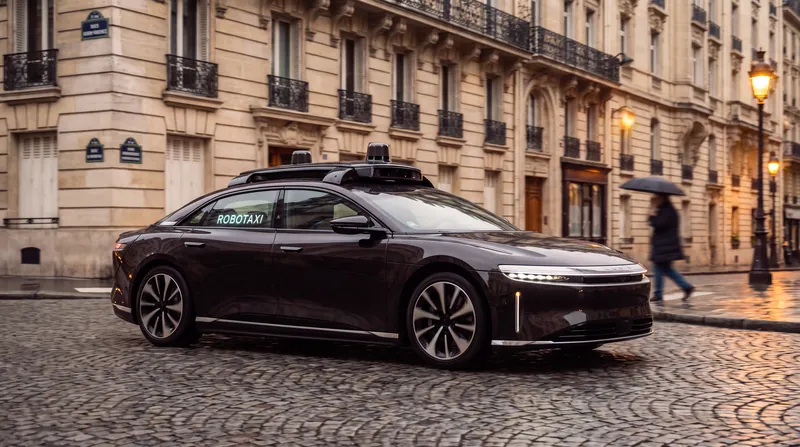
The 10-90 Percent Rule: How the ODD-EVE Framework Quantifies the Safety Gap Between Autonomous and Human Driving
8 sources
Airport Automation
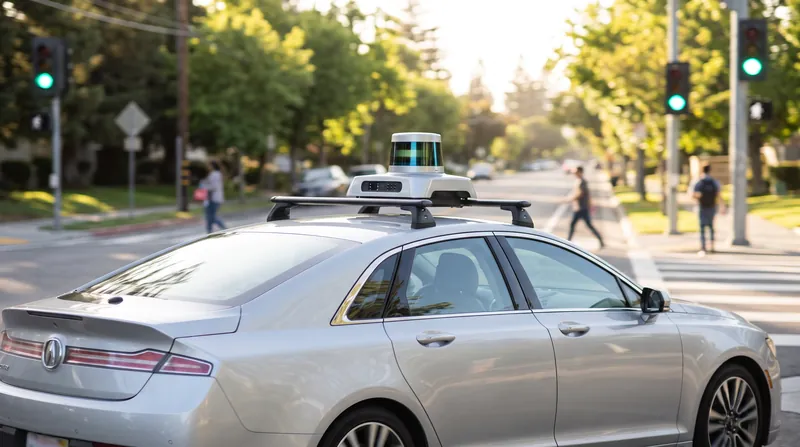
Zurich Airport Deploys Level 4 Autonomous Shuttles Without Onboard Safety Drivers
6 sources
Sensor Tech
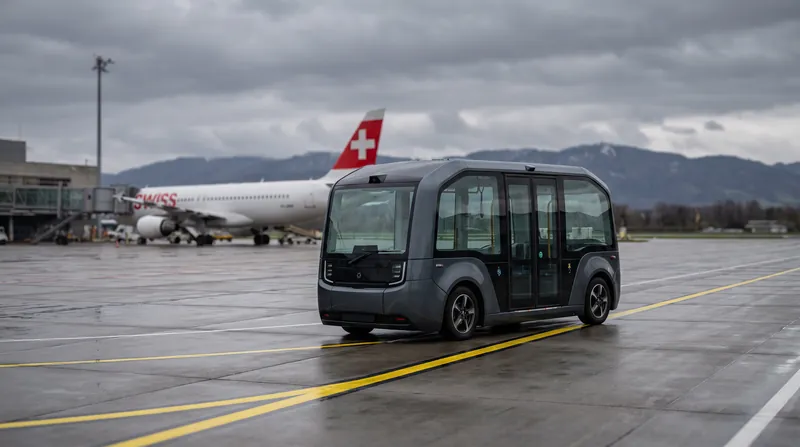
How Lidar, Radar, and Camera Sensor Fusion Overcomes the Limitations of Each for Autonomous Driving
6 sources
Liability Frameworks
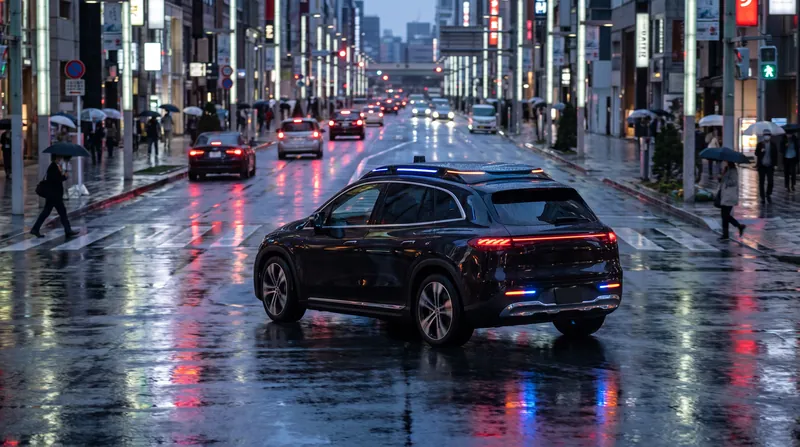
Why Level 3 Autonomous Driving Is Paralyzing Automakers With Legal Liability
7 sources
Comments
Every angle. Every day.
Get Automotive & Transportation stories with full source coverage and perspective breakdowns, free every day.