
Lucid and Bolt Partner to Deploy 25,000 Robotaxis Across Europe
Ride-hailing platform Bolt and EV maker Lucid Group have announced a sweeping pact to deploy 25,000 autonomous vehicles in Europe, though the underlying hardware remains years away from production.
By Derya Kaplan

- Ride-Hailing Operators
- Mobility platforms view autonomous fleets as the only path to long-term profitability and scale.
- Automotive Manufacturers
- EV makers are using robotaxi promises to secure volume pipelines and appease investors amid consumer slowdowns.
- European Regulators
- Policymakers are prioritizing safety and local data sovereignty over rapid autonomous deployment.
Perspectives this story doesn't cover
- Gig-economy drivers facing displacement
- Urban planners managing city congestion
When a ride-hailing user in Paris or Berlin opens the Bolt app today, they are booking a gig worker in a conventional car. Bolt and California electric vehicle maker Lucid Group announced a sweeping partnership this week to change that, claiming they will deploy at least 25,000 fully autonomous Level 4 robotaxis across European cities. The companies framed the deal as a major step toward Bolt's ambition to operate 100,000 driverless vehicles by 2035. But for a commuter waiting to hail one of these driverless Lucids, the reality of the agreement is far more tentative: no money has changed hands, no firm vehicle orders have been placed, and the underlying Lucid platform required to build the cars was recently delayed until at least late 2027.[1][2][4]
Under the terms of the memorandum, Bolt intends to own and operate the fleet directly, moving away from its traditional model of connecting independent human drivers with riders. The vehicles will be engineered on Lucid's upcoming Midsize platform and are expected to utilize NVIDIA's Hyperion architecture, a production-ready autonomous vehicle system that pairs high-performance computing with a standardized sensor suite. The two companies plan to co-develop the vehicles from the product stage to ensure they meet the specific demands of European roads, weather conditions, and stringent safety regulations.[1][2][3][4]
The division of labor splits the hardware engineering from the localized software and operations. Bolt Autonomous Driving Solutions, the ride-hailing firm's dedicated autonomy unit, will define the vehicle requirements, safety parameters, and rider-experience specifications. Bolt will leverage its decade of operating data across more than 850 cities to build the fleet infrastructure, design the operating systems, and secure the necessary city-level partnerships required to deploy the vehicles at scale. On the manufacturing side, the newly formed Lucid Technologies division will consolidate the automaker's artificial intelligence and advanced driver assistance systems.[1][3][4]
While the joint press release omitted any specific deployment dates, Lucid Chief Executive Officer Silvio Napoli told the Financial Times that the company aims to roll out the first batch of vehicles for Bolt in 2028. "The idea is as soon as possible," Napoli said, acknowledging that the partnership gives the automaker a vital narrative to present to its board and investors. Financially, the deal represents a critical step for Lucid, even though Bolt has not yet placed a formal order or transferred any capital to fund the initial development.[6]
"The idea is as soon as possible," Napoli said, acknowledging that the partnership gives the automaker a vital narrative to present to its board and investors.
The timeline for that rollout is tightly constrained by Lucid's own production hurdles. The robotaxi variant is entirely dependent on Lucid's consumer Midsize platform, which has faced significant headwinds following a corporate restructuring that eliminated approximately 18 percent of the company's workforce earlier this year. Because the autonomous vehicle is a modification of a car that must first exist on the assembly line, the 2028 target represents a best-case scenario for when the hardware could actually reach Bolt's European depots, assuming no further delays in the underlying vehicle architecture.[2][6]
Lucid recently delayed the launch of the first consumer vehicle on that Midsize architecture—the Cosmos SUV—to early 2027, pushing back the entire development timeline. Despite the lack of immediate revenue, the agreement expands Lucid's footprint in the commercial fleet sector, marking the automaker's second major robotaxi bet in just over a year. In 2025, Uber and autonomous technology firm Nuro committed to deploying up to 35,000 Lucid robotaxis in the United States, providing a theoretical volume pipeline of 60,000 vehicles for a company that currently builds low-volume luxury sedans.[1][2]
For Bolt, the partnership is a strategic necessity in an increasingly crowded European mobility market. Bolt CEO Markus Villig noted that while Europe's strict safety regulations make autonomous deployment more difficult than in the United States or China, the region has room for millions of robotaxis over time. Villig warned that long-term dependence on imported technology from competing markets poses a massive strategic risk, arguing that Europe must build systems tailored to its own local standards. By aligning with Lucid, Bolt is securing its own hardware pipeline to ensure its 200 million customers eventually have an autonomous option.[1][4][7]
The race to capture that European market is already accelerating as global competitors move in. Last month, Alphabet-owned Waymo announced it would introduce driverless vehicles on German roads by the end of next year, while Uber recently launched its first European robotaxi service in Croatia in partnership with Pony.ai. Until the physical vehicles roll off Lucid's assembly lines and clear Europe's stringent regulatory hurdles, the 25,000-vehicle target remains an engineering and development pact rather than an imminent commercial service. The shift from human-driven gig work to a fully autonomous Bolt fleet is still years away.[3][4]
The stakes
Bolt's 25,000-vehicle pact with Lucid signals a massive shift in European transit from gig-worker ride-hailing to corporate-owned autonomous fleets. However, the lack of firm orders and a delayed vehicle platform means riders will be waiting years before the technology actually arrives on city streets.
The essentials
- Bolt and Lucid Group announced a partnership to deploy at least 25,000 Level 4 autonomous robotaxis across European cities.
- Bolt intends to own and operate the fleet directly, aiming for 100,000 driverless vehicles on its platform by 2035.
- No money has changed hands and no firm orders have been placed, making the agreement a long-term development pact.
- The vehicles will be built on Lucid's Midsize platform, which was recently delayed to 2027, pushing the robotaxi rollout to 2028 at the earliest.
Timeline
Early 2026
Lucid announces a corporate restructuring, cutting 18 percent of its workforce and delaying its Midsize platform to 2027.
July 2025
Uber and Nuro commit to deploying up to 35,000 Lucid robotaxis in the United States.
August 2026
Waymo and Uber announce competing plans to launch commercial robotaxi services in European markets.
September 2026
Bolt and Lucid announce a partnership to deploy 25,000 autonomous vehicles across Europe.
Perspectives explored
Ride-Hailing Operators
Mobility platforms view autonomous fleets as the only path to long-term profitability.
For companies like Bolt and Uber, the current gig-worker model is inherently margin-capped by the cost of human labor. Transitioning to owned-and-operated autonomous fleets allows these platforms to capture the full fare while standardizing the rider experience. However, because they lack the manufacturing capability to build cars, they are forced into early, speculative partnerships with automakers to ensure they aren't left without hardware when the technology matures.
Automotive Manufacturers
EV makers are using robotaxi promises to secure volume pipelines and investor confidence.
Lucid and its peers are facing a cooling consumer EV market and massive capital requirements to launch new vehicle platforms. By signing fleet agreements for tens of thousands of vehicles, automakers can demonstrate a guaranteed future revenue stream to their boards and shareholders. Even if no money changes hands immediately, the sheer volume of a 25,000-vehicle commitment helps justify the billions spent engineering the underlying chassis and software.
European Regulators
Policymakers are prioritizing safety and local standards over rapid deployment.
Unlike the United States or China, where autonomous testing has expanded rapidly in grid-like cities, European regulators are moving cautiously. The region's older, narrower streets and strict data privacy laws present unique challenges for AI training. Regulators are demanding that autonomous systems be trained specifically on European data and tailored to local infrastructure, creating a high barrier to entry that favors operators with extensive local mapping experience.
Sources
Source coverage
7 outlets
3 viewpoints surfaced







- [1]ElectrekAutomotive Manufacturers
Lucid and Bolt to deploy 25,000 autonomous EVs across Europe
Read on Electrek → - [2]EngadgetAutomotive Manufacturers
Lucid And Bolt Plan To Deploy At Least 25,000 Robotaxis Across Europe
Read on Engadget → - [3]Just AutoEuropean Regulators
Lucid, Bolt partner on 25,000 autonomous vehicles for Europe
Read on Just Auto → - [4]Silicon RepublicRide-Hailing Operators
Bolt, Lucid plan to deploy 25,000 robotaxis in Europe
Read on Silicon Republic → - [5]Euronext MarketsAutomotive Manufacturers
Lucid, Bolt team up to deploy 25,000 robotaxis across Europe
Read on Euronext Markets → - [6]Electric VehiclesAutomotive Manufacturers
Lucid Aims to Roll Out First Bolt Robotaxis in Europe in 2028, CEO Says
Read on Electric Vehicles → - [7]WTVBEuropean Regulators
Bolt, Lucid target at least 25,000 self-driving vehicles in Europe
Read on WTVB →
Comments
More in Automotive & Transportation
See all →Vehicle Recalls
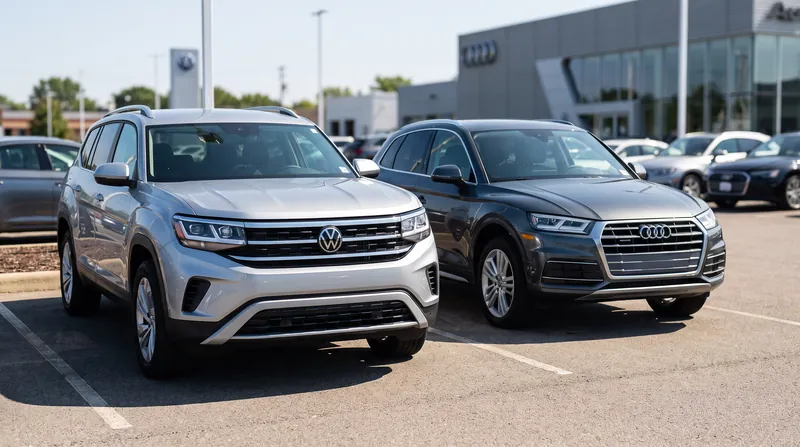
Volkswagen and Audi Recall 208,000 SUVs Over Corroding Steering Rack Bolts
7 sources
Autonomous Freight
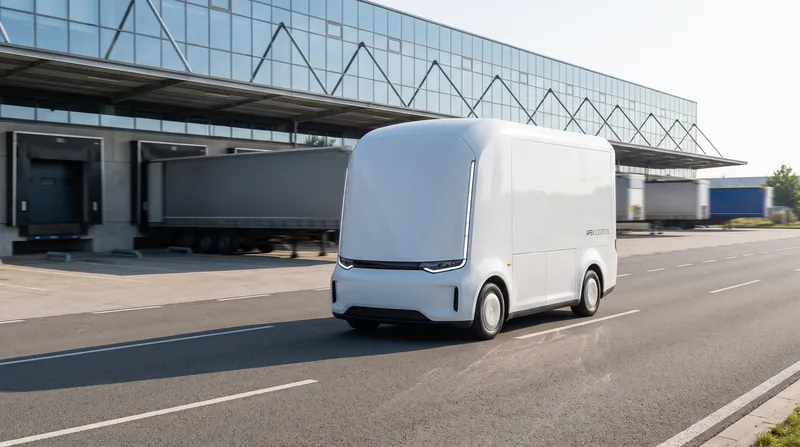
Germany Grants First Permit for Cab-Less Level 4 Autonomous Truck in Daily Commercial Operation
5 sources
EV Safety Recalls
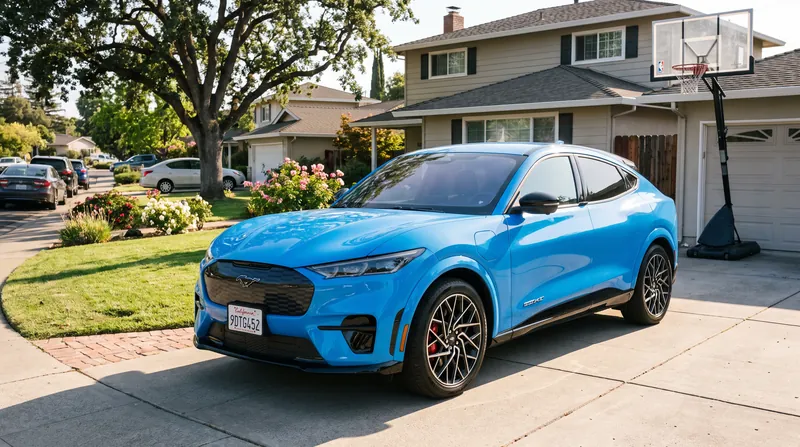
Ford Recalls 86 Mustang Mach-E EVs Over Battery Software Fire Risk
6 sources
Engine Architecture
The Mechanics of V8 Crankshafts: Why Flat-Plane and Cross-Plane Designs Dictate Supercar Character
6 sources
Every angle. Every day.
Get Automotive & Transportation stories with full source coverage and perspective breakdowns delivered to your inbox.