
The Hidden Route to a 3% Mortgage: How Assumable Loans Work
As average mortgage rates hover near 7%, a growing number of homebuyers are utilizing FHA and VA loan assumptions to legally take over sellers' ultra-low interest rates from the pandemic era.
By Factlen Editorial Team
- Homebuyers and Advocates
- View assumable mortgages as a vital lifeline for affordability in a punishing housing market.
- Federal Housing Agencies
- Focus on ensuring the assumption process is legally compliant while pushing servicers to improve efficiency.
- Mortgage Industry Data
- Track the macroeconomic impact of assumptions and the administrative burden placed on loan servicers.
What's not represented
- · Second-mortgage lenders who finance the equity gap
- · Sellers who feel trapped by their current low rates
Why this matters
For a $400,000 loan, securing a 3% rate instead of a 6.5% rate saves a buyer over $800 a month—amounting to nearly $300,000 in interest savings over the life of the loan. Understanding this mechanism can drastically alter a homebuyer's purchasing power and open doors that high rates have slammed shut.
Key points
- Assumable mortgages allow buyers to inherit a seller's existing interest rate, often below 4%.
- Only government-backed loans (FHA, VA, USDA) are generally assumable; conventional loans are not.
- Buyers must cover the 'equity gap' between the home's price and the remaining loan balance with cash or a second mortgage.
- Federal agencies are actively working to speed up the historically slow assumption approval process.
- Non-veterans can assume VA loans, but it ties up the seller's VA entitlement.
The defining feature of the mid-2020s housing market has been the "lock-in effect." Millions of homeowners secured mortgage rates below 4% during the pandemic, making them deeply reluctant to sell and take on a new loan at today's rates, which hover between 6% and 7%.[1][6]
For prospective buyers, this dynamic has created an affordability crisis, with monthly payments for a median-priced home nearly doubling since 2021. Yet, a growing cohort of savvy buyers is bypassing the current rate environment entirely through a legally binding, decades-old mechanism: the assumable mortgage.[2][6]
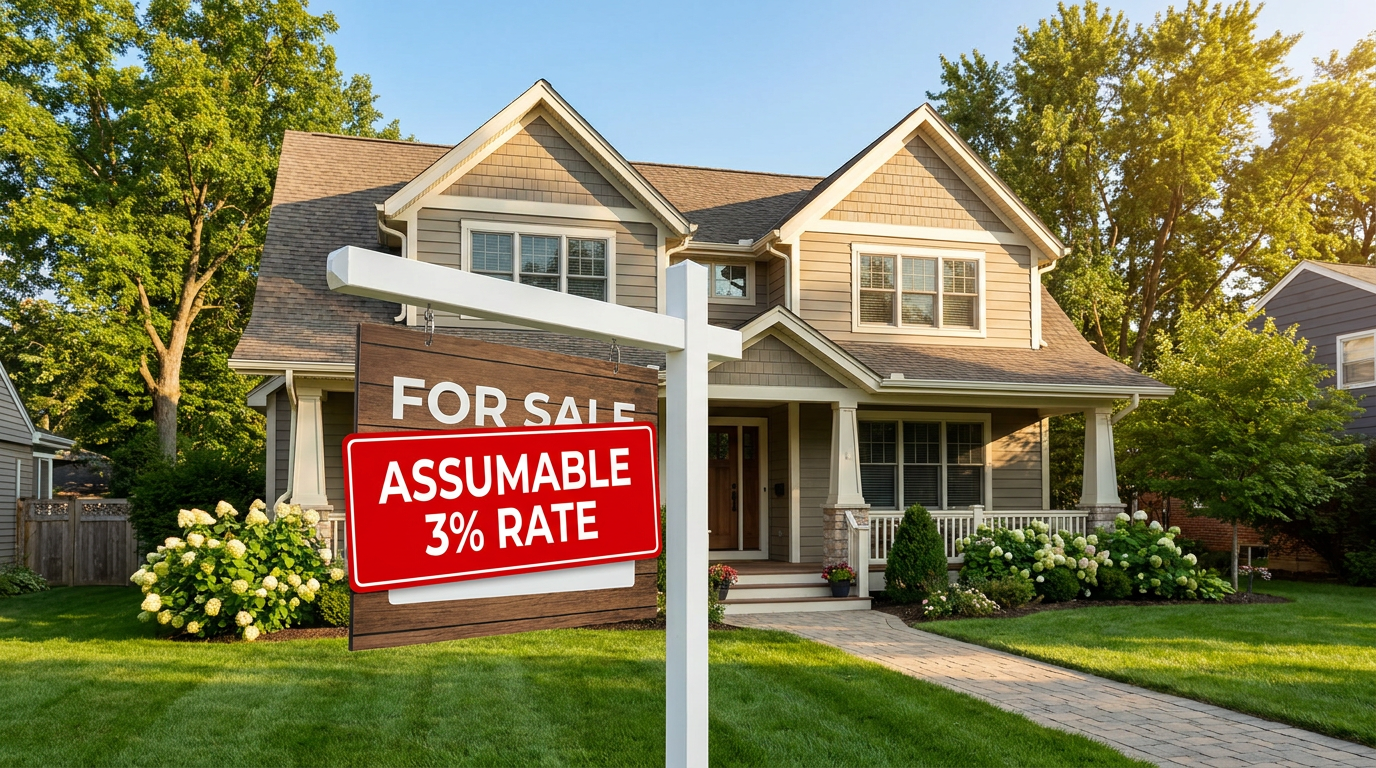
An assumable mortgage allows a homebuyer to step into the seller's shoes, taking over their exact loan balance, repayment schedule, and—crucially—their original interest rate. If the seller locked in a 2.8% rate in 2020, the buyer inherits that 2.8% rate for the remainder of the loan term.[2][3]
While this sounds like a financial cheat code, it is a standard feature of government-backed loans. By law, all mortgages insured by the Federal Housing Administration (FHA), the Department of Veterans Affairs (VA), and the US Department of Agriculture (USDA) are assumable.[3][4]

Conventional mortgages—those backed by Fannie Mae and Freddie Mac, which make up the vast majority of the US market—almost universally contain a "due-on-sale" clause. This clause requires the loan to be paid off in full when the property changes hands, effectively banning assumptions for conventional borrowers.[2]
However, government-backed loans still represent a massive pool of inventory. According to industry data, roughly 12 million active US mortgages are FHA or VA loans, and millions of those carry interest rates below 4%.[5]
The financial advantage of assuming one of these loans is staggering. On a $400,000 loan balance, the difference between a 3% rate and a 6.5% rate is roughly $850 per month. Over the first ten years of the loan, that translates to over $100,000 in saved interest, fundamentally changing what a family can afford.[1][6]
The financial advantage of assuming one of these loans is staggering.
Despite the obvious appeal, assuming a mortgage is not as simple as checking a box on a purchase agreement. The most significant hurdle buyers face is the "equity gap."[2][6]
When a buyer assumes a mortgage, they only take over the remaining balance of the loan. If a home is being sold for $500,000, but the seller's remaining mortgage balance is only $300,000, the buyer must cover the $200,000 difference to make the seller whole.[2][3]

Buyers must bridge this gap either with cash or by taking out a second mortgage. While second mortgages carry higher interest rates than primary mortgages, the blended rate—combining the ultra-low assumed rate with the higher second-mortgage rate—often still beats the current market average by a wide margin.[1][6]
The second major friction point is administrative. Historically, mortgage servicers have been slow to process assumptions. Unlike originating a new loan, which generates significant origination fees, processing an assumption is labor-intensive and legally capped at a low fee, often $900 or less for FHA loans.[3][5]
This lack of financial incentive led to processing times that could stretch for months, frustrating buyers and sellers alike. However, federal agencies have recently stepped in to streamline the process and clear the administrative bottlenecks.[6]
The Department of Housing and Urban Development (HUD) has issued new guidance and increased the allowable fees servicers can charge, aiming to incentivize faster turnaround times and reduce the bureaucratic backlog that previously plagued FHA assumptions.[3]

For VA loans, there is an additional nuance regarding "entitlement." While anyone—even a non-veteran—can assume a VA loan, the veteran seller's VA loan entitlement remains tied up in the property unless the buyer is also a qualified veteran who agrees to substitute their own entitlement.[4]
If a non-veteran assumes the loan, the seller cannot use that portion of their VA benefit to buy their next home until the assumed loan is fully paid off. This makes veteran sellers cautious about allowing non-veterans to assume their mortgages, though it remains legally permissible.[4][6]
To help buyers navigate these complexities, a cottage industry of specialized real estate platforms and brokerages has emerged. These services specifically filter multiple listing services (MLS) for assumable properties and help manage the intricate paperwork required by servicers.[1]

How we got here
2020–2021
Mortgage rates hit historic lows, allowing millions of buyers to lock in rates below 4%.
2022–2023
The Federal Reserve aggressively hikes interest rates, pushing average mortgage rates past 7% and triggering the 'lock-in effect'.
Late 2023
Homebuyers and specialized real estate startups begin aggressively targeting FHA and VA loan assumptions to bypass high market rates.
2024–2025
HUD and the VA issue updated guidance to mortgage servicers, aiming to reduce bottlenecks and speed up assumption processing times.
Viewpoints in depth
Homebuyers and Real Estate Agents
View assumable mortgages as the ultimate affordability hack in a high-rate environment.
For buyers priced out of the traditional market, an assumable mortgage is often the only viable path to homeownership. Real estate agents increasingly use assumable FHA and VA loans as a premium marketing tool, noting that homes with transferable 3% rates often sell faster and command higher asking prices than comparable homes with conventional financing. Specialized brokerages have even built their entire business models around matching buyers with assumable inventory.
Mortgage Servicers
Struggle with the administrative burden and low profit margins of processing assumptions.
From the servicer's perspective, processing an assumption is nearly as much work as underwriting a brand-new loan, but without the lucrative origination fees. Because federal rules cap the fees servicers can charge for processing FHA and VA assumptions, many lenders historically deprioritized these files, leading to processing times of 60 to 90 days. Servicers argue that to make the process truly efficient, federal agencies need to allow them to charge fees that accurately reflect the labor involved.
Federal Housing Agencies
Aim to protect the legal right to assume loans while modernizing the bureaucratic process.
Agencies like HUD and the VA recognize that assumability is a core, legally mandated benefit of the loans they insure. In response to the recent surge in demand, these agencies have focused on compliance—issuing circulars reminding servicers of their legal obligation to process assumptions in a timely manner. At the same time, they are exploring policy tweaks, such as adjusting allowable fees, to ensure the system functions smoothly without placing undue financial strain on buyers.
What we don't know
- Whether conventional loan backers (Fannie Mae and Freddie Mac) will ever face legislative pressure to allow assumptions.
- How quickly mortgage servicers will adapt their internal technology to process assumptions at scale.
- The exact percentage of current FHA/VA sellers who are actively marketing their low rates to buyers.
Key terms
- Assumable Mortgage
- A type of financing arrangement where an outstanding mortgage and its terms are transferred from the current owner to a buyer.
- Due-on-Sale Clause
- A provision in a mortgage contract that requires the mortgage to be repaid in full upon a sale or conveyance of partial or full interest in the property.
- Equity Gap
- The difference between the agreed-upon purchase price of a home and the remaining balance of the assumed mortgage, which the buyer must cover.
- VA Entitlement
- The specific dollar amount the Department of Veterans Affairs guarantees on a VA loan, which protects the lender if the borrower defaults.
- Blended Rate
- The effective interest rate a buyer pays when combining a low-rate assumed first mortgage with a higher-rate second mortgage.
Frequently asked
Can I assume a conventional mortgage?
Generally, no. Most conventional mortgages backed by Fannie Mae and Freddie Mac contain a 'due-on-sale' clause that requires the loan to be paid off when the home is sold. Assumptions are primarily restricted to government-backed FHA, VA, and USDA loans.
Do I need to be a veteran to assume a VA loan?
No, non-veterans can legally assume a VA loan. However, the veteran seller's VA entitlement remains tied to the property until the loan is paid off, which makes many veterans hesitant to allow non-veterans to assume their loans.
How do I cover the equity gap?
If the home's purchase price is higher than the remaining mortgage balance, you must cover the difference. Buyers typically do this by bringing cash to the closing table or by taking out a second mortgage for the remaining amount.
Why does the assumption process take so long?
Processing an assumption is labor-intensive for mortgage servicers, and federal rules cap the fees they can charge for doing it. This lack of financial incentive historically led to slow processing times, though federal agencies are working to speed this up.
Sources
Source coverage
6 outlets
3 viewpoints surfaced






[1]The Wall Street JournalHomebuyers and Advocates
The 3% Mortgage Is Still Alive: Inside the Boom in Assumable Loans
Read on The Wall Street Journal →[2]BankrateHomebuyers and Advocates
What is an assumable mortgage and how does it work?
Read on Bankrate →[3]U.S. Department of Housing and Urban DevelopmentFederal Housing Agencies
FHA Single Family Housing Policy Handbook: Assumptions
Read on U.S. Department of Housing and Urban Development →[4]U.S. Department of Veterans AffairsFederal Housing Agencies
Processing VA Loan Assumptions and Release of Liability
Read on U.S. Department of Veterans Affairs →[5]ICE Mortgage TechnologyMortgage Industry Data
Mortgage Monitor Report: Government Loan Assumption Volume Trends
Read on ICE Mortgage Technology →[6]Factlen Editorial TeamMortgage Industry Data
Synthesis by Factlen editorial team
Read on Factlen Editorial Team →



Every angle. Every day.
Get finance stories with full source coverage and perspective breakdowns delivered to your inbox.