
The Economics and Expansion of Europe's 2026 Night Train Revival
Driven by climate awareness and massive investments in next-generation rolling stock, Europe's sleeper train network is rapidly expanding in 2026. However, operators are navigating a complex landscape of track access charges, shifting subsidies, and infrastructure bottlenecks.
By Factlen Editorial Team
- State-Backed Legacy Operators
- Emphasize massive capital investments in next-generation fleets but warn that high track access charges require government support.
- Eco-Conscious Travelers
- Value the massive carbon reduction, city-center convenience, and the romance of slow travel over the speed of short-haul flights.
- Citizen-Backed Cooperatives
- Argue that overnight rail can thrive without permanent state subsidies through smart routing and community sharefunding.
What's not represented
- · Aviation Industry Executives
- · Railway Infrastructure Managers
Why this matters
The resurgence of sleeper trains offers a highly practical, low-carbon alternative to short-haul flights, allowing travelers to cross borders overnight and wake up in a new city center. As new routes and modern cabins roll out, it fundamentally changes how millions of people plan their European business trips and vacations.
Key points
- Austria's ÖBB is deploying 33 next-generation Nightjet trains across Europe, representing a €500 million investment in modern sleeper travel.
- The new Nightjet carriages feature capsule-style 'Mini Cabins' for solo travelers and en-suite showers in premium compartments.
- Following the cancellation of the state-subsidized Paris-Berlin route, citizen cooperative European Sleeper took over the line in March 2026.
- European Sleeper is expanding its network southward, launching a new Brussels-Milan corridor in September 2026.
The romance of the sleeper train is back, but in 2026, it is driven by hard economics and climate targets rather than pure nostalgia. Across Europe, a massive network expansion is fundamentally altering how travelers cross the continent.[3][7]
The core mechanism driving this shift is the carbon math. A night train emits a fraction of the CO2 of an equivalent short-haul flight. Combined with flight restrictions in countries like France, eco-conscious travelers are embracing the efficiency of boarding in one city center at 10 PM and stepping off in another at breakfast, effectively saving the cost of a hotel night.[3]
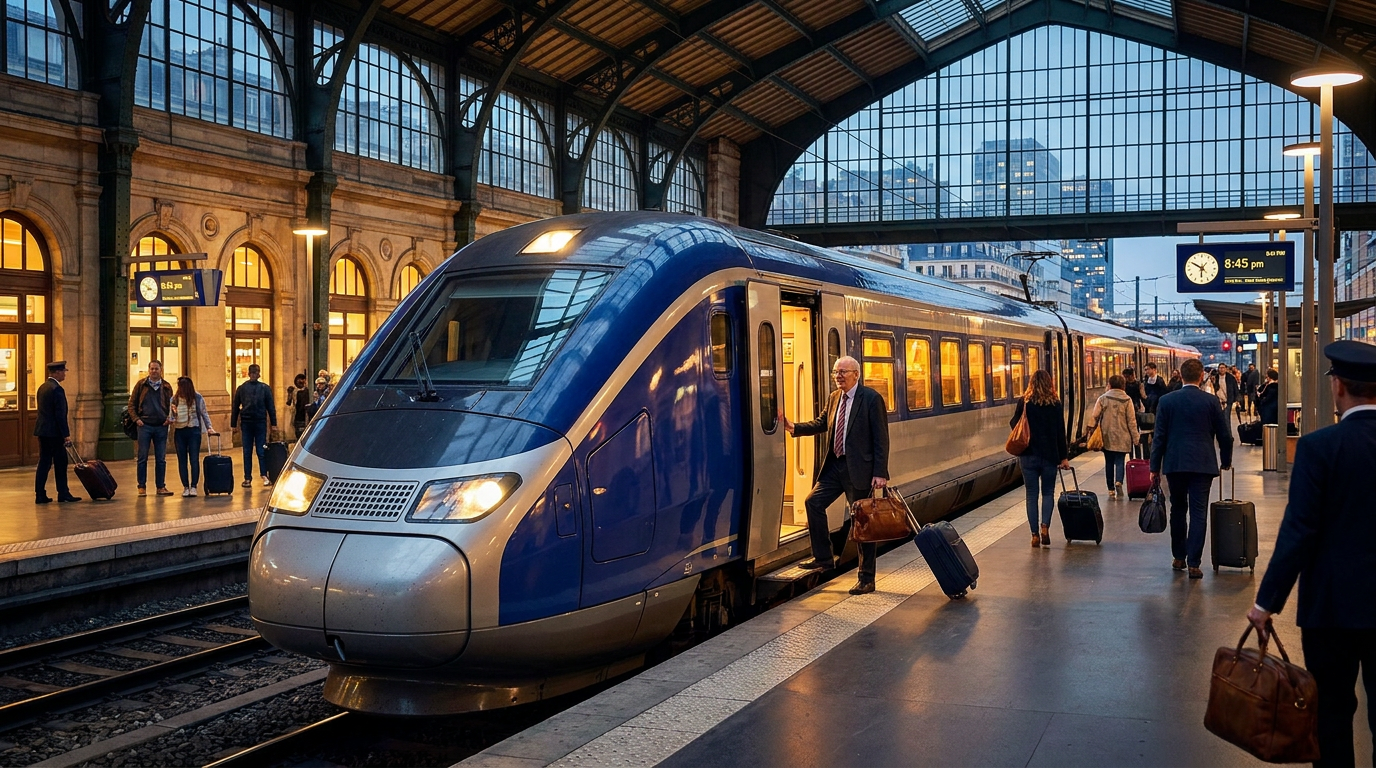
The undisputed backbone of this renaissance is Austria's national railway, ÖBB. While other national carriers abandoned their overnight routes a decade ago, ÖBB doubled down, investing over €500 million into a fleet of 33 next-generation Nightjet trains.[2][4]

These new seven-car Nightjets, built by Siemens, are designed to erase the gritty "hostel-on-wheels" reputation of older rolling stock. They feature improved soundproofing, electronic NFC card access, and modern passenger information systems.[4][8]
The most significant innovations are in the cabin layouts. For solo travelers, ÖBB introduced lockable "Mini Cabins"—capsule-style pods that offer privacy on a budget. Meanwhile, premium sleeper compartments now feature en-suite washrooms with private shower cubicles, elevating the experience to a rolling hotel.[4][8]
However, the economics of running a hotel on rails remain incredibly complex. Night trains are expensive to operate due to high track access charges, specialized staff, and the simple fact that a sleeper car carries far fewer passengers than a standard daytime carriage.[6]
However, the economics of running a hotel on rails remain incredibly complex.
This financial fragility was exposed in late 2025 when ÖBB and France's SNCF abruptly cancelled the Paris-Berlin Nightjet route. The French government, facing a budget crisis, withdrew the annual subsidies required to keep the route viable, proving that state-backed lines are highly vulnerable to political winds.[6]

Into this void stepped European Sleeper, a Dutch-Belgian citizen cooperative. Founded by rail enthusiasts and funded by millions of euros in "sharefunding" from thousands of everyday investors, the start-up aims to prove that night trains can survive without permanent state subsidies.[1][6]
European Sleeper officially took over the Paris-Berlin route in March 2026, running three times a week. Their strategy relies on agile routing, dynamic pricing, and tapping directly into the massive consumer demand for cross-border rail travel.[1][6]
The cooperative is also aggressively expanding southward. In September 2026, they are launching a highly anticipated north-south corridor connecting Brussels to Milan, crossing the Swiss Alps overnight.[1][5]

Yet, independent operators face severe infrastructure hurdles. European Sleeper had to drop Amsterdam from its Milan route due to severe track congestion in the Dutch capital, opting instead to route through Breda and Eindhoven. Similarly, morning rush-hour traffic forced them to swap a stop in Zurich for nearby Aarau.[5]
Beyond the major players, the entire continent is seeing localized expansions. Czech operator RegioJet is pushing into Poland with ultra-budget couchettes, while Sweden's Snälltåget is expanding its Nordic network into Norway. Even the UK's Caledonian Sleeper is adding new stops to connect the English Midlands directly to the Scottish Highlands.[2][7]

For travelers navigating this booming network, understanding the class system is crucial. The standard hierarchy remains: reclining seats for extreme budgets, four-to-six bed couchettes for the best value and social experience, and private sleeper cabins for maximum comfort.[7][8]
As the 2026 timetable unfolds, the European night train has proven it is not a passing fad. Despite the logistical puzzles and the delicate dance of track access fees, the sheer volume of new routes and next-generation carriages ensures that sleeping across borders is once again a pillar of European transport.[1][3]
How we got here
December 2023
ÖBB introduces the first of its next-generation Nightjet trains on the Hamburg-Vienna route.
December 2025
ÖBB and SNCF discontinue the subsidized Paris-Berlin Nightjet route due to budget constraints.
March 2026
Citizen cooperative European Sleeper takes over the Paris-Berlin route, running three times a week.
June 2026
ÖBB launches its new generation Nightjet service on the Vienna-Zurich route.
September 2026
European Sleeper launches a new north-south corridor connecting Brussels to Milan.
Viewpoints in depth
Citizen-Backed Cooperatives
Argue that the night train renaissance shouldn't rely solely on the whims of government budgets.
European Sleeper and the Back-on-Track network believe that by utilizing a 'sharefunding' model—raising capital directly from thousands of citizen investors—operators can design efficient, cross-border routes that achieve economic equilibrium. They point to their successful takeover of the Paris-Berlin route as proof that agile start-ups can succeed where state monopolies retreat, provided they tap directly into consumer demand.
State-Backed Legacy Operators
Maintain that operating international night trains is inherently expensive and often requires state support.
National carriers like Austria's ÖBB and France's SNCF point out that despite massive capital investments in new rolling stock, high track access charges, staff costs, and complex cross-border logistics make many routes unprofitable. When governments pull funding—as France did for the Paris-Berlin line—these operators argue they are forced to cut services to protect their bottom line, highlighting the fragility of the network.
Eco-Conscious Travelers
View the night train as a lifestyle choice driven by climate anxiety and a desire for 'slow travel.'
For a growing demographic of European travelers, the primary appeal is the massive reduction in carbon emissions compared to short-haul flights. They value the practical convenience of traveling from city-center to city-center while sleeping, viewing the train not just as transit, but as a rolling hotel that reclaims lost vacation time and avoids the stress of modern airports.
What we don't know
- Whether citizen-backed cooperatives like European Sleeper can maintain long-term profitability without the state subsidies that legacy operators rely on.
- How severe track congestion and infrastructure bottlenecks will impact future route expansions, as seen with Amsterdam being dropped from the Milan route.
- If the high cost of premium sleeper cabins will eventually alienate budget travelers, or if the cheaper couchette options will remain economically viable for operators.
Key terms
- Couchette
- A shared sleeping compartment, typically with 4 to 6 bunk beds, where passengers are provided basic bedding to make up their own bunks.
- Sleeper Cabin
- A premium private compartment with 1 to 3 beds, featuring hotel-style amenities like made-up beds, washbasins, and sometimes en-suite showers.
- Track Access Charges
- Fees paid by train operators to the companies that manage the railway infrastructure for the right to run trains on their tracks.
- Sharefunding
- A crowdfunding model where citizens invest directly in a company, used by European Sleeper to launch new routes without state subsidies.
Frequently asked
Do sleeper trains have showers?
Most standard couchettes and older sleepers only have shared washrooms, but next-generation fleets like ÖBB's new Nightjets feature en-suite showers in premium sleeper cabins.
Are night trains cheaper than flying?
While budget seats can start around €30, a private sleeper cabin is often more expensive than a budget flight. However, travelers save the cost of a hotel night and airport transfers.
Are the trains safe for solo travelers?
Yes. Private cabins lock from the inside, and operators like ÖBB have introduced single-occupancy 'Mini Cabins' and electronic NFC key cards for enhanced security.
Sources
Source coverage
8 outlets
3 viewpoints surfaced








[1]HourrailCitizen-Backed Cooperatives
European Sleeper: Brussels–Milan, Paris–Berlin, and Prague night trains in 2026
Read on Hourrail →[2]PixidiaEco-Conscious Travelers
European Night Trains 2026: 10 New Routes You Need to Know
Read on Pixidia →[3]GopaxoEco-Conscious Travelers
The comeback of night trains in Europe (2026 routes & booking guide)
Read on Gopaxo →[4]Railway-NewsState-Backed Legacy Operators
ÖBB Celebrates Launch of New Vienna-Zurich Nightjet
Read on Railway-News →[5]NL TimesCitizen-Backed Cooperatives
European Sleeper drops Amsterdam from Milan night train plan, adds Breda, Eindhoven
Read on NL Times →[6]Travels of a lifeState-Backed Legacy Operators
Berlin–Paris Night Train: Why the Nightjet Was Discontinued
Read on Travels of a life →[7]TravelGatorEco-Conscious Travelers
Sleep Your Way Across Europe: The Ultimate Guide to Sleeper Trains (2026)
Read on TravelGator →[8]Seat 61Eco-Conscious Travelers
A guide to the new generation Nightjet sleeper trains
Read on Seat 61 →
Every angle. Every day.
Get transportation stories with full source coverage and perspective breakdowns delivered to your inbox.