
The Chemistry of Clarified Milk Punch: How Curdled Dairy Creates Crystal-Clear Cocktails
By intentionally curdling milk and filtering out the solids, bartenders are harnessing centuries-old chemistry to strip bitterness and create silky, transparent cocktails.
By Factlen Editorial Team
- Culinary Scientists
- Focuses on the molecular mechanics of protein binding, pH manipulation, and the isoelectric point of casein.
- Cocktail Historians
- Focuses on the survival and utility of the drink as a preservation method in the pre-refrigeration 18th century.
- Modern Mixologists
- Focuses on the sensory benefits, texture manipulation from whey proteins, and creative flavor applications.
What's not represented
- · Dairy-free and vegan mixologists adapting the technique with plant proteins.
- · Commercial distillers exploring large-scale clarification methods for bottled cocktails.
Why this matters
Understanding the science of milk clarification demystifies one of the most intimidating techniques in modern mixology, empowering home bartenders to preserve ingredients and elevate their own drinks using basic kitchen chemistry.
Key points
- Milk clarification is a centuries-old technique used to preserve cocktails and soften harsh spirits.
- The process works by using the acidity of a cocktail to lower milk's pH to 4.6, causing casein proteins to curdle.
- As the curds form, they bind to bitter polyphenols and act as a microscopic filter to trap cloudy particles.
- While the curds are removed, whey proteins remain in the liquid, giving the final clear cocktail a luxurious, silky texture.
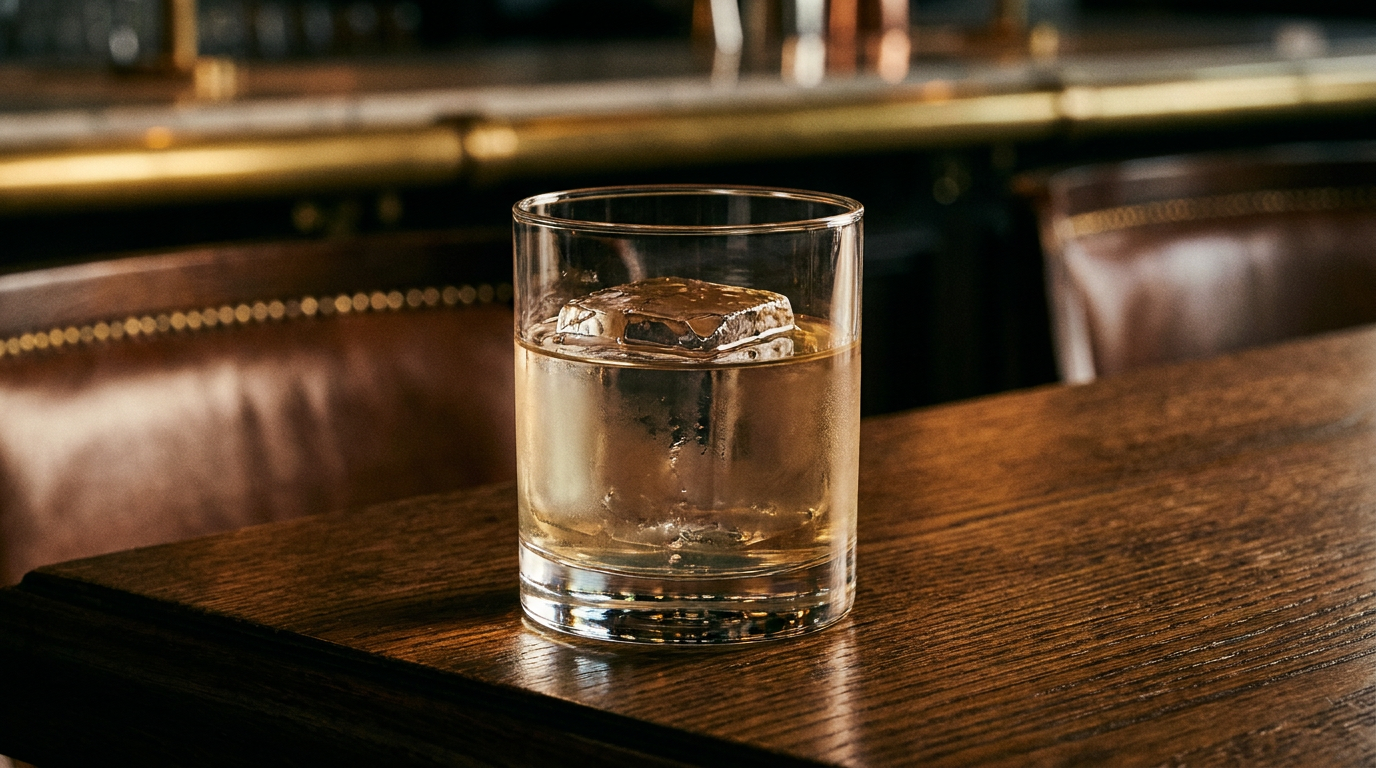
You order a complex, ambitious cocktail featuring a heavy pour of bourbon, dark steeped black tea, and fresh lemon juice. Based on the ingredients, you expect a dark, murky, perhaps aggressively tannic beverage to arrive at your table. Instead, the bartender slides over a glass of liquid that looks exactly like a glass of water, poured over a single, perfectly clear block of ice. When you take a sip, it tastes like a symphony—rich, complex, and impossibly smooth, with none of the harsh bite you anticipated. This visual and sensory paradox is currently dominating the menus of the world's most elite cocktail bars.[1]
The secret behind this elegant illusion is one of the most counterintuitive and seemingly unappetizing techniques in the culinary world: intentionally curdling milk. To the uninitiated, mixing fresh dairy with high-proof alcohol and sharp citrus sounds like a recipe for a ruined drink and a stomach ache. Yet, this deliberate destruction of milk is the precise engine behind the crystal-clear, silken cocktails that are captivating modern drinkers. It is a process that relies entirely on precise kitchen chemistry to fundamentally alter the molecular structure of the beverage.[2]
Known in the industry as milk washing or clarified milk punch, the process has become a rite of passage for ambitious mixologists. By forcing milk to break apart into curds and whey, bartenders can harness the biological properties of dairy proteins to act as a microscopic filtration system. The technique strips away the muddy colors and harsh flavors of a drink, leaving behind a pristine, transparent liquid that challenges the drinker's expectations. While it feels like a modern molecular gastronomy trick, it is actually one of the oldest techniques in the bartending playbook.[1][6]
To truly understand why modern bartenders are deliberately creating vats of curdled messes in their pristine kitchens, one has to look back to the realities of life in the eighteenth century. Long before the invention of mechanical refrigeration or the refinement of modern continuous distillation, drinking was a vastly different experience. Early spirits were often crude, harsh, and loaded with aggressive impurities, while fresh ingredients like citrus juice would spoil rapidly in the heat. Mixologists of the era needed a way to make their alcohol palatable and their punches shelf-stable.[3]

The solution arrived in the form of dairy. In 1711, a housewife named Mary Rockett recorded the earliest known formal recipe for a milk punch. Her instructions were straightforward but revolutionary: she combined two gallons of hot milk with a gallon of brandy, five quarts of water, the juice of eight lemons, and two pounds of sugar. After letting the mixture sit and curdle for an hour, she strained it through a flannel bag. The resulting elixir was clear, silky-smooth, and capable of lasting for months without any refrigeration.[3]
The technique quickly gained a devoted following among the intellectual and political elite of the era. Benjamin Franklin was such a passionate advocate for the process that he enclosed his own personal recipe—featuring brandy, lemon, and hot milk—in a 1763 letter to the governor of Massachusetts. The preservation power of the method was so profound that perfectly preserved bottles of milk punch were famously discovered in the wine cellar of author Charles Dickens after his death in 1870, still entirely safe and pleasant to drink.[3]
The longevity and remarkable smoothness of these historical punches are not the result of magic, but rather the highly predictable chemical properties of milk proteins. Milk is a complex emulsion containing water, fats, sugars, and two primary types of protein: casein and whey. When a highly acidic cocktail—typically one containing a heavy dose of fresh citrus juice—is introduced to this emulsion, the pH of the entire mixture begins to drop rapidly, triggering a cascade of molecular changes.[4][5]
The star of this chemical reaction is casein. Casein proteins naturally repel each other in fresh milk, floating freely and reflecting light, which gives milk its opaque white appearance. However, these proteins have a specific isoelectric point of roughly pH 4.6. When the acidity of the liquid reaches this exact threshold, the casein molecules lose their negative electrical charge. No longer repelling one another, they begin to aggressively clump together, coagulating into solid, visible curds.[4]
Because this reaction is so sensitive to acidity, the order of operations in the kitchen is a rigid chemical law that cannot be violated. Bartenders must always pour the acidic cocktail mixture into the milk, rather than pouring the milk into the cocktail. If milk is poured directly into a highly acidic environment, it experiences an immediate, localized pH drop. This instantly scrambles the proteins, causing them to clump into tight, useless knots before they can properly interact with the rest of the liquid.[1]
Because this reaction is so sensitive to acidity, the order of operations in the kitchen is a rigid chemical law that cannot be violated.
Conversely, pouring the cocktail slowly into the milk lowers the pH of the entire batch gradually. This controlled descent toward the 4.6 pH isoelectric point allows the casein proteins to unfold and denature slowly. As they begin to clump together into curds, they act as a sprawling molecular sponge, spreading throughout the liquid and preparing to capture the specific compounds that make spirits taste harsh.[1][4]

Once the casein proteins denature, they specifically seek out and bind to polyphenols. Polyphenols are a broad category of chemical compounds responsible for the astringent, mouth-puckering, and bitter tastes found in many cocktail ingredients. They are abundant in the heavy wood tannins of barrel-aged whiskeys, the dark leaves of steeped black tea, and the skins of certain fruits. As the curds form, they lock these bitter polyphenols into their solid structure, permanently removing them from the liquid solution.[1][5]
This specific binding process is incredibly effective at stripping harsh tannins right out of the beverage. The phenomenon of milk proteins neutralizing polyphenols is not just a bartender's theory; it was rigorously documented by researchers in the commercial tea industry during the 1960s. Their studies explained the exact chemical mechanism behind why adding a simple splash of milk to a heavily steeped, bitter cup of black tea immediately softens the flavor and smooths out the astringency.[1]
Once the curds have fully formed and trapped the bitter compounds within their protein structures, the entire mixture must be separated. The curdled batch is carefully poured through a fine filter, which in modern bars is typically a large coffee filter, a specialized nut-milk bag, or a traditional cheesecloth. The initial pour is often cloudy, but as the curds settle at the bottom of the filter, they create a dense, three-dimensional biological matrix known as a curd raft.[2]
This curd raft is where the final stage of clarification occurs. As the rest of the liquid slowly drips through this thick bed of coagulated proteins, the curds act as a microscopic net. They trap tiny suspended particles that standard strainers miss, such as the cellular walls of citrus juice, fruit purees, and microscopic spices that normally make a drink look cloudy and opaque. The liquid is forced to navigate through this dense maze of proteins, leaving all its visual impurities behind.[2][4]

What eventually drips out the other side of the filter is a liquid completely devoid of color-causing particles, bitter tannins, and heavy dairy fats. It is entirely translucent, visually pristine, and highly shelf-stable. Because the perishable dairy solids have been entirely removed and trapped in the filter, the resulting clarified punch can sit in a refrigerator for weeks or even months without spoiling, exactly as it did in the cellars of the eighteenth century.[4]
But the true magic of milk washing is not just about what is removed from the cocktail; it is equally about what is left behind in the glass. While the casein proteins form the solid curds and are filtered out, milk's other primary protein—whey—remains completely dissolved in the clear liquid. These invisible whey proteins survive the acidic environment and pass right through the filter, fundamentally altering the physical texture of the final drink.[1]
These dissolved whey proteins impart a luxurious, silken mouthfeel that gently coats the palate, providing a weight and richness that cannot be achieved through standard chilling or dilution. Furthermore, if the clarified drink is shaken with ice rather than stirred, the whey proteins trap air bubbles, producing a voluminous, meringue-like foam that rests beautifully on the surface of the cocktail and lasts far longer than a traditional egg-white foam.[1]

Armed with this understanding of protein chemistry, modern mixologists are applying the centuries-old science to wildly inventive and unconventional flavor profiles. Rather than sticking to traditional brandy and lemon, bartenders are clarifying complex, savory ingredients. Menus now feature transparent drinks made with roasted banana and chai, jalapeño-infused mezcal, and even savory broths laced with Japanese miso, all rendered perfectly clear and smooth by the power of milk washing.[1][3]
The technique also allows for the seamless integration of notoriously difficult ingredients. Highly acidic or aggressively spicy components that would normally overpower a drink's balance are tamed by the casein binding process. The milk wash acts as an equalizer, softening the sharpest edges of a recipe and allowing delicate floral or herbal notes to shine through a mixture that would otherwise be dominated by heavy tannins or burning alcohol.[5][6]
Ultimately, the enduring appeal of the clarified milk punch lies in its perfect intersection of history, chemistry, and sensory delight. It transforms a chaotic, curdled mess into a beverage of unparalleled elegance and clarity. By mastering the delicate balance of pH and protein denaturation, today's bartenders are proving that sometimes, completely breaking a liquid apart is the only way to perfect it.[1][3][6]
How we got here
1711
Housewife Mary Rockett records the earliest known formal recipe for milk punch.
1763
Benjamin Franklin documents his own recipe using brandy, lemon, and hot milk in a letter.
1870
Perfectly preserved bottles of milk punch are discovered in Charles Dickens's wine cellar after his death.
2010s
The craft cocktail movement revives the technique to create visually striking, modern clarified drinks.
Viewpoints in depth
Culinary Scientists
Focuses on the molecular mechanics of protein binding and pH manipulation.
For food scientists and chemists, milk clarification is a masterclass in protein denaturation. They emphasize that the magic lies at pH 4.6, the isoelectric point where casein proteins lose their charge and coagulate. This camp views the curds not just as a byproduct, but as a highly efficient biological filter that actively seeks out and binds to astringent polyphenols, fundamentally altering the chemical makeup of the liquid.
Cocktail Historians
Focuses on the survival and utility of the drink in the pre-refrigeration era.
Historians view milk punch as an ingenious 18th-century survival mechanism. Before refrigeration and advanced distillation, spirits were often harsh and highly perishable. By intentionally curdling milk, early mixologists like Mary Rockett and Benjamin Franklin discovered a way to strip the rough edges off crude brandies while creating a shelf-stable beverage that could survive long ocean voyages or sit in a cellar for years.
Modern Mixologists
Focuses on the sensory benefits, texture manipulation, and creative applications.
Today's bartenders are less concerned with preservation and more focused on texture and visual illusion. For this camp, the true prize of milk washing is the retention of whey proteins, which impart a luxurious, velvety mouthfeel without the heaviness of cream. They utilize the technique to tame aggressively bitter or spicy ingredients—like jalapeño or heavy amaro—transforming them into elegant, crystal-clear centerpieces.
What we don't know
- Exactly how long modern clarified milk punches remain food-safe, as historical claims of 'months' often clash with modern health department standards.
- The precise molecular impact of milk washing on highly delicate, volatile flavor compounds, which can sometimes be unintentionally muted during the filtration process.
Key terms
- Casein
- The primary family of proteins in milk that coagulate and form curds when exposed to acid.
- Whey
- The liquid remaining after milk has been curdled and strained, containing proteins that give clarified cocktails a silky texture.
- Polyphenols
- Chemical compounds found in plants, tea, and wood barrels that contribute bitter and astringent flavors to drinks.
- Isoelectric point
- The specific pH level at which a molecule carries no net electrical charge, causing proteins like casein to clump together.
- Flocculation
- The process where fine particulates clump together into a mass or 'raft', making them easier to filter out.
Frequently asked
Does clarified milk punch taste like milk?
No. The dairy solids that taste like milk are filtered out. The remaining liquid tastes like the base cocktail, but with a smoother, silkier texture.
Can you use dairy-free milk for clarification?
Yes, but with mixed results. Plant milks lack casein, so they rely on different proteins to curdle, which often requires heating or different acid ratios to achieve a proper break.
How long does clarified milk punch last?
Because the perishable dairy solids are removed, it can last for weeks or even months in the refrigerator, though modern food safety guidelines recommend consuming it fresh.
Why do you pour the cocktail into the milk instead of the reverse?
Pouring the acidic cocktail into the milk lowers the pH gradually, allowing the proteins to bind to bitter compounds before they fully curdle into tight knots.
Sources
Source coverage
6 outlets
3 viewpoints surfaced






[1]SevenFifty DailyModern Mixologists
The Science of Milk Clarification
Read on SevenFifty Daily →[2]Alcohol ProfessorModern Mixologists
The Science Behind Clarified Cocktails
Read on Alcohol Professor →[3]Atlas ObscuraCocktail Historians
The History of Milk Punch
Read on Atlas Obscura →[4]The Double StrainerCulinary Scientists
Milk Punch (Milk Washing): How to Clarify Cocktails for Crystal-Clear Results
Read on The Double Strainer →[5]Campari AcademyCulinary Scientists
Clarified Milk Punch
Read on Campari Academy →[6]Factlen Editorial Team
Synthesis by Factlen editorial team
Read on Factlen Editorial Team →
Every angle. Every day.
Get food drink stories with full source coverage and perspective breakdowns delivered to your inbox.