
The Anatomy of SkiMo: Inside the Olympics' Most Exhausting New Sport
Ski mountaineering made its highly anticipated Olympic debut at the 2026 Winter Games, introducing global audiences to a grueling, fast-paced blend of uphill climbing and downhill racing.
By Factlen Editorial Team
- Olympic Organizers & Broadcasters
- Value the fast-paced, spectator-friendly sprint format that brings high energy and broadcast appeal to the Games.
- Traditional Mountaineering Community
- Value the sport's backcountry roots and express concern that shortened, artificial courses distort its endurance-based essence.
- Competitive SkiMo Athletes
- Focus on the extreme physiological demands, gear optimization, and the thrill of competing on the world's biggest stage.
What's not represented
- · Recreational Backcountry Skiers
- · Winter Resort Operators
Why this matters
Ski mountaineering's successful Olympic debut introduces a highly accessible, fitness-driven winter sport to a global audience, driving innovation in lightweight outdoor gear and reshaping how recreational skiers experience the mountains.
Key points
- Ski mountaineering (SkiMo) made its official Olympic debut at the Milano Cortina 2026 Winter Games.
- The sport combines uphill skinning, on-foot bootpacking, and downhill slalom racing into a single event.
- Athletes use specialized lightweight gear, including skis that weigh less than 800 grams and boots with flexible climbing cuffs.
- Strict transition rules penalize athletes for fumbling gear or failing to stow their climbing skins properly.
- While purists lament the move away from backcountry endurance, the fast-paced sprint format proved to be a massive spectator success.
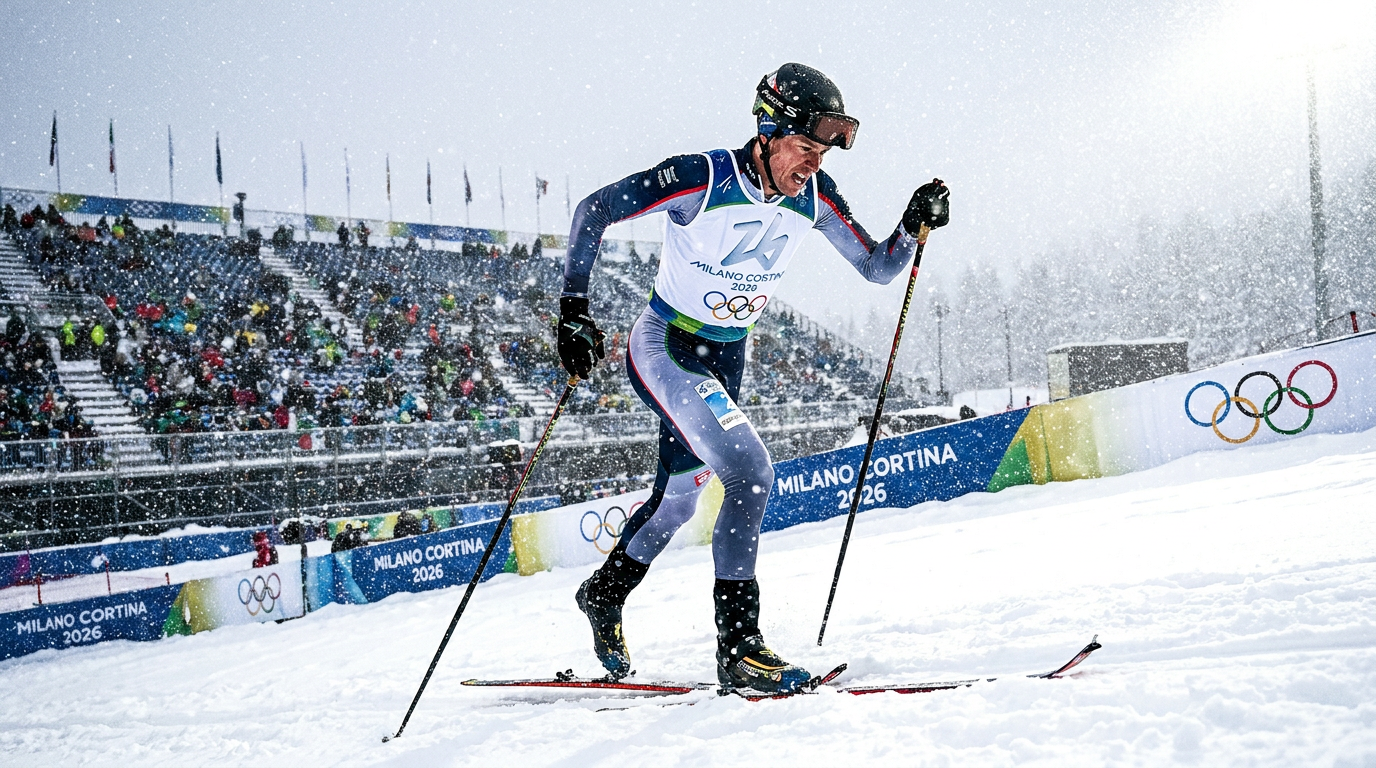
The scene at the Stelvio Ski Centre in Bormio, Italy, on February 19, 2026, was nothing short of spectacular. Heavy snowfall blanketed the region as packed grandstands roared for a sport most of the world had never seen on this stage. Spain's Oriol Cardona Coll and Switzerland's Marianne Fatton crossed the finish line to become the first-ever Olympic champions in a discipline that blends sheer lung capacity with alpine adrenaline.[2]
The sport is ski mountaineering, universally known as "SkiMo." Making its debut at the Milano Cortina 2026 Winter Games, it quickly became one of the most talked-about events of the fortnight. But beyond the medals and the roaring crowds, SkiMo represents a fascinating evolution of mountain travel—transforming a century-old military patrol technique into a hyper-modern, three-minute sprint.[1][2]
To understand SkiMo, one must look past traditional downhill skiing. It is essentially a winter triathlon compressed into a single, lung-busting circuit. The Olympic sprint format requires athletes to ascend a steep slope, transition to climbing on foot with skis on their backs, and finally race back down a slalom course.[4][5]
The race begins with the ascent. Athletes line up at the bottom of the course with their skis attached. Unlike alpine skiers, their heels are free to lift, much like in cross-country skiing. This allows them to "skin" up the mountain—a technique that relies on specialized equipment to defy gravity.[3][5]

The secret to this uphill glide lies in the "skins." Originally made from seal skin but now constructed from grippy synthetic mohair or nylon, these carpet-like strips adhere to the bottom of the skis. The fibers are angled so that the ski glides forward smoothly but grips the snow instantly when pushed backward, preventing the athlete from sliding down the slope.[3][4]
After ascending the initial section, the athletes hit the first transition zone. This is where SkiMo's unique technical demands become apparent. In a flurry of motion, competitors must detach their skis, secure them to specialized asymmetrical backpacks, and prepare for the "bootpack" phase.[6]
The bootpack is arguably the most grueling segment of the sprint. Carrying their skis, athletes must run up a steep, stepped section of the course on foot. Their boots, which look like a hybrid between alpine and cross-country footwear, feature flexible cuffs that allow for a natural running stride.[2][6]
Once they reach the top of the bootpack section, the second transition occurs. Athletes must remove their skis from their packs, rip the skins off the bases, and stow the skins securely inside their spandex racing suits. This specific rule—stowing the skins—is a nod to the sport's backcountry origins, designed to prevent littering in pristine mountain environments.[4]

With the skins removed, the athletes lock their bindings, securing their heels to the skis. The flexible cuffs of their boots are also locked into a rigid, forward-leaning position. Suddenly, the uphill endurance runner transforms into a downhill alpine racer.[3][6]
With the skins removed, the athletes lock their bindings, securing their heels to the skis.
The final phase is a frantic 70-meter descent through a giant slalom-style course. Athletes must navigate gates and small jumps, relying on lightweight gear that is notoriously difficult to control at high speeds. The first skier to cross the finish line wins the heat.[2][5]
The margins in these transitions are razor-thin. Much like a Formula 1 pit stop or a triathlon transition area, any fumble can cost a medal. Referees monitor these zones strictly; transitioning outside the designated area or dropping equipment results in severe time penalties, often 30 seconds, which is a death knell in a three-minute race.[4]
The gear itself is a marvel of modern engineering, driven by an obsessive quest to shed weight. Olympic regulations mandate that men's skis weigh no less than 780 grams each, while women's skis must weigh at least 730 grams. These are significantly shorter and narrower than standard alpine skis, maximizing mobility on the ascent.[3]
The boots are equally specialized. Constructed from carbon fiber and lightweight plastics, a SkiMo boot can weigh as little as 400 to 500 grams—a fraction of the weight of a standard downhill boot. They feature Vibram rubber soles for traction during the bootpack and complex lever systems that switch the boot from "walk" mode to "ski" mode in a fraction of a second.[3][6]

While the sprint format captivated television audiences, it also sparked a philosophical debate within the mountaineering community. Traditional SkiMo is an endurance sport, often taking place over hours or days in untouched, avalanche-prone backcountry terrain. Purists argue that the three-minute Olympic sprint on a groomed, artificial course distorts the essence of the sport.[6]
In traditional long-distance SkiMo, athletes must carry mandatory avalanche safety gear, including a transceiver, a probe, and a snow shovel. They navigate crevasses and unpredictable weather. The Olympic format strips away these environmental variables, distilling the sport into a pure test of V02 max and transition speed.[3][5]
However, organizers and many athletes defend the sprint format as a necessary compromise. The International Olympic Committee required a format that was spectator-friendly, easy to broadcast, and safe to execute on a predictable schedule. The sprint and mixed relay events delivered exactly that, bringing unprecedented visibility to a niche sport.[1][6]
The mixed relay, which debuted alongside the individual sprints, further highlighted the sport's dynamic appeal. Teams of one man and one woman completed multiple laps of the course, tagging each other in a frantic display of teamwork and endurance. The format proved to be a massive hit with the crowds in Bormio.[2][5]

As the dust settles on Milano Cortina 2026, the impact of SkiMo's Olympic debut is already being felt. The International Ski Mountaineering Federation is reporting a surge in interest, and equipment manufacturers are seeing increased demand for lightweight touring gear from recreational skiers inspired by the Games.[1][6]
Looking ahead to the 2030 Winter Olympics in the French Alps, SkiMo is poised to expand its footprint. There are already discussions about adding longer individual endurance events to the program, which would bridge the gap between the sport's backcountry roots and its new Olympic identity.[1]
For now, SkiMo stands as a testament to the evolution of winter sports. It has successfully honored its origins as a utilitarian method of mountain travel while transforming into a breathtaking athletic spectacle. As the athletes who conquered the Stelvio slope proved, the future of the Winter Games is faster, steeper, and more demanding than ever.[1]
How we got here
Early 1900s
Ski mountaineering originates as a method for Alpine military patrols to traverse mountainous terrain.
1924
Military ski patrolling is featured as a medal event at the inaugural Winter Olympics in Chamonix.
2007
The International Ski Mountaineering Federation (ISMF) is founded to govern and standardize the sport.
July 2021
The IOC Executive Board officially approves SkiMo for inclusion in the Milano Cortina 2026 program.
February 2026
SkiMo makes its official debut in Bormio, Italy, with sprint and mixed relay events.
Viewpoints in depth
Olympic Organizers & Broadcasters
Prioritizing spectator engagement and broadcast logistics.
For the International Olympic Committee and global broadcasters, traditional ski mountaineering presented a logistical nightmare. Races that span hours across unpredictable, avalanche-prone backcountry terrain are nearly impossible to film comprehensively and difficult for stadium crowds to follow. By condensing the sport into a three-minute sprint on a groomed, 70-meter slope, organizers created a highly digestible, high-octane television product. This format ensures predictable scheduling, maximizes the visibility of the athletes, and brings the action directly in front of packed grandstands.
Traditional Mountaineering Community
Defending the backcountry endurance roots of the sport.
Purists within the mountaineering world view the Olympic sprint format with a degree of skepticism. Traditional SkiMo is fundamentally an endurance and survival sport, requiring athletes to navigate untouched snow, manage avalanche risks, and sustain physical exertion over long distances. Critics argue that placing the event on an artificial, groomed slalom course strips away the environmental variables that define mountaineering. For this camp, the Olympic version is closer to a snow-based track event than true alpine exploration.
Competitive SkiMo Athletes
Embracing the physiological extremes and technical precision.
For the athletes competing in Bormio, the philosophical debates take a back seat to the sheer physical reality of the race. The sprint format demands an agonizingly high VO2 max, requiring competitors to redline their heart rates for three uninterrupted minutes. Furthermore, the athletes emphasize that the Olympic format places an unprecedented premium on transition skills. A fumbled binding or a dropped ski pole in the transition zone can instantly erase months of physical training, making the event a supreme test of both cardiovascular output and fine motor control under extreme stress.
What we don't know
- Whether the International Olympic Committee will approve longer, traditional endurance SkiMo events for the 2030 Winter Games.
- How the surge in Olympic visibility will impact the commercial market for lightweight backcountry ski gear.
Key terms
- Skins
- Synthetic, carpet-like strips attached to the bottom of skis that provide traction for uphill climbing.
- Bootpack
- A section of the race where athletes must remove their skis, attach them to a backpack, and climb steep terrain on foot.
- Transition Zone
- Designated areas on the course where athletes switch between skiing and climbing modes, subject to strict time penalties for errors.
- Bindings
- The mechanisms that attach boots to skis, which in SkiMo can be unlocked at the heel for walking and locked down for descending.
Frequently asked
Do SkiMo athletes use normal downhill skis?
No. SkiMo skis are significantly shorter, narrower, and lighter than alpine skis, with men's skis weighing a minimum of 780 grams to maximize uphill mobility.
Why do athletes take their skis off during the race?
Courses include a 'bootpack' section featuring terrain or stairs too steep to ski up, requiring athletes to carry their skis on their backs and run on foot.
What happens if an athlete drops their gear?
Referees strictly monitor transition zones. Dropping gear or transitioning outside the designated area results in severe time penalties, often 30 seconds.
Is ski mountaineering a new sport?
While it made its Olympic debut in 2026, the sport originated in the early 1900s as a method for Alpine military patrols to traverse mountainous terrain.
Sources
Source coverage
6 outlets
3 viewpoints surfaced






[1]Factlen Editorial TeamCompetitive SkiMo Athletes
Synthesis by Factlen editorial team
Read on Factlen Editorial Team →[2]International Olympic CommitteeOlympic Organizers & Broadcasters
What is ski mountaineering? A guide to the newest sport at Winter Olympics 2026
Read on International Olympic Committee →[3]NBC OlympicsOlympic Organizers & Broadcasters
Ski mountaineering 101: Olympic equipment
Read on NBC Olympics →[4]Canadian Olympic CommitteeCompetitive SkiMo Athletes
What is ski mountaineering? The newest Olympic winter sport, explained
Read on Canadian Olympic Committee →[5]The British Mountaineering CouncilTraditional Mountaineering Community
SkiMo at the Milano-Cortina 2026 Winter Olympics
Read on The British Mountaineering Council →[6]NSS SportsTraditional Mountaineering Community
The ultime guide to SkiMo
Read on NSS Sports →

More in sports
See all 9 stories →Standings
White Sox and Mariners Surge in Mid-June MLB Standings as Underdogs Take Center Stage
0 sources

Injury
European Injury Report: Maddison Nears Spurs Return as Real Madrid Lose Mendy for Months
0 sources

Standings
MLS Standings at the World Cup Break: Nashville SC and Vancouver Lead as Inter Miami Surges
0 sources

British Tennis
17-Year-Old Hannah Klugman Secures First WTA Tour Victory at Nottingham Open
0 sources

Every angle. Every day.
Get sports stories with full source coverage and perspective breakdowns delivered to your inbox.