
The 60-Second Fight: Why Women's Boxing is Battling Over the 3-Minute Round
As women's boxing reaches unprecedented commercial heights, top fighters are demanding an end to the sport's two-minute round limit in a push for true equality.
By Factlen Editorial Team
- Fighter Equality Advocates
- Top fighters arguing that equal round times are essential for equal pay, knockouts, and respect.
- Safety & Regulation Defenders
- Governing bodies maintaining that shorter rounds protect athletes from severe brain injuries.
- Action & Spectacle Proponents
- Promoters and high-volume fighters who believe the two-minute round creates a better television product.
What's not represented
- · Neurologists specializing in female combat sports
- · Athletic commission medical boards
Why this matters
The push for three-minute rounds isn't just about the rules of a sport—it's a battle for equal pay, equal respect, and the right of female athletes to dictate the terms of their own physical risks.
Key points
- The standard round length for women's professional boxing is two minutes, compared to three minutes for men.
- Top fighters like Amanda Serrano and Claressa Shields are actively campaigning for three-minute rounds to increase knockout opportunities and pay parity.
- The World Boxing Council (WBC) refuses to sanction three-minute rounds for women, citing medical studies on fatigue and concussion risks.
- Some champions, including Katie Taylor, prefer the two-minute format because it encourages a relentless, action-packed pace.
- The debate highlights a broader struggle for autonomy, equality, and earning potential in the rapidly growing sport.
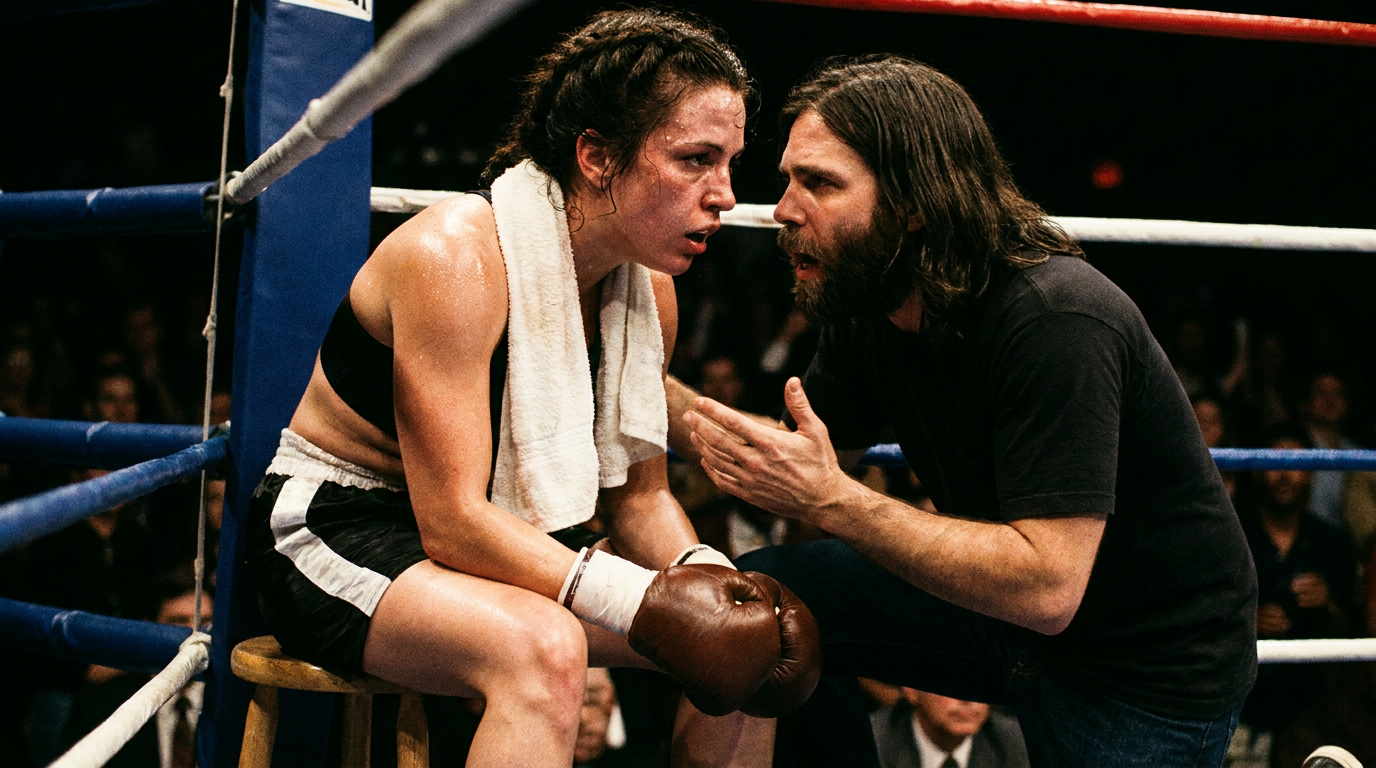
In the brutal, mathematical world of professional boxing, a single minute is an eternity. For over a century, the three-minute round has stood as the undisputed standard for men, dictating the rhythm, strategy, and endurance required to reach the pinnacle of the sport. But for women, the clock abruptly stops at 120 seconds.[2]
When women's boxing finally began securing mainstream athletic commission sanctioning in the 1990s, the two-minute round was instituted as a mandatory concession. It was framed as a necessary safety measure to appease regulators who were historically hesitant to allow female fighters in the ring at all. Today, however, that concession has become the battleground for the sport's most heated debate.[2]
Fast forward to 2026, and women's boxing has evolved into a global economic powerhouse. Female fighters are headlining Madison Square Garden, selling out international arenas, and drawing millions of pay-per-view buys. Yet, despite this massive commercial leap, the two-minute ceiling remains firmly in place across most major sanctioning bodies.[5][6]
A vocal coalition of pioneers, led by multi-division champions Amanda Serrano and Claressa Shields, is now pushing to abolish the limit. They argue that if female fighters endure the same grueling training camps and make the same physical sacrifices, they should be allowed to compete under the exact same parameters as their male counterparts.[3][7]

To understand the frustration, one must look at the mechanics of the extra minute. In a two-minute round, fighters are essentially forced into a sprint. There is precious little time to establish a probing jab, download an opponent's timing, or set complex traps. The bell rings just as a fighter begins to find their rhythm.[2][8]
This sprint creates a significant "knockout deficit." Because fighters only have 120 seconds to work before their opponent is granted a 60-second recovery period, accumulating the sustained damage necessary for a stoppage is mathematically much harder. Shields has frequently noted that many of her opponents survive simply because they are saved by the early bell.[3]
The economic consequences of this deficit are profound. In combat sports, spectacular knockouts generate viral highlights, and viral highlights generate leverage in purse negotiations. By capping the round length and artificially depressing the knockout rate, advocates argue that the sport is actively capping women's earning potential and marketability.[2]
In combat sports, spectacular knockouts generate viral highlights, and viral highlights generate leverage in purse negotiations.
On the other side of the debate stands the World Boxing Council (WBC) and its president, Mauricio Sulaiman, who have flatly refused to sanction three-minute rounds for women. When Serrano fought a historic 12-round, three-minute bout against Danila Ramos, she was forced to vacate her WBC title because the organization would not recognize the format.[1]

The WBC anchors its refusal entirely in medical caution. The organization cites internal studies suggesting that female athletes may be more susceptible to concussions and traumatic brain injuries. They argue that the third minute of a round is when severe fatigue sets in, dehydration peaks, and the neck muscles weaken—creating the perfect storm for a catastrophic head injury.[1][4]
However, critics point out that the gender-specific concussion data in combat sports is far from settled. In mixed martial arts, women have fought five-minute rounds for over a decade in organizations like the UFC and PFL, without a disproportionate spike in catastrophic brain injuries compared to men.[7]
Interestingly, the resistance to three-minute rounds doesn't only come from regulators. Some of the sport's biggest stars, including undisputed lightweight champion Katie Taylor and her promoter Eddie Hearn, argue that the two-minute format is actually a feature, not a bug.[6]

Because the rounds are shorter, women's fights often feature a relentless, high-volume pace that rarely lulls. Fighters do not have to conserve energy for a grueling third minute, resulting in action-packed bouts from the opening bell. Taylor's camp argues this frantic pace creates a highly entertaining television product that differentiates the women's game from the sometimes plodding, tactical men's bouts.[1][6]
For advocates like Serrano, the goal isn't necessarily to force every female fighter into three-minute rounds immediately, but to offer the choice at the championship level. They believe that elite fighters who have proven their conditioning should have the autonomy to decide their fight parameters, rather than being restricted by blanket mandates.[1]
The momentum appears to be shifting. State athletic commissions have already shown a willingness to sanction 12x3 fights if the athletes request them, bypassing the traditional belt organizations' rules. As more high-profile fighters demand the longer format, the pressure on the remaining holdouts will only intensify.[7]

Ultimately, the fight over the clock is a fight over the future identity of women's boxing. Whether the sport evolves into a structural mirror image of the men's game or retains its unique, high-octane format, the athletes themselves are finally the ones driving the conversation—and demanding that their voices be heard.[3][4][8]
How we got here
1990s
Women's boxing gains mainstream athletic commission sanctioning, but with mandatory two-minute rounds as a safety concession.
2017
The Amateur International Boxing Association (AIBA) changes its rules to allow women to compete in three-minute rounds.
October 2023
Amanda Serrano fights Danila Ramos in a historic 12-round, 3-minute bout, vacating her WBC title after the organization refuses to sanction it.
2026
The debate reaches a boiling point as top fighters continue to demand equal ring time to maximize knockout potential and pay parity.
Viewpoints in depth
Fighter Equality Advocates
Top fighters arguing that equal round times are essential for equal pay and respect.
Pioneers like Amanda Serrano and Claressa Shields view the two-minute limit as an artificial ceiling on their earning potential and legacy. They argue that shorter rounds make it mathematically harder to secure knockouts—the viral moments that drive pay-per-view buys and mainstream stardom. By demanding 12 three-minute rounds, they are pushing to prove that female athletes possess the exact same endurance, tactical depth, and finishing ability as their male counterparts, rendering the historical 'safety' concessions obsolete.
Safety & Regulation Defenders
Governing bodies maintaining that shorter rounds protect athletes from severe brain injuries.
The World Boxing Council (WBC), led by Mauricio Sulaiman, stands as the primary roadblock to three-minute rounds, citing medical caution. Their argument hinges on the physiology of fatigue: as a fighter exhausts their neck and core muscles in the third minute of a round, their head becomes more susceptible to the rotational forces that cause concussions. The WBC argues that because women may have different concussion recovery profiles than men, maintaining the 120-second limit is a necessary safeguard, not a sexist double standard.
Action & Spectacle Proponents
Promoters and high-volume fighters who believe the two-minute round creates a better television product.
A distinct camp, which includes undisputed champion Katie Taylor and promoter Eddie Hearn, argues that the two-minute round is actually women's boxing's secret weapon. Because fighters don't have to conserve energy for a third minute, bouts are fought at a frantic, sprint-like pace from the opening bell. This relentless action rarely suffers from the slow, tactical lulls that can plague 36-minute men's fights. For this camp, the two-minute round isn't a limitation; it's a unique feature that makes the women's sport arguably more entertaining to watch.
What we don't know
- Whether definitive, peer-reviewed neurological data proves that female boxers face higher concussion risks in the third minute of a round.
- If major sanctioning bodies like the WBA, IBF, and WBO will eventually break from the WBC and universally adopt the three-minute standard.
Key terms
- Sanctioning Body
- An organization (like the WBC, WBA, IBF, or WBO) that ranks fighters and awards championship belts, enforcing their own specific rules for title bouts.
- High-Volume Fighter
- A boxer whose strategy relies on throwing a massive number of punches to overwhelm their opponent, rather than relying on single knockout blows.
- Knockout Deficit
- The concept that shorter rounds give fighters less time to inflict sustained damage, mathematically reducing the likelihood of a knockout.
Frequently asked
Why do women box 2-minute rounds?
Originally instituted as a safety concession in the 1990s, the rule is maintained by bodies like the WBC who argue shorter rounds prevent late-round fatigue and reduce concussion risks.
Have any women fought 3-minute rounds?
Yes. Amanda Serrano made history by fighting Danila Ramos in a 12-round, 3-minute-per-round championship bout, though the WBC refused to sanction it.
Do all female boxers want 3-minute rounds?
No. Some champions, like Katie Taylor, prefer the 2-minute format because it forces a relentless, high-action pace that suits high-volume fighters.
Sources
Source coverage
8 outlets
3 viewpoints surfaced








[1]Sky SportsSafety & Regulation Defenders
WBC president Mauricio Sulaiman explains why organisation rejected three-minute rounds
Read on Sky Sports →[2]The RingerFighter Equality Advocates
The Biggest Fight in Women’s Boxing Is Over a Minute
Read on The Ringer →[3]BoxingSceneFighter Equality Advocates
Claressa Shields Wants 3-Minute Rounds, Equality In Women's Boxing
Read on BoxingScene →[4]KO StudioSafety & Regulation Defenders
Why Is Women's Boxing Limited to 2-Minute Rounds? Explained
Read on KO Studio →[5]Sidekick BoxingSafety & Regulation Defenders
WBC Rules Against Three-Minute Rounds for Women's Boxing
Read on Sidekick Boxing →[6]CBS SportsAction & Spectacle Proponents
Katie Taylor vs. Amanda Serrano: What's at stake for the fighters and the sport of women's boxing
Read on CBS Sports →[7]Cris Cyborg OfficialFighter Equality Advocates
Amanda Serrano looks to change Women’s Boxing with 12 round 3 minute championship fight
Read on Cris Cyborg Official →[8]Factlen Editorial TeamFighter Equality Advocates
Synthesis by Factlen editorial team
Read on Factlen Editorial Team →
More in sports
See all 11 stories →Standings
Belgium Closes in on FIH Pro League Title and 2028 Olympic Berth as Final European Leg Begins
0 sources
Women's Soccer Boom
The Unprecedented Boom of U.S. Women's Soccer in 2026
0 sources
Centaur Chess
The Post-Engine Era: How AI Transformed Modern Chess Strategy
0 sources

Injury
Nebojsa Simić's Triumphant Return Highlights Handball's Grueling Injury Landscape
0 sources
Every angle. Every day.
Get sports stories with full source coverage and perspective breakdowns delivered to your inbox.