
The 2026 Wearable Divide: Smartwatches vs. Fitness Watches vs. Smart Rings
As health tracking matures, consumers must choose between the seamless connectivity of smartwatches, the endurance of dedicated fitness watches, and the invisible monitoring of smart rings.
By Factlen Editorial Team
- Ecosystem Loyalists
- Prioritize seamless smartphone integration and smart features over multi-day battery life.
- Data-Driven Athletes
- Value deep training metrics, GPS accuracy, and multi-week battery life for endurance sports.
- Discreet Wellness Seekers
- Focus on sleep, recovery, and continuous monitoring without the distraction of a screen.
What's not represented
- · Budget-conscious consumers who rely on sub-$50 basic fitness bands.
- · Medical professionals utilizing clinical-grade wearables for remote patient monitoring.
Why this matters
The era of the generic step-counter is over. Choosing the right wearable in 2026 dictates whether you get actionable health insights that seamlessly fit your lifestyle, or an expensive gadget that spends most of its time sitting on a charger.
Key points
- Lifestyle smartwatches offer the best connectivity and safety features but require daily charging.
- Dedicated fitness watches provide up to 14 days of battery life and deep athletic metrics.
- Smart rings excel at comfortable, highly accurate sleep and recovery tracking.
- Smart rings lack screens, making them unsuitable for real-time workout pacing.
- Consumers must choose based on their tolerance for charging and need for smart features.
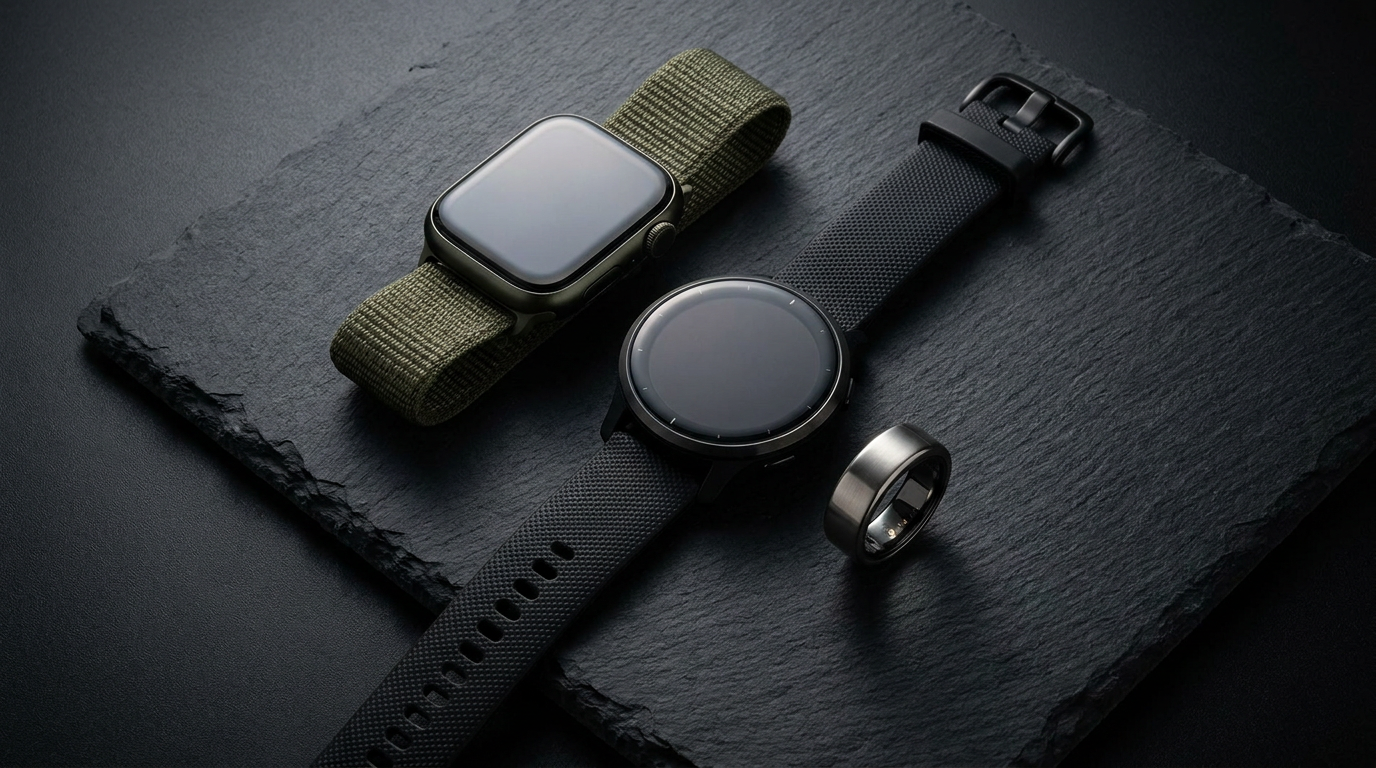
The wearable technology landscape has fractured into three distinct philosophies in 2026. The era of the generic, one-size-fits-all step counter has ended, replaced by highly specialized devices that cater to specific lifestyles. Consumers must now navigate a trade-off analysis between the lifestyle smartwatch, the dedicated fitness watch, and the screenless smart ring. Each paradigm demands compromises, forcing buyers to prioritize either seamless connectivity, athletic endurance, or invisible health monitoring.[2][5]
The first paradigm is the lifestyle smartwatch, championed by the Apple Watch Series 10 and 11, alongside the Google Pixel Watch. The case for these devices rests entirely on their ability to act as a true extension of a smartphone. They offer vibrant OLED displays, cellular connectivity, and deep integration with native operating systems. Users can answer calls, reply to texts, and stream music without carrying a phone, making them the ultimate convenience tool for urban environments.[3][4][6]
The evidence supporting the lifestyle smartwatch is robust. Testing reveals that the Apple Watch features some of the most accurate optical heart rate sensors available, particularly during high-intensity, erratic workouts where wrist movement can confuse lesser sensors. Furthermore, its safety features, including fall detection, crash detection, and emergency SOS, provide a layer of security that other wearables simply cannot match. For general health tracking, the ecosystem provides a highly polished, user-friendly interface that makes data accessible to beginners.[3][4]
However, the argument against the lifestyle smartwatch remains anchored to its battery life. Despite years of iteration, devices like the Apple Watch Series 10 still max out at roughly 18 to 36 hours of use, especially with the always-on display enabled. This necessitates daily charging, which frequently interrupts sleep tracking. If a user forgets to charge the watch during the day, they must choose between wearing a dead device to bed or missing out on crucial overnight recovery metrics.[3][6]

Ultimately, the lifestyle smartwatch fits well when a user wants a seamless extension of their digital life, values safety features, and does not mind a daily charging routine. It does not fit when a user suffers from charging fatigue, requires multi-day GPS tracking for outdoor expeditions, or finds wearing a glowing screen to bed uncomfortable.[4][5]
The second paradigm is the dedicated fitness watch, dominated by Garmin's Venu 3 and Forerunner series. The case for the fitness watch centers on unparalleled battery life and deep, actionable training metrics. Unlike lifestyle smartwatches, these devices are built primarily as sports tools that happen to tell time, prioritizing continuous data collection over app ecosystems.[2][6]
The second paradigm is the dedicated fitness watch, dominated by Garmin's Venu 3 and Forerunner series.
The evidence for the fitness watch is compelling for active users. The Garmin Venu 3 boasts up to 14 days of battery life on a single charge, or roughly five days with the screen always on. This endurance allows for uninterrupted 24/7 health monitoring, feeding proprietary algorithms that calculate dynamic metrics like "Body Battery" and precise recovery times. Furthermore, these watches support highly specific sport profiles, from indoor track running to bouldering, offering metrics like ground contact time and cycling power that lifestyle watches often gloss over.[2][3][4]
The argument against the dedicated fitness watch lies in its limited smart capabilities. The proprietary operating systems do not support robust third-party app stores, and the interfaces can feel less polished than Apple or Google's offerings. While they mirror smartphone notifications, interacting with them is limited, and cellular models are virtually nonexistent. Additionally, the rugged or plastic-heavy designs of some models can feel out of place in formal settings compared to the sleek metal finishes of premium smartwatches.[3][4]
The dedicated fitness watch fits well when a user is serious about athletic training, prioritizes multi-week battery life, and wants deep insights into their physical recovery. It does not fit when a user expects seamless voice assistants, wants to leave their phone at home while staying reachable via cellular, or prefers a highly dynamic, app-heavy interface.[4][6]

The third paradigm is the smart ring, led by the Oura Ring 4 and the Samsung Galaxy Ring. The case for smart rings is built entirely on discretion and comfort. By removing the screen entirely, these devices offer a way to track health metrics without adding another source of digital distraction or wrist fatigue to a user's day.[1][7][8]
The evidence supporting smart rings highlights their superiority in sleep tracking. Weighing as little as three grams, rings are significantly more comfortable to wear to bed than bulky watches. Because the blood vessels in the finger are closer to the surface than those in the wrist, rings can capture highly accurate resting heart rate, blood oxygen, and skin temperature data. Devices like the Oura Ring 4 use this data to provide clinical-grade insights into cardiovascular age and sleep apnea, translating raw metrics into actionable daily readiness scores.[1][7][8]
The argument against smart rings focuses on their limitations during active workouts. Without a screen, users cannot check their pace, heart rate, or distance mid-run. Furthermore, the form factor struggles with dynamic, high-movement exercises; gripping a barbell or a bicycle handlebar can disrupt the sensor's contact with the skin, leading to inaccurate readings. Additionally, some top-tier rings, like Oura, require an ongoing monthly subscription fee to access the data they collect, adding a hidden long-term cost.[1][7]

The smart ring fits well when a user wants 24/7 holistic health and sleep data, values traditional mechanical watches but still wants to track their health, or finds wrist wearables uncomfortable. It does not fit when a user needs real-time workout feedback, relies on built-in GPS for outdoor pacing, or wants to interact with smartphone notifications.[1][8]
As 2026 progresses, the wearable market has proven that no single device can perfectly serve every master. The choice is no longer about which tracker is objectively the best, but rather which set of trade-offs aligns with a user's daily habits. Whether opting for the connected convenience of Apple, the relentless endurance of Garmin, or the invisible insights of Oura, consumers now have the tools to track their health exactly how they see fit.[2][5][8]
How we got here
2015
Apple launches the first Apple Watch, establishing the lifestyle smartwatch paradigm.
2018
Oura releases its second-generation ring, proving that screenless finger wearables can accurately track sleep.
2023
Garmin introduces AMOLED screens to its fitness watches, bridging the gap between rugged sports tools and vibrant smartwatches.
2026
Samsung enters the smart ring market with the Galaxy Ring, validating the screenless form factor for mainstream Android users.
Viewpoints in depth
Ecosystem Loyalists
Users who prioritize seamless smartphone integration and daily convenience over specialized sports metrics.
For this camp, a wearable is primarily an extension of the smartphone. They value the ability to leave their phone behind while staying connected via cellular, using voice assistants, and paying for groceries from their wrist. They view daily charging as a minor inconvenience easily solved by a 30-minute top-up during a morning shower, arguing that the unparalleled smart features and safety nets like fall detection far outweigh the benefits of multi-week battery life.
Data-Driven Athletes
Runners, cyclists, and outdoor enthusiasts who demand deep training metrics and relentless battery life.
This perspective views wearables as serious training tools rather than lifestyle accessories. They rely on metrics like VO2 max, training load, and recovery time to optimize their performance. For them, a device that dies after 18 hours is a liability, especially during long hikes or marathon training blocks. They willingly trade slick OLED animations and third-party app stores for tactile buttons, dual-band GPS accuracy, and batteries that measure their lifespan in weeks rather than hours.
Discreet Wellness Seekers
Users focused on holistic health, sleep, and recovery who prefer their technology to be invisible.
This growing camp rejects the idea that health tracking requires wearing a glowing screen. They prioritize sleep quality and nervous system recovery over active workout pacing. By opting for smart rings, they gain access to clinical-grade temperature and blood oxygen data in a form factor that doesn't disrupt their sleep or clash with traditional mechanical watches. They argue that the best health tracker is the one you forget you are wearing.
What we don't know
- Whether future battery breakthroughs will eventually allow full-featured smartwatches to last multiple days.
- How upcoming non-invasive blood glucose monitoring will be integrated into these different form factors.
Key terms
- Heart Rate Variability (HRV)
- A measure of the variation in time between each heartbeat, used by wearables to gauge physical stress and nervous system recovery.
- Body Battery
- A proprietary Garmin metric that combines activity, stress, and sleep data to estimate a user's remaining daily energy reserves.
- Chronotype
- A person's natural biological inclination regarding the times of day when they prefer to sleep or when they are most alert, often analyzed by advanced sleep trackers.
- Optical Heart Rate Sensor
- The technology used on the back of smartwatches and inside smart rings that uses light to measure blood flow and calculate heart rate.
Frequently asked
Can a smart ring replace a smartwatch for running?
No. Smart rings lack screens for real-time feedback and built-in GPS, making them better suited for post-workout recovery tracking rather than active pacing.
Which device has the most accurate sleep tracking?
Smart rings generally offer the most comfortable and reliable sleep tracking due to the finger's strong pulse signal, though the Apple Watch also provides highly accurate sleep stage data if worn to bed.
Do I have to pay a subscription fee for these devices?
It depends. The Oura Ring requires a monthly subscription for full data access, whereas Garmin devices, Apple Watches, and the Samsung Galaxy Ring offer their insights subscription-free.
Can I use an Apple Watch with an Android phone?
No, the Apple Watch requires an iPhone to function. Android users must look to devices like the Google Pixel Watch, Samsung Galaxy Watch, or cross-platform options like Garmin and Oura.
Sources
Source coverage
8 outlets
3 viewpoints surfaced







[1]TechRadarEcosystem Loyalists
Best smart ring 2026: the best from Oura, Samsung, RingConn and more
Read on TechRadar →[2]ForbesData-Driven Athletes
The Best Fitness Trackers Of 2026, Tested And Reviewed
Read on Forbes →[3]PhoneArenaEcosystem Loyalists
Garmin Venu 3 vs Apple Watch Series 10 differences
Read on PhoneArena →[4]BandleticData-Driven Athletes
Garmin Venu 3 vs Apple Watch Series 10: Which is Right for You?
Read on Bandletic →[5]EsquireDiscreet Wellness Seekers
The 7 Best Fitness Trackers to Buy in 2026
Read on Esquire →[6]Runner's WorldData-Driven Athletes
The best fitness trackers 2026: From Fitbit-style bands to smartwatches
Read on Runner's World →[7]Neura HealthDiscreet Wellness Seekers
The Verdict: Which is the Best Smart Ring for Heart Health?
Read on Neura Health →[8]TechAdvisorDiscreet Wellness Seekers
Best smart rings 2026
Read on TechAdvisor →

Every angle. Every day.
Get guides stories with full source coverage and perspective breakdowns delivered to your inbox.