
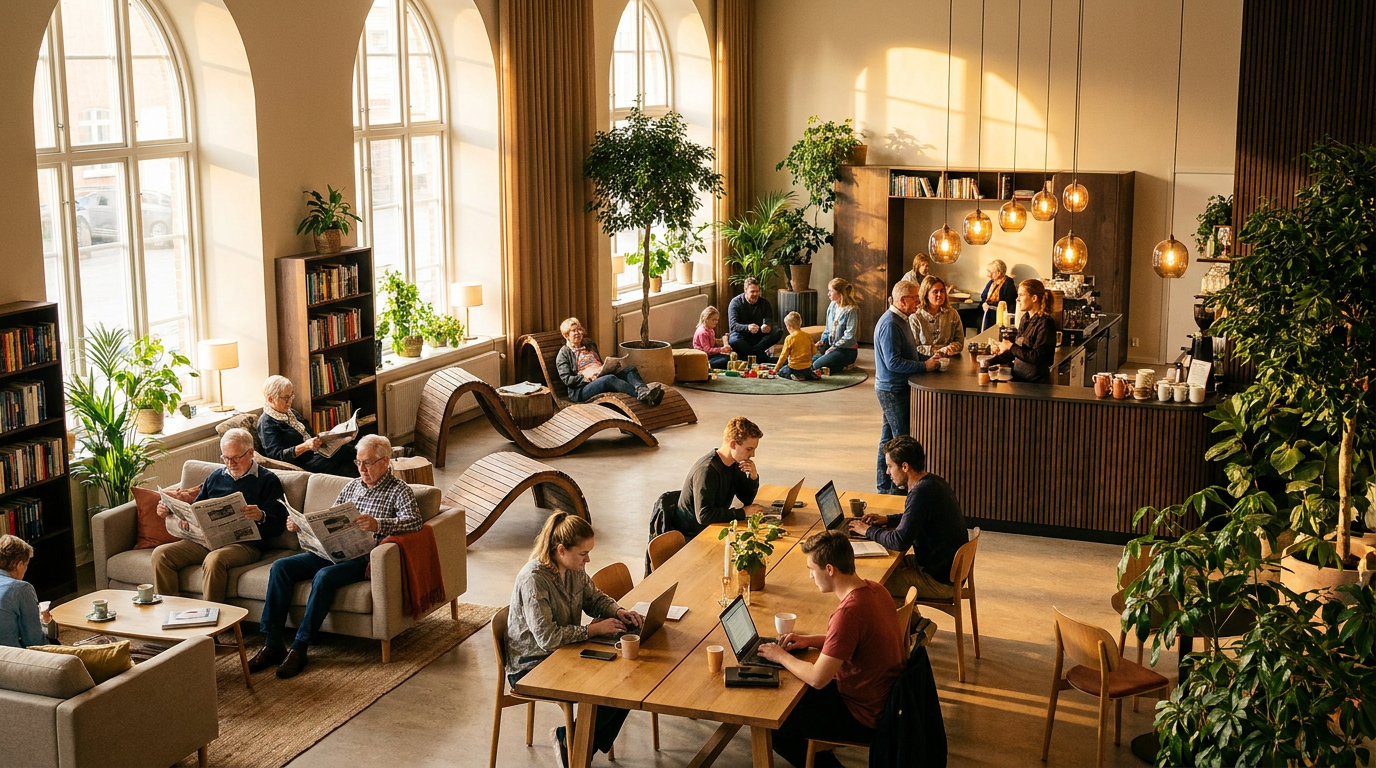
The 2026 'Third Place' Revival: How Communities Are Reclaiming Physical Spaces to Combat Loneliness
Driven by a desire for genuine connection, a cultural shift is reviving 'third places'—from modernized public libraries to grassroots micro-communities—as essential infrastructure against the modern loneliness epidemic.
By Factlen Editorial Team
Public Space Advocates 40%Commercial Innovators 30%Gen Z Community Builders 30%
- Public Space Advocates
- Argue that true third places must be radically inclusive and entirely free of financial barriers.
- Commercial Innovators
- Believe that private enterprise and specialized retail can effectively fill the modern demand for social connection.
- Gen Z Community Builders
- Focus on grassroots, low-barrier 'micro-communities' that prioritize recurring physical presence over digital curation.
What's not represented
- · Rural community organizers
- · Elderly care advocates addressing senior isolation
Why this matters
As digital fatigue peaks and remote work isolates millions, the resurgence of physical gathering spaces offers a tangible, accessible blueprint for improving mental health and rebuilding local civic bonds.
More in lifestyle
See all 48 stories →Digital Wellness
The Dumbphone Renaissance: Why Gen Z is Downgrading Tech to Reclaim Their Minds
7 sources
Workplace Trends
Chronoworking: How Aligning Schedules With Circadian Rhythms Is Reshaping Productivity
9 sources

Modern Romance
The Science of 'Slow Dating': Why Intentional Matchmaking is Replacing Swipe Culture
8 sources

Relationship Science
Why How You Celebrate Good News Matters More Than How You Fight
7 sources

Stay informed
Every angle. Every day.
Get lifestyle stories with full source coverage and perspective breakdowns delivered to your inbox.