
Plant-Based Leather vs. Traditional Leather: The 2026 Material Comparison
As next-generation bio-materials scale, consumers face a complex trade-off between the generational durability of animal hide and the low-carbon promise of plant-based alternatives.
By Factlen Editorial Team
- Eco-Material Innovators
- Focuses on reducing carbon emissions and utilizing agricultural waste through bio-design and plant-based alternatives.
- Traditional Craftspeople
- Values longevity, repairability, and natural aging, viewing animal leather as a durable byproduct of the meat industry.
- Circularity Advocates
- Critical of both traditional tanning chemicals and the plastic polyurethane binders used in many plant-based leathers, pushing for 100% biodegradable solutions.
What's not represented
- · Livestock Farmers
- · Chemical Tanning Facility Workers
Why this matters
As the $360 billion leather industry pivots toward sustainability, consumers are forced to choose between the generational durability of animal hide and the low-carbon promise of plant-based alternatives. Understanding the hidden plastics in 'vegan' leathers and the ecological toll of traditional tanning is essential for making purchasing decisions that genuinely align with your environmental values.
Key points
- The global leather market is undergoing a massive shift as next-generation plant-based materials challenge traditional animal hides.
- Traditional animal leather offers unmatched longevity and repairability, often lasting decades when properly maintained.
- Plant-based leathers drastically reduce carbon emissions and water usage by upcycling agricultural waste like apple peels and cactus leaves.
- Many current fruit-based leathers require up to 80% synthetic plastic binders to maintain structural integrity, hindering their biodegradability.
- Mushroom mycelium is emerging as a highly durable, low-plastic alternative that can be grown in days and rivals animal hide in strength.
- Consumers must weigh the generational durability of animal leather against the cruelty-free, low-emission benefits of bio-based alternatives.
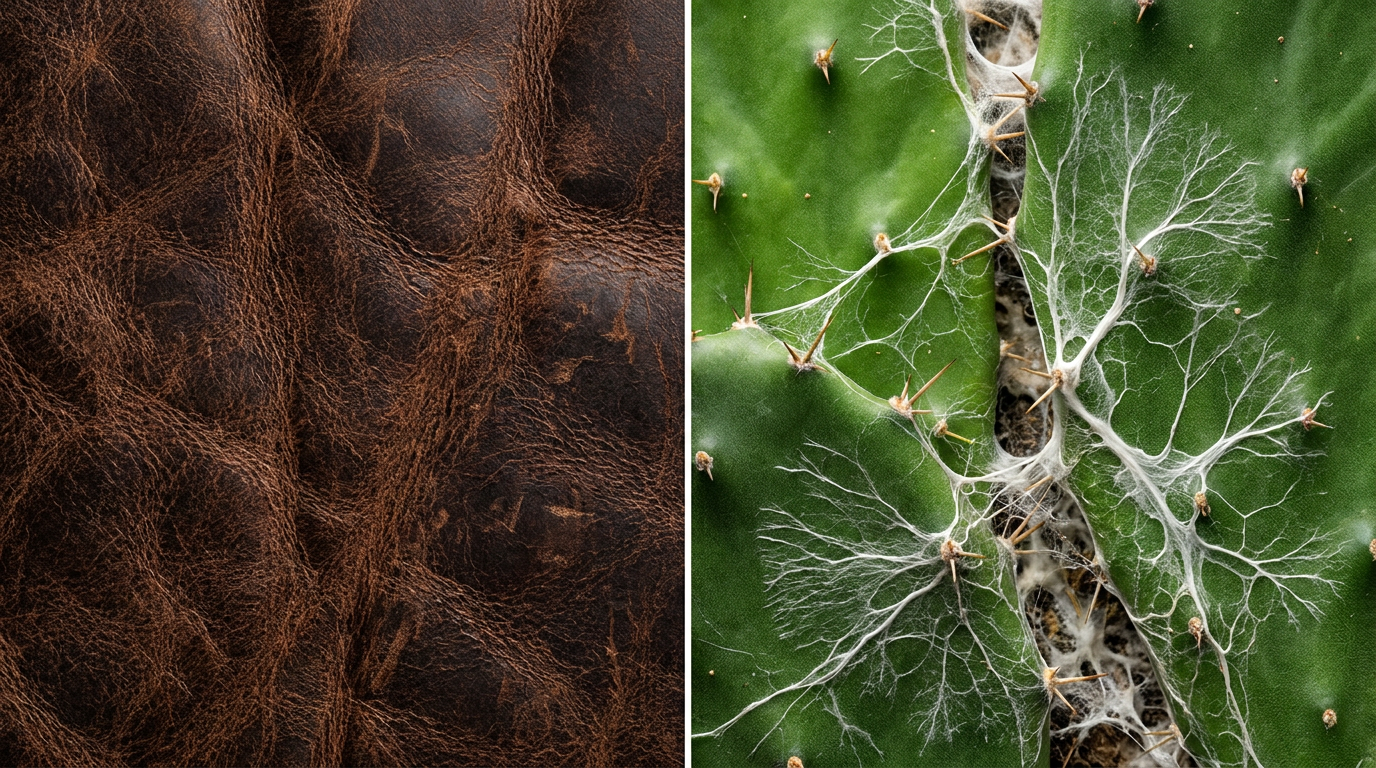
The $360 billion global leather market is facing a generational reckoning. For decades, the choice for consumers was strictly binary: premium animal hide or cheap, petroleum-based plastic synthetics. Today, a new category of next-generation plant-based leathers—engineered from cactus leaves, apple pomace, pineapple fibers, and mushroom mycelium—promises a third path. These bio-based materials aim to deliver the tactile luxury of traditional leather without the heavy environmental toll of livestock farming. Yet, as these materials move from niche boutiques to mainstream fashion lines, consumers are faced with a complex trade-off between sustainability, durability, and true circularity.[5]
The argument for traditional animal leather rests entirely on its unmatched longevity and repairability. As a material that has been utilized for millennia, animal hide possesses a unique, interlocking fibrous structure that synthetic alternatives struggle to replicate. When properly conditioned, traditional leather does not merely endure; it adapts, softening over time and developing a natural patina. Craftspeople and heritage brands champion animal leather as the ultimate "slow fashion" material, arguing that a single cowhide jacket or pair of boots can easily last fifty years, outliving dozens of cheaper synthetic replacements.[2][11]
The evidence supporting traditional leather's durability is overwhelming, but the argument against it centers on its severe ecological footprint. The environmental toll begins with the massive land and water resources required for cattle farming, which is a leading driver of deforestation and methane emissions. Furthermore, the transformation of raw hide into usable leather relies heavily on the tanning process. The vast majority of the global industry utilizes chromium-salt baths to strip hair and fat, a chemical-intensive process that frequently results in toxic wastewater polluting local ecosystems. While vegetable-tanned leather exists, it represents a fraction of the market, leaving the standard animal leather industry as a major ecological offender.[4][5]
The argument for plant-based leather focuses on radical carbon reduction and the clever utilization of agricultural waste. Innovators have discovered that the fibrous byproducts of the food industry—such as the 40,000 tons of waste leaves produced annually by the pineapple industry, or the leftover pulp from apple juice manufacturing—can be upcycled into flexible, leather-like sheets. By diverting this biomass from landfills or incinerators, plant-based leathers actively prevent methane emissions while requiring a fraction of the water and land needed for livestock.[2]

The evidence for the environmental benefits of plant-based materials is highly compelling. According to life-cycle assessments, replacing pure polyurethane (PU) with apple waste saves approximately 5.28 kilograms of carbon dioxide emissions for every kilogram of material produced. Similarly, pineapple-derived materials like Piñatex boast an ecological impact roughly two-thirds lower than standard synthetic leathers. Beyond emissions, these supply chains create secondary revenue streams for farmers, transforming agricultural refuse into a high-value commodity for the luxury fashion sector.[2][10]
However, the argument against many current plant-based leathers lies in the "hidden plastic" required to hold them together. Raw apple or cactus fibers possess a fragile structural integrity on their own. To achieve the flexibility, water resistance, and tensile strength expected of a commercial handbag or shoe, manufacturers frequently blend the organic matter with traditional fossil-based polyurethane or polyvinyl chloride (PVC). In many popular fruit-based leathers, the actual plant content hovers around 20 to 30 percent, with the remaining 70 to 80 percent consisting of synthetic binders and polyester backings.[9]
However, the argument against many current plant-based leathers lies in the "hidden plastic" required to hold them together.
The evidence against these hybrid materials highlights a significant circularity problem. Because the organic plant fibers are inextricably fused with petroleum-based plastics, the resulting material is neither fully biodegradable nor easily recyclable. While they represent a step up from 100 percent virgin plastic faux leathers, these blends often suffer in high-wear scenarios. Consumers frequently report that heavily coated plant leathers are prone to cracking, peeling, and fraying under constant friction, typically limiting their lifespan to five to ten years—a fraction of the lifespan of well-maintained animal hide.[3][4]
Cost dynamics present another crucial layer to the trade-off. Historically, premium animal leather has commanded a high price due to the years required to raise livestock and the labor-intensive tanning process. Today, plant-based alternatives are becoming increasingly competitive. A 20-square-foot sheet of pineapple leather currently costs approximately $65, compared to roughly $150 for a comparable sheet of cowhide. As production scales, the financial barrier to entry for bio-based materials is dropping, making them highly attractive to mid-tier fashion brands looking to boost their sustainability credentials without eroding profit margins.[1][2]

Among the next-generation materials, mushroom mycelium stands out as a unique exception that bridges the gap between organic purity and structural strength. Unlike fruit-based leathers that rely on agricultural waste, mycelium is grown in controlled indoor environments, forming dense, interlocking root networks in a matter of days. Because the mycelium naturally binds itself into a tough, foam-like mat, it requires significantly fewer synthetic resins to achieve durability. Recent studies indicate that when treated with bio-based coatings like polylactic acid, mycelium leather can actually surpass animal leather in tear and flex strength.[5][6]
The economic and environmental metrics for mycelium are particularly striking. Producing a square meter of raw mycelium costs between 18 and 28 cents in direct inputs, compared to nearly $6 for raw animal hides. Furthermore, the manufacturing process requires minimal energy beyond initial sterilization, avoiding both the heavy chemical tanning of animal leather and the petroleum dependency of synthetic PU. While finished mycelium products currently carry a premium price tag due to limited scaling, the underlying material science suggests it could eventually become the most cost-effective and sustainable option on the market.[5]
Ultimately, traditional animal leather fits well when maximum longevity, repairability, and rugged durability are the primary goals. It remains the superior choice for heavy-duty footwear, heirloom accessories, and items subjected to extreme wear and tear. For consumers who view sustainability through the lens of "buy it for life," a single, well-crafted animal leather product that lasts decades is often considered more responsible than purchasing multiple synthetic replacements. It is the material of choice for traditional craftspeople who value natural patina and the ability to restore a product with conditioning oils.[2][11]

Conversely, traditional animal leather does not fit when consumers prioritize a cruelty-free supply chain, low carbon emissions, and minimal chemical pollution. The heavy environmental footprint of cattle farming and chromium tanning makes it a non-starter for eco-conscious buyers who want their purchasing habits to reflect immediate climate action. For these consumers, the ethical and ecological costs of animal agriculture far outweigh the benefits of generational durability.[4][5]
Plant-based leather fits well when the objective is a cruelty-free, low-emission product suitable for everyday fashion. Materials derived from cactus, apple, and pineapple are excellent choices for structured handbags, wallets, and light-wear jackets. They offer a sophisticated aesthetic, natural water resistance, and a significantly reduced carbon footprint compared to pure virgin plastics. They are ideal for modern consumers who want to support agricultural upcycling and are comfortable with a product lifespan of five to ten years.[7][8]
However, current plant-based leather does not fit when the application demands extreme tensile strength or when the consumer demands a 100 percent biodegradable product. Because most fruit and cactus leathers still rely on polyurethane binders to prevent crumbling, they contribute to the microplastic problem at the end of their lifecycle. Until bio-based, plastic-free resins become the industry standard, these hybrid materials remain a transitional technology—a meaningful improvement over pure synthetics, but not yet a perfect closed-loop solution.[8][9]
How we got here
2014
Piñatex, the first commercially viable pineapple leaf leather, is introduced to the market.
2018
Major fashion houses begin investing heavily in mycelium (mushroom) leather research and development.
2019
Desserto launches the world's first highly sustainable organic cactus leather, winning international material innovation awards.
2024
The plant-based vegan leather market reaches a valuation of $2.5 billion, driven by consumer demand for cruelty-free alternatives.
2026
Next-generation bio-leathers focus on eliminating polyurethane binders to achieve 100% biodegradability.
Viewpoints in depth
Traditional Craftspeople
Advocates for the unmatched longevity and repairability of animal hide.
This camp views traditional animal leather not as an environmental hazard, but as the ultimate 'slow fashion' material. They argue that a single, well-crafted cowhide jacket can last fifty years, outliving dozens of synthetic or plant-based replacements that inevitably crack and end up in landfills. From this perspective, utilizing the hides of animals raised for food is a responsible use of agricultural byproducts, and the focus should be on shifting the industry toward vegetable tanning rather than abandoning natural leather for plastic-bound alternatives.
Eco-Material Innovators
Champions the carbon-reduction and cruelty-free benefits of upcycling agricultural waste.
Innovators in the bio-design space argue that the environmental toll of cattle farming and chromium tanning is fundamentally unsustainable for a $360 billion global market. By upcycling the millions of tons of waste generated by the apple, pineapple, and cactus industries, they are creating high-value materials that drastically reduce carbon emissions and water usage. While they acknowledge the current reliance on synthetic binders, they view plant-based hybrids as a necessary transitional step toward a fully cruelty-free fashion industry.
Circularity Advocates
Demands 100% biodegradable materials and criticizes the 'hidden plastics' in vegan leathers.
Circularity advocates are highly critical of both the toxic chemicals used in traditional leather tanning and the petroleum-based polyurethane (PU) used to coat most plant-based leathers. They argue that mixing organic matter with plastic creates a 'monstrous hybrid' that cannot be recycled or composted, ultimately contributing to microplastic pollution. This camp heavily favors pure mycelium and emerging bio-resins, insisting that true sustainability is only achieved when a product can return entirely to the earth at the end of its lifecycle.
What we don't know
- Whether bio-based, plastic-free resins can be scaled affordably to replace the polyurethane currently used in most plant-based leathers.
- How the long-term aging and structural degradation of mycelium leather will compare to animal hide over a 20-year period.
- The exact timeline for when next-generation bio-materials will reach price parity with cheap, petroleum-based synthetic faux leathers.
Key terms
- Mycelium
- The vegetative, root-like network of fungi that can be grown in controlled environments to form dense, leather-like mats.
- Polyurethane (PU)
- A petroleum-based synthetic plastic commonly used as a binder or coating in both faux leathers and plant-based hybrid leathers to provide flexibility and water resistance.
- Chromium Tanning
- The most common industrial process for treating animal hides, which uses toxic chromium salts to soften the leather and prevent decomposition.
- Circularity
- An economic and environmental model where products are designed to be reused, repaired, or fully biodegraded, leaving zero waste at the end of their lifecycle.
- Patina
- The soft sheen and darkened color that develops on the surface of high-quality traditional animal leather through aging, wear, and exposure to the elements.
Frequently asked
Is plant-based leather 100% biodegradable?
Most commercial plant-based leathers are not fully biodegradable. While they utilize organic waste like apple peels or cactus leaves, they frequently require polyurethane (PU) or PVC binders to maintain structural integrity and water resistance.
How long does vegan leather last compared to real leather?
High-quality plant-based leathers typically last 5 to 10 years before the synthetic binders begin to crack or peel. In contrast, a well-maintained traditional animal leather product can last for decades.
What is mushroom leather?
Mushroom leather, or mycelium, is a material grown from the root structure of fungi. It forms a natural, interlocking web that requires fewer plastic binders than fruit-based leathers, making it stronger and more environmentally friendly.
Is traditional leather just a byproduct of the meat industry?
While animal hides are a byproduct of meat production, the leather industry is highly lucrative and helps subsidize cattle farming. Furthermore, the chemical tanning process used to treat the hides carries its own significant environmental footprint.
Sources
Source coverage
11 outlets
3 viewpoints surfaced











[1]Softline Brand PartnersEco-Material Innovators
Advantages of Using Plant-Based Leather in Manufacturing Small Goods
Read on Softline Brand Partners →[2]Fashion IndexTraditional Craftspeople
Plant-Based Leather Alternatives: Comparing Sustainability and Performance
Read on Fashion Index →[3]Manuel DreesmannCircularity Advocates
Durability of Vegan Leather
Read on Manuel Dreesmann →[4]RijacEco-Material Innovators
Bio-based vegan leathers
Read on Rijac →[5]FaunalyticsCircularity Advocates
Mycelium Leather vs. Animal Leather
Read on Faunalytics →[6]Cambridge University PressCircularity Advocates
Searching for sustainable alternatives through bio-design
Read on Cambridge University Press →[7]Green HermitageEco-Material Innovators
A Simple Guide to Apple, Cactus, Banana & Other Plant Leather Bags
Read on Green Hermitage →[8]SoulmatteEco-Material Innovators
Breaking Down 4 Vegan Leathers: Sources, Strengths, and Realities
Read on Soulmatte →[9]Melina BucherCircularity Advocates
Vegan Leather Guide
Read on Melina Bucher →[10]WikipediaCircularity Advocates
Plant-based leather
Read on Wikipedia →[11]Factlen Editorial TeamTraditional Craftspeople
Synthesis by Factlen editorial team
Read on Factlen Editorial Team →

More in shopping
See all 113 stories →Material Science
Plant-Based vs. Traditional Leather: The 2026 Sustainability and Durability Showdown
9 sources
Motorcycle Safety Tech
The 2026 Motorcycle Buyer's Guide: Why You Need an IMU and Cornering ABS
7 sources

Display Tech
OLED vs. Mini-LED: The Definitive 2026 TV Buying Guide
8 sources

Skincare Tech
Do At-Home LED Light Therapy Masks Actually Work? An Evidence-Based Review
8 sources

Every angle. Every day.
Get shopping stories with full source coverage and perspective breakdowns delivered to your inbox.