
SpaceX Completes Historic $75 Billion IPO, Pushing Elon Musk's Net Worth Past $1 Trillion
SpaceX has executed the largest initial public offering in history, raising $75 billion and achieving a $2.1 trillion market capitalization on its first day of trading. The blockbuster Nasdaq debut officially made founder Elon Musk the world's first trillionaire.
By Factlen Editorial Team
- Tech & Space Optimists
- View the IPO and valuation as justified by SpaceX's monopoly on orbital launch, Starlink's growth, and the long-term potential of a multi-planetary economy.
- Market Realists
- Acknowledge the historic demand and market momentum but highlight the extreme revenue multiples and lack of current profitability.
- Wealth Inequality Critics
- Argue that the trillion-dollar milestone symbolizes a broken economic system where market valuations are detached from economic reality.
What's not represented
- · Traditional aerospace competitors losing market share to SpaceX.
- · Astronomers and environmental groups concerned about the rapid proliferation of Starlink satellites in low Earth orbit.
Why this matters
The SpaceX IPO fundamentally reshapes the global stock market, introducing a $2.1 trillion heavyweight that will soon anchor major index funds and retirement portfolios. It also marks a historic milestone in wealth accumulation, creating the world's first trillionaire while setting a new benchmark for the commercialization of space and artificial intelligence.
Key points
- SpaceX raised $75 billion in its IPO, shattering the previous record held by Saudi Aramco.
- Shares priced at $135 and closed at $160.95 on their first day, a 19% increase.
- The market debut pushed Elon Musk's net worth past $1 trillion, making him the world's first trillionaire.
- The IPO generated $250 billion in total demand, with retail investors accounting for over $100 billion.
- SpaceX is now the sixth-most valuable public company in the world, despite posting a $4.28 billion net loss in Q1 2026.
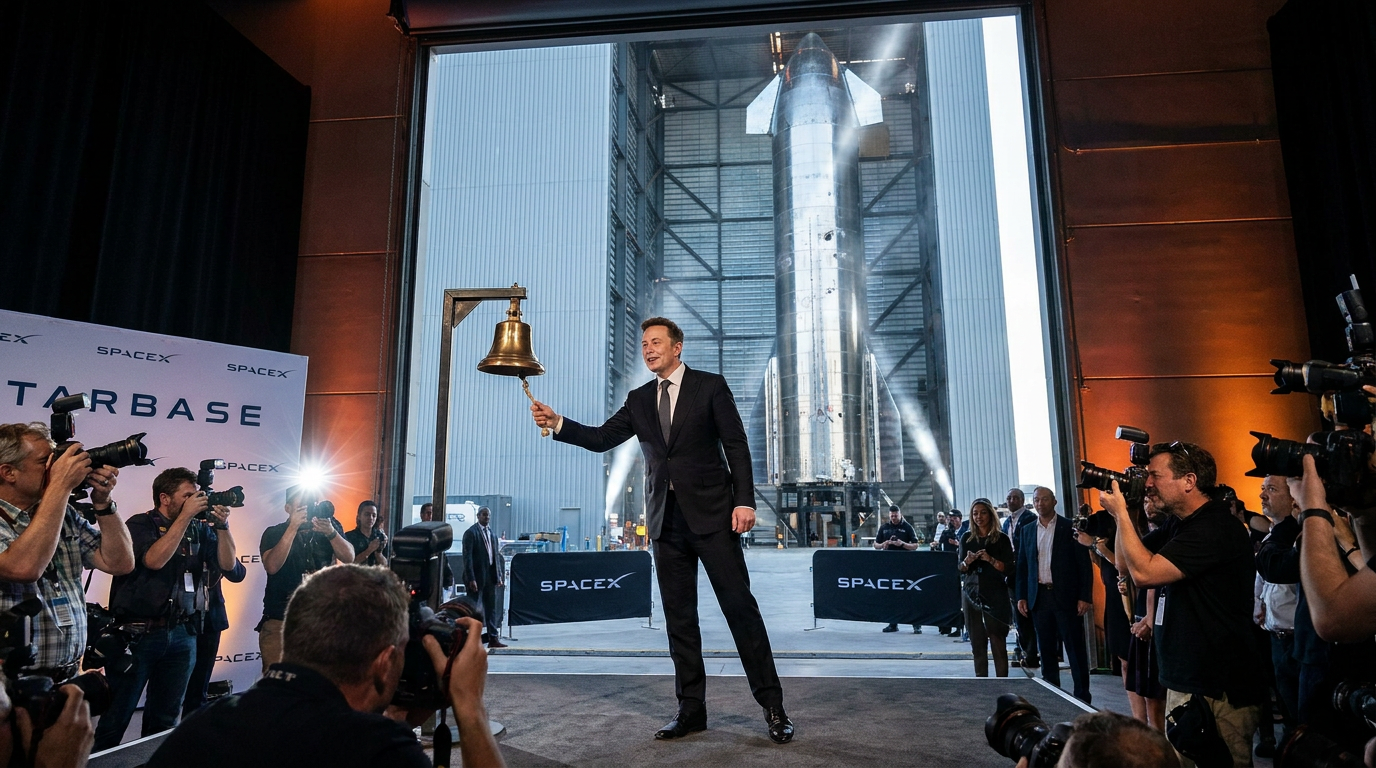
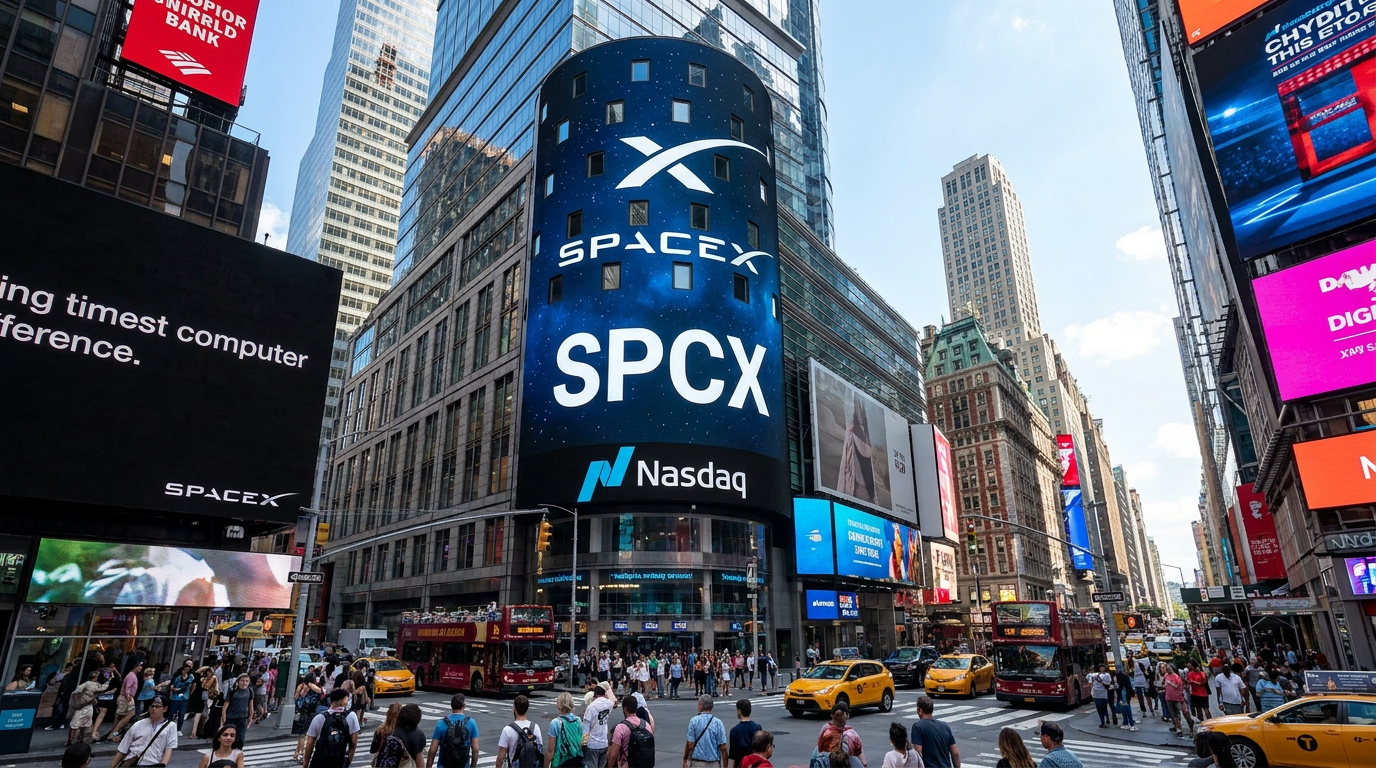
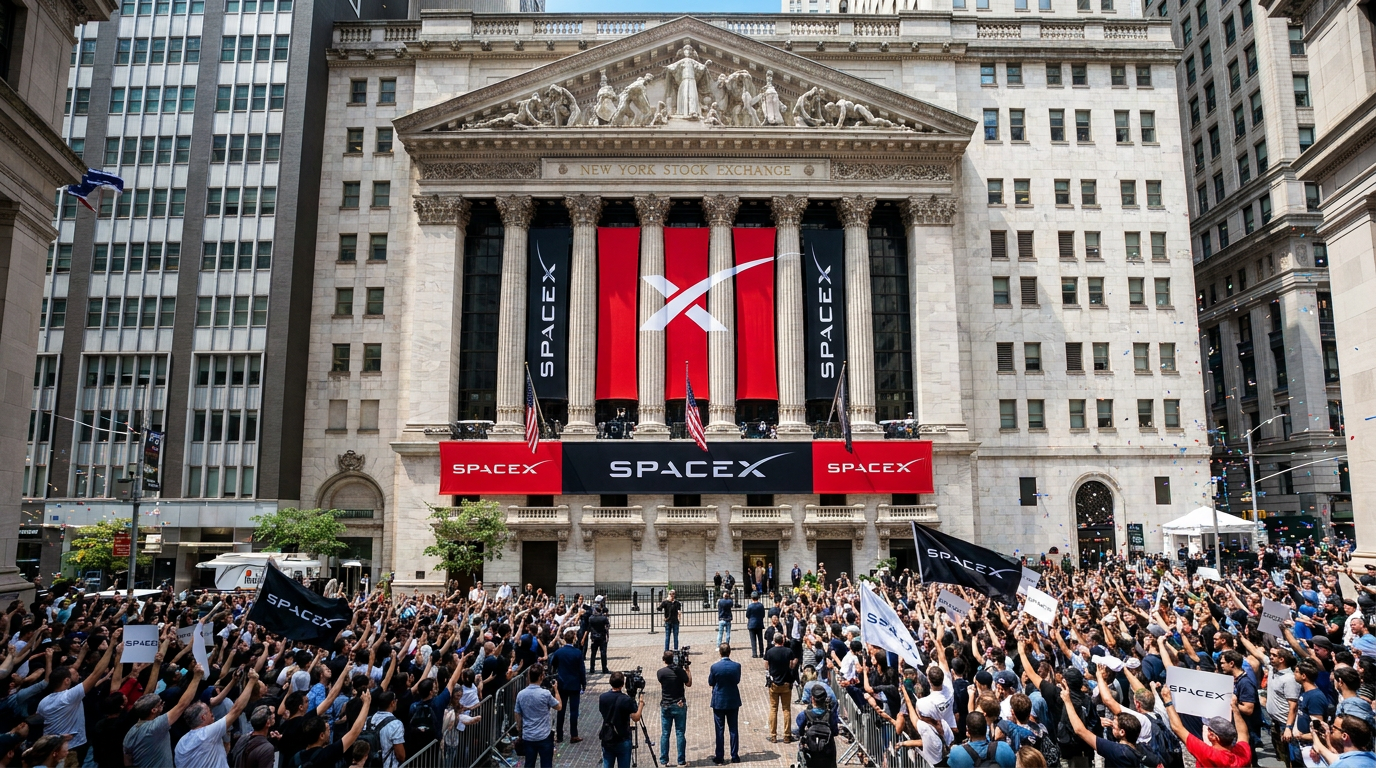
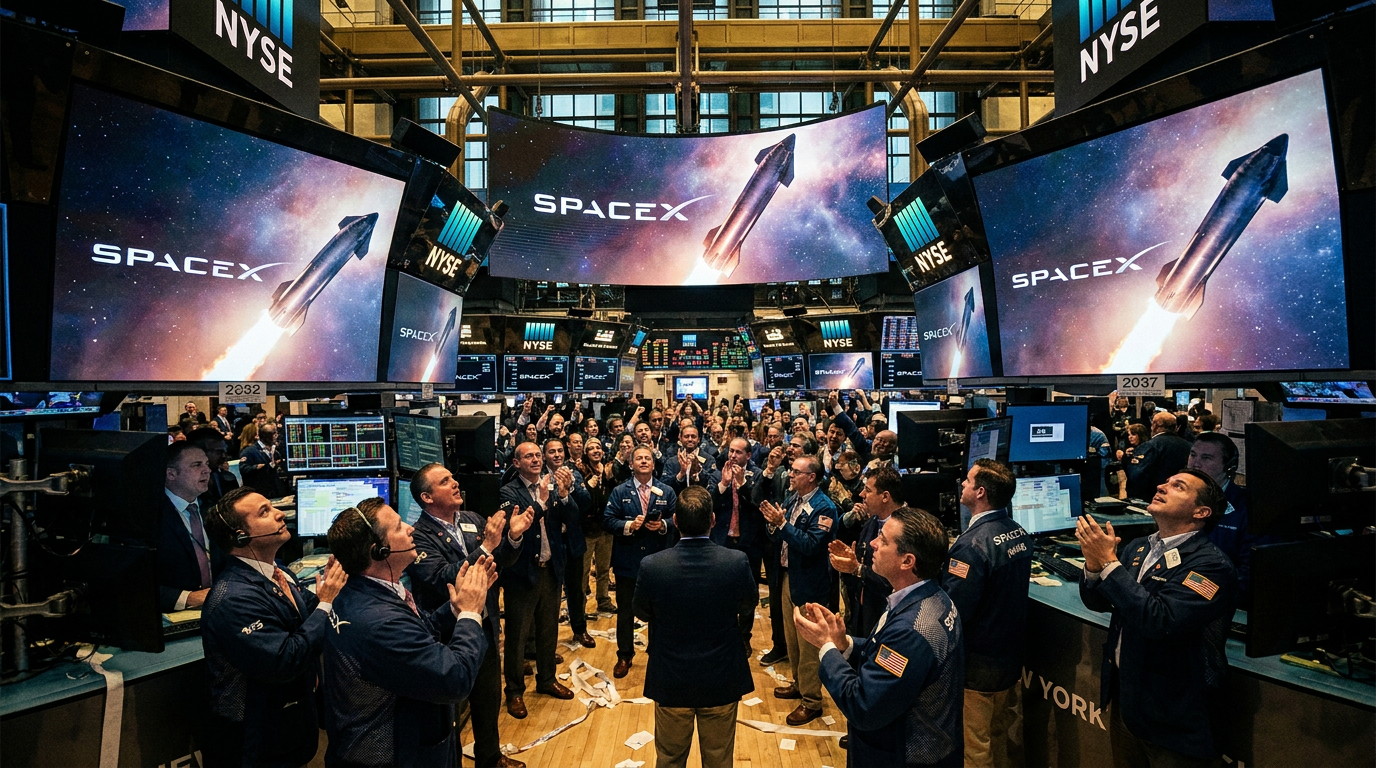
SpaceX has successfully executed the largest initial public offering in global financial history, raising $75 billion and fundamentally reshaping the landscape of the public markets. Debuting on the Nasdaq under the ticker symbol SPCX, Elon Musk’s aerospace, satellite, and artificial intelligence conglomerate bypassed traditional valuation metrics to achieve a staggering market debut. The offering eclipses the previous record held by Saudi Aramco’s 2019 listing by a massive margin, marking a watershed moment for both the commercial space industry and the broader technology sector. The sheer scale of the IPO—selling 555.6 million shares at a fixed price of $135—drew unprecedented interest from both institutional heavyweights and retail traders, signaling a voracious appetite for Musk's sprawling empire.[1][3][7]
When trading commenced on Friday, the stock immediately surged, opening at $150 and peaking at $176.52 before settling at $160.95 at the closing bell. This 19% first-day pop propelled SpaceX’s market capitalization to approximately $2.1 trillion, instantly making it the sixth-most valuable public company in the world. The demand was overwhelming; the deal attracted more than $250 billion in investor orders—roughly three and a half times the $75 billion the company sought to raise. Retail investors alone reportedly placed orders exceeding $100 billion, a testament to the cultural and financial gravity of the SpaceX brand. The successful debut validates the company's unconventional path to the public markets, which included bypassing the standard price-range bookbuilding process in favor of a fixed-price offering.[1][3][5]

The blockbuster listing has also rewritten the record books of personal wealth, officially cementing Elon Musk as the world’s first trillionaire. Prior to the IPO, Musk’s net worth hovered around $813 billion, already making him the wealthiest individual on the planet by a wide margin. With his 42% stake in SpaceX—amounting to 4.8 billion shares—now marked to public market prices, his net worth surged past the $1 trillion threshold, closing Friday at an estimated $1.14 trillion. To put this figure into perspective, Musk is now worth more than the next four richest people combined, including Google founders Larry Page and Sergey Brin, Amazon’s Jeff Bezos, and Oracle’s Larry Ellison. His fortune now rivals the gross domestic product of major developed nations.[2][6][8]
Yet, beneath the euphoria of the trillion-dollar valuation lies a stark disconnect from traditional financial fundamentals. SpaceX is entering the public markets while still bleeding cash, having posted a $4.28 billion net loss in the first quarter of 2026 alone and carrying an accumulated deficit of over $41 billion. At its $135 IPO price, the company is trading at roughly 94 times its projected 2025 revenue of $18.7 billion—a multiple with virtually no precedent among the world's most valuable mega-cap companies. For context, SpaceX generates less than a tenth of the revenue produced by tech giants like Amazon or Apple, yet it commands a valuation higher than Meta and Tesla combined on a revenue basis. Financial analysts note that buyers are essentially paying a massive premium for the company's future potential rather than its current balance sheet.[2][7]

Yet, beneath the euphoria of the trillion-dollar valuation lies a stark disconnect from traditional financial fundamentals.
Much of this astronomical valuation is fueled by the company's strategic pivot beyond traditional rocketry. While SpaceX remains the dominant force in commercial spaceflight—responsible for more than 80% of the mass launched into orbit over the past three years—investors are heavily pricing in the potential of Starlink and the company's recent integration with artificial intelligence. The February 2026 merger with Musk’s AI startup, xAI, fundamentally altered SpaceX's investment thesis, transforming it from an aerospace manufacturer into a sprawling tech conglomerate. The company's pitch to investors included ambitious plans to deploy millions of satellites to create space-based data centers capable of powering advanced AI from orbit, effectively merging the space economy with the ongoing artificial intelligence boom.[2][7]
During an opening bell-ringing event at the company’s Starbase headquarters in Texas, Musk reiterated the grand, sci-fi-esque ambitions that have captivated his investor base. "SpaceX wants to be able to take you to the moon, take you to Mars and ultimately beyond," he told the assembled crowd of employees and supporters. The company’s S-1 filing outlines a total addressable market of $28.5 trillion, a figure it boldly claims is the largest in human history. This long-term vision—establishing a self-sustaining human colony of one million inhabitants on Mars—serves as the ultimate narrative driving the stock. For many retail buyers and institutional backers alike, purchasing SPCX shares is less about quarterly earnings and more about funding a multi-generational leap in human capability.[2][3]
However, the sheer scale of the IPO and the resulting concentration of wealth have drawn sharp criticism from progressive lawmakers and economic commentators. Critics argue that the event symbolizes a broken economic system where market valuations have entirely decoupled from economic reality. Senator Elizabeth Warren pointed to Musk's unprecedented wealth as a policy failure, while former Labor Secretary Robert Reich argued that the old rules of capitalism no longer apply, characterizing the IPO as a speculative magic trick rather than a reflection of supply and demand. Skeptics also warn of the structural risks inherent in the offering, noting that SpaceX insiders may be able to sell their shares sooner than is typical in standard IPO lock-up periods, potentially leaving retail investors exposed if the stock's momentum falters.[2][4]
The SpaceX IPO also marks a significant shift in retail investor access to mega-cap offerings. Historically, the most lucrative allocations in highly anticipated IPOs have been reserved for institutional clients and high-net-worth individuals. However, brokerages lowered the barrier to entry for the SpaceX listing, allowing retail clients to participate with as little as $2,000. This democratization of access fueled the unprecedented $100 billion in retail demand, transforming the IPO into a populist financial event. While financial advisors caution about the volatility of newly listed equities, the sheer volume of retail participation underscores a growing trend of everyday investors demanding direct access to the companies shaping the technological frontier.[3][7]

Regardless of the skepticism, SpaceX’s successful debut is already sending shockwaves through Wall Street, potentially unfreezing a dormant market for mega-cap public offerings. The company's inclusion in major indices like the Nasdaq 100 and the Russell indices is expected within weeks, which will trigger a wave of mandatory buying from passive funds and exchange-traded funds. This institutional backstop could provide significant price support for the stock in the near term. Furthermore, the sheer magnitude of the $75 billion raise has set a new benchmark for private tech giants waiting in the wings. Industry analysts predict that SpaceX's triumph will accelerate the IPO timelines for other highly valued startups, including AI heavyweights OpenAI and Anthropic, kicking off a new era of trillion-dollar public market debuts.[1][7]
How we got here
Dec 2025
A SpaceX tender offer values the private company at approximately $800 billion.
Feb 2026
SpaceX merges with Musk's AI startup, xAI, pushing the combined entity's private valuation to $1.25 trillion.
May 20, 2026
The SEC publicly discloses SpaceX's S-1 IPO paperwork, detailing plans to go public.
June 11, 2026
SpaceX officially prices its IPO at $135 per share, raising a record-breaking $75 billion.
June 12, 2026
SpaceX debuts on the Nasdaq under the ticker SPCX, closing up 19% and making Elon Musk a trillionaire.
Viewpoints in depth
The Innovation Premium
Investors are pricing SpaceX not as a traditional aerospace manufacturer, but as a foundational pillar of the future economy.
Proponents of SpaceX's staggering $2.1 trillion valuation argue that traditional revenue multiples are useless for a company attempting to build a multi-planetary economy. By successfully merging with xAI and dominating the global launch market, SpaceX is positioned as the sole gatekeeper to space-based infrastructure. Bulls argue that Starlink's recurring revenue and the potential for orbital AI data centers justify the premium, viewing the $75 billion IPO as a necessary capital injection to fund the ultimate goal of a Mars colony.
The Valuation Skeptics
Financial analysts and economic critics warn that the company's market cap is dangerously detached from its actual balance sheet.
Skeptics point to SpaceX's $4.28 billion net loss in the first quarter of 2026 and its $41 billion accumulated deficit as glaring red flags. Trading at roughly 94 times its projected 2025 revenue, the company is priced for absolute perfection in an industry fraught with catastrophic risk. Critics argue that the IPO is less about raising necessary capital and more about cashing in on the cult of personality surrounding Elon Musk, warning that retail investors could be left exposed if the company's ambitious timelines for Mars and AI integration inevitably slip.
What we don't know
- Whether SpaceX can achieve profitability in the near term given its massive capital expenditures on Starship and Mars colonization efforts.
- How the stock will perform once the initial retail euphoria subsides and early insider lock-up periods expire.
- The exact timeline for the deployment of space-based AI data centers, a key driver of the company's recent valuation surge.
Key terms
- Initial Public Offering (IPO)
- The process of a private company offering shares to the public in a new stock issuance, allowing everyday investors to buy equity.
- Market Capitalization
- The total dollar market value of a company's outstanding shares of stock, calculated by multiplying the current stock price by the total number of shares.
- S-1 Filing
- The initial registration form for new securities required by the SEC for public companies based in the United States.
- Addressable Market
- The total revenue opportunity available for a product or service if a company achieves 100% market share.
Frequently asked
How much did SpaceX raise in its IPO?
SpaceX raised $75 billion, making it the largest initial public offering in history, surpassing Saudi Aramco's 2019 listing.
What is SpaceX's stock ticker symbol?
SpaceX trades on the Nasdaq stock exchange under the ticker symbol SPCX.
Did the IPO make Elon Musk a trillionaire?
Yes. The surge in SpaceX's valuation pushed Musk's personal net worth to an estimated $1.14 trillion, making him the first person in history to reach that milestone.
Is SpaceX currently profitable?
No. Despite its massive $2.1 trillion valuation, SpaceX posted a $4.28 billion net loss in the first quarter of 2026 and carries an accumulated deficit of over $41 billion.
Sources
Source coverage
8 outlets
3 viewpoints surfaced








[1]BloombergTech & Space Optimists
What to Know About SpaceX’s Record-Breaking IPO
Read on Bloomberg →[2]The Washington PostWealth Inequality Critics
Elon Musk is the world's first trillionaire (on paper) thanks to the SpaceX IPO
Read on The Washington Post →[3]CBS NewsMarket Realists
SpaceX stock soars 19% on first day of trading following record-breaking $75 billion IPO
Read on CBS News →[4]The GuardianWealth Inequality Critics
The SpaceX IPO made Musk a trillionaire. The old rules of capitalism no longer apply.
Read on The Guardian →[5]CNBCTech & Space Optimists
Jim Cramer says it's not too late to buy SpaceX — under one condition
Read on CNBC →[6]ForbesTech & Space Optimists
How Elon Musk Just Became The World's First Trillionaire
Read on Forbes →[7]CBCMarket Realists
A closer look at SpaceX's IPO
Read on CBC →[8]The New York TimesWealth Inequality Critics
Musk Is the World’s First Trillionaire. Who Was the First Billionaire?
Read on The New York Times →
More in business
See all 68 stories →SpaceX IPO
SpaceX Completes Record-Breaking IPO, Making Elon Musk the World's First Trillionaire
8 sources
Space Economy
SpaceX Completes Record $75 Billion IPO, Pushing Market Capitalization Past $2.2 Trillion
8 sources
Space Economy
SpaceX Completes Historic $75 Billion IPO, Igniting Space Economy Boom
8 sources
Skills-Based Hiring
The End of the Paper Ceiling: How Skills-Based Hiring is Rewiring the Labor Market
7 sources

Every angle. Every day.
Get business stories with full source coverage and perspective breakdowns delivered to your inbox.