
Supreme Court Strikes Down Automatic Gun Ban for Marijuana Users in Landmark Second Amendment Ruling
In a unanimous 9-0 decision, the Supreme Court ruled that the federal government cannot automatically strip individuals of their Second Amendment rights solely for using marijuana.
By Javier Cruz

- Civil Liberties Advocates
- Argue that the automatic gun ban was an unconstitutional, status-based deprivation of rights that lacked due process and unfairly targeted cannabis consumers.
- Gun Rights Organizations
- View the ruling as a necessary check on federal overreach and a victory for the Second Amendment under the historical tradition framework.
- Federal Prosecutors
- Argued that the law was a necessary tool to disarm individuals who engage in illegal behavior and pose a categorical risk to public safety.
Perspectives this story doesn't cover
- State-level law enforcement officials navigating the conflict between state legalization and federal gun laws.
- Medical marijuana patients who have historically been denied concealed carry permits.
Why this matters
This ruling protects millions of Americans who use state-legal medical or recreational cannabis from facing up to 15 years in federal prison simply for keeping a firearm at home for self-defense. It forces the federal government to prove actual dangerousness or impairment before revoking constitutional rights.
Key points
- The Supreme Court unanimously ruled that the federal ban on gun possession by 'unlawful drug users' is unconstitutional as applied to regular marijuana users.
- The case centered on a Texas man facing up to 15 years in prison solely for admitting he used marijuana while keeping a gun at home.
- Justice Neil Gorsuch wrote that the government cannot automatically strip constitutional rights without proving an individual is actually dangerous or incapacitated.
- The ruling is narrow and does not protect individuals who possess firearms while actively intoxicated.
- Federal prosecutors can still disarm drug users if they provide individualized proof of dangerousness.
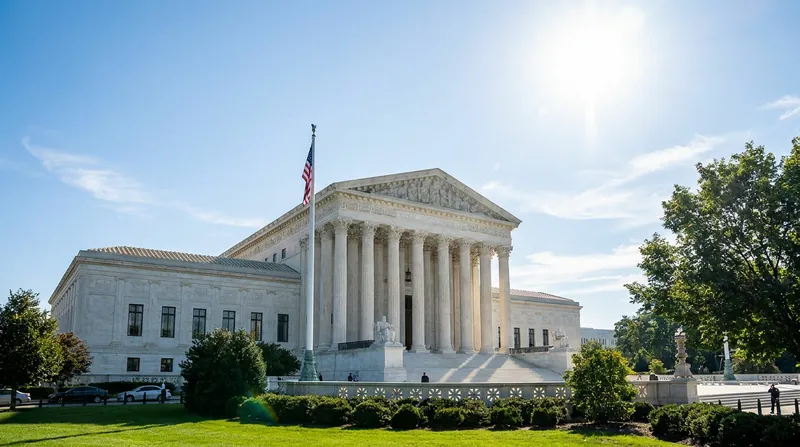
For more than 50 years, federal law has dictated that using any controlled substance—including marijuana—automatically strips an American of their Second Amendment right to own a firearm. On June 18, 2026, the United States Supreme Court unanimously struck down that framework.
In a 9-0 decision in United States v. Hemani, the Court ruled that the government cannot prosecute an individual for possessing a firearm based solely on the fact that they regularly use marijuana. The ruling fundamentally alters how federal law enforcement handles the intersection of gun ownership and drug use, shifting the burden onto the government to prove a citizen is actually dangerous.
The federal statute at the center of the case, 18 U.S.C. § 922(g)(3), made it a felony for anyone who is an "unlawful user of or addicted to any controlled substance" to possess a gun. Violations carried severe penalties, including up to 15 years in federal prison and a lifetime ban on firearm ownership.
The law created a sprawling legal trap as states increasingly legalized medical and recreational cannabis. Because marijuana remains a controlled substance at the federal level, millions of state-legal consumers were technically committing federal felonies if they kept a gun in their homes for self-defense.[2]
The case that dismantled this provision began in Texas. In 2022, federal agents searched the family home of Ali Danial Hemani, a dual citizen of the United States and Pakistan, based on suspected terrorism-related activities involving family members.
Hemani cooperated fully with the investigation. He surrendered a handgun he kept safely stored in his home, pointed agents to marijuana on the property, and admitted during an interview that he used the drug "about every other day."
The terrorism investigation yielded no evidence and produced no charges against Hemani. However, more than six months later, the government indicted him on a single charge: knowingly possessing a firearm while being an unlawful user of a controlled substance. There were no allegations of violence, drug trafficking, or intoxication while handling the weapon.
The terrorism investigation yielded no evidence and produced no charges against Hemani.
Hemani challenged the indictment, arguing that the statute violated his Second Amendment rights. After lower courts dismissed the charge, the Justice Department appealed the case to the Supreme Court, arguing that the law was necessary to disarm dangerous individuals.
Writing for the unanimous Court, Justice Neil Gorsuch rejected the government's arguments. He applied the historical test established in the 2022 Bruen decision, which requires modern gun regulations to align with the nation's historical tradition of firearm regulation.
The government attempted to compare modern drug users to "habitual drunkards" from the founding era, who were subject to certain restrictions. Gorsuch dismantled this analogy, noting that historical laws required a specific showing that a person was practically incapacitated and incapable of managing their affairs.
Furthermore, historical laws generally provided due process—such as a probate hearing or a conviction—before an individual lost their liberties. The modern federal statute, by contrast, automatically divested an individual of their constitutional rights the moment they became an unlawful user, without any pre-deprivation process.
Gorsuch also highlighted the inconsistency of the federal government's stance. He observed that the government has largely tolerated the state-level legalization of marijuana, making it "awkwardly positioned to suggest that the millions of Americans who now regularly use marijuana are categorically and unusually dangerous."
Despite the sweeping 9-0 vote, the Court was careful to craft a narrow ruling. The decision specifically addresses the "unlawful user" provision of the statute and does not strike down the separate prohibition against individuals who are "addicted to" controlled substances.
The ruling also does not protect individuals who handle firearms while actively intoxicated. The Court noted a clear historical distinction between disarming a sober citizen in their home and regulating the public handling of weapons by someone under the influence.
Crucially, the decision leaves the door open for prosecutors to disarm drug users if they can provide individualized proof. If the government can demonstrate that a specific defendant's drug use renders them a danger to themselves or others, a prosecution could still survive constitutional scrutiny.
The case forged an unusual alliance across the political spectrum. Gun rights organizations like the National Rifle Association filed briefs supporting Hemani, arguing against federal overreach. They were joined by civil liberties and drug policy reform groups, including the ACLU and the Cato Institute, who argued the law was a draconian relic of the war on drugs.[2]
For now, the immediate impact is clear: federal prosecutors can no longer rely on a simple admission of occasional marijuana use to secure a felony gun conviction. The burden has shifted back to the government to prove that an individual's actions, rather than their mere status as a consumer, pose a genuine threat to public safety.[2]
Viewpoints in depth
Civil Liberties and Drug Policy Advocates
Argue that status-based disarmament without due process is unconstitutional and draconian.
Groups like the ACLU and the Cato Institute view the ruling as a necessary correction to decades of overreach fueled by the war on drugs. They argue that 18 U.S.C. § 922(g)(3) functioned as a draconian trap, allowing the government to strip fundamental constitutional rights from millions of Americans based solely on their status as consumers of a substance that is legal in most states. By requiring the government to prove actual dangerousness or impairment, these advocates believe the Court has restored essential due process protections.
Gun Control Advocates
Express concern that narrowing the law could allow dangerous individuals to possess firearms.
While acknowledging the specific overreach of the marijuana ban, gun control advocates worry that the ruling weakens the federal government's ability to proactively disarm individuals who engage in high-risk behaviors. They argue that requiring 'individualized proof' of dangerousness places an unreasonable burden on prosecutors and law enforcement, potentially allowing individuals with severe substance abuse issues to legally acquire and maintain arsenals until a tragedy occurs.
The Federal Government's Stance
Argued that regular drug users are categorically dangerous and analogous to historical habitual drunkards.
The Department of Justice defended the statute by arguing that the Second Amendment allows for the disarmament of groups that pose a categorical risk to public safety. The government maintained that individuals who regularly use controlled substances are more likely to engage in unpredictable or violent behavior, drawing historical parallels to founding-era laws that restricted the rights of 'habitual drunkards.' The government warned that striking down the law would force prosecutors to abandon a critical tool used to disrupt criminal networks.
Key terms
- 18 U.S.C. § 922(g)(3)
- A federal statute that makes it a felony for anyone who is an 'unlawful user of or addicted to any controlled substance' to possess a firearm.
- Bruen Test
- A legal standard established by the Supreme Court in 2022 requiring modern gun regulations to be consistent with the nation's historical tradition of firearm regulation.
- As-Applied Challenge
- A legal claim that a law is unconstitutional in the specific context of the defendant's case, rather than unconstitutional in all possible situations.
- Controlled Substances Act (CSA)
- The federal policy under which the manufacture, importation, possession, use, and distribution of certain substances is regulated.
Sources
Source coverage
2 outlets
3 viewpoints surfaced


- [1]PBSFederal Prosecutors
Supreme Court sides with Texas marijuana user who says it's not a crime to have a gun
Read on PBS → - [2]Cato InstituteCivil Liberties Advocates
Supreme Court Strikes Down Federal Gun Ban for Cannabis Users
Read on Cato Institute →
Comments
More in Law & Justice
See all →Criminal Procedure
Custody and Interrogation: The Two Conditions That Trigger the Requirement for Miranda Warnings
7 sources

Contract Law
Offer, Acceptance, and Consideration: The Three Essential Elements of a Valid Contract
4 sources

Redistricting Fight
Missouri Appeals to US Supreme Court After State Justices Block Congressional Map
2 sources
Prosecutorial Disclosure
How the Brady Doctrine Requires Prosecutors to Disclose Favorable Evidence to the Defense
6 sources
Every angle. Every day.
Get Law & Justice stories with full source coverage and perspective breakdowns delivered to your inbox.