
NRC Proposes Sweeping Regulatory Overhaul to Accelerate New Reactor Licensing and Save Industry $1.8 Billion
The U.S. Nuclear Regulatory Commission has unveiled a 553-page proposal to modernize nuclear power plant licensing, aiming to cut red tape and accelerate the deployment of next-generation reactors.

Share this story
The U.S. Nuclear Regulatory Commission (NRC) has proposed a sweeping, 553-page overhaul of its reactor licensing framework, marking the most comprehensive modernization of nuclear power regulations in decades. Unveiled on July 1, 2026, the proposed rule aims to rewrite the rules of how commercial nuclear plants are sited, licensed, built, and operated. The package bundles 17 distinct modernization measures that touch virtually every stage of a reactor's lifecycle, from initial design approvals to decommissioning.[1][3]
The driving force behind the proposal is a recognition that legacy regulatory frameworks, built primarily for large light-water reactors in the 20th century, are ill-equipped for the current energy landscape. "NRC's regulations have not kept pace with new technologies and our energy needs," NRC Chairman Ho Nieh said in a statement announcing the proposal. Nieh emphasized that the new rule strips out "rigid frameworks and unnecessary conservatism" to accelerate the safe deployment of new reactors across the country.[1][2]
The financial stakes of the overhaul are massive. According to the NRC's draft regulatory analysis, the proposed changes would result in an estimated $1.86 billion in undiscounted net savings for the agency and the nuclear industry. These savings are expected to materialize through reduced administrative friction, faster review timelines, and the elimination of redundant safety analyses that do not materially improve plant security.[2]
A central mechanism of the proposed rule is the redefinition of "construction" under 10 CFR Part 50. Historically, securing permission to simply break ground on a nuclear site required years of exhaustive approvals. The new framework would streamline the start of construction by focusing the NRC's oversight strictly on the most safety-significant systems. Once an application is docketed, developers would be allowed to conduct certain early site activities under a general license, significantly compressing project timelines.[1][3]
The proposal also fundamentally alters the lifespan of existing and future reactors by extending operating license renewals. Under the current system, license renewals are granted in 20-year increments. The new rule would double that term, allowing for 40-year operating license renewals. The NRC justified this change by noting that most U.S. reactors are already operating safely beyond their original 40-year lifespans under renewed licenses and robust aging management programs.[2]
Siting criteria—where a nuclear plant can legally be built—would also see a dramatic shift. For decades, the NRC has maintained a strong preference for siting reactors in areas of low population density. The new proposal introduces alternative siting criteria that would accommodate a broader range of technologies, allowing advanced reactors to be built closer to load centers, industrial facilities, and densely populated areas, provided the applicant can demonstrate that the societal benefits outweigh the risks.[3]
This geographic flexibility is particularly crucial for the technology sector. As artificial intelligence and advanced manufacturing drive unprecedented surges in electricity demand, tech companies are increasingly looking to co-locate data centers directly adjacent to nuclear power sources. By relaxing rigid siting constraints, the NRC's proposal clears a path for small modular reactors (SMRs) and microreactors to be integrated directly into industrial parks and tech campuses.
Environmental reviews, long cited by developers as a major bottleneck, are another primary target of the overhaul. The draft rule proposes revising how the NRC implements the National Environmental Policy Act (NEPA) by expanding the use of categorical exclusions. These exclusions are designed to speed up permitting for relatively minor actions that do not significantly affect human health. Furthermore, the rule mandates that the NRC publish environmental assessments within one year and full environmental impact statements within two years.
Emergency preparedness requirements would also transition from a one-size-fits-all approach to a risk-informed model. Instead of mandating a standard 10-mile emergency planning zone for all facilities, the rule would allow for flexible, performance-based emergency planning tailored to each specific reactor's design and risk profile. For advanced reactors with passive safety systems that automatically shut down without external power, this could mean significantly smaller emergency zones.[1][3]
The catalyst for this sweeping package traces back to a pair of federal mandates aimed at jump-starting the American nuclear renaissance. The bipartisan ADVANCE Act of 2024 set the statutory groundwork for increasing nuclear power availability, while Executive Order 14300, signed in May 2025, directed the NRC to conduct a "wholesale revision" of its regulations. The July 1 proposal is the agency's most visible and comprehensive response to those directives to date.[3]
Industry groups have strongly praised the proposed reforms. The National Association of Manufacturers (NAM) lauded the overhaul, with CEO Jay Timmons stating that America's manufacturing future depends on an energy advantage. Timmons noted that unleashing the next generation of reliable nuclear energy is critical to giving manufacturers the power they need to compete and innovate. Utility companies and developers have echoed this sentiment, arguing that the optional regulatory pathways will prevent new technologies from being forced into outdated frameworks.[3]
At the core of the overhaul is a philosophical shift from prescriptive regulation to performance-based regulation. Instead of dictating the exact engineering methods a developer must use to build a reactor, the NRC is increasingly asking whether the final design achieves defined safety outcomes. This allows applicants to use modern, risk-informed approaches as alternatives to traditional requirements, including for safety analyses and quality assurance standards.[3]
However, the push for speed and flexibility has raised alarms among some safety advocates and former regulators. Critics warn that the accelerated timelines and the stripping away of prescriptive requirements could compromise the rigorous safety standards that have defined the U.S. nuclear industry for decades. There are also concerns that the intense political pressure to expand nuclear capacity—driven by executive orders and legislative mandates—might undermine the NRC's traditional independence.
The challenge for the NRC is balancing these safety concerns with the reality of a rapidly electrifying economy. The International Energy Agency forecasts a 40% to 50% growth in global electricity demand by 2035, driven by AI, electric transportation, and industrial heating. Without a streamlined pathway to deploy carbon-free baseload power, the U.S. risks falling behind in both climate goals and technological competitiveness.
The proposed rule is now entering a critical phase of public and industry scrutiny. The NRC is collecting feedback from manufacturers, environmental groups, and the public before moving to finalize the regulations. While the 553-page document represents a monumental shift in regulatory theory, the ultimate test will be whether developers actually utilize these new pathways to put steel in the ground and bring new reactors online.[3]
Key points
- The NRC proposed a 553-page overhaul to modernize reactor licensing, safety oversight, and siting practices.
- The rule aims to save the industry and the agency $1.86 billion by reducing administrative friction.
- Key changes include allowing early site construction activities and extending operating license renewals to 40 years.
- The proposal relaxes strict low-population siting rules, allowing reactors closer to data centers and industrial hubs.
What we don’t know
- How many developers will actually utilize the new regulatory pathways to build reactors.
- Whether the expanded use of categorical exclusions under NEPA will survive inevitable legal challenges from environmental groups.
How we got here
2019
Congress passes the Nuclear Energy Innovation and Modernization Act (NEIMA) to begin modernizing regulations.
2024
The ADVANCE Act is signed into law, setting statutory goals for increasing nuclear power availability.
May 2025
Executive Order 14300 directs the NRC to conduct a wholesale revision of its regulations.
March 2026
The NRC finalizes Part 53, creating a new optional licensing pathway for advanced reactors.
July 1, 2026
The NRC proposes a comprehensive 553-page overhaul of its broader reactor licensing and siting practices.
- Nuclear Industry & Manufacturers
- Argues that outdated regulations stifle innovation and that streamlining is essential to meet surging energy demands from AI and manufacturing.
- Regulatory Modernizers
- Believes that safety can be maintained while stripping out unnecessary conservatism by using risk-informed, performance-based metrics.
- Safety Advocates
- Warns that accelerated timelines, relaxed siting rules, and reduced prescriptive requirements could compromise safety standards and agency independence.
Perspectives this story doesn't cover
- Local community groups near proposed reactor sites
- Environmental litigators challenging NEPA exclusions
Sources
Source coverage
3 outlets
3 viewpoints surfaced



- [1]NRCRegulatory Modernizers
NRC Proposes Sweeping Package of Regulatory Reforms
Read on NRC → - [2]American Nuclear Society
Proposed rules on ALARA, reactor licensing revamp introduced by NRC
Read on American Nuclear Society → - [3]Public PowerNuclear Industry & Manufacturers
NRC Unveils Sweeping Package of Regulatory Reforms
Read on Public Power →

More in Energy
See all →Materials Science
Fast Neutrons Sputter Cladding and Displace Lattice Atoms, Capping Reactor Fuel Lifespans
6 sources
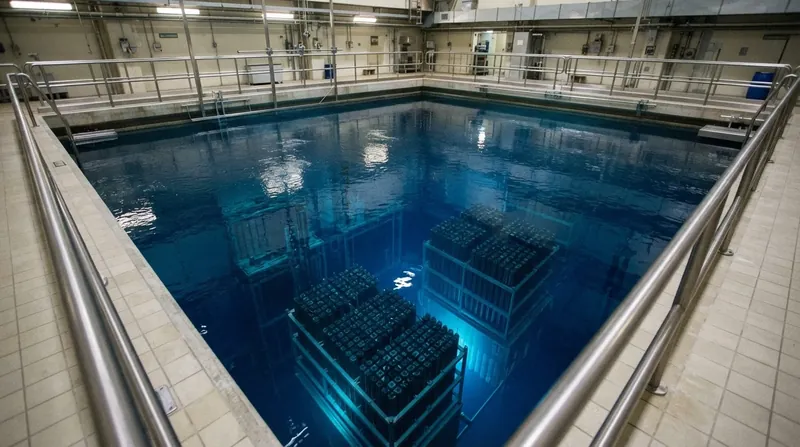
Nuclear Fuel Cycle
Why Extracting the 95 Percent Unused Uranium in Spent Fuel Costs Far More Than Mining Fresh Ore
6 sources
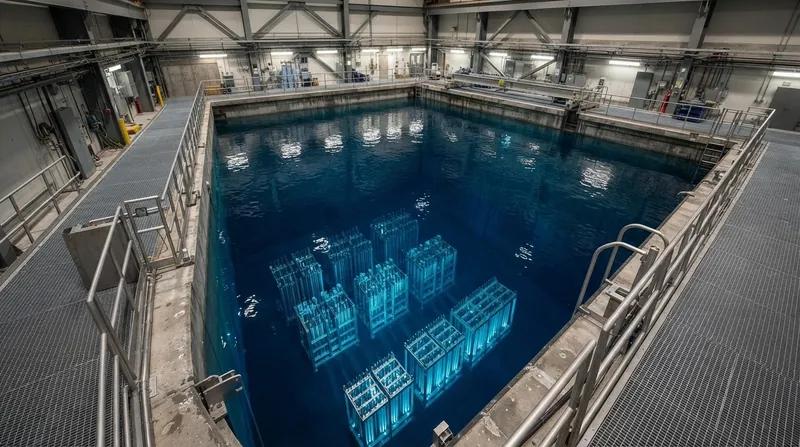
Nuclear Physics
Why Commercial Nuclear Reactors Cannot Explode Like Atomic Bombs
3 sources
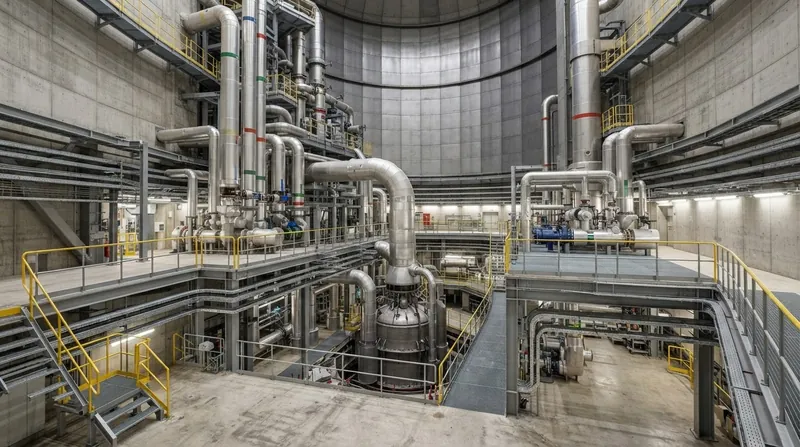
Nuclear Safety
The 0-to-7 Scale That Classifies the Severity of Nuclear Accidents and Incidents
6 sources
Comments
Every angle. Every day.
Get Energy stories with full source coverage and perspective breakdowns, free every day.