
Seattle Seahawks Sold for NFL-Record $9.61 Billion, Resetting Franchise Valuations
The Paul G. Allen Trust has agreed to sell the Seattle Seahawks to a tech and private equity consortium for $9.61 billion, shattering the previous North American sports record. The landmark deal reflects the NFL's soaring media revenues and the recent introduction of institutional capital into league ownership.

Share this story
The era of the $10 billion sports franchise has officially arrived. On Tuesday, the Paul G. Allen Trust announced a definitive agreement to sell the Seattle Seahawks to a consortium of Pacific Northwest technology executives and institutional private equity firms for $9.61 billion. The staggering figure obliterates the previous North American sports record—the $6.05 billion paid for the Washington Commanders in 2023—and fundamentally resets the baseline for professional sports valuations globally.[1]
The sale marks the culmination of a multi-year process mandated by the late Paul Allen, the Microsoft co-founder who purchased the team in 1997 for $194 million to prevent its relocation to Southern California. Following his death in 2018, his sister Jody Allen assumed control of the trust, which was legally bound to liquidate its assets to fund Allen's vast philanthropic endeavors. The $9.61 billion windfall will now be directed toward global health, environmental conservation, and scientific research initiatives.[4]
To understand how a football team commands a valuation approaching the GDP of a small nation, one must look at the mechanics of NFL ownership and recent structural changes within the league. Historically, the NFL required a single principal owner to hold at least 30% of the team's equity and strictly capped acquisition debt at $1.2 billion. As valuations soared past $5 billion, the pool of individuals capable of writing a $2 billion cash check shrank to a handful of global mega-billionaires.[2][3]
The mechanism that made the Seahawks' $9.61 billion price tag possible was the NFL's recent decision to allow private equity funds to purchase up to 10% of a franchise. By injecting nearly $1 billion of passive institutional capital into the bid, the buying consortium was able to bridge the massive equity gap required to meet the league's strict financing rules. This deal serves as the first major test case of that policy, proving that private equity can successfully inflate the ceiling of an already exclusive market.[2]
Beyond the financial engineering, the underlying asset justifies the premium through the NFL's unparalleled media dominance. The league is currently operating under a $110 billion broadcast rights package that runs through 2033, guaranteeing every franchise roughly $400 million annually before a single ticket or hot dog is sold. Unlike European soccer, the NFL's hard salary cap ensures cost certainty, virtually guaranteeing massive annual operating profits for ownership.[1][4]
Real estate also played a crucial role in the valuation. The transaction includes lucrative long-term operating rights for Lumen Field and its surrounding entertainment district in downtown Seattle. The buying group has reportedly committed to a $500 million privately funded modernization of the stadium infrastructure, a move designed to maximize game-day revenue and secure the venue's status as a premier destination for international soccer and concert tours.[3]
The ripple effects of this sale are already being felt across the league's ownership suites. If a mid-market franchise in the Pacific Northwest commands $9.61 billion, sports economists suggest that legacy brands like the Dallas Cowboys, New York Giants, or Los Angeles Rams could now be valued well north of $15 billion. This rapid appreciation creates a paradox: while owners are wealthier on paper than ever before, the estate tax implications for families looking to pass teams to the next generation have become increasingly complex.[2][3]
For the local fanbase, the immediate reaction has been a mix of relief and apprehension. The consortium's deep local ties have assuaged fears of relocation—a trauma Seattle sports fans know too well from the departure of the NBA's SuperSonics. However, the introduction of private equity, which traditionally demands aggressive returns on investment, has sparked concerns about potential spikes in ticket prices, parking fees, and local broadcast accessibility.
The NFL's push for global expansion further justifies the consortium's massive investment. With the league aggressively scheduling regular-season games in London, Frankfurt, São Paulo, and Madrid, franchises are transitioning from regional sports teams into global entertainment properties. The new ownership group reportedly plans to heavily market the Seahawks brand across the Pacific Rim, leveraging Seattle's geographic and corporate ties to Asia.[4]
The transaction now moves to the NFL's finance committee for rigorous vetting before requiring approval from 24 of the league's 32 owners. Given that the record-breaking valuation instantly boosts the equity of every other franchise in the league, insiders expect the approval process to be a formality, officially closing the chapter on the Paul Allen era and ushering in the age of the corporate mega-franchise.[1]
Key points
- The Seahawks' $9.61 billion sale shatters the previous North American sports record of $6.05 billion.
- The sale fulfills the Paul G. Allen Trust's mandate to liquidate assets for philanthropic funding.
- The deal is the first major test of the NFL's new rules allowing private equity to hold minority stakes.
- The valuation is driven by the NFL's massive guaranteed media rights and global expansion efforts.
- The new ownership group plans a $500 million privately funded modernization of Lumen Field.
How we got here
1997
Microsoft co-founder Paul Allen purchases the Seahawks for $194 million to prevent the team from relocating.
2018
Paul Allen passes away, leaving the franchise in a trust managed by his sister, Jody Allen.
2023
The Washington Commanders are sold for $6.05 billion, setting a new benchmark for North American sports.
2024
NFL owners vote to allow private equity firms to purchase up to 10% of a franchise, expanding the pool of potential buyers.
July 2026
The Seahawks are sold for a record-breaking $9.61 billion to a tech and private equity consortium.
- Institutional Investors
- Views the NFL as a uniquely stable asset class with guaranteed revenue floors and massive growth potential.
- League Management
- Celebrates the valuation as proof of the NFL's global dominance and the success of its recent private equity rule changes.
- Local Stakeholders
- Focuses on the preservation of the team's Seattle legacy and the potential impact on game-day affordability.
Perspectives this story doesn't cover
- Priced-out legacy fans
- Municipal taxpayers funding stadium infrastructure
Sources
Source coverage
4 outlets
3 viewpoints surfaced




- [1]ESPNLeague Management
Seahawks sold for record $9.61B to tech-led consortium
Read on ESPN → - [2]BloombergInstitutional Investors
NFL Valuations Near $10 Billion as Seahawks Sale Shocks Market
Read on Bloomberg → - [3]ForbesInstitutional Investors
What We Know About Potential $300 Billion For Iran In Peace Deal
Read on Forbes → - [4]Wall Street JournalInstitutional Investors
Paul Allen Trust Offloads Seahawks in Landmark NFL Transaction
Read on Wall Street Journal →
More in Sports
See all →Franchise Valuation
Lakers Sold to Kushner-Iger Group for Record $12.5 Billion, Resetting US Sports Franchise Valuation
6 sources
Sports Broadcasting
Versant Secures Bundesliga US Rights, Shifting 275 Matches to Free Streaming on Fandango
6 sources
College Athletics
NCAA Revenue Sharing Cap Hits $21.3M as Schools Develop Uncapped Athlete Compensation Channels
2 sources
Las Vegas Expansion
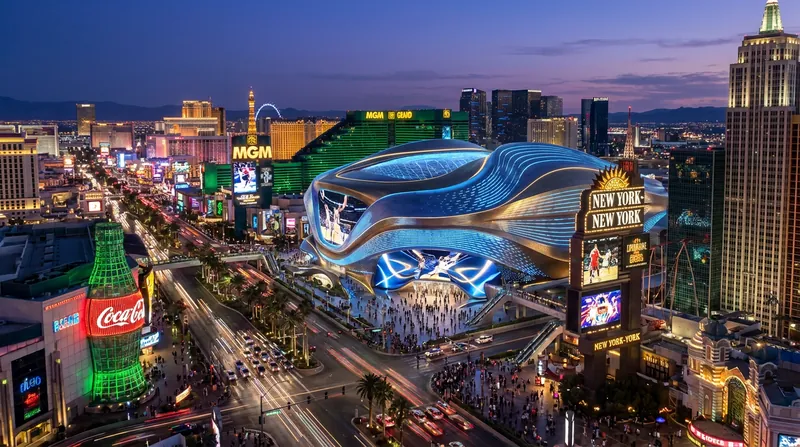
Competing Bids for Las Vegas NBA Expansion Team Top $10 Billion Valuation as League Eyes 2028 Launch
2 sources
Comments
Every angle. Every day.
Get Sports stories with full source coverage and perspective breakdowns, free every day.