
UN Report Details the Mechanics of AI's 9.3 Trillion Liter Water Footprint
A new United Nations University report projects that AI data centers will consume 9.3 trillion liters of water annually by 2030, prompting calls for 'efficiency by design' to manage the technology's physical resource demands.

Share this story
The cloud is often imagined as a weightless, invisible realm where data floats freely. In reality, the artificial intelligence revolution is profoundly physical, anchored by millions of servers housed in massive, warehouse-scale data centers. Every time a user generates an image, summarizes a document, or asks a chatbot a question, physical hardware must process the request. That hardware generates immense heat, requiring vast amounts of electricity to run and millions of gallons of water to cool.[1]
The scale of this physical infrastructure is expanding at a rate that is forcing a global reassessment of technological sustainability. A comprehensive new report from the United Nations University Institute for Water, Environment and Health (UNU-INWEH) has quantified the indirect environmental costs of the AI boom. The findings reveal a resource footprint that extends far beyond the carbon emissions typically discussed in corporate sustainability reports.
According to the UN researchers, if the current trajectory holds, the water footprint of AI data centers will reach 9.3 trillion liters annually by 2030. To put that figure into perspective, 9.3 trillion liters is equivalent to the basic annual domestic water needs of 1.3 billion people—roughly the entire population of Sub-Saharan Africa. The electricity demands are equally staggering, projected to hit 945 terawatt-hours by the end of the decade, which is nearly triple the combined annual power use of Pakistan, Bangladesh, and Nigeria.[2]
To understand why artificial intelligence is so thirsty, one must look at the thermal mechanics of modern computing. High-performance graphics processing units (GPUs), the specialized chips that train and run AI models, consume significantly more power than traditional processors. As electricity flows through these dense silicon chips, a large portion of it is converted into heat. If that heat is not rapidly removed, the servers will melt down or trigger automatic thermal shutdowns.[1]
To manage this extreme heat, hyperscale data centers primarily rely on evaporative cooling towers. In these systems, water is pumped through the facility to absorb heat from the server racks. The heated water is then piped to cooling towers, where it is exposed to outside air and evaporated into the atmosphere, carrying the heat away with it. While this method is highly effective and uses less electricity than traditional air conditioning, it physically consumes the water, removing it from the local watershed.[3]
This dynamic creates what researchers call the carbon-water paradox. In an effort to reduce their carbon footprint, many tech companies optimize their data centers for maximum energy efficiency, which often means leaning heavier on evaporative water cooling. A facility might boast a low carbon footprint because it uses less electricity to cool its servers, but it achieves that metric by consuming millions of gallons of local freshwater.[3]
The UN report highlights that evaluating sustainability through a single "low-carbon" lens can hide these critical trade-offs. For example, transitioning a data center's power supply from coal to bioenergy can slash carbon emissions associated with electricity generation by up to 70 percent. However, because growing biofuel crops is incredibly water-intensive, that same transition can cause the facility's overall water footprint to surge by 30 times and its land footprint to multiply by a factor of 100.
Public debate around AI's environmental impact has historically focused on the training phase—the months-long process of feeding massive datasets into a model. Training a frontier model requires an immense, concentrated burst of energy. The UN estimates that training a next-generation model could require 100 gigawatt-hours of electricity and a billion liters of water.[3]
However, the UNU-INWEH report reveals that training is only a fraction of the problem. The vast majority of AI's energy and water consumption—between 80 and 90 percent—comes from inference, which is the daily, ongoing use of the deployed models. ChatGPT alone is estimated to process approximately 2.5 billion prompts every day. At a conservative estimate of 0.42 watt-hours per text prompt, that single application requires roughly 383 gigawatt-hours of electricity per year.[2][3]
The resource cost of inference also varies wildly depending on the modality of the task. Generating a single AI image requires about 1,450 times more energy than performing a basic text classification task. Creating a short AI-generated video can consume as much electricity as classifying 200,000 spam emails. As tech companies push to integrate multimodal AI—capable of processing audio, video, and high-resolution images—into everyday search engines and office software, the per-query resource cost is skyrocketing.[2]
Beyond water and power, the physical expansion of AI infrastructure is placing unprecedented demands on land and raw materials. The UN projects that the land footprint required to support AI data centers and their associated power generation will exceed 14,500 square kilometers by 2030, an area roughly twice the size of the Jakarta metropolitan area.[2]
Furthermore, the specialized hardware required for AI workloads has a limited lifespan. Servers and GPUs must be regularly replaced to keep pace with computational demands, leading to a surge in electronic waste. The report estimates that AI infrastructure could generate up to 2.5 million metric tonnes of e-waste annually by the end of the decade, much of which contains hazardous materials and rare earth elements that are difficult to recycle.
The geographic distribution of this infrastructure adds a layer of environmental justice to the equation. Data centers are frequently constructed in regions that offer cheap electricity and tax incentives, which sometimes overlap with areas already facing severe water stress. In these locations, expanding compute facilities draw heavily from local aquifers, pitting the global demand for artificial intelligence against a community's access to safe drinking water and agricultural irrigation.
Despite these alarming projections, the UN researchers emphasize that their findings are not an argument against artificial intelligence itself. Kaveh Madani, the director of UNU-INWEH, noted that AI is a transformative technology capable of driving medical breakthroughs and optimizing power grids. Instead, the report is a call to engineer and deploy AI responsibly, ensuring that the backbone of the technological revolution develops within planetary limits.[2]
To achieve this, the UN outlines a framework for a responsible AI ecosystem based on "efficiency by design." This requires a fundamental shift in how tech companies build and deploy their models. Developers are urged to treat model selection, default output settings, and server routing decisions as critical environmental footprint determinants, rather than purely focusing on speed and capability.[3]
For users and deploying organizations, the path forward involves adopting "fit-for-purpose" AI. This means selecting the smallest, lightest model that can accurately complete a specific task. Using a massive, energy-intensive multimodal model to perform a simple text summarization is akin to driving a commercial dump truck to the grocery store. Right-sizing the tool to the task can drastically reduce the aggregate inference footprint.[3]
On the hardware side, the industry is beginning to explore advanced thermal management solutions that do not rely on evaporating municipal water. Innovations like direct-to-chip liquid cooling—where a closed loop of coolant is circulated directly over the processors—and immersive cooling, where entire server racks are submerged in non-conductive fluid, offer pathways to manage heat without depleting local aquifers.
Ultimately, the UN report makes it clear that sustainability cannot be an afterthought in the AI race. Governments and tech giants must integrate digital infrastructure planning into broader water governance and energy policies. By measuring the full environmental cost—carbon, water, and land—and designing systems that respect those limits, humanity can harness the benefits of artificial intelligence without bankrupting the natural resources required to sustain it.[3]
Key points
- A UN University report projects AI data centers will consume 9.3 trillion liters of water annually by 2030.
- This volume is equivalent to the basic annual domestic water needs of 1.3 billion people.
- The daily use of AI (inference) accounts for 80% to 90% of its total energy consumption.
- Generating a single AI image requires roughly 1,450 times more energy than basic text classification.
What we don’t know
- How quickly the tech industry can transition from evaporative cooling to closed-loop liquid cooling at scale.
- The exact degree to which future, more efficient silicon architectures might offset the exponentially growing demand for compute power.
- How local municipalities will adjust zoning and water-use regulations in response to the influx of hyperscale data centers.
How we got here
2024
Global data centers are estimated to consume 415 terawatt-hours of electricity, approximately 1.5% of global electricity.
2025
Data centers worldwide consume an estimated 448 terawatt-hours, ranking as the equivalent of the world's 11th largest electricity consumer.
June 2026
The UN University Institute for Water, Environment and Health releases a comprehensive report quantifying AI's indirect environmental footprints.
2030 (Projected)
AI data center water consumption is expected to reach 9.3 trillion liters annually, alongside 945 terawatt-hours of electricity.
- Planetary Boundary Advocates
- Argue that AI growth must be constrained by holistic resource limits, not just carbon emissions.
- Compute Infrastructure Providers
- Emphasize that scaling AI requires massive physical infrastructure, often relying on evaporative cooling to maximize energy efficiency.
- Local Resource Defenders
- Highlight the localized strain of data centers on community drinking water and grid capacity.
Perspectives this story doesn't cover
- Semiconductor Manufacturers
- Renewable Energy Grid Operators
Sources
Source coverage
3 outlets
3 viewpoints surfaced



- [1]The Washington PostCompute Infrastructure Providers
The environmental footprint of data centers already rivals some of the world's largest countries
Read on The Washington Post → - [2]Anadolu AgencyLocal Resource Defenders
AI's environmental cost threatens water, land resources for billions by 2030: UN report
Read on Anadolu Agency → - [3]EurekAlertPlanetary Boundary Advocates
UN report: AI’s environmental footprint is systematically mismeasured
Read on EurekAlert →
More in Environment
See all →Corporate Lobbying
US Corporate Lobbyists Mounted Coordinated Campaign to Weaken EU Deforestation Law, Report Reveals
3 sources

Arctic Climate
NOAA 2025 Arctic Report Card Details Record Precipitation and Structural Cryosphere Collapse
2 sources

Carbon Storage
Waterlogged Anoxia Allows Peatlands to Store Twice the Carbon of Global Forests
7 sources

Renewable Energy Tech
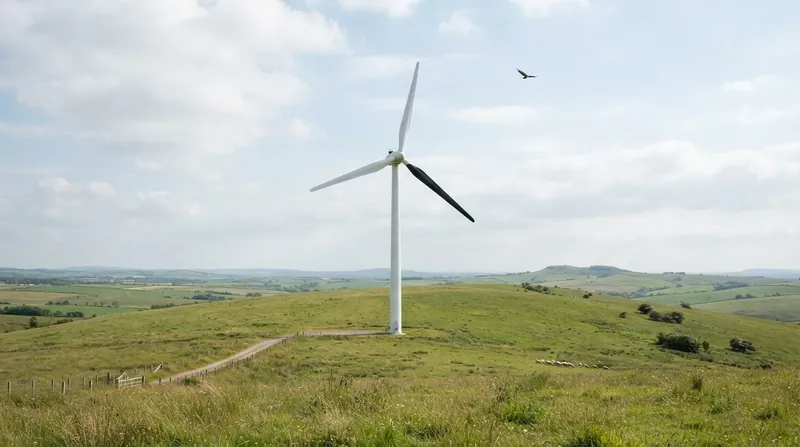
Contrast Painting Breaks Motion Smear: Why One Black Turbine Blade Cuts Bird Deaths by 70 Percent
4 sources
Comments
Every angle. Every day.
Get Environment stories with full source coverage and perspective breakdowns, free every day.