
AI-Powered Reformers and Gen Z Adoption Drive Pilates From Niche Practice to Mainstream Fitness Powerhouse
Driven by Gen Z's preference for low-impact workouts and a new generation of AI-equipped smart reformers, Pilates has become the most booked fitness class globally. The integration of servo-motor resistance and real-time movement tracking is transforming the century-old practice into a data-driven industry.

Share this story
In short
- Pilates has become the most booked workout globally, driven by Gen Z's preference for low-impact exercise.
- Smart reformers are replacing traditional mechanical springs with AI-guided servo motors.
- Embedded sensors track a user's control, speed, and consistency to provide real-time form correction.
For decades, the Pilates reformer—a sliding carriage attached to an intricate system of mechanical springs, ropes, and pulleys—was viewed primarily as either a specialized clinical rehabilitation tool or a niche, elite pursuit for professional dancers. Today, that perception has been entirely shattered as the reformer takes its place at the undisputed center of the global fitness industry.
Driven by a massive influx of health-conscious Gen Z practitioners and a wave of Silicon Valley-style hardware innovation, Pilates has shed its exclusive, old-school reputation to become a mainstream powerhouse. The convergence of mindful movement and cutting-edge technology has transformed the century-old practice into a highly accessible, data-driven lifestyle staple.[2]
The numbers behind this fitness revolution reflect a staggering cultural shift in how people choose to exercise. According to recent industry data from the ClassPass 2025 Look Back Report, Pilates bookings have surged by an impressive 66% year-over-year, officially making it the most booked workout globally for the third consecutive year.
This growth is particularly visible in the boutique fitness sector. In North America alone, the percentage of fitness studios offering dedicated Pilates classes has nearly tripled since 2021, climbing rapidly from just 17% to a commanding 45%. This sustained momentum proves that the current boom is not a fleeting micro-trend, but a permanent restructuring of the fitness landscape.
But the most significant catalyst for this explosive, sustained growth isn't just a sudden change in consumer taste—it is a fundamental, ground-up reinvention of the equipment itself. The fitness hardware industry has officially ushered in the "intelligent era" of Pilates by replacing the century-old mechanical spring system with artificial intelligence, robotics, and cloud connectivity.
By digitizing the reformer, manufacturers have managed to capture a massive demographic of tech-native users who expect their workouts to be as measurable and connected as their smartphones, fundamentally altering the trajectory of the entire wellness sector.[2]
At the heart of this technological leap is the advent of the "smart reformer." Traditional reformers rely on heavy metal springs that users must manually hook and unhook to adjust tension between exercises, a process that can disrupt the flow of a workout.
Smart reformers, by contrast, utilize advanced, whisper-quiet servo motors to generate electronic resistance. This digital approach allows for micro-level precision, enabling the machine to adjust tension dynamically and automatically in the middle of an exercise without the user ever needing to pause, break their concentration, or physically interact with the hardware.[2]
This seamless electronic resistance is paired with an intricate array of embedded sensors located beneath the sliding carriage. Companies at the forefront of this space, such as Flexia and Jusai, have pioneered sophisticated systems that track the exact physics and biomechanics of a user's movement in real time. Instead of simply counting repetitions or tracking heart rate like a standard fitness wearable, these smart machines measure three critical, Pilates-specific metrics: the user's physical control, the speed of their movement, and the consistency of their form across multiple repetitions.
As a user pushes against the footbar or pulls the resistance straps, the reformer's integrated AI continuously analyzes whether they are maintaining steady, deliberate tension or improperly relying on momentum to complete the movement.
If a user begins to speed up as their muscles fatigue—a common flaw that drastically reduces the effectiveness of the exercise and increases injury risk—the machine instantly detects the inconsistency. It then provides real-time visual feedback on an integrated, eye-level screen, effectively acting as a digital instructor tapping the user on the shoulder to correct their form.
At the conclusion of a session, users receive a comprehensive "Movement Quality Score," which serves as a highly detailed, data-driven report card. This post-workout analysis breaks down their exact range of motion, the total weight they successfully moved, and their overall muscular control throughout the duration of the class. For the first time in the long history of the practice, Pilates practitioners have access to objective, quantifiable data regarding their physical form and progression, removing the guesswork and subjectivity that traditionally accompanied the mind-body discipline.[2]
This highly data-driven approach has resonated deeply with Gen Z, a demographic that inherently expects seamless digital integration and measurable feedback in virtually every aspect of their daily lives. However, Gen Z's enthusiastic embrace of Pilates is also rooted in a much broader, philosophical rejection of the fitness industry's previous paradigms. They are actively seeking out routines that offer tangible physical benefits without the extreme physical toll demanded by the workout trends that dominated the previous decade.
For the past ten years, high-intensity interval training (HIIT) and heavy, aggressive weightlifting dominated the commercial fitness market, often promoting a punishing "no pain, no gain" mentality. Younger consumers are increasingly pivoting away from these grueling workouts that spike cortisol levels and carry a high risk of long-term joint injury. Instead, they are prioritizing longevity, nervous system regulation, and sustainable, pain-free mobility. Pilates, with its strict emphasis on controlled breathing, core stability, and low-impact functional strength, perfectly aligns with this new, holistic wellness philosophy.
The global hardware market has rapidly adapted to meet this surging, tech-forward demand. In 2023 alone, over 1.3 million units of Pilates equipment were shipped globally, and smart reformers accounted for a massive 38% of all reformer sales in the North American market. Major, established home-fitness players have aggressively entered the space to capture this audience; NordicTrack, for example, recently launched the Ultra 1, a premium $5,000 smart reformer featuring enclosed electronic springs and a massive digital library of interactive, on-demand classes.[1]
The rise of foldable, aerospace-grade aluminum smart reformers has also effectively solved one of the biggest historical barriers to Pilates adoption: the sheer amount of physical space required. By designing robust, studio-quality machines that can be easily folded and stored under a bed or in a closet, manufacturers have successfully brought the premium Pilates experience directly into the living room. This engineering breakthrough has fueled a remarkable 31% increase in residential equipment sales, democratizing access to a practice that once required an expensive studio membership.[1]
Despite this unprecedented technological and cultural boom, the Pilates industry faces significant, structural growing pains that could hinder its long-term trajectory. The most pressing challenge threatening to bottleneck this rapid expansion is a severe, global shortage of highly qualified instructors. Currently, there are only about 45,000 fully certified Pilates trainers operating worldwide. Furthermore, the vast majority of those professionals are heavily concentrated in North America and Western Europe, leaving massive, eager international markets entirely underserved and struggling to meet the skyrocketing consumer demand for in-person guidance.[1]
Becoming a fully certified Pilates instructor is an arduous process that requires hundreds of hours of intensive anatomy study, movement observation, and hands-on training, making it incredibly difficult for physical studios to scale their workforce fast enough to meet consumer demand. This severe labor bottleneck is precisely why AI-guided smart reformers are increasingly viewed as absolutely essential to the industry's future. They provide a highly supervised, biomechanically safe experience for millions of home users who simply cannot access or afford private, in-person studio sessions.[1][2]
However, the rapid integration of glowing screens and artificial intelligence has not been universally welcomed across the fitness community. Classical Pilates purists argue passionately that the true essence of the practice lies in the deep, internal mind-body connection, which they believe is fundamentally disrupted by gamified metrics and digital displays. They maintain that a machine's sensors, no matter how advanced, can never fully replace the tactile feedback, intuitive pacing, and nuanced physical adjustments provided by a highly trained human instructor.[2]
Proponents of the new technology counter these concerns by emphasizing that smart reformers are not designed to replace human instructors, but rather to empower them. By allowing the hardware to handle the mechanical adjustments and track baseline performance metrics, the technology frees up instructors in hybrid studio environments to focus entirely on advanced postural alignment, personalized coaching, and emotional encouragement. This symbiosis of human expertise and machine precision allows studios to offer a vastly superior, highly individualized experience to their clients.
Proponents of the new technology counter these concerns by emphasizing that smart reformers are not designed to replace human instructors, but rather to empower them.
As 2026 unfolds, the powerful convergence of mindful movement and advanced technology shows absolutely no signs of slowing down. By successfully transforming a 100-year-old rehabilitation discipline into a measurable, connected, and highly accessible daily practice, smart reformers have fundamentally rewritten the rules of the wellness industry. They have ensured that Pilates is not just a passing generational trend driven by social media, but the foundational, data-driven blueprint for the future of global fitness, nervous system health, and long-term physical longevity for decades to come.[2]
Terms to know
- Reformer
- The primary piece of equipment used in Pilates, consisting of a sliding carriage, straps, and a resistance system.
- Servo Motor
- An electronic motor that provides precise, programmable resistance in smart reformers, replacing traditional metal springs.
- Movement Quality Score
- A metric generated by smart reformers that evaluates a user's control, speed, and consistency during an exercise.
- Classical Pilates
- The traditional method of Pilates that strictly adheres to the original exercises and philosophies developed by Joseph Pilates, typically without digital technology.
- Nervous System Regulation
- The practice of using controlled breathing and mindful movement to calm the body's stress response and lower cortisol levels.
Questions readers ask
What is a smart Pilates reformer?
A smart reformer is a modernized Pilates machine that replaces traditional mechanical springs with electronic servo motors for resistance. It includes built-in sensors to track movement metrics like speed and control, and often features a screen for guided workouts.
Why is Pilates suddenly so popular with Gen Z?
Gen Z is shifting away from high-intensity, high-impact workouts that can cause burnout and joint strain. They are prioritizing longevity, nervous system regulation, and sustainable functional strength, which aligns perfectly with Pilates.
How much does a smart reformer cost?
Premium smart reformers designed for home use, such as the NordicTrack Ultra 1, typically cost around $5,000, though prices vary based on features, materials, and subscription requirements.
Can a smart reformer replace a human instructor?
While smart reformers provide real-time feedback on form and pacing, most experts agree they cannot fully replace the nuanced, personalized adjustments and tactile feedback provided by a certified human instructor.
Different angles
The Tech Innovators' View
Smart reformers provide objective data that was previously impossible to measure.
Fitness technologists and hardware developers argue that traditional Pilates relies too heavily on subjective feeling and instructor availability. By integrating servo motors and sensors, smart reformers can measure exact metrics like speed, control, and consistency. This objective data allows users to see their progression in real-time, correcting form instantly and preventing the kind of momentum-based cheating that often leads to injury. They view technology not as a replacement for the method, but as an evolution that makes high-quality practice accessible to millions.
The Classical Purists' View
Technology distracts from the internal focus required for true mindful movement.
Traditional instructors and classical Pilates advocates express concern over the 'gamification' of the practice. Joseph Pilates designed the method to require intense internal concentration and body awareness. Purists argue that staring at a digital screen to chase a 'Movement Quality Score' pulls the practitioner's attention outward, severing the mind-body connection. Furthermore, they emphasize that a machine's sensors cannot replace a trained instructor's ability to read a client's breathing patterns, subtle muscular imbalances, and emotional state.
The Market Analysts' View
Tech integration is the only viable solution to scale the industry.
Industry analysts look at the math: consumer demand is exploding, but there are only 45,000 certified instructors globally. Because proper Pilates certification requires hundreds of hours of rigorous anatomical training, the labor supply simply cannot scale fast enough to meet the Gen Z-driven boom. Analysts view smart reformers and AI-guided home systems as the necessary bridge, allowing the industry to capture the massive residential market while reserving highly trained human instructors for premium, specialized studio experiences.
- Fitness Technologists
- Argue that AI and smart tracking democratize Pilates by providing studio-quality feedback and precision at home.
- Industry Analysts
- Focus on the massive market growth driven by Gen Z and the need for scalable tech solutions amidst an instructor shortage.
- Classical Pilates Purists
- Believe that screens and gamified metrics disrupt the essential mind-body connection and focus of traditional practice.
Perspectives this story doesn't cover
- Physical therapists who use traditional reformers for clinical rehabilitation
- Low-income consumers priced out of the premium smart reformer market
Sources
Source coverage
2 outlets
3 viewpoints surfaced


- [1]Market Reports WorldIndustry Analysts
Global Reformer Pilates Equipment Market Analysis and Forecast
Read on Market Reports World → - [2]Factlen Editorial TeamFitness Technologists
Synthesis by Factlen editorial team
Read on Factlen Editorial Team →
More in Fitness
See all →Cardiometabolic Health
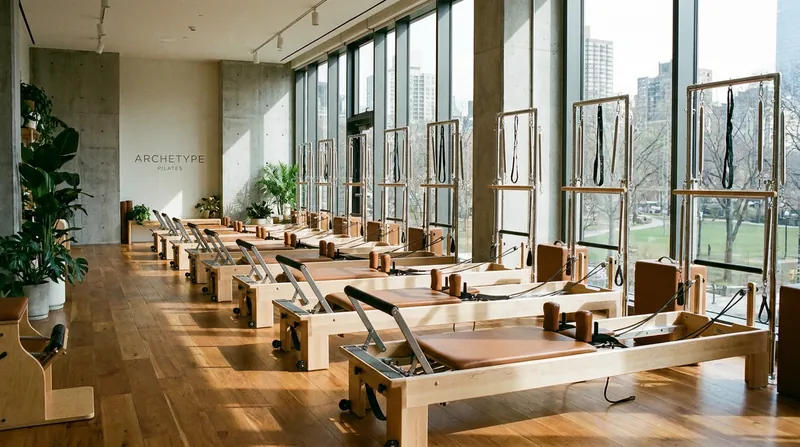
New Clinical Studies Validate Pilates as a Potent Intervention for Cardiovascular and Metabolic Health
6 sources
Fitness Regulation
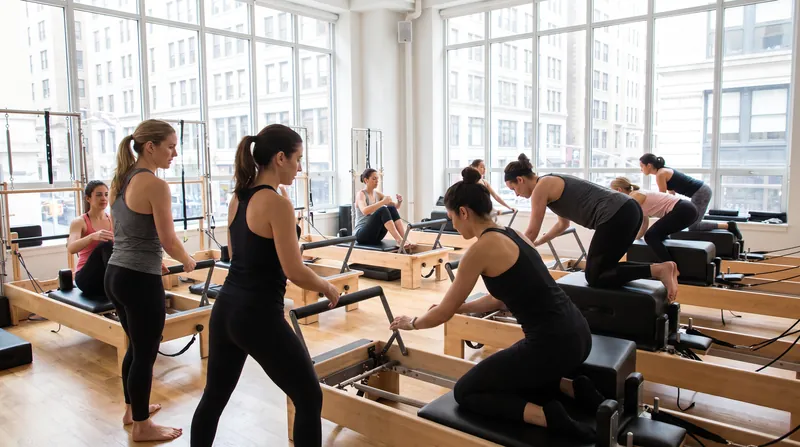
State Legislatures Enact Wave of New Laws Regulating Fitness Club Auto-Renewal and Biometric Data Collection
3 sources
Metabolic Health
Landmark Study Finds Pilates Significantly Improves Heart and Metabolic Health in Sedentary Women
5 sources
Mind-Body Science
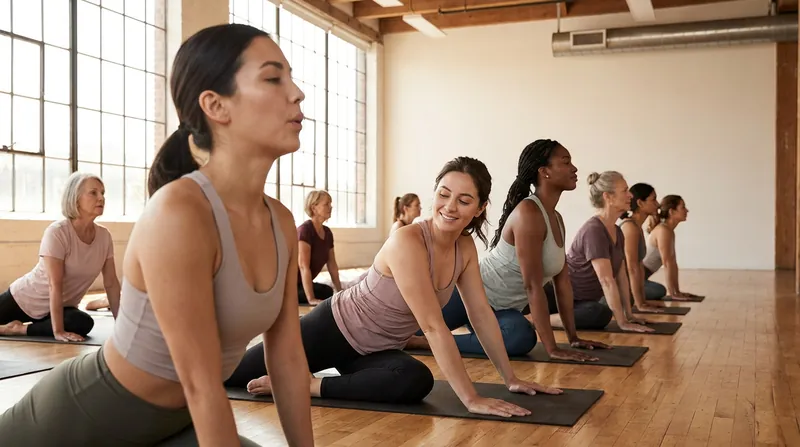
How Pilates Reduces Anxiety and Depression: The Science of Mindful Movement
5 sources
Comments
Every angle. Every day.
Get Fitness stories with full source coverage and perspective breakdowns, free every day.