
SpaceX Stock Surges 19% as Historic IPO Raises an Additional $10.7 Billion
Underwriters exercised options to purchase 83 million more shares of SpaceX, pushing the record-breaking public debut even higher and officially making Elon Musk the world's first trillionaire.
By Factlen Editorial Team
- SpaceX Bulls
- Argue the valuation is justified by Starlink's cash flow and Starship's monopoly on heavy-lift launch.
- Market Strategists
- View the IPO as a structural shift proving public markets will fund capital-intensive deep tech.
- Aerospace Competitors
- Fear the massive capital injection creates an insurmountable competitive moat for legacy launch providers.
What's not represented
- · Retail investors priced out of the initial offering
- · Regulatory bodies overseeing space traffic management
Why this matters
The overwhelming success of the SpaceX IPO proves that public markets are eager to fund ambitious, capital-intensive deep tech. It fundamentally reshapes the aerospace industry by giving the market leader an unparalleled financial war chest to accelerate human spaceflight and satellite internet expansion.
Key points
- Underwriters exercised options to buy an additional 83 million SpaceX shares, raising $10.7 billion.
- The stock closed up 19%, officially making CEO Elon Musk the world's first trillionaire.
- Early investors and venture funds are lined up for an estimated $230 billion windfall.
- Musk projected a trillion-dollar revenue forecast driven by Starlink and Starship.
- Competitors like Rocket Lab saw their stocks rebound as the IPO validated the broader space economy.
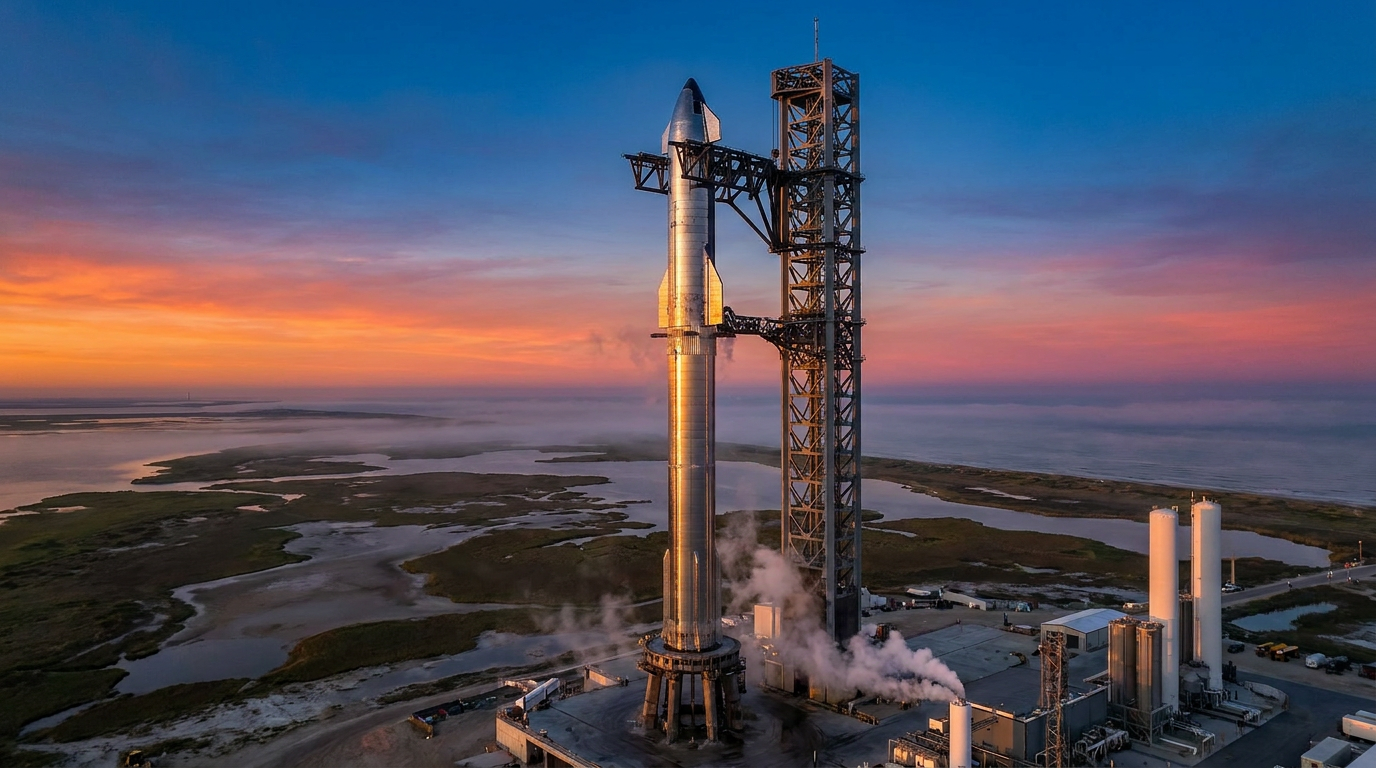
SpaceX’s already historic public debut just expanded its footprint on Wall Street. On Monday, the aerospace giant revealed that underwriters exercised their overallotment option, snapping up an additional 83 million shares to meet insatiable investor demand. The maneuver injected another $10.7 billion into the company's coffers, padding what was already the largest initial public offering in history. The broader market reacted with immediate enthusiasm, sending SpaceX shares surging 19% by the closing bell. The sheer scale of the capital raise underscores a massive shift in investor appetite, proving that Wall Street is more than willing to write blank checks for capital-intensive, generational infrastructure projects if the execution track record is undeniable.[1][4]
The post-IPO surge has pushed SpaceX’s market capitalization into unprecedented territory, triggering a wealth generation event of historic proportions. The most immediate consequence of the stock's 19% jump was the official crowning of CEO Elon Musk as the world’s first trillionaire. But the financial windfall extends far beyond the company's founder. Early backers who funded the company during its high-risk private years are now reaping the rewards of their patience. Financial analysts estimate that the IPO has lined up a staggering $230 billion windfall for the company's early investors, fundamentally reshaping the balance sheets of several prominent venture capital firms and sovereign wealth funds.[4][5]
The cap table of those early beneficiaries reads like a who’s who of Silicon Valley and global finance. Prominent tech figures including Peter Thiel, Larry Ellison, and Jack Dorsey are among the unexpected winners taking home massive returns from their early bets on reusable rockets. For years, these investors anchored SpaceX through explosive test failures and near-bankruptcies, betting that the physics of reusable launch vehicles would eventually yield a monopoly on orbital access. Now, as the company transitions into a publicly traded behemoth, that high-risk capital is being rewarded with liquidity on a scale rarely seen outside of sovereign state privatizations.[5]

To justify this astronomical valuation to retail and institutional buyers, Musk has laid out a sky-high trillion-dollar revenue forecast for the company's coming decades. While Wall Street bankers initially modeled far more conservative figures based on the existing launch market, Musk’s track record of defying aerospace gravity has investors willing to buy into the expanded vision. The pitch relies on the premise that SpaceX is not merely a launch provider competing for a fixed number of government contracts, but rather the foundational infrastructure layer for an entirely new space-based economy that will scale exponentially as the cost of access to orbit drops.[2]
That ambitious revenue projection relies heavily on two primary business pillars: the continued dominance of the Starlink satellite internet constellation and the commercialization of the fully reusable Starship vehicle. Starlink is already generating massive, recurring cash flow by providing high-speed broadband to underserved global markets, effectively acting as the financial engine for the company's deeper space ambitions. Meanwhile, Starship’s ability to deliver unprecedented payload mass to orbit at a fraction of legacy costs is the technological moat driving the valuation. Investors are betting that Starship will render all expendable rockets economically obsolete, capturing nearly the entire global launch market.
Meanwhile, Starship’s ability to deliver unprecedented payload mass to orbit at a fraction of legacy costs is the technological moat driving the valuation.
The sheer gravitational pull of the SpaceX IPO initially caused a vacuum in the broader commercial space sector. Last week, competitors saw their shares dip sharply as institutional capital rotated out of smaller aerospace firms and into the new market leader. However, that trend is already reversing as the dust settles. Financial strategists are beginning to argue that the rising tide of space capital will ultimately lift other viable players, validating the entire commercial space thesis and expanding the total addressable market for all launch providers.[3]
Rocket Lab, one of SpaceX’s primary competitors in the small-to-medium launch market, serves as a prime example of this sector-wide rebound. The company's stock recovered sharply on Monday, with aerospace analysts noting that the initial SpaceX-fueled selloff was misguided. Rather than viewing SpaceX as a zero-sum threat that will bankrupt smaller competitors, the market is beginning to recognize that a thriving, trillion-dollar space economy will require multiple launch providers, diverse orbital services, and a robust supply chain. The massive influx of capital into SpaceX is now being viewed as a green light for the entire industry.[3]

Beyond the aerospace sector, financial strategists view the SpaceX offering as a watershed moment for public markets as a whole. For the past decade, capital-intensive "deep tech" companies with multi-decade horizons were thought to be strictly the domain of private equity and venture capital. Public markets, the conventional wisdom held, were too focused on quarterly software earnings to stomach the massive capital expenditures and long development cycles required to build rockets, nuclear reactors, or next-generation hardware. The SpaceX IPO has shattered that assumption.[6]
The overwhelming retail and institutional appetite for SpaceX shares proves that public markets are highly receptive to ambitious, long-term infrastructure projects. This paradigm shift could pave the way for other deep-tech unicorns to bypass late-stage private funding and test the public waters much earlier in their lifecycles. If investors are willing to fund a company building cities on Mars, bankers argue, they will likely fund other capital-intensive breakthroughs in energy, biotechnology, and advanced manufacturing, potentially revitalizing a public market that has been heavily skewed toward asset-light software.[6]
For legacy aerospace contractors and international space agencies, however, the IPO represents a daunting new reality. With an unparalleled war chest of public capital, SpaceX is now positioned to accelerate its research and development at a pace no government or private competitor can match. The company can now leverage its massive market capitalization to acquire critical supply chain partners, attract top global engineering talent, and further entrench its monopoly on heavy-lift launch. Competitors across Europe, Asia, and the United States are now left scrambling to figure out how to compete with a fully capitalized giant that operates at the speed of a startup but wields the financial power of a nation-state.
How we got here
Early 2000s
SpaceX is founded with private capital, facing near-bankruptcy before its first successful Falcon 1 launch.
2020
The company successfully launches astronauts to the ISS, cementing its dominance in the commercial launch sector.
May 2026
SpaceX officially debuts on the public markets in the largest initial public offering in history.
June 15, 2026
Underwriters exercise options to buy an additional 83 million shares, raising another $10.7 billion as the stock surges 19%.
Viewpoints in depth
Retail and Institutional Bulls
Investors buying into the trillion-dollar space economy vision.
For the bulls, SpaceX is not evaluated as a traditional aerospace contractor, but as the foundational infrastructure of the next century. They point to Starlink's rapidly growing recurring revenue as the ultimate financial backstop, providing the cash flow needed to fund deep-space ambitions. Furthermore, they argue that Starship's fully reusable architecture will drive the cost of orbital access so low that it will unlock entirely new industries—from space-based solar power to asteroid mining—justifying the astronomical valuation.
Legacy Aerospace and Competitors
Rival firms facing a fully capitalized market monopoly.
Competitors view the IPO with a mix of awe and existential dread. For years, legacy providers like ULA and Arianespace relied on government contracts and the assumption that SpaceX would eventually face capital constraints. With an unparalleled public war chest, SpaceX can now outspend entire national space agencies on research and development. Rivals fear this will allow SpaceX to permanently corner the heavy-lift market, forcing them to either consolidate, rely entirely on government subsidies, or pivot to niche orbital services.
Financial Market Analysts
Strategists analyzing the structural impact on public markets.
Market analysts are focused on what the SpaceX IPO means for the broader ecosystem of venture capital and public equities. For the past decade, public markets have heavily favored asset-light software companies, leaving capital-intensive 'deep tech' to private equity. The overwhelming success of the SpaceX offering proves that public investors are hungry for ambitious, hardware-driven infrastructure projects if the leadership has a proven track record. Analysts predict this could trigger a wave of deep-tech IPOs in sectors like nuclear fusion and biotechnology.
What we don't know
- Whether SpaceX can meet Musk's aggressive trillion-dollar revenue forecast in the coming decades.
- How legacy aerospace contractors and international space agencies will adapt to competing with a fully capitalized SpaceX.
- If the success of the IPO will immediately trigger a wave of other capital-intensive 'deep tech' companies going public.
Key terms
- Overallotment Option
- A provision that allows underwriters to sell more shares than originally planned if demand for an IPO is exceptionally high.
- Deep Tech
- Companies based on substantial scientific or engineering challenges, requiring long-term R&D and significant capital before commercialization.
- Launch Provider
- A company that builds and operates rockets to deliver payloads, such as satellites or spacecraft, into orbit.
Frequently asked
Why did SpaceX raise an additional $10.7 billion?
Underwriters exercised their overallotment option to purchase 83 million more shares due to overwhelming investor demand following the initial public offering.
Who benefits from the IPO besides Elon Musk?
Early private investors, including Peter Thiel, Larry Ellison, Jack Dorsey, and various venture funds, are seeing a combined windfall estimated at $230 billion.
How did the IPO affect other space companies?
While competitors like Rocket Lab initially saw their stocks dip as capital rotated into SpaceX, they have since rebounded as analysts argue the IPO validates the broader commercial space industry.
Sources
Source coverage
6 outlets
3 viewpoints surfaced



[1]MarketWatchSpaceX Bulls
SpaceX’s stock jumps as the company reveals its IPO has raised another $10.7 billion
Read on MarketWatch →Elon Musk makes sky-high trillion-dollar forecast for SpaceX revenue
Read on MarketWatch →Rocket Lab’s stock rebounds, as one analyst says the SpaceX-fueled selloff was misguided
Read on MarketWatch →[4]ForbesSpaceX Bulls
SpaceX Shares Close Up 19% After Historic IPO Makes Musk World's First Trillionaire
Read on Forbes →SpaceX IPO Lines Up $230 Billion Windfall For Peter Thiel And Other Musk Backers
Read on Forbes →[6]Saxo BankMarket Strategists
The SpaceX IPO is bigger than rockets: a new test for public markets
Read on Saxo Bank →

Every angle. Every day.
Get finance stories with full source coverage and perspective breakdowns delivered to your inbox.