
SpaceX's Historic IPO Success Sets the Stage for OpenAI and Anthropic Mega-Listings
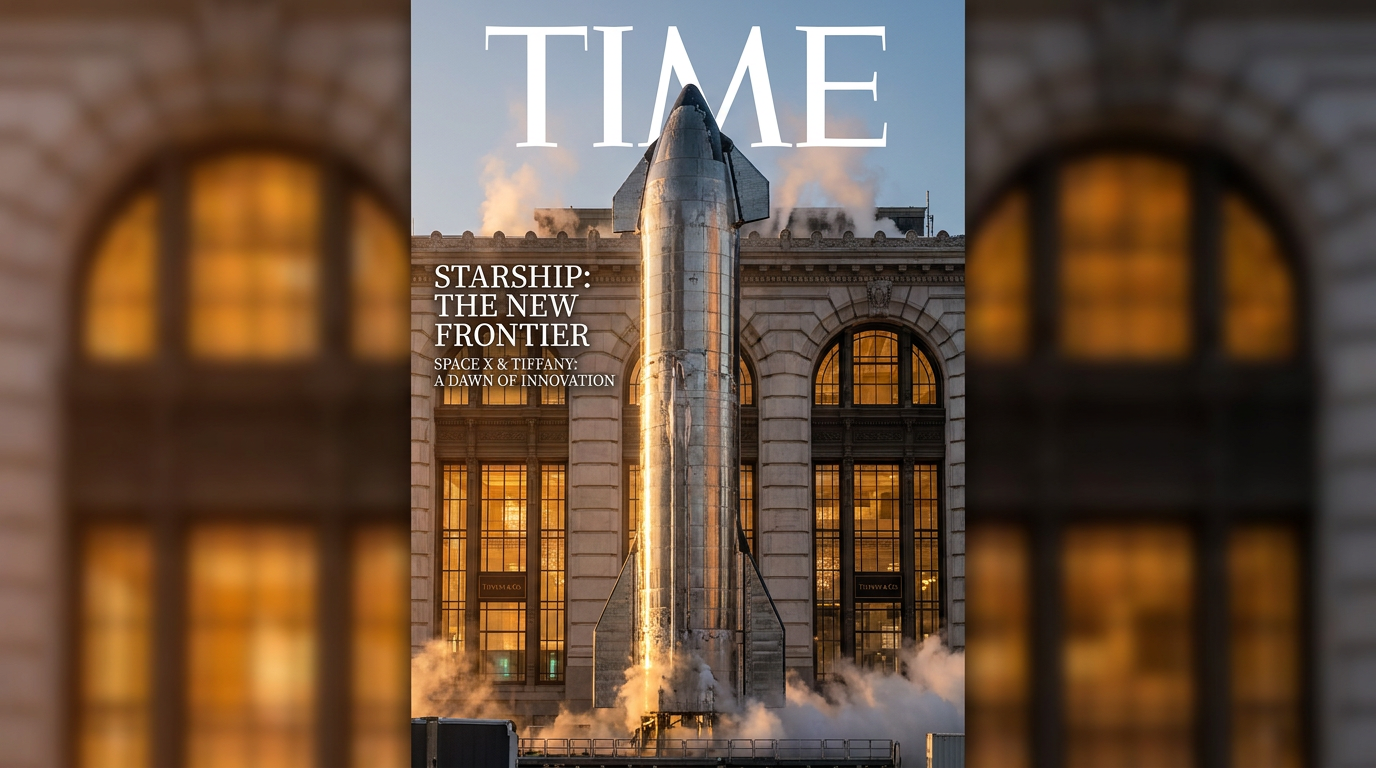
SpaceX closed its first week of trading up 37%, cementing a $2.4 trillion valuation and fueling investor anticipation for the upcoming public debuts of AI giants OpenAI and Anthropic.
By Factlen Editorial Team
- Growth-Focused Investors
- Views the mega-IPOs as a historic opportunity to fund generation-defining infrastructure and the next leg of the bull market.
- Cautious Market Analysts
- Warns about unprecedented price-to-sales multiples and the market's ability to absorb trillions in new equity.
- Institutional & Passive Funds
- Focuses on the mechanics of index inclusion, portfolio rebalancing, and gaining exposure to massive new public entities.
What's not represented
- · Retail investors priced out of early allocations
- · Competitors remaining private
Why this matters
The transition of the world's most valuable private space and AI companies into the public markets allows everyday investors to finally own a stake in generation-defining technologies. This massive influx of public capital will directly fund the infrastructure needed for multi-planetary exploration and artificial general intelligence.
Key points
- SpaceX completed the largest IPO in history, raising $85.7 billion and closing its first week of trading up 37%.
- The aerospace company's market capitalization reached $2.4 trillion, making Elon Musk the world's first trillionaire.
- Following SpaceX's success, AI leaders OpenAI and Anthropic have both confidentially filed S-1 paperwork for their own public debuts.
- OpenAI and Anthropic are expected to target valuations near or above $1 trillion to fund massive data center infrastructure costs.
- Analysts warn that the unprecedented influx of mega-cap equity could test the market's ability to absorb new shares.
The successful initial public offering of SpaceX has sent a jolt of electricity through global capital markets, closing its first week of trading up 37% and setting the stage for a historic wave of mega-listings. The aerospace giant's debut not only shattered records for the largest IPO in history but also served as a critical litmus test for investor appetite. With SpaceX's market capitalization surging to $2.4 trillion, the financial world is now turning its immediate attention to the artificial intelligence sector, where industry leaders OpenAI and Anthropic are waiting in the wings. The overwhelming demand for SpaceX shares has proven that the public markets are hungry for generation-defining technology, providing a massive green light for AI labs seeking to fund their own astronomical infrastructure costs.[1][2]
SpaceX's public debut on June 12, 2026, was a watershed moment that redefined the scale of public offerings. The company offered shares at a take-it-or-leave-it price of $135, raising an unprecedented $85.7 billion after underwriters exercised their greenshoe options. By the end of its first week, the stock had climbed to $185 per share. The sheer volume of capital absorbed by the market demonstrated that institutional and retail investors alike possess a massive, untapped reserve of liquidity for companies with visionary, long-term goals. This successful absorption of such a massive equity block has alleviated fears that the market might choke on the sheer size of the offering.[2][7]
The enthusiasm surrounding SpaceX has been characterized by Wall Street analysts as a new era of "dream-driven FOMO" or fear of missing out. Julian Emanuel of Evercore ISI noted in a client report that the listing could catalyze the next leg of the broader bull market, driven by a collective desire to back visionary infrastructure projects rather than traditional, slow-growth equities. This sentiment has propelled SpaceX to become the sixth-largest publicly traded company in the world, trading at a staggering 2027 forward price-to-sales ratio of 39.2x—a multiple that surpasses every single constituent currently listed in the S&P 500.[1][8]

For CEO Elon Musk, the IPO cemented his status as the world's first trillionaire, given his retention of roughly half of the company's equity and his overwhelming voting control. But beyond individual wealth, the capital influx is earmarked for massive, capital-intensive infrastructure projects. SpaceX plans to use the funds to accelerate the development of the Starship rocket program, expand the Starlink satellite internet constellation, and build out orbital artificial intelligence data centers to support its xAI subsidiary. The market's willingness to fund these capital-heavy, futuristic endeavors is exactly what the AI industry has been waiting to see.[2][7]
With the market's capacity to digest an $85 billion offering definitively proven, the floodgates are opening for the generative artificial intelligence industry. Both OpenAI and Anthropic have confidentially filed S-1 registration statements with the U.S. Securities and Exchange Commission, signaling their intent to go public in the coming months. These filings mark the culmination of a multi-year private funding frenzy that has seen the valuation of AI frontier labs skyrocket from the low billions to nearly a trillion dollars in record time.[3][5]
OpenAI, the creator of the ubiquitous ChatGPT, is reportedly targeting a public debut as early as the fourth quarter of 2026. The company recently closed a private funding round that pegged its value at $852 billion, but underwriters are reportedly aiming for a market capitalization that could exceed $1 trillion upon listing. The company is currently generating an estimated $2 billion in monthly revenue, growing at a pace that eclipses the early trajectories of both Alphabet and Meta, with enterprise adoption driving the bulk of its recent financial success.[4][5]
OpenAI, the creator of the ubiquitous ChatGPT, is reportedly targeting a public debut as early as the fourth quarter of 2026.
However, OpenAI's explosive top-line growth is matched by staggering infrastructure costs. The company is balancing its skyrocketing enterprise adoption against unprecedented data center expenses, with projected net losses reaching into the billions as it races to build more capable foundational models. The IPO will provide the necessary public capital to sustain this cash burn, transitioning the financial burden from private venture capitalists and corporate partners like Microsoft to the broader public market. This transition is viewed as a necessary step to fund the next generation of artificial general intelligence.[3][5]
Hot on OpenAI's heels is Anthropic, the developer of the highly capable Claude AI models. Anthropic confidentially filed its paperwork shortly after closing a massive funding round that valued the company at $965 billion, briefly eclipsing OpenAI's private valuation. The simultaneous march toward the public markets by the two fiercest rivals in generative AI is setting up a historic showdown for investor capital. Both firms are seeking to secure the massive war chests required to purchase the specialized semiconductors and build the data centers needed to maintain their competitive edge.[3][6]

The convergence of these mega-IPOs is making 2026 a bumper year for equity capital raising. Alongside secondary offerings from tech behemoths like Alphabet and Meta—who are raising tens of billions to fund their own AI capital expenditures—the sheer volume of new equity entering the market is unprecedented. Financial advisors and portfolio managers are closely monitoring how this influx will reshape the broader tech ecosystem, as capital that might have flowed into smaller startups is increasingly concentrated at the very top of the market.[4][6]
Passive index funds are particularly impacted by the arrival of these mega-cap companies. Because SpaceX, OpenAI, and Anthropic are entering the public markets at valuations near or above $1 trillion, their eventual inclusion in major indices like the Nasdaq 100 and the S&P 500 will force massive portfolio rebalancing. Index providers are currently navigating complex rules regarding fast-entry inclusion, meaning that even passive investors will soon find themselves with significant exposure to these newly public entities, whether they actively choose to buy the stock or not.[6]
Despite the overwhelming optimism, cautious voices are urging a reality check. Analysts at BMI Research have warned that the combined IPOs of SpaceX, OpenAI, and Anthropic could test the market's ability to absorb hundreds of billions in new shares without pressuring broader stock prices. The concern is rooted in the fact that, despite their massive revenues and cultural impact, the AI labs have yet to prove they can generate the sustained, long-term profits required to justify trillion-dollar valuations in a high-interest-rate environment.[3][4]

Furthermore, the regulatory landscape remains a significant wild card for the upcoming AI listings. While SpaceX successfully navigated the complexities of defense contracts and export controls, OpenAI and Anthropic will face intense scrutiny regarding data privacy, copyright infringement, and the national security implications of advanced AI models. The confidential S-1 process allows these companies to iron out these disclosures with the SEC behind closed doors, but their public roadshows will inevitably bring these legal and ethical challenges to the forefront of the investor conversation.[5][7]
Ultimately, the successful launch of the SpaceX IPO has provided the definitive proof of concept that the public markets are ready and willing to finance the next generation of technological infrastructure. As investors eagerly await the unsealing of the financial disclosures from OpenAI and Anthropic, the technology sector is undergoing a profound transformation. The epicenter of artificial intelligence and space innovation is shifting decisively from Silicon Valley boardrooms to the global public exchanges, inviting the world to invest directly in the future.[1][2][3]
How we got here
Early 2026
OpenAI and Anthropic close massive private funding rounds, pushing their valuations near $1 trillion.
May 2026
OpenAI and Anthropic confidentially file S-1 registration statements with the SEC.
June 12, 2026
SpaceX completes the largest IPO in history, raising $85.7 billion.
June 19, 2026
SpaceX concludes its first week of trading up 37%, reaching a $2.4 trillion market capitalization.
Viewpoints in depth
Growth-Focused Investors
Views the mega-IPOs as a historic opportunity to fund generation-defining infrastructure and the next leg of the bull market.
For growth-oriented investors, the successful launch of SpaceX is the ultimate validation of 'dream-driven' capital. Analysts in this camp argue that traditional valuation metrics, such as price-to-earnings ratios, are insufficient for companies building orbital infrastructure or artificial general intelligence. Instead, they view these IPOs as a rare chance to participate in technological leaps that will define the next century, driving a new wave of market enthusiasm that could lift the entire technology sector.
Cautious Market Analysts
Warns about unprecedented price-to-sales multiples and the market's ability to absorb trillions in new equity.
More conservative voices on Wall Street are raising red flags about the sheer scale of these offerings. With SpaceX trading at nearly 40 times its projected 2027 sales, and AI labs burning through billions in data center costs before achieving profitability, skeptics worry about a potential bubble. They caution that flooding the market with hundreds of billions of dollars in new equity could siphon liquidity away from other sectors, pressuring broader stock prices if the companies fail to meet their astronomical growth targets.
Institutional & Passive Funds
Focuses on the mechanics of index inclusion, portfolio rebalancing, and gaining exposure to massive new public entities.
For the managers of trillions of dollars in passive index funds, the arrival of companies valued near or above $1 trillion presents a unique mechanical challenge. Because these firms are so large upon entry, their inclusion in major indices like the S&P 500 or Nasdaq 100 requires massive, immediate portfolio rebalancing. Institutional players are heavily focused on lobbying for favorable 'fast-entry' rules and managing the logistical hurdles of acquiring enough shares to accurately track the indices without causing massive price distortions.
What we don't know
- The exact dates when OpenAI and Anthropic will make their S-1 filings public and begin their investor roadshows.
- How many shares the AI companies will allocate to retail investors versus institutional buyers.
- Whether the broader stock market will experience a liquidity drain as trillions of dollars are concentrated into these new mega-cap listings.
Key terms
- Initial Public Offering (IPO)
- The process by which a private company offers shares of its stock to the public for the first time.
- S-1 Registration Statement
- A document companies must file with the SEC before going public, detailing their business model, financials, and risks.
- Greenshoe Option
- A provision in an underwriting agreement that allows the underwriter to sell more shares than originally planned if demand is higher than expected.
- Price-to-Sales (P/S) Ratio
- A valuation metric that compares a company's stock price to its revenues, often used for high-growth companies that are not yet profitable.
- Market Capitalization
- The total dollar market value of a company's outstanding shares of stock.
Frequently asked
How much did SpaceX stock rise in its first week?
SpaceX shares closed their first week of trading at $185, representing a 37% increase from their initial public offering price of $135.
When are OpenAI and Anthropic going public?
Both OpenAI and Anthropic have confidentially filed S-1 paperwork with the SEC, with market analysts expecting their public debuts in late 2026 or early 2027.
What is the current valuation of OpenAI?
In private markets, OpenAI was recently valued at approximately $852 billion, though analysts suggest the company may target a valuation exceeding $1 trillion for its IPO.
Why are these IPOs considered historic?
SpaceX raised a record-breaking $85.7 billion, and the combined expected valuations of SpaceX, OpenAI, and Anthropic represent trillions of dollars, marking a massive shift of foundational tech companies into public markets.
Sources
Source coverage
8 outlets
3 viewpoints surfaced








[1]BloombergGrowth-Focused Investors
SpaceX IPO Sparks Anticipation for OpenAI and Anthropic
Read on Bloomberg →[2]The GuardianGrowth-Focused Investors
SpaceX makes the biggest stock market debut in history
Read on The Guardian →[3]ForbesCautious Market Analysts
OpenAI, Anthropic And SpaceX IPO Race: What To Know
Read on Forbes →[4]The Edge SingaporeCautious Market Analysts
2026 is turning out to be a bumper year for equity capital raising on Wall Street
Read on The Edge Singapore →[5]SmartAssetInstitutional & Passive Funds
OpenAI Confidentially Files for IPO
Read on SmartAsset →[6]MorningstarInstitutional & Passive Funds
SpaceX, OpenAI and Anthropic: Funds Are Gaining Exposure to These Bumper IPOs
Read on Morningstar →[7]Zacks Investment ResearchInstitutional & Passive Funds
SpaceX IPO 2026 Guide: Price Predictions, Dates, and Everything You Need to Know
Read on Zacks Investment Research →[8]KuCoin NewsGrowth-Focused Investors
SpaceX IPO Sparks Netscape Comparisons
Read on KuCoin News →
Every angle. Every day.
Get business stories with full source coverage and perspective breakdowns delivered to your inbox.