
The Warsh Era Begins: How the Fed's Hawkish Pivot is Reshaping the U.S. Economy
Federal Reserve Chair Kevin Warsh used his first meeting to dismantle forward guidance and signal higher-for-longer interest rates, triggering a massive surge in the U.S. dollar.
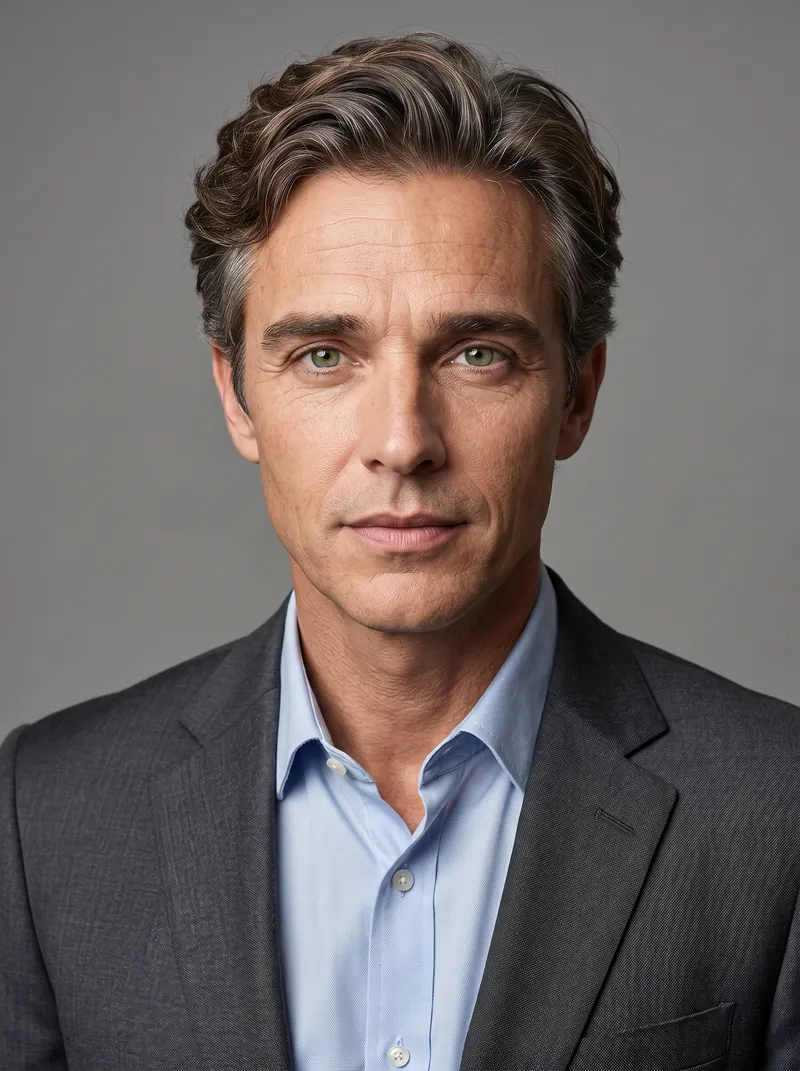
The June 2026 Federal Open Market Committee meeting marked a seismic and immediate shift in American monetary policy. Kevin Warsh, presiding over his first meeting as Chair of the Federal Reserve since being sworn in late May, delivered a hawkish hold that immediately rippled through global financial markets.
While the decision to keep rates unchanged was widely anticipated by economists and traders alike, the underlying message signaled a definitive end to the easing cycle that markets had been aggressively pricing in for months. Warsh used his inaugural press conference to establish a new tone for the central bank, one that prioritizes strict inflation control over market hand-holding, setting the stage for a fundamentally different relationship between Wall Street and the Federal Reserve.[4]
The committee voted unanimously to maintain the benchmark federal funds rate at a target range of 3.50% to 3.75%. However, the routine nature of the rate decision masked a profound regime change beneath the surface. Warsh’s debut was characterized by a sharp return to orthodox central banking, drawing immediate comparisons from fixed-income analysts to the inflation-fighting era of Paul Volcker.
He stripped the official policy statement of its traditional forward guidance, cutting its length by more than half compared to recent meetings. Standing at the podium, Warsh declared that the committee would "unambiguously and unanimously" deliver price stability, explicitly rejecting the notion that the Fed might tolerate a prolonged period of above-target inflation to protect employment gains.[3]
The most striking evidence of this hawkish pivot emerged from the Summary of Economic Projections, commonly known as the "dot plot." In March, under the previous leadership, the median projection suggested that the federal funds rate would end 2026 at 3.4%, implying that at least one rate cut was on the horizon. By the conclusion of the June meeting, that median forecast had shifted aggressively upward to 3.8%.
Nine of the eighteen participating Fed officials now project at least one rate hike before the end of the year, fundamentally flipping the central bank's bias from easing to tightening. This 40-basis-point upward revision in just three months caught many institutional investors off guard, forcing a rapid reassessment of borrowing costs across the economy.[4]
In a highly symbolic move that underscored his disdain for forward guidance, Warsh himself abstained from submitting a dot for the projection matrix. He has long criticized the dot plot for boxing the Federal Reserve into premature commitments, emphasizing during the press conference that economic projections are written with "a pencil and an eraser."
This deliberate refusal to hand-hold the market forces Wall Street analysts to do their own heavy lifting. Without explicit forward guidance acting as a safety net, financial markets must now react directly to incoming macroeconomic data—such as high-frequency inflation prints and labor market surveys—rather than relying on the Fed to synthesize the information and telegraph its next move months in advance.
To institutionalize this operational shift, Warsh announced the creation of five independent task forces designed to comprehensively overhaul the central bank's inner workings. These specialized groups will review the Fed's public communications strategy, the optimal size of its massive balance sheet, its reliance on traditional data sources, the economic impact of artificial intelligence on productivity, and the mechanics of its inflation mandate.
By bringing together both internal Fed staff and outside economic experts, Warsh is signaling a willingness to question decades of institutional orthodoxy. He noted that the central bank has become overly reliant on outdated survey methods and must adapt to a modern economy where technological shifts happen at breakneck speed.[1]
These task forces are expected to deliver their findings and recommendations by the end of the year, a timeline that serves a dual purpose for the new Chair. Beyond generating actual policy reforms, the ongoing reviews give the committee significant wiggle room to delay any major adjustments to interest rates until December.
Whenever pressed by reporters on specific future actions, Warsh frequently deferred to the pending task force conclusions. This strategic ambiguity allows the Federal Reserve to buy time, keeping financial conditions suitably tight while policymakers wait to see if the recent stickiness in core inflation is a temporary anomaly or a structural feature of the post-pandemic economy.[1]
A key area of focus for the new administration is the Federal Reserve's massive balance sheet, which expanded dramatically during the pandemic-era quantitative easing programs. Warsh has historically been a vocal critic of sustained asset purchases, arguing that they distort financial markets and create unnecessary risks.
His newly formed balance sheet task force is widely expected to recommend a more aggressive pace of quantitative tightening, allowing more Treasury bonds and mortgage-backed securities to roll off the Fed's books without reinvestment. This structural drain on liquidity will serve as a secondary tightening mechanism, working in tandem with elevated interest rates to cool the economy and rein in speculative excess.[3]
The immediate market reaction to Warsh's hawkish tone was a violent repricing across global asset classes, with the U.S. dollar emerging as the undisputed standout. The greenback, which had been stuck in a relatively narrow and stagnant trading range for over a year, broke out aggressively following the press conference.
The U.S. Dollar Index (DXY), which measures the currency against a basket of major global peers, surged past the critical 100.00 threshold to reach its highest level since May 2025. Currency strategists noted that the breakout was not a temporary positioning squeeze, but rather a structural regime change driven by the sudden realization that U.S. interest rates would remain elevated far longer than previously modeled.[2]
The mechanics driving the dollar's rapid ascent are rooted in the widening gap between U.S. monetary policy and the rest of the world. As the Federal Reserve signals a willingness to hike rates, higher expected U.S. borrowing costs push up real yields on Treasury bonds.
This widens the dollar's "carry advantage"—the profit an investor makes by borrowing in a low-interest currency to invest in a higher-yielding one—against counterparts like the euro, the British pound, and the Japanese yen. With other global central banks actively considering rate cuts to stimulate their own sluggish economies, the Federal Reserve stands alone in its hawkishness, making dollar-denominated assets overwhelmingly attractive to global capital allocators.[2]
This interest rate differential is drawing massive, sustained capital inflows into the United States, a dynamic further amplified by the underlying resilience of the American economy. While European and Asian markets grapple with stagnant growth, U.S. gross domestic product continues to expand at a solid pace.
Furthermore, the massive capital demands of the ongoing artificial intelligence infrastructure build-out are heavily concentrated in American tech hubs. Hyperscalers and AI startups are raising billions of dollars to fund data centers and chip procurement, creating fierce competition for capital that naturally gravitates toward the U.S. dollar, reinforcing the narrative of American economic exceptionalism.[2]
Conversely, the Fed's hawkish pivot placed immediate and intense pressure on alternative assets that typically thrive in low-rate, high-liquidity environments. Gold prices flushed downward violently in the hours following the FOMC announcement, dropping significantly as the metal's inverse correlation with the dollar and real yields took full effect.
Because gold yields no interest, it becomes far less attractive to hold when risk-free government bonds are offering substantial, inflation-adjusted returns. Major investment banks quickly scrambled to revise their commodities forecasts, with some slashing their year-end gold price targets by hundreds of dollars an ounce in response to the new monetary reality.
Despite the immediate shock to the system, equity markets have shown remarkable resilience in the face of this hawkish regime change. While major indices initially stumbled on the realization that the "higher for longer" era was far from over, they quickly stabilized and resumed their upward trajectory.
Investors appear to be carefully weighing the headwind of higher corporate borrowing costs against the powerful tailwind of strong productivity growth, particularly driven by advancements in artificial intelligence. If Warsh's Fed can successfully thread the needle—taming inflation without triggering a severe recession—the U.S. economy may emerge from this transition with a healthier, more sustainable foundation for long-term growth.
For everyday consumers and main street businesses, the new Federal Reserve regime translates into a stark reality: meaningful relief on borrowing costs is likely delayed indefinitely. Mortgage rates, auto loans, and credit card interest will remain elevated as the central bank prioritizes the fight against sticky inflation over stimulating consumer demand.
Warsh made it abundantly clear that he views inflation as a choice, primarily determined by monetary policy, and he explicitly rejected the idea of moving the goalposts. He stated there is absolutely no reason to revisit the Fed's 2% inflation target until the institution proves it has the discipline and capability to actually achieve it.
Ultimately, the Warsh era promises a more unpredictable, data-dependent environment for financial markets, but a potentially more stable one for consumer prices. By stepping back from explicit forward guidance and dismantling the safety nets that Wall Street had grown accustomed to, the Federal Reserve is attempting to restore its institutional credibility and operational flexibility.
Ultimately, the Warsh era promises a more unpredictable, data-dependent environment for financial markets, but a potentially more stable one for consumer prices.
Key points
- The Federal Reserve held its benchmark interest rate steady at 3.50% to 3.75% during Kevin Warsh's first meeting as Chair.
- The median 'dot plot' projection for the end of 2026 shifted upward to 3.8%, signaling a bias toward rate hikes rather than cuts.
- Warsh dismantled traditional forward guidance, refusing to submit his own rate projection and forcing markets to rely directly on economic data.
- Five new task forces were announced to overhaul the Fed's communications, balance sheet, data sources, and inflation mandate by year-end.
What we don’t know
- Whether the recent stickiness in core inflation is a temporary anomaly or a structural feature of the post-pandemic economy.
- What specific policy changes the five newly formed task forces will recommend when they report back at the end of the year.
- How long equity markets can sustain their current valuations in the face of prolonged, elevated corporate borrowing costs.
How we got here
March 2026
The Federal Reserve's dot plot projects a median year-end interest rate of 3.4%, implying expected rate cuts.
May 22, 2026
Kevin Warsh is sworn in as the 17th Chair of the Federal Reserve, succeeding Jerome Powell.
June 17, 2026
Warsh presides over his first FOMC meeting, holding rates steady but signaling a hawkish shift toward higher-for-longer policy.
- Orthodox Policy Advocates
- Argue the Fed must prioritize price stability, shrink its balance sheet, and stop providing excessive forward guidance to markets.
- Data-Driven Pragmatists
- Emphasize that the Fed's ultimate path depends on incoming inflation and employment data, regardless of the new communication style.
- Currency Bulls
- Focus on how the Fed's hawkish divergence from other central banks is driving capital inflows and a structural bull market for the US dollar.
Perspectives this story doesn't cover
- Borrowers seeking mortgage relief
- Emerging market central banks facing currency pressure
Sources
Source coverage
4 outlets
3 viewpoints surfaced



- [1]MarketWatchCurrency Bulls
Warsh’s task forces give the Fed wiggle room to put off changing rates until December
Read on MarketWatch → - [2]NordeaCurrency Bulls
Hawkish Fed and Strong US Data Support the Dollar – For Now
Read on Nordea → - [3]Franklin TempletonOrthodox Policy Advocates
Kevin Warsh came out as a hawk during his first press conference
Read on Franklin Templeton → - [4]PIMCOData-Driven Pragmatists
Hawkish-Leaning Committee, Reform-Minded Chair: Warsh's First Fed Meeting
Read on PIMCO →

More in Finance
See all →Economic Forecasts
World Bank Raises South Asia 2026 Growth Forecast to 6.9% as Domestic Demand Withstands Energy Shock
4 sources
Trade Economics
The Mechanics of the J-Curve: How Currency Depreciation Temporarily Expands Trade Deficits
5 sources
Macroeconomics
How GDP and GNP Measure Economic Output Through Borders Versus Ownership
7 sources

Energy Consolidation
BKV Corporation Closes Barnett Shale Acquisition, Expanding Natural Gas and Carbon Capture Footprint
4 sources
Comments
Every angle. Every day.
Get Finance stories with full source coverage and perspective breakdowns, free every day.