
The Billion-Dollar Era of Women's Team Sports: How Valuations Skyrocketed in 2026
Driven by unbundled media rights, dedicated stadium infrastructure, and modernized collective bargaining, women's sports franchises have transitioned from niche investments to premium institutional asset classes.
By Factlen Editorial Team
- Institutional Capital & Ownership
- Views women's sports as a highly undervalued asset class with exponential growth potential driven by unbundled media rights and dedicated infrastructure.
- Athlete Advocates
- Focuses on ensuring the financial windfall translates directly to the players through modernized CBAs, revenue sharing, and improved working conditions.
- Legacy Supporters
- Celebrates the growth but warns against the gentrification of the sports, fearing that rising ticket prices and corporate takeovers will alienate grassroots fans.
What's not represented
- · Grassroots youth sports organizations
- · City planners and municipal stadium financiers
Why this matters
The financial maturation of women's sports ensures long-term stability for the leagues, guarantees better compensation and working conditions for female athletes, and creates a massive new asset class for global investors.
Key points
- Women's sports franchises have transitioned from loss-leading marketing projects to premium institutional asset classes.
- Unbundling media rights from men's sports packages allowed leagues to secure massive, independent broadcasting deals.
- Purpose-built stadiums allow teams to control parking, concessions, and premium seating, transforming local revenue models.
- New collective bargaining agreements ensure athletes share in the growth through revenue-sharing triggers and higher salary caps.
- Leagues must balance rapid commercial growth with the risk of pricing out their foundational, grassroots fanbases.
The landscape of professional sports ownership crossed a historic threshold in the first half of 2026. For decades, women's team sports franchises were treated by institutional investors as philanthropic endeavors or loss-leading marketing extensions of men's clubs. That era is definitively over. Across the National Women's Soccer League (NWSL), the Women's National Basketball Association (WNBA), and the surging Professional Women's Hockey League (PWHL), franchise valuations have exploded, transforming these teams into highly coveted, premium asset classes. Recent franchise sales and expansion fees have consistently shattered the nine-figure mark, signaling a permanent recalibration of how the financial sector values women's athletics.[1][2]
The catalyst for this financial metamorphosis is not a sudden discovery of the sports' entertainment value, but rather a structural overhaul in how these leagues monetize their core products. The most significant driver has been the unbundling of media rights. Historically, broadcast networks acquired the rights to women's leagues as throw-in add-ons to massive men's sports packages, artificially depressing their market value and hiding their true viewership metrics. By taking their media rights to the open market independently, leagues have forced broadcasters and streaming platforms into bidding wars that reflect actual consumer demand.[3][4]
This unbundling strategy yielded immediate dividends. The NWSL's landmark domestic broadcasting agreements, which took full effect over the last two seasons, distributed matches across multiple major networks and streaming giants, increasing annual media revenue by nearly 240 percent. Similarly, the WNBA's latest media rights negotiations capitalized on a generational influx of talent and record-breaking viewership, securing a multi-platform deal that fundamentally altered the league's financial trajectory. These deals provide the guaranteed, long-term revenue floors that institutional investors require before committing capital.[2][5]

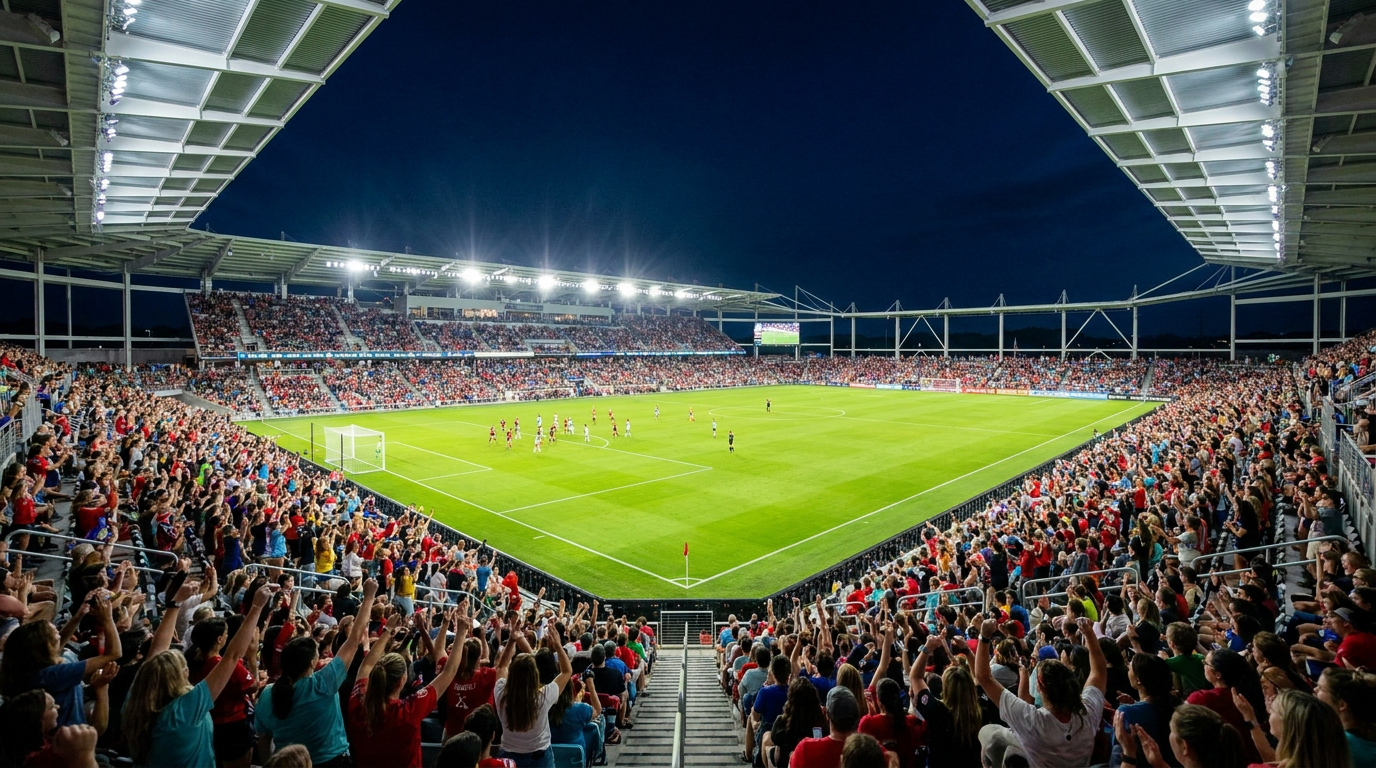
Beyond television screens, the physical infrastructure of women's team sports has undergone a radical transformation. The opening of CPKC Stadium in Kansas City—the first stadium purpose-built for a women's professional sports team—served as a proof of concept that has now been replicated. Dedicated facilities eliminate the predatory lease agreements and secondary-tenant scheduling conflicts that previously hampered women's teams sharing arenas with NHL or NBA franchises. Controlling the venue means controlling parking, concessions, premium seating, and naming rights, which constitute the lifeblood of local sports revenue.[6][7]
The influx of private equity and venture capital has further accelerated this valuation boom. Firms that previously restricted their sports portfolios to minority stakes in European football clubs or NBA franchises are now aggressively targeting women's leagues. The rationale is straightforward: the buy-in cost, while rising, remains a fraction of the multi-billion-dollar price tags associated with legacy men's teams, yet the year-over-year growth potential is exponentially higher. This influx of sophisticated capital has professionalized front offices, expanded marketing budgets, and driven advanced data analytics in player recruitment.[1][8]
Expansion fees provide the most transparent window into this surging market. When the WNBA awarded its recent expansion franchises to groups in the Bay Area, Toronto, and Portland, the entry fees reportedly eclipsed $50 million—a staggering increase from just five years prior when teams could be acquired for low single-digit millions. These fees are not merely entry tickets; they are immediate capital injections shared among existing owners, further stabilizing the league's financial ecosystem and validating the skyrocketing valuations of legacy franchises.[4][9]

Expansion fees provide the most transparent window into this surging market.
The Professional Women's Hockey League (PWHL) offers a fascinating alternative model that has proven equally attractive to investors. Operating under a single-entity structure where the league owns all six original franchises, the PWHL bypassed the traditional slow-growth franchise model. By centralizing player compensation, broadcasting production, and sponsorship negotiations, the league achieved immediate economies of scale. Following a sold-out inaugural season and a heavily attended sophomore campaign in 2025-2026, the league's centralized valuation has prompted discussions of highly lucrative future franchise spin-offs.[10][11]
This financial windfall is fundamentally reshaping the athlete experience through modernized collective bargaining agreements (CBAs). As league revenues have multiplied, players associations have successfully negotiated for a larger share of the pie. The most recent labor agreements feature substantial increases in salary caps, mandatory charter flights, comprehensive maternity and family planning benefits, and, crucially, revenue-sharing triggers. These triggers ensure that if league revenues exceed specific benchmarks, players receive a direct percentage of the surplus, aligning the financial interests of ownership and athletes.[5][12]
The integration of advanced data analytics and targeted digital marketing has also played a pivotal role in this commercial ascendance. Unlike legacy men's leagues that rely heavily on traditional linear television demographics, women's sports franchises have cultivated highly engaged, digitally native fanbases. By leveraging first-party data, teams are executing hyper-targeted merchandise drops, localized ticketing campaigns, and bespoke sponsorship integrations that deliver measurable return on investment for corporate partners. This direct-to-consumer relationship bypasses traditional media gatekeepers and fosters intense brand loyalty.[3][8]

Corporate sponsorship has evolved from philanthropic brand alignment to core strategic marketing. Major financial institutions, automotive manufacturers, and technology conglomerates are no longer satisfied with secondary logo placements. They are demanding primary jersey sponsorships, stadium naming rights, and integrated digital campaigns. This shift is driven by the realization that fans of women's sports demonstrate exceptionally high brand loyalty and purchasing intent toward companies that actively support their teams, creating a highly lucrative conversion funnel for sponsors.[1][6]
Despite the overwhelming positive momentum, the industry faces distinct growing pains and structural challenges. The rapid escalation in franchise valuations and player salaries requires a corresponding sustained increase in consumer spending. As teams move from intimate, low-cost venues to premium arenas, they must navigate the delicate balance of maximizing ticketing revenue without pricing out the grassroots, legacy fans who sustained the leagues during their leaner years. The gentrification of the fanbase remains a persistent concern among player advocates and early supporters.[7][12]

Furthermore, the reliance on massive national media deals introduces a degree of vulnerability to the broader macroeconomic climate and the shifting landscape of sports broadcasting. As regional sports networks (RSNs) continue to face bankruptcy and restructuring, women's leagues must innovate their local broadcasting strategies to ensure fans can easily access non-nationally televised games. The transition to direct-to-consumer streaming models offers a solution, but requires significant upfront investment in production quality and digital infrastructure.[4][9]
Ultimately, the 2026 valuation boom represents a permanent structural correction in the global sports market. The days of evaluating women's team sports through a lens of potential rather than performance are over. Armed with dedicated infrastructure, equitable media representation, and sophisticated institutional backing, these leagues have established themselves as formidable commercial entities. The ongoing challenge will be managing this hyper-growth sustainably, ensuring that the athletes who drive the product share equitably in its unprecedented financial success.[2][10]
How we got here
2022
The NWSL signs a landmark collective bargaining agreement, setting a new standard for player compensation and free agency.
2024
CPKC Stadium opens in Kansas City, proving the financial viability of purpose-built, dedicated stadiums for women's professional teams.
2025
The WNBA secures a historic, unbundled national media rights deal that fundamentally alters the league's revenue floor.
2026
Franchise valuations across the NWSL, WNBA, and PWHL consistently cross the $100 million threshold as institutional capital floods the market.
Viewpoints in depth
Institutional Investors
The financial sector views women's sports as the last great undervalued asset class in global entertainment.
For private equity firms and venture capitalists, the math is straightforward. Legacy men's sports franchises now cost billions of dollars to acquire, offering slow, single-digit annual percentage growth. In contrast, women's sports franchises offer a much lower barrier to entry with the potential for exponential, double-digit year-over-year growth. Investors point to the unbundling of media rights and the shift toward first-party digital marketing as proof that these leagues have finally unlocked their commercial mechanisms, making them highly attractive additions to diversified portfolios.
Players Associations
Athlete advocates are focused on ensuring the influx of capital directly improves working conditions and compensation.
While players celebrate the rising valuations of their teams, their unions are aggressively negotiating to ensure the athletes who drive the product are not left behind. Players associations are utilizing the valuation boom as leverage to demand modernized collective bargaining agreements. Their focus has shifted from basic survival demands—like minimum salaries and maternity leave—to wealth-building mechanisms, specifically demanding revenue-sharing triggers, equity options, and mandatory charter flights to protect athlete health during grueling seasons.
Legacy Supporters
Early adopters and grassroots fans worry that the influx of corporate money will erode the inclusive culture of the sports.
There is a growing anxiety among the fans who sustained these leagues during their unprofitable years. As teams move from small, affordable college arenas to massive, premium-priced dedicated stadiums, ticket prices have surged. Legacy supporters fear a gentrification of the fanbase, where the inclusive, community-driven atmosphere that defined women's sports is replaced by corporate hospitality suites and priced-out diehards. They argue that leagues must find a way to monetize their growth without abandoning the demographics that built their foundation.
What we don't know
- Whether local direct-to-consumer streaming revenues can fully replace the income lost from collapsing regional sports networks.
- How high the ceiling is for expansion fees before the institutional market cools and valuations plateau.
- If the PWHL's highly successful single-entity model will eventually be forced to transition into a traditional franchise model to satisfy investor demand.
Key terms
- Unbundled Media Rights
- The practice of selling a league's broadcasting rights independently on the open market, rather than packaging them as an add-on to a larger men's sports broadcasting deal.
- Expansion Fee
- The upfront capital a new ownership group must pay to a league to establish a new franchise, which is typically distributed among the existing team owners.
- Single-Entity Structure
- A sports league business model where the central league office owns all the teams and player contracts, rather than individual franchise owners.
- Revenue-Sharing Trigger
- A clause in a collective bargaining agreement that guarantees players a percentage of the league's total revenue once that revenue surpasses a specific, pre-negotiated financial benchmark.
- Regional Sports Network (RSN)
- A local cable television channel dedicated to broadcasting the games of sports teams within a specific geographic market, a model currently facing severe financial instability.
Frequently asked
What is driving the sudden increase in franchise valuations?
The boom is primarily driven by the unbundling of media rights, which sparked bidding wars among broadcasters, alongside investments in dedicated stadiums that allow teams to control local revenue streams.
How does the PWHL model differ from the WNBA and NWSL?
The PWHL operates under a single-entity structure where the league owns all the teams, allowing for centralized costs and immediate economies of scale, whereas the WNBA and NWSL use a traditional franchise ownership model.
Are the athletes making more money from this valuation boom?
Yes. Modernized collective bargaining agreements have introduced higher salary caps, improved benefits like charter flights, and revenue-sharing triggers that pay players a percentage of league surplus.
What are the main risks associated with this rapid financial growth?
The primary risks include pricing out the grassroots fans who originally supported the leagues, and a reliance on national media deals while local regional sports networks face bankruptcy.
Sources
Source coverage
12 outlets
3 viewpoints surfaced












[1]CNBCInstitutional Capital & Ownership
Women's sports franchises emerge as premium asset class in 2026
Read on CNBC →[2]SporticoInstitutional Capital & Ownership
NWSL and WNBA valuations shatter previous records amid media boom
Read on Sportico →[3]ESPNAthlete Advocates
How unbundled media rights changed the game for women's leagues
Read on ESPN →[4]BloombergInstitutional Capital & Ownership
Private equity pours into women's sports as expansion fees soar
Read on Bloomberg →[5]Just Women's SportsAthlete Advocates
New CBAs and revenue sharing: What the valuation boom means for players
Read on Just Women's Sports →[6]The AthleticAthlete Advocates
The stadium effect: How dedicated infrastructure is driving local revenue
Read on The Athletic →[7]Financial TimesInstitutional Capital & Ownership
The gentrification of women's sports: Can leagues balance growth and legacy fans?
Read on Financial Times →[8]Wall Street JournalLegacy Supporters
Data-driven marketing and the new sports consumer
Read on Wall Street Journal →[9]Sports Business JournalInstitutional Capital & Ownership
WNBA expansion groups pay record fees for new franchises
Read on Sports Business Journal →[10]Yahoo SportsAthlete Advocates
PWHL's single-entity success story enters year three
Read on Yahoo Sports →[11]ForbesInstitutional Capital & Ownership
The billion-dollar ceiling: Forecasting the next decade of women's sports
Read on Forbes →[12]The GuardianLegacy Supporters
Grassroots concerns grow as women's sports valuations skyrocket
Read on The Guardian →

More in sports
See all 6 stories →Sports Business
Inside the NWSL's Financial Boom: How Expansion Fees Hit $205 Million
7 sources

Injury
Blue Jays Prospect Ricky Tiedemann Returns to the Mound After 706-Day Injury Layoff
6 sources

F1 2026 Rules
How Formula 1's 2026 Regulations Are Rewriting the Rules of Racing
7 sources
Standings
Dodgers and Yankees Set Blistering Pace as Mariners Surge in 2026 MLB Standings
7 sources

Every angle. Every day.
Get sports stories with full source coverage and perspective breakdowns delivered to your inbox.