
Tropical Butterflies Found to Defy Aging, Living 25 Times Longer Than Relatives
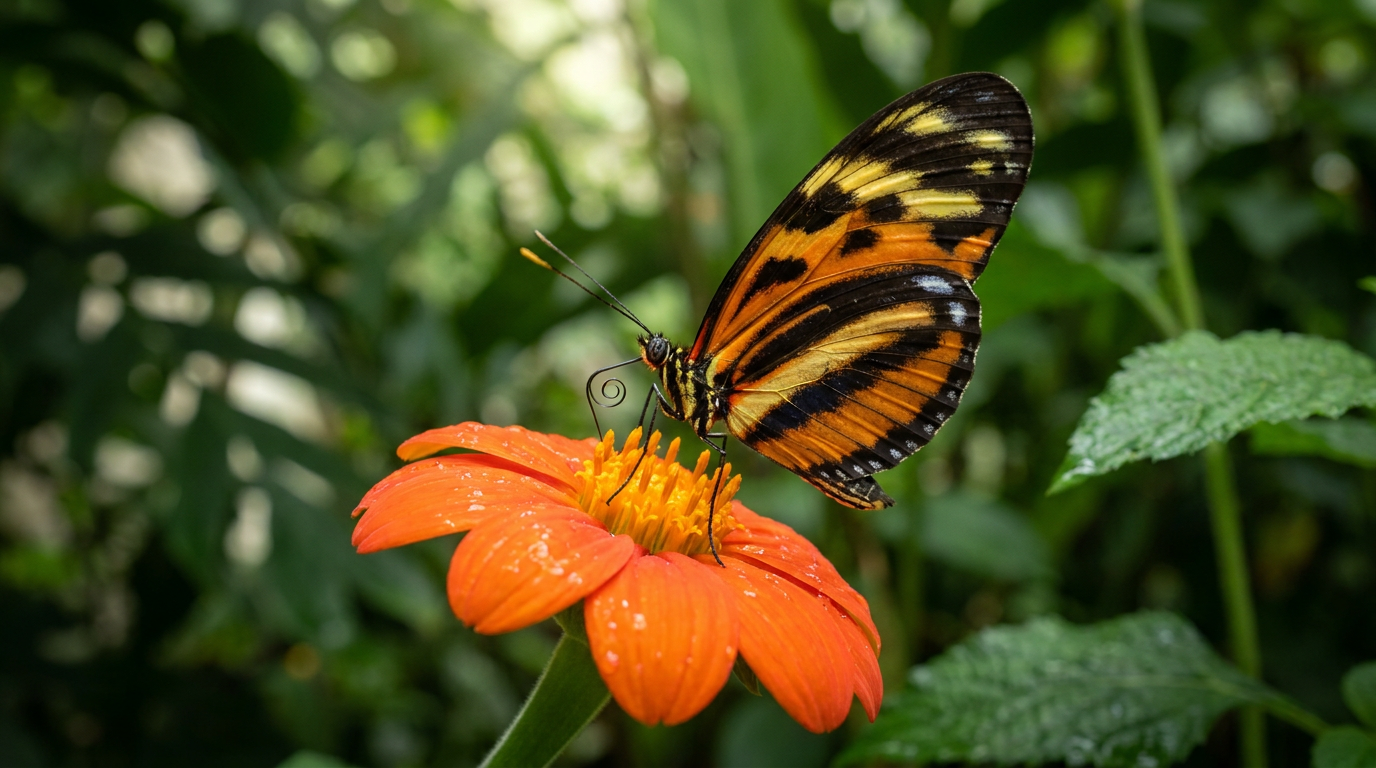
Scientists have discovered that Heliconius butterflies not only live up to a year by feeding on pollen, but also possess evolved genetic mechanisms that prevent age-related physical decline.
By Factlen Editorial Team
- Evolutionary Biologists
- Focus on how the dietary shift to pollen altered evolutionary pressures and pushed back the selection shadow.
- Gerontology Researchers
- View the butterflies as a novel model organism to study delayed senescence and potential applications for human aging.
- Ecologists
- Emphasize the unique relationship between the rainforest flora and the specialized foraging behavior of the genus.
What's not represented
- · Conservationists monitoring rainforest habitat loss
- · Geneticists specializing in insect DNA sequencing
Why this matters
By uncovering how these butterflies maintain muscle strength and cellular health for nearly a year, researchers are identifying new biological pathways that could eventually inform treatments for age-related physical decline in humans.
Key points
- Butterflies in the Heliconius genus can live up to 348 days, compared to just 14 days for their close relatives.
- They are the only known butterflies that actively consume pollen, providing them with a continuous supply of amino acids.
- Experiments show they outlive relatives even when deprived of pollen, proving their longevity is an evolved genetic trait.
- Older Heliconius butterflies show no signs of age-related physical decline, maintaining the same grip strength as younger individuals.
- Researchers believe the genus could serve as a powerful new model organism for studying healthy aging and delayed senescence.
For most butterflies, life is a fleeting burst of color. The typical adult lifespan of a butterfly is measured in mere weeks, a brief window dedicated entirely to reproduction before rapid physiological decline sets in.[1]
But deep in the tropical rainforests of Central and South America, one genus of butterflies has entirely rewritten the biological rules of time. Butterflies of the genus Heliconius are now recognized as some of the longest-lived insects of their kind, surviving for months and seemingly defying the standard markers of aging.[3]
A comprehensive new study published in Nature Communications has provided the most detailed look yet at how these insects achieve their remarkable longevity. Led by researchers from the University of Bristol and the Smithsonian Tropical Research Institute, the evidence suggests Heliconius has not only extended its lifespan but fundamentally slowed the aging process itself.[2][6]
The sheer scale of this survival advantage is staggering. By compiling data from commercial butterfly houses, mark-release-recapture field studies, and controlled insectary populations, researchers documented a 25-fold variation in maximum lifespan across the broader Heliconiini tribe.[2][5]
At the extreme ends of this spectrum, the contrast is stark. The species Dione juno lives for a maximum of roughly 14 days as an adult. In contrast, Heliconius hewitsoni has been recorded living for up to 348 days—nearly a full year.[4][6]

On average, pollen-feeding Heliconius species boast a maximum lifespan of around 177 days, roughly three times longer than their non-pollen-feeding evolutionary cousins. This evolutionary divergence occurred relatively recently, making the dramatic gap in longevity highly unusual in the animal kingdom.[3][6]
For decades, entomologists have suspected that the secret to Heliconius longevity lay in its unique diet. Unlike the vast majority of butterflies, which rely exclusively on sugary flower nectar for adult energy, Heliconius actively collects and consumes pollen.[1][3]
For decades, entomologists have suspected that the secret to Heliconius longevity lay in its unique diet.
This dietary innovation provides a consistent, rich supply of amino acids. In most butterfly species, the proteins required for reproduction must be accumulated during the caterpillar stage. Once those reserves are depleted, the adult dies. By eating pollen, Heliconius can continually synthesize new proteins, supporting a prolonged reproductive lifespan.[2][4]
To test whether diet alone was responsible for their long lives, the researchers conducted controlled deprivation experiments. They took a long-lived species, Heliconius hecale, and withheld pollen from its diet, comparing its survival to a closely related, non-pollen-feeding species, Dryas iulia.[2]

The results revealed a deeper biological adaptation. While the pollen-deprived Heliconius did experience a steeper decline in body mass, they still significantly outlived their Dryas iulia relatives. This indicates that while nutrition plays a crucial role, the butterflies have evolved intrinsic, genetic mechanisms for longevity that operate independently of their diet.[2][3][4]
Surviving longer is only half the equation; the researchers also wanted to know if the butterflies were experiencing the standard physiological decay associated with aging. To measure this, they turned to a classic biomechanical proxy: grip strength.[5][6]
By testing how firmly the butterflies could hold onto a surface as they aged, the team could quantify muscle deterioration. In the shorter-lived Dryas iulia, grip strength steadily weakened over time, mirroring the age-related physical decline seen in almost all animals.[6]
Remarkably, older individuals of Heliconius hecale showed virtually no detectable deterioration in grip strength. Their muscle function and physical performance remained as robust in old age as it was in their youth, suggesting they largely escape the physiological ravages of time.[3][5]

Evolutionary biologists refer to the period of life after reproduction ceases as the "selection shadow"—a phase where natural selection no longer weeds out genetic mutations that cause bodily decline. By maintaining their reproductive capacity through pollen feeding, Heliconius butterflies appear to have pushed this selection shadow much further into the future.[2][3]
This unique combination of extended lifespan and delayed senescence positions Heliconius as a highly promising new model organism for gerontology. While scientists have long relied on fruit flies, nematode worms, and mice to study aging, these tropical butterflies offer a fresh perspective on how ecological shifts can drive the evolution of longer, healthier lives.[4][5]
"I'm interested in the evolutionary basis of these kinds of lifespan differences because they might hold insights relevant for healthy ageing in humans," noted Dr. Jessica Foley, the study's lead author and a postdoctoral scholar at Tufts University's Jean Mayer USDA Human Nutrition Research Center on Aging.[4]
The next frontier for researchers is mapping the specific genetic pathways that allow Heliconius to maintain its cellular integrity and muscle mass over such extended periods. Understanding how these butterflies repair DNA and manage cellular waste could eventually inform therapeutic targets for age-related diseases in other species.[2][4]
How we got here
~18 million years ago
The Heliconius genus diverges from its relatives, evolving the unique ability to consume and digest pollen.
Late 20th Century
Field biologists first document the unusual pollen-feeding behavior and extended lifespans of Heliconius butterflies in the wild.
June 2026
A comprehensive study in Nature Communications proves that the butterflies have evolved delayed senescence, maintaining muscle strength into old age.
Viewpoints in depth
Evolutionary Biologists
Focus on how dietary shifts alter evolutionary pressures.
Evolutionary biologists emphasize that the transition to pollen feeding was a catalyst that fundamentally changed the evolutionary trajectory of the Heliconius genus. By securing a continuous supply of amino acids, these butterflies were able to reproduce throughout their adult lives. This continuous reproduction pushed back the "selection shadow," meaning natural selection continued to favor genetic traits that maintained physical health and cellular repair mechanisms long after other butterfly species would have died.
Gerontology Researchers
View the butterflies as a novel model for studying healthy aging.
For researchers focused on aging, the most exciting aspect of the Heliconius discovery is not just the length of their lives, but the quality of their extended age. The complete lack of physical decline—demonstrated by their sustained grip strength—offers a rare natural model of delayed senescence. Gerontologists hope that by sequencing the genome of these butterflies and identifying the specific proteins responsible for muscle maintenance, they can uncover biological pathways applicable to preventing frailty and age-related muscle loss in humans.
Ecologists
Highlight the complex interdependence between the butterflies and their rainforest habitat.
Ecologists view the longevity of Heliconius through the lens of their environment. These butterflies have developed a highly specialized, mutualistic relationship with specific pollen-producing plants in the Central and South American rainforests, particularly Passiflora (passionflowers). Their extended lifespans allow them to develop complex foraging routes, remembering the locations of specific flowers over vast territories. This makes them crucial, long-term pollinators for their ecosystems, but also highly vulnerable to deforestation and habitat fragmentation.
What we don't know
- The specific genetic mutations and cellular pathways that allow Heliconius to prevent muscle deterioration.
- How their immune systems adapt to defend against pathogens over a lifespan that is 25 times longer than average.
- Whether the biological mechanisms they use to delay aging have direct analogs in mammalian biology.
Key terms
- Senescence
- The condition or process of deterioration with age, characterized by a loss of cellular and physical function.
- Heliconiini
- A specific tribe of butterflies within the nymphalid family, encompassing both the long-lived Heliconius genus and their shorter-lived relatives.
- Selection Shadow
- The phase of an organism's life after its reproductive peak, where evolutionary pressure to maintain health and survival diminishes.
- Model Organism
- A non-human species that is extensively studied to understand particular biological phenomena, with the expectation that discoveries will provide insight into the workings of other organisms.
- Amino Acids
- Organic compounds that combine to form proteins, essential for tissue repair, muscle maintenance, and reproduction.
Frequently asked
Why do most butterflies live such short lives?
Most butterflies rely entirely on the protein reserves they built up as caterpillars. Once those reserves are exhausted through reproduction, the adult butterfly quickly dies.
What makes Heliconius butterflies different?
They are the only known butterflies that actively consume pollen as adults, providing them with a continuous supply of amino acids that sustains their bodies for months.
Do they only live longer because of the pollen?
No. Experiments show that even when deprived of pollen, Heliconius butterflies still outlive their relatives, proving they have evolved intrinsic genetic traits for longevity.
What is the 'selection shadow'?
It is an evolutionary concept describing the period of life after an organism stops reproducing, when natural selection no longer actively eliminates traits that cause physical decline.
Sources
Source coverage
6 outlets
3 viewpoints surfaced





[1]NatureEvolutionary Biologists
A long-lived butterfly’s secret to graceful ageing
Read on Nature →Evolution of increased longevity and slowed ageing in a genus of tropical butterfly
Read on Nature Communications →[3]Discover MagazineEcologists
Butterflies That Defy Aging
Read on Discover Magazine →[4]CNNGerontology Researchers
These tropical butterflies live months longer than others. Scientists are finding out why
Read on CNN →[5]The Economic TimesGerontology Researchers
These butterflies barely seem to age at all
Read on The Economic Times →[6]Earth.comEcologists
Heliconius butterflies have evolved to delay aging itself
Read on Earth.com →


Every angle. Every day.
Get science stories with full source coverage and perspective breakdowns delivered to your inbox.