
Soccer's War on Time-Wasting: How the New IFAB Rules Will Change the Game
Starting July 1, referees will enforce strict new countdowns for throw-ins, penalize slow substitutions, and ban tactical timeouts to speed up global soccer.
By Factlen Editorial Team
- Governing Bodies
- Prioritize the entertainment value of the sport by eliminating dead time and gamesmanship.
- Sports Media & Analysts
- Focus on how the rules will alter team tactics and punish specific strategies like set-piece screening.
- Match Officials
- Emphasize the practical application and training required to enforce the new countdowns fairly.
What's not represented
- · Players' Unions
- · Goalkeepers
Why this matters
For decades, fans have watched the actual playing time of a 90-minute soccer match dwindle as teams exploit loopholes to run down the clock. The 2026/2027 rule changes represent the sport's most aggressive attempt yet to return the game to the players, directly impacting the pace and strategy of every match from local leagues to the World Cup.
Key points
- The IFAB has approved sweeping rule changes to combat time-wasting, effective July 1, 2026.
- Referees will use a visual five-second countdown for delayed throw-ins and goal kicks, penalizing violations with a turnover of possession.
- Substituted players must exit the pitch within ten seconds, or their replacement cannot enter until a full minute of play has elapsed.
- Teams are now banned from holding tactical huddles on the sideline while a goalkeeper receives medical treatment.
- VAR can now intervene to penalize attackers who illegally block defenders before a set piece is taken.
- Referees gain the authority to issue red cards to players who cover their mouths to conceal discriminatory language.
For decades, the most frustrating aspect of global soccer hasn't been low-scoring draws or controversial penalties, but the slow, agonizing bleed of the clock. A standard 90-minute match often features barely 55 minutes of actual ball-in-play time, as teams master the dark arts of tactical delays.[6]
That era of unchecked gamesmanship is coming to an abrupt end. At its 140th Annual General Meeting in Wales, the International Football Association Board (IFAB)—the notoriously conservative body that governs the Laws of the Game—approved a sweeping package of rule changes designed to radically enhance match tempo.[1]
Taking effect on July 1, 2026, the new regulations represent the sport's most aggressive crackdown on time-wasting in modern history. The changes will be immediately visible on the sport's biggest stage, serving as the operational framework for the 2026 FIFA World Cup across North America.[2][3]
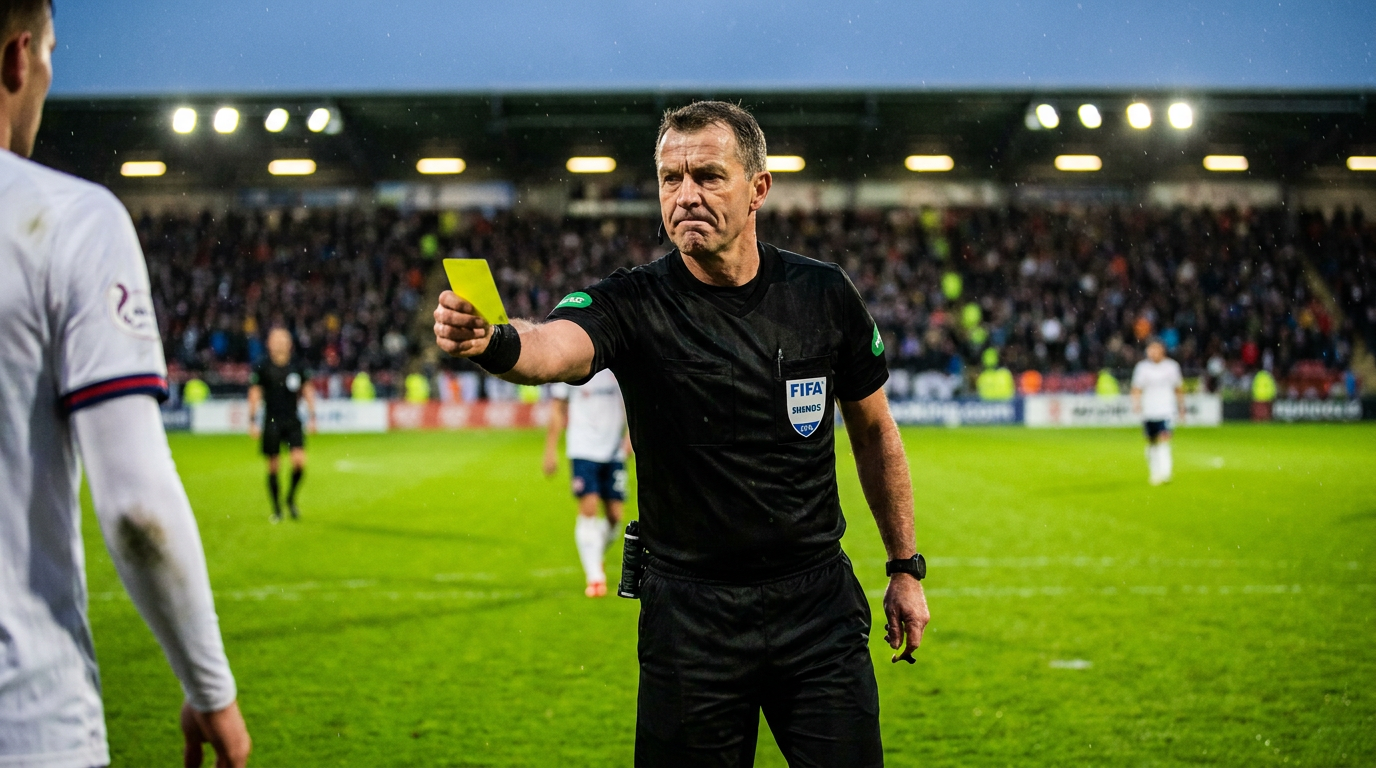
The most noticeable shift for fans and players alike will be the introduction of a strict countdown clock for restarts. Referees are now empowered to initiate a visual five-second countdown if they determine a player is deliberately delaying a throw-in or a goal kick.[1]
The penalty for violating this countdown is severe: an immediate turnover of possession. If a throw-in takes too long, the throw is awarded to the opposing team. If a goalkeeper delays a goal kick past the five-second mark, the opposing team is awarded a corner kick—transforming a routine restart into a high-danger scoring opportunity.[4]

IFAB has also targeted the "slow walk"—the theatrical, time-consuming trudge a substituted player takes to leave the pitch when their team is protecting a narrow lead.[6]
Under the new Law 3 amendments, a substituted player has exactly ten seconds to exit the field of play from the moment the substitution board is displayed or the referee signals the change.[2]
If the departing player fails to cross the nearest boundary line within those ten seconds, the incoming substitute is barred from entering the pitch immediately. Instead, the substitute must wait on the sideline until the first natural stoppage that occurs after a full minute of continuous play has elapsed.[3]
If the departing player fails to cross the nearest boundary line within those ten seconds, the incoming substitute is barred from entering the pitch immediately.
This effectively forces the offending team to play shorthanded for at least sixty seconds of game time. By attaching a tangible on-field disadvantage to the delay, IFAB has engineered a deterrent that makes the traditional slow walk a tactical liability rather than an advantage.[6]

The governing body is also closing the "tactical timeout" loophole. In recent seasons, teams have increasingly exploited the rule that requires play to stop for a goalkeeper injury. While the keeper receives treatment, outfield players routinely rush to the sideline to receive tactical instructions from their manager.[3]
Referees will now strictly prohibit players from approaching the technical area during these injury stoppages. Goalkeepers will still receive necessary medical attention, but the rest of the squad must remain in their standard on-field positions, eliminating the incentive to fake a cramp for a free coaching session.[3]
Beyond time-wasting, the 2026/2027 laws expand the jurisdiction of the Video Assistant Referee (VAR) to police off-the-ball fouls during set pieces.[2]
Dubbed by some analysts as the "Anti-Arsenal" rule—in reference to the Premier League club's highly effective strategy of legally and illegally screening defenders during corners—VAR can now intervene if an attacker commits a foul before the ball is officially in play.[3]
FIFA refereeing chief Pierluigi Collina highlighted this specific change as a necessary evolution, noting that attackers whose sole objective is to illegally block a defender from making a play will no longer escape scrutiny simply because the ball hadn't been kicked yet.[3]

Finally, the IFAB is taking a hard line on player conduct and referee abuse. At the discretion of competition organizers, referees can now issue straight red cards to players who deliberately cover their mouths during a confrontation.[4]
This measure is specifically designed to prevent players from concealing discriminatory language or severe insults directed at match officials or opponents, a practice that has historically frustrated post-match disciplinary reviews.[4]
The same red-card penalty can be applied to any player who leaves the field of play in protest of a referee's decision, or to team officials who incite their squad to walk off the pitch.[4]
To ensure a smooth rollout, regional referee associations across the globe are already holding seminars to train officials on the new countdown mechanics and substitution penalties.[5]

By attacking the structural incentives that reward delays, the IFAB is signaling a profound philosophical shift. The 2026/2027 rules prioritize continuous action and the viewing experience, ensuring that the beautiful game is actually played, rather than managed.[6]
How we got here
March 2026
The IFAB holds its 140th Annual General Meeting in Wales, approving the new package of Laws of the Game.
June 2026
Regional referee associations begin training officials on the new countdown mechanics and substitution penalties.
July 1, 2026
The 2026/2027 Laws of the Game officially take effect globally.
Summer 2026
The new regulations are utilized on the sport's biggest stage during the 2026 FIFA World Cup.
Viewpoints in depth
The IFAB & FIFA Officials
The governing bodies argue these rules are essential to protect the integrity and entertainment value of the sport.
For FIFA and the IFAB, the continuous drop in effective playing time represents an existential threat to soccer's entertainment value. FIFA refereeing chief Pierluigi Collina and the IFAB board view the new countdowns and substitution penalties not as punitive measures, but as necessary structural corrections. By attaching immediate, on-field consequences—like playing a man down for a minute—they believe they can instantly eradicate the tactical delays that have plagued the sport for decades.
Tactical Managers & Coaches
Coaches must now adapt their late-game strategies and set-piece routines to avoid severe new penalties.
For managers, the 2026/2027 rules require a complete overhaul of late-game management. The traditional strategy of making an 89th-minute substitution to bleed the clock is now fraught with risk; if the departing player is too slow, the team must defend a one-goal lead with ten men for a full minute. Furthermore, set-piece coaches who rely on complex 'pick' plays and screens during corners must redesign their routines, knowing VAR will now scrutinize off-the-ball blocks before the kick is even taken.
Match Officials & Referees
Referees welcome the new tools but face the challenge of managing the subjective nature of the countdowns.
Grassroots and professional referees largely support the new laws, as they provide concrete mechanisms to punish gamesmanship without relying solely on subjective yellow cards. However, the implementation of the five-second visual countdown places a new burden on the official to determine exactly when a delay becomes 'deliberate.' Referees will need to balance game flow with common sense, ensuring the countdown is used to punish actual time-wasting rather than genuine logistical delays in retrieving the ball.
What we don't know
- How strictly referees will enforce the 10-second substitution rule during high-stakes, emotionally charged knockout matches.
- Whether the five-second countdown for goal kicks will inadvertently lead to an increase in defensive errors as goalkeepers rush their distribution.
- How the 'Anti-Arsenal' VAR rule will distinguish between natural jostling in the penalty box and deliberate, illegal screens before a corner kick.
Key terms
- The IFAB
- The International Football Association Board, the independent body responsible for determining and updating the Laws of the Game for global soccer.
- Effective Playing Time
- The actual amount of time the ball is actively in play during a match, excluding stoppages for fouls, injuries, and out-of-bounds.
- VAR
- Video Assistant Referee, an officiating system that reviews decisions made by the head referee using video footage and headsets.
- Technical Area
- The designated zone on the sideline where the manager, coaching staff, and substitute players are allowed to stand during a match.
Frequently asked
When do the new soccer rules take effect?
The 2026/2027 Laws of the Game officially take effect on July 1, 2026, though competitions starting before that date, like the World Cup, are permitted to implement them early.
What happens if a goalkeeper takes too long on a goal kick?
If the referee initiates a five-second countdown and the ball is not played, the opposing team is awarded a corner kick.
How does the new substitution penalty work?
A substituted player has ten seconds to leave the pitch. If they fail to do so, their team must play shorthanded until the next natural stoppage that occurs after one minute of continuous play.
Can players still cover their mouths when talking to the referee?
Under the new rules, referees have the discretion to issue a straight red card to any player who covers their mouth during a confrontation to conceal discriminatory language or insults.
Sources
Source coverage
6 outlets
3 viewpoints surfaced






[1]FIFAGoverning Bodies
The IFAB introduces further measures to improve match flow and player behaviour
Read on FIFA →[2]The IFABGoverning Bodies
Laws of the Game 2026/27
Read on The IFAB →[3]Sports IllustratedSports Media & Analysts
IFAB Confirms Host of Rule Changes for 2026 World Cup
Read on Sports Illustrated →[4]Coaching American SoccerMatch Officials
IFAB PREVIEW OF LAW CHANGES 2026/2027
Read on Coaching American Soccer →[5]South Texas Soccer RefereesMatch Officials
Laws of the Game 2026/27 effective as from 1 July
Read on South Texas Soccer Referees →[6]Factlen Editorial TeamSports Media & Analysts
Synthesis by Factlen editorial team
Read on Factlen Editorial Team →
More in sports
See all 12 stories →Standings
The Race to Beijing: Global Qualification Standings Heat Up for the 2026 Short Course World Championships
6 sources
Injury
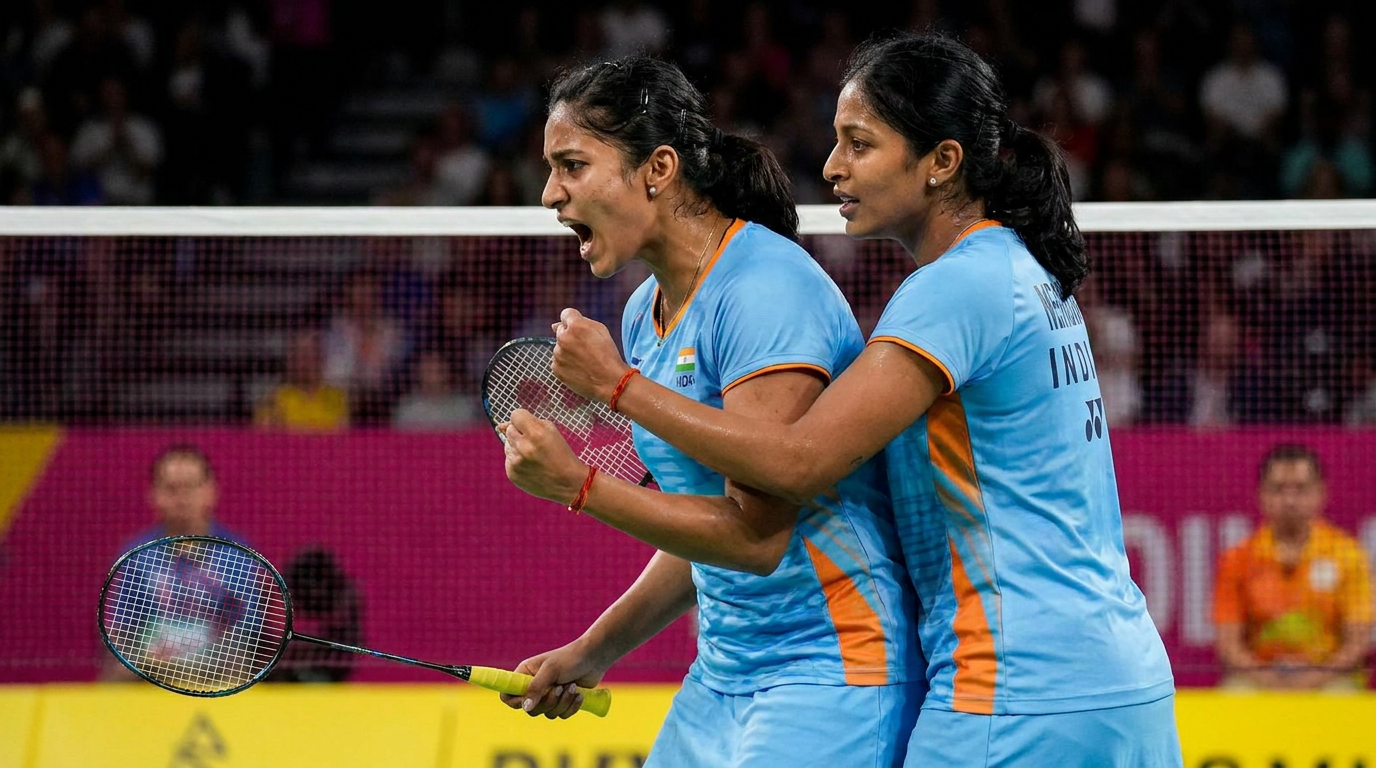
Treesa Jolly and Gayatri Gopichand Battle to US Open Second Round in Triumphant Injury Comeback
5 sources
Cognitive Longevity
The Cognitive Shield: How Chess and Strategy Games Rewire the Aging Brain
8 sources

Standings
BWF Race to Finals: Danish and Malaysian Pairs Set the Pace in Mid-Season Doubles Standings
7 sources
Every angle. Every day.
Get sports stories with full source coverage and perspective breakdowns delivered to your inbox.