
Explainer: How Debt-for-Nature Swaps Are Rewriting Latin America's Conservation Economics
A new wave of billion-dollar financial agreements is allowing Latin American nations to trade sovereign debt for ecological protection. While advocates hail them as a dual solution to climate and fiscal crises, critics warn they are too small to fix systemic debt.
By Factlen Editorial Team
- Conservation Finance Advocates
- Argue that swaps provide a rare, proven mechanism to inject billions into ecological protection while offering developing nations balance sheet relief.
- Macroeconomic Skeptics
- Warn that the deals are too small to solve systemic sovereign debt crises and carry excessively high administrative costs.
- Local Implementers
- Focus on the practical application of funds to provincial infrastructure, watershed restoration, and community resilience.
What's not represented
- · Citizens living in the protected watersheds and marine zones whose daily livelihoods are impacted by the new conservation rules.
- · Private bondholders who sell the distressed debt at a discount on the secondary market.
Why this matters
Latin America is home to some of the world's most critical biodiversity but is burdened by over $1 trillion in public external debt. These financial instruments offer a rare mechanism to fund climate resilience without bankrupting developing economies, potentially creating a blueprint for the global south.
Key points
- Latin American nations are increasingly using debt-for-nature swaps to fund climate resilience while reducing sovereign debt burdens.
- El Salvador recently executed a $1 billion swap to protect the Lempa River, the first mega-deal focused on freshwater security.
- Ecuador's 2023 deal refinanced $1.6 billion in debt to unlock $450 million for Galapagos Islands conservation.
- Since 1989, 169 swaps have converted approximately $8 billion globally, with Latin America leading the market.
- Critics warn the deals carry high administrative costs and only reduce national debt levels by an average of 3 percent.
Across Latin America and the Caribbean, a brutal economic paradox is currently playing out on a continental scale. The region is home to some of the world's most critical biodiversity—from the dense Amazon basin to the fragile Galapagos archipelago—yet its governments are suffocating under more than $1 trillion in public external debt. For many of these developing nations, the sheer cost of servicing foreign loans now entirely eclipses their public health and environmental budgets. Caught between fiscal survival and climate vulnerability, a growing number of countries are turning to a financial mechanism that effectively turns their sovereign debt into forests, coral reefs, and freshwater watersheds.[4]
The instrument driving this macroeconomic shift is known as the 'debt-for-nature swap.' While the underlying concept dates back to the late 1980s, when environmental charities bought small amounts of distressed debt to fund local conservation, the modern iteration has evolved into a highly sophisticated, Wall Street-scale enterprise. Over the past three years, a new wave of billion-dollar transactions has completely redefined conservation finance, allowing developing nations to refinance their crushing liabilities on the strict condition that the financial savings are legally ring-fenced for ecological protection.[3][5]
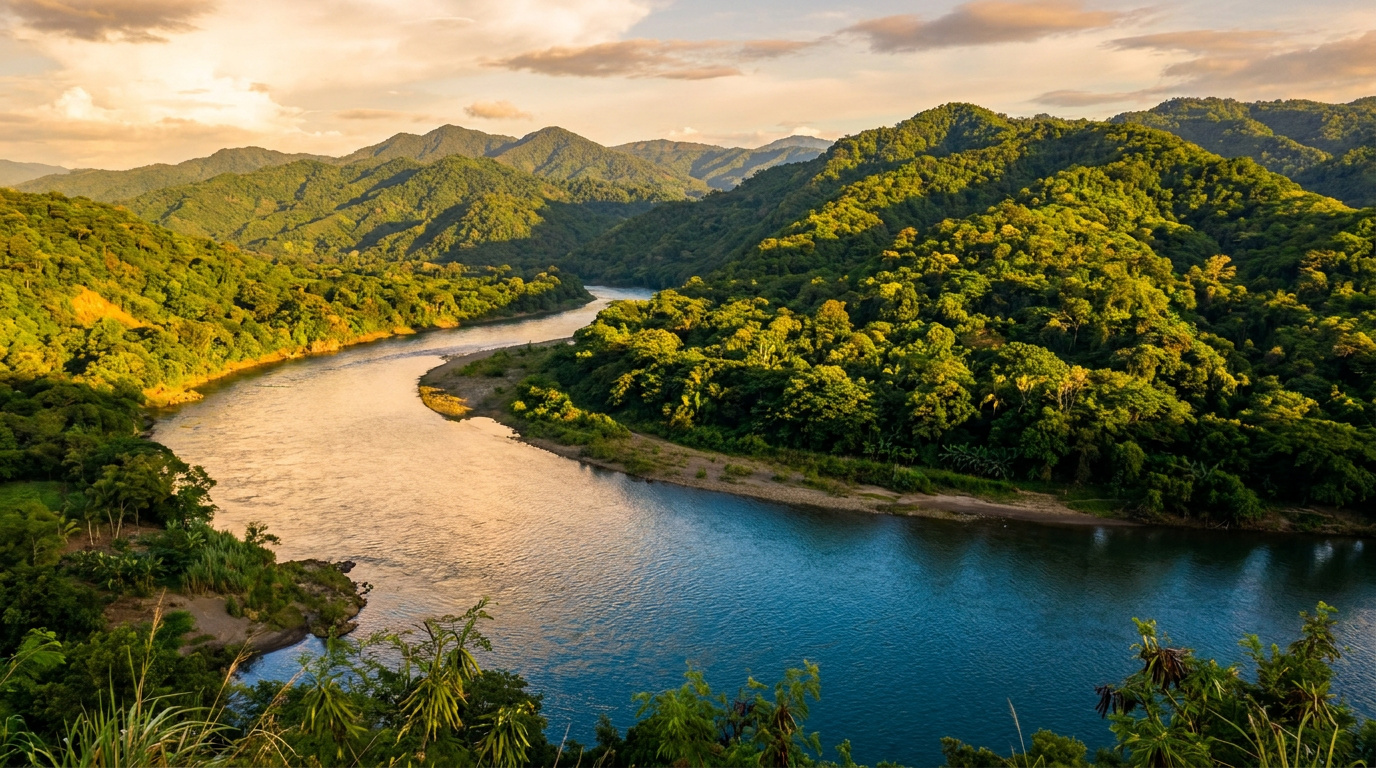
The most recent and structurally ambitious of these mega-deals unfolded in El Salvador. In late 2024, the Central American nation successfully executed a landmark $1 billion debt-for-nature swap that caught the attention of global markets. Unlike previous mega-deals that focused exclusively on ocean and marine conservation, El Salvador's transaction was the first to place freshwater security at its absolute core. The deal specifically targets the Lempa River basin, a vital watershed that supplies nearly 70 percent of the country's drinking water, powers five major hydroelectric plants, and sustains its entire agricultural sector.[1]
Through the innovative Lempa River swap, El Salvador is expected to generate more than $352 million in lifetime savings through immediate debt reduction and significantly lower servicing costs. Of that total, $350 million is contractually earmarked over the next two decades for conservation, mitigation, and restoration efforts. A portion of the funds will be deployed immediately into direct environmental restoration projects, while $150 million will be channeled into a permanent endowment to ensure the watershed remains protected and funded long after the initial bonds mature in 2044.[1]

To understand why these deals are proliferating across the hemisphere, it is necessary to examine their underlying financial mechanics. The process typically begins when a developing nation's sovereign bonds are trading at a steep discount on secondary markets, usually because international investors perceive a high risk of default. A coalition of international conservation organizations—frequently led by groups like The Nature Conservancy or the World Wildlife Fund—partners with multilateral development banks to intervene and restructure the liabilities before a crisis hits.[5][6]
Using powerful credit guarantees from institutions like the Inter-American Development Bank or the U.S. International Development Finance Corporation, the coalition helps the debtor nation buy back its own distressed bonds at a fraction of their original face value. The country then issues new, cheaper debt backed by the international guarantees. The critical caveat to the deal is that the millions of dollars saved in interest payments cannot be absorbed into the government's general treasury; they must be deposited into an independently managed local conservation trust.[6][7][9]
The ecological dividends of this complex financial engineering are already materializing across the hemisphere. In 2021, Belize pioneered the modern 'blue bond' era by striking a historic $364 million deal that successfully reduced its external debt by 10 percent of its gross domestic product. In exchange for this massive balance sheet relief, the Belizean government legally committed to protecting 30 percent of its marine areas, securing vital, long-term funding to preserve the longest coral reef system in the Western Hemisphere.[2][7]
The ecological dividends of this complex financial engineering are already materializing across the hemisphere.
Ecuador followed suit in 2023 with the largest debt-for-nature swap in history, proving that the mechanism could be scaled to unprecedented macroeconomic levels. By refinancing $1.6 billion of its commercial debt, the Ecuadorian government unlocked $450 million in dedicated conservation funding for the Galapagos Islands. The capital is currently being used to expand marine reserves, police illegal fishing fleets, and protect the vital migratory corridors of endangered sharks and sea turtles that rely heavily on the archipelago's unique and fragile ecosystem.[3][5]
Since the concept was first introduced in 1989, approximately 169 debt-for-nature swaps have been executed globally, converting roughly $8 billion of debt into environmental initiatives. The vast majority of that capital—over $2.4 billion—has been deployed in Latin America and the Caribbean. This heavy concentration of deals has effectively cemented the region as the global laboratory for conservation finance, testing new frameworks and legal structures that other climate-vulnerable nations in Africa and Asia are now actively looking to replicate.[3][5]

Yet, as the size and frequency of these transactions increase, so does the scrutiny from macroeconomic analysts and debt relief advocates. While the environmental victories are widely celebrated by conservationists, the financial efficacy of the swaps remains a subject of intense debate. Critics argue that the deals are frequently marketed to the public as a panacea for sovereign distress, masking the harsh reality that they barely dent the systemic, trillion-dollar debt crises currently facing the Global South's most vulnerable economies.[4][5]
An in-depth analysis by Debt Justice of recent mega-swaps in Belize, Ecuador, Barbados, and Gabon found that the transactions reduced the participating countries' national debt levels by an average of just 3 percent. In some poorly structured cases, the complex refinancing terms actually increased a nation's long-term debt burden. The International Monetary Fund has similarly cautioned that debt-for-nature swaps only make economic sense in a limited number of scenarios, noting that they are absolutely no substitute for comprehensive debt restructuring and conditional grant programs.[5][6]
The sheer complexity of the transactions also presents a formidable barrier to widespread adoption. Negotiating a billion-dollar swap requires years of delicate coordination between private bondholders, sovereign governments, multilateral banks, and environmental NGOs. This multi-layered architecture results in exceptionally high administrative and legal costs, which ultimately eat into the total capital available for actual conservation work, leading some economists to question whether direct financial grants would be a much more efficient delivery mechanism for international climate aid.[4]

Furthermore, the mechanism has sparked serious concerns regarding national sovereignty. Because the conservation trusts are often overseen by boards that include foreign NGOs and international creditors, critics warn that developing nations are effectively ceding control over their domestic environmental policies to Western institutions. The rigid contractual obligations mean that even if a country faces a sudden economic shock or a devastating natural disaster, it cannot legally redirect the locked conservation funds to emergency relief or critical social services.[4][6]
Despite these structural limitations, proponents maintain that debt-for-nature swaps are currently one of the only functional mechanisms capable of injecting hundreds of millions of dollars into climate resilience. As global climate finance pledges from wealthy nations routinely fall short of their promised targets, these swaps bypass the gridlock of international aid. By leveraging the private market's growing appetite for sustainable investment, they create immediate, legally binding funding streams that do not rely on the shifting political winds of donor countries.[3][8]
The financial model is also evolving rapidly to address its early shortcomings. Financial engineers are exploring ways to streamline the negotiation process to reduce transaction costs, while policymakers in countries like Argentina are investigating the potential for provincial-level swaps. By moving beyond national sovereign debt, local governments hope to use smaller, highly targeted swaps to fund sustainable infrastructure, renewable energy grids, and rural agricultural resilience without requiring massive federal guarantees or years of international negotiation.[8][9]
Ultimately, debt-for-nature swaps will not single-handedly solve Latin America's trillion-dollar debt crisis, nor will they replace the urgent need for comprehensive global financial reform. However, by forcing international markets to assign a tangible monetary value to biodiversity, they have transformed the region's natural assets from passive victims of economic distress into active levers for fiscal relief. For the vital watersheds of El Salvador and the vibrant reefs of Belize, that financial innovation is already rewriting the future of conservation.[1][2]
How we got here
1987
The first-ever debt-for-nature swap is executed in Bolivia, converting $650,000 of debt into conservation funds.
2021
Belize pioneers the modern mega-swap era with a $364 million 'blue bond' deal that protects 30 percent of its marine areas.
May 2023
Ecuador completes a historic $1.6 billion swap to fund marine conservation around the Galapagos Islands.
Late 2024
El Salvador executes a $1 billion swap focused on the Lempa River, marking the first mega-deal dedicated to freshwater watershed protection.
Viewpoints in depth
Conservation Finance Advocates
Viewing swaps as a pragmatic bridge between fiscal reality and climate necessity.
Proponents of debt-for-nature swaps, including multilateral development banks and major NGOs like The Nature Conservancy, argue that the mechanism is one of the few functional ways to mobilize climate finance at scale. While acknowledging the complexity of the deals, they point to tangible outcomes: hundreds of millions of dollars legally locked into protecting critical ecosystems like the Lempa River and the Galapagos. For these advocates, waiting for comprehensive global debt forgiveness is politically unrealistic, making swaps an essential, immediate tool to prevent ecological collapse.
Macroeconomic Skeptics
Highlighting the mathematical limitations and sovereignty risks of the transactions.
Financial analysts and debt relief organizations caution against viewing swaps as a cure for the Global South's debt crisis. Groups like Debt Justice point out that recent mega-swaps have only reduced national debt burdens by an average of 3 percent, while generating millions in fees for the private banks and legal firms that structure them. Furthermore, skeptics raise sovereignty concerns, arguing that the rigid, decades-long conservation trusts effectively transfer control of a nation's environmental policy to foreign creditors and international NGOs, limiting a government's ability to respond to future domestic crises.
What we don't know
- Whether the rigid, decades-long structures of these conservation trusts will hold up if a participating nation faces a severe economic collapse or political upheaval.
- How effectively the newly proposed provincial-level swaps can be scaled without the sovereign guarantees that back national deals.
- The exact percentage of the financial savings that is ultimately absorbed by administrative, legal, and banking fees during the years-long negotiation process.
Key terms
- Debt-for-Nature Swap
- A financial transaction in which a portion of a developing nation's foreign debt is forgiven or refinanced in exchange for local investments in environmental conservation.
- Sovereign Debt
- Money borrowed by a country's government, often in a foreign currency, by issuing bonds to international investors and institutions.
- Blue Bond
- A debt instrument issued by governments or development banks specifically to raise capital for marine and ocean-based conservation projects.
- Secondary Market
- A financial market where investors buy and sell previously issued bonds; distressed sovereign debt is often purchased here at a steep discount.
- Credit Guarantee
- A promise by a major institution, such as a multilateral development bank, to cover a debt if the borrowing country defaults, which lowers the interest rate for the borrower.
Frequently asked
What is a debt-for-nature swap?
It is a financial agreement where a portion of a developing nation's foreign debt is forgiven or refinanced at a lower interest rate, on the condition that the savings are invested in local environmental conservation projects.
How much debt has been converted globally?
Since the late 1980s, approximately 169 debt-for-nature swaps have been executed worldwide, converting roughly $8 billion of debt into conservation funding.
What was the largest swap in history?
In 2023, Ecuador completed the largest swap to date, refinancing $1.6 billion of its commercial debt to unlock $450 million in long-term conservation funding for the Galapagos Islands.
Why are some economists critical of these deals?
Critics argue that the swaps are highly complex, carry steep administrative fees, and only reduce a country's overall debt by a tiny fraction, failing to address the root causes of systemic sovereign debt crises.
Sources
Source coverage
9 outlets
3 viewpoints surfaced









[1]LatinFinanceConservation Finance Advocates
El Salvador executes landmark $1 billion debt-for-nature swap
Read on LatinFinance →[2]UNDPConservation Finance Advocates
Debt-for-nature swaps: A new wave of deals
Read on UNDP →[3]Global Government ForumConservation Finance Advocates
Turning debt into forests: the finance tool making a comeback
Read on Global Government Forum →[4]Project SyndicateMacroeconomic Skeptics
Debt, Disasters, and the Price of Delay
Read on Project Syndicate →[5]New Lines MagazineMacroeconomic Skeptics
Inside the Rise of Debt-For-Nature Swaps
Read on New Lines Magazine →[6]Zero Carbon AnalyticsMacroeconomic Skeptics
Debt-for-nature swaps in Latin America
Read on Zero Carbon Analytics →[7]ShareAmericaConservation Finance Advocates
How debt-for-nature swaps protect the environment
Read on ShareAmerica →[8]MolpackLocal Implementers
Debt-for-Nature Swaps: A Dual Goal
Read on Molpack →[9]Factlen Editorial TeamLocal Implementers
Synthesis by Factlen editorial team
Read on Factlen Editorial Team →
Every angle. Every day.
Get world stories with full source coverage and perspective breakdowns delivered to your inbox.