
Israel Refuses to Withdraw from Lebanon Security Zone Despite US Peace Push
Israeli Defense Minister Israel Katz declared that military forces will remain in southern Lebanon indefinitely, barring 200,000 displaced residents from returning. The hardline stance complicates ongoing US-mediated talks aimed at securing a regional ceasefire.
By Factlen Editorial Team
- Israeli Security Establishment
- Argues that permanent buffer zones are the only reliable way to protect northern communities from Hezbollah.
- Lebanese Sovereignty Advocates
- Views the permanent occupation as an illegal annexation that punishes civilians.
- International Mediators
- Seeks to balance Israeli security demands with the need for regional stability.
What's not represented
- · Displaced Lebanese civilians
- · Northern Israeli border residents
- · Hezbollah leadership
Why this matters
Israel's decision to permanently occupy southern Lebanon and bar 200,000 civilians from returning effectively redraws the Middle Eastern map. The hardline stance threatens to derail fragile US-brokered peace talks and could reignite the broader regional conflict involving Iran and its allied militias.
Key points
- Defense Minister Israel Katz announced Israel will not withdraw from its security zone in southern Lebanon.
- Approximately 200,000 displaced Lebanese residents will be permanently barred from returning to their homes.
- Katz stated that Israel also intends to maintain security zones in Syria and Gaza.
- The hardline stance complicates ongoing US-mediated peace talks between Israel and Lebanon.
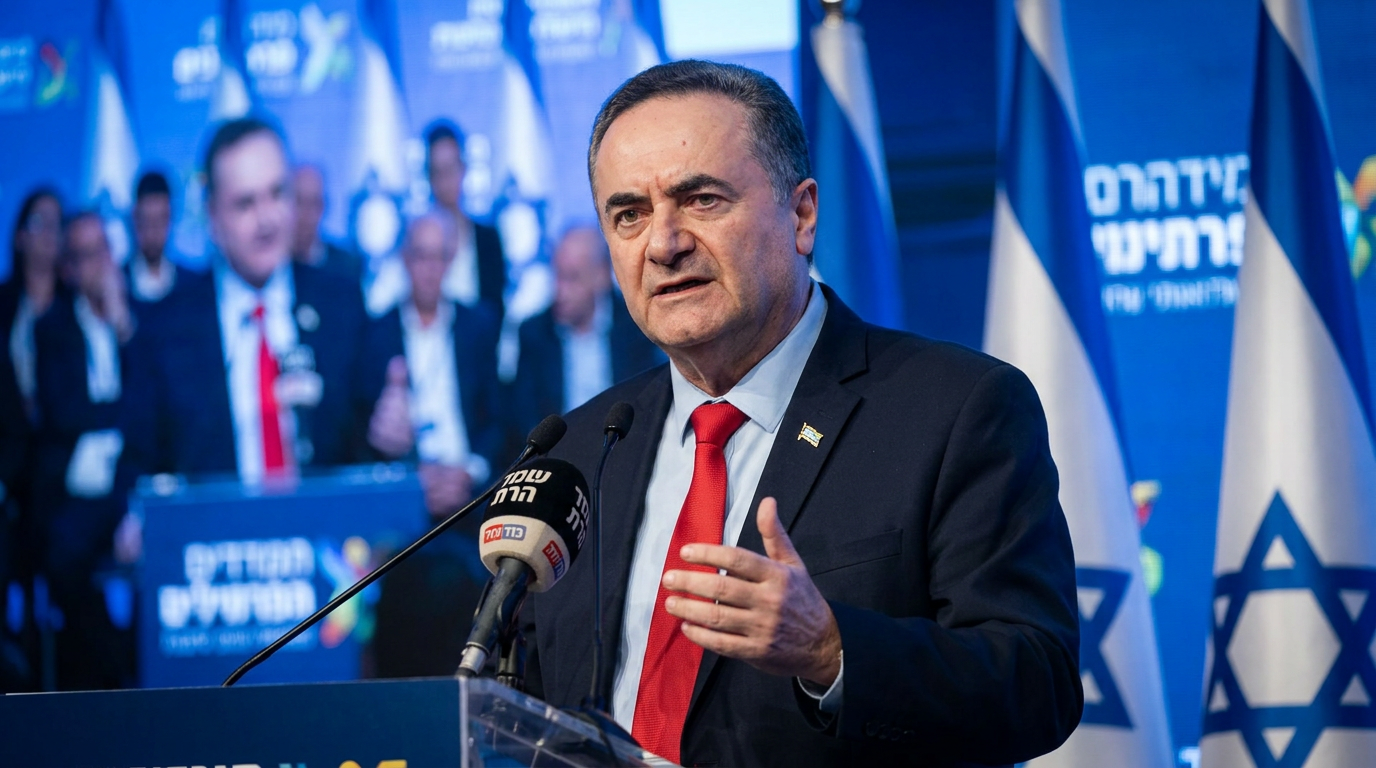
Israeli Defense Minister Israel Katz announced Wednesday that the military will not withdraw from its newly established security zone in southern Lebanon, defying potential international pressure and complicating ongoing US-mediated peace talks. The declaration marks a significant hardening of Israel's geopolitical posture, effectively transforming a temporary wartime deployment into a permanent territorial occupation. The decision arrives at a highly sensitive moment for regional diplomacy, as US officials, operating under the Trump administration, are currently in their second day of mediating indirect talks between Israel and Lebanon. Washington has been hoping to secure a lasting cessation of hostilities that would stabilize the northern border and complement a fragile 60-day roadmap recently negotiated with Iran in Switzerland.[1][5]
Speaking at the MUNI EXPO conference in Tel Aviv, Katz stated unequivocally that Israeli forces would remain stationed in the Lebanese territory indefinitely. "We have made it clear that under no circumstances will we withdraw," Katz told the gathering of local officials. He noted that, as of Wednesday, the United States had not explicitly demanded an Israeli pullback, framing the lack of American pressure as a "diplomatic achievement." The defense minister revealed that he had personally clarified Jerusalem's uncompromising position to US Secretary of State Marco Rubio, while Prime Minister Benjamin Netanyahu had conveyed the exact same red lines to President Donald Trump.[1][3]
The most immediate consequence of the policy falls on the civilian population of southern Lebanon. According to Katz, approximately 200,000 displaced Lebanese residents will be permanently barred from returning to the homes they evacuated when the heavy fighting began in March. Katz justified the mass exclusion by citing historical precedents from previous occupations, arguing that allowing a civilian population to repopulate the security zone would inevitably lead to "roadside bombs and attacks against the soldiers." By keeping the area depopulated, the Israeli military intends to maintain a sterile buffer zone where any movement can be treated as a hostile threat, prioritizing the safety of its own northern communities over the return of Lebanese civilians.[2][3]

The defense minister's hardline approach extends well beyond the northern border, signaling a broader shift in Israel's long-term security doctrine. In subsequent remarks, Katz emphasized that Israel intends to maintain indefinite security zones not only in Lebanon but also in Syria and the Gaza Strip. He framed these multi-front deployments as necessary lessons drawn from the devastating October 7 attacks, arguing that Israel must retain the "ability to act independently" and cannot rely on international peacekeeping forces or diplomatic agreements to prevent militant incursions. This expansive vision of permanent buffer zones effectively redraws the borders of the Levant, establishing a new status quo built on military occupation rather than negotiated settlements.[4][5]
The defense minister's hardline approach extends well beyond the northern border, signaling a broader shift in Israel's long-term security doctrine.
Katz's explicit refusal to withdraw appears to shut the door on earlier diplomatic compromises. In the weeks leading up to the current talks, reports suggested that Israel might consider "symbolic" withdrawals from certain Lebanese territories as a gesture of goodwill to the government in Beirut, potentially handing over control to the Lebanese Armed Forces. However, intense domestic political pressure from Israel's right-wing coalition partners has severely constrained the government's negotiating room. National Security Minister Itamar Ben-Gvir recently criticized the broader ceasefire framework as a "serious mistake," arguing that the Lebanese state is deeply compromised and that any withdrawal would simply allow Hezbollah to rebuild its military infrastructure right on Israel's doorstep.[3][5]
The standoff in Lebanon is deeply intertwined with the broader, high-stakes US-Iran conflict. Washington recently secured a fragile 60-day de-escalation roadmap with Tehran, which includes the reopening of the Strait of Hormuz and the resumption of UN nuclear inspections. However, Iranian officials and their allied militias view the defense of Lebanese sovereignty as a core strategic interest. A permanent Israeli occupation of southern Lebanon, coupled with the displacement of 200,000 Shia residents, risks inflaming Iranian-backed factions and providing them with a potent justification to abandon the ceasefire.[2][6]

The humanitarian implications of the permanent buffer zone are already drawing intense scrutiny from international observers. The Lebanese government, which is struggling with a severe economic crisis, now faces the daunting prospect of permanently resettling hundreds of thousands of internal refugees who have lost their homes, agricultural lands, and livelihoods. Human rights organizations have warned that barring civilians from returning to their native villages constitutes a severe violation of international law, effectively amounting to collective punishment. Yet, within Israel, the policy enjoys substantial support from northern border residents who refuse to return to their own homes unless the threat of Hezbollah cross-border raids is permanently neutralized by a physical military barrier.[2][5]
If Hezbollah resumes its rocket fire in response to the occupation, it could easily unravel the wider regional peace effort that the US State Department has spent weeks painstakingly assembling. The militant group, which did not directly participate in the US-mediated talks, has historically predicated its legitimacy on "resisting" Israeli occupation of Lebanese territory. By formally declaring an intent to stay, Katz has provided Hezbollah with a renewed mandate for armed struggle. Security analysts warn that the buffer zone, rather than preventing attacks, may simply shift the frontline further north, transforming southern Lebanon into a grinding war of attrition characterized by guerrilla ambushes and retaliatory airstrikes.[4][5]

As US diplomats attempt to salvage the Lebanese track of the peace process, the focus now shifts to Washington's willingness to apply leverage. The Trump administration faces a stark choice: either exert significant pressure on Israel to withdraw and allow civilians to return, or tacitly accept the new buffer zone as a permanent reality. Accepting the occupation would likely alienate Arab allies and complicate efforts to isolate Iran, while forcing a withdrawal would provoke a fierce backlash from the Israeli government and its domestic American supporters. For now, Katz's declaration has laid down a definitive marker, ensuring that the road to a comprehensive Middle East peace remains heavily fortified and deeply contested.[3][6]
How we got here
March 2026
Heavy fighting erupts across the Israel-Lebanon border, displacing hundreds of thousands of civilians.
Early June 2026
Israel and Lebanon agree to a fragile, US-mediated ceasefire framework.
June 23, 2026
US diplomats begin a second round of indirect talks aimed at securing a permanent cessation of hostilities.
June 24, 2026
Defense Minister Israel Katz announces that Israeli forces will permanently occupy the southern Lebanon security zone.
Viewpoints in depth
Israeli Security Establishment
Prioritizes physical buffer zones over diplomatic agreements to ensure border safety.
Israeli defense officials argue that international peacekeeping forces and diplomatic agreements have repeatedly failed to prevent Hezbollah from amassing weapons and launching attacks across the border. By maintaining a permanent, depopulated security zone, the military believes it can create a sterile environment where any movement is treated as a threat, thereby guaranteeing the safety of northern Israeli communities that have been evacuated since the conflict began.
Lebanese Sovereignty Advocates
Views the permanent occupation as an illegal annexation that punishes civilians.
Lebanese officials and human rights advocates argue that barring 200,000 civilians from returning to their homes constitutes collective punishment and a severe violation of international law. They maintain that true security cannot be achieved through permanent military occupation, which they warn will only fuel further resentment, empower militant groups like Hezbollah, and systematically dismantle the territorial integrity of the Lebanese state.
US Diplomatic Mediators
Seeks to balance Israeli security demands with the need for regional stability.
American diplomats are attempting to thread a delicate needle, recognizing Israel's need for border security while warning that a permanent occupation could sabotage the broader Middle East peace process. Mediators fear that an uncompromising Israeli stance in Lebanon will alienate Arab allies, provoke Iranian-backed factions to abandon the fragile 60-day ceasefire, and drag the United States deeper into a protracted regional conflict.
What we don't know
- Whether the Trump administration will apply significant pressure on Israel to withdraw from the security zone.
- How Hezbollah and its Iranian backers will respond to the permanent barring of 200,000 Shia residents from southern Lebanon.
Key terms
- Security Zone
- A designated military buffer area established by an occupying force to prevent cross-border attacks into its own territory.
- Litani River
- A major river in southern Lebanon that historically serves as a geographic marker for proposed demilitarized zones between Israel and Hezbollah.
- Hezbollah
- A heavily armed Lebanese Shia political party and militant group backed by Iran, which has engaged in ongoing conflict with Israel.
Frequently asked
Why is Israel refusing to leave southern Lebanon?
Defense Minister Israel Katz stated that maintaining a military buffer zone is necessary to prevent Hezbollah from launching attacks on northern Israeli communities.
What will happen to the civilians who lived in the security zone?
According to Katz, approximately 200,000 displaced Lebanese residents will not be permitted to return to their homes, as Israel fears civilian populations could provide cover for roadside bombs and ambushes.
How does this affect the US-brokered peace talks?
The refusal to withdraw complicates ongoing US diplomatic efforts, as Lebanon demands the restoration of its territorial sovereignty as a condition for a lasting ceasefire.
Sources
Source coverage
6 outlets
3 viewpoints surfaced





[1]Al JazeeraLebanese Sovereignty Advocates
Katz: Israel will not withdraw from Lebanon even if US demands it
Read on Al Jazeera →[2]Iran InternationalIsraeli Security Establishment
Israel will not withdraw from Lebanon security zone, defense minister says
Read on Iran International →[3]UNIIsraeli Security Establishment
Israel will not withdraw forces from Lebanon even if there is US demand says defence minister
Read on UNI →[4]Roya NewsLebanese Sovereignty Advocates
Katz says 'Israel' will not withdraw from Lebanon, Syria, and Gaza
Read on Roya News →[5]PhilenewsIsraeli Security Establishment
Israel will not withdraw from Lebanon despite new ceasefire, defence minister says
Read on Philenews →[6]The GuardianInternational Mediators
Israel says IDF is staying in southern Lebanon, undermining US-Iran peace talks
Read on The Guardian →

Every angle. Every day.
Get news politics stories with full source coverage and perspective breakdowns delivered to your inbox.