
The Race to Beijing: Global Qualification Standings Heat Up for the 2026 Short Course World Championships
Following blistering times at the Australian Trials and ahead of the US National Championships, the global qualification picture for the 2026 World Aquatics Swimming Championships in Beijing is rapidly taking shape.
By Factlen Editorial Team
- Australian Swimming Camp
- Believes their early-summer trials have established a psychological stronghold and set the global benchmark.
- USA Swimming Camp
- Trusts their late-taper strategy, confident that the July National Championships will reclaim the top global times.
- European Aquatics Camp
- Focused on the upcoming Paris European Championships as the ultimate crucible for setting their Beijing rosters.
- World Aquatics Organizers
- Emphasizes the global narrative and the new 'Silk Road' World Cup tour as the perfect lead-in to the Beijing championships.
What's not represented
- · Athletes from emerging swimming nations who face funding challenges to attend the Silk Road World Cup tour.
Why this matters
In a "bridge year" without a summer long-course World Championship, the short-course Worlds in Beijing serve as the pinnacle event of 2026. For elite swimmers, securing a spot on their national rosters this summer dictates their funding, sponsorships, and momentum heading into the 2027-2028 Olympic cycle.
Key points
- The 2026 swimming season is a 'bridge year,' culminating in the Short Course World Championships in Beijing this December.
- Australia currently dominates the global standings following blistering performances at their June national trials.
- USA Swimming will finalize its roster at the Toyota National Championships in Irvine in late July.
- European athletes are targeting the European Aquatics Championships in Paris as their primary qualification event.
- A new 'Silk Road' World Cup tour in October will serve as the final tune-up before Beijing.
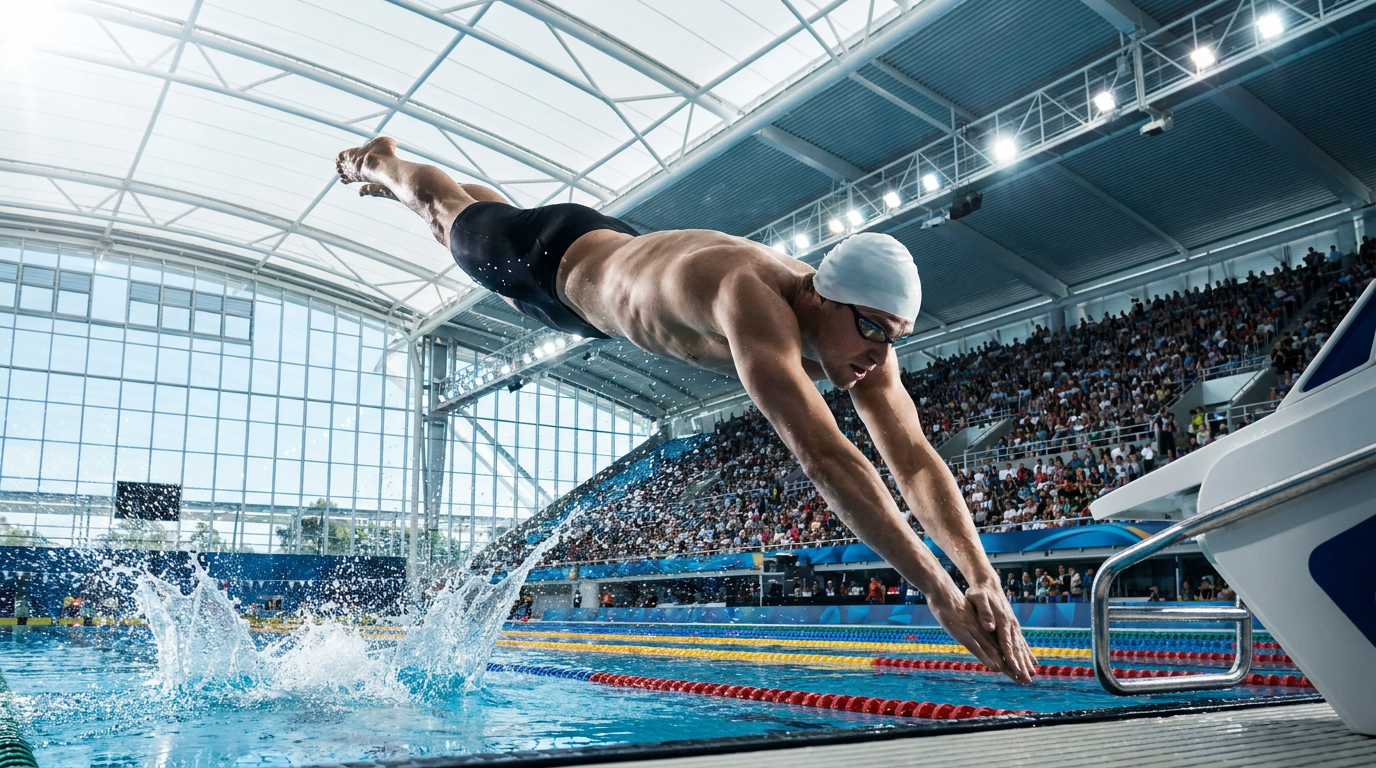
The 2026 global swimming calendar is a unique beast. Dubbed a "bridge year" by World Aquatics, it lacks a long-course World Championship, making the Short Course World Championships (25m) in Beijing this December the undisputed pinnacle of the season. For elite swimmers around the globe, the race to secure a spot on the starting blocks in China has officially begun. Unlike a traditional sports league with weekly win-loss records, swimming's "standings" are dictated by the ruthless, ticking clock of the World Aquatics global rankings. As national federations host their selection trials this summer, the championship picture is shifting rapidly, with some nations surging ahead while others bide their time in heavy training blocks.[1][5]
The current leaders in the clubhouse reside in the Southern Hemisphere. The Australian Dolphins sent shockwaves through the global standings during their national trials at the Sydney Olympic Park Aquatic Centre in mid-June. With their roster for the upcoming Pan Pacific Championships and the Beijing Short Course Worlds taking shape, the Australians proved they are peaking early. The standout performance came from Kaylee McKeown, who reclaimed the number one spot in the world rankings for the 200-meter backstroke. Clocking a blistering 2:03.98, McKeown displaced American Isabelle Stadden from the top of the leaderboard, sending a clear message that the road to Beijing runs through her.[2]
Australia's dominance was not limited to the backstroke events. In the distance freestyle, Sam Short surged up the global standings with a massive 14:42.09 in the 1500-meter freestyle, cementing his status as a gold-medal favorite for the winter championships. Meanwhile, the sprint freestyle battles saw Mollie O'Callaghan and Meg Harris post world-leading times that have left international rivals scrambling to adjust their tapers. For the Australian camp, these trials were about more than just hitting qualifying standards; they were about establishing a psychological stronghold over the rest of the world before the international racing season even begins.[2]

Across the Pacific, the United States is currently playing a strategic game of catch-up. USA Swimming's selection meet—the Toyota National Championships—does not kick off until late July in Irvine, California. As a result, many top American stars appear to be slipping down the global time standings simply because they are swimming through heavy, mid-season training blocks. Heavyweights like Kate Douglass, Caeleb Dressel, and Bobby Finke are biding their time, trusting that their late-summer taper will yield times capable of answering the Australian surge. The Irvine meet will serve as the sole selection event for the American roster heading to Beijing, making it a high-stakes pressure cooker for athletes whose federation funding depends on making the team.[3]
The European contingent is following a similarly delayed timeline, utilizing the 2026 European Aquatics Championships in Paris as their primary battleground. Scheduled to run from late July through mid-August at the Centre Aquatique Olympique, the event will double as the ultimate roster-setter for powerhouse nations like France, Great Britain, and Italy. Home-nation hero Leon Marchand and German distance specialist Florian Wellbrock are expected to use the Paris meet to officially stamp their tickets to Beijing. Until then, European times on the global leaderboard remain artificially soft, masking the true depth of the continent's talent pool.[4]
The European contingent is following a similarly delayed timeline, utilizing the 2026 European Aquatics Championships in Paris as their primary battleground.
Beyond the traditional superpowers, smaller federations are already locking in their championship pictures. Swimming New Zealand recently finalized its squads for the late-summer international meets, naming a lean, highly targeted roster aimed at maximizing finals appearances. For these nations, the qualification window is a delicate balancing act of peaking just enough to make the national team without burning out before the World Championships. The global standings currently reflect this disparity, with early-trial nations dominating the top ten times while late-trial nations lurk just outside the spotlight.[6]

What is truly at stake in this race to Beijing extends far beyond winter medals. In the ecosystem of professional swimming, securing a spot on the Short Course World Championship roster dictates an athlete's trajectory for the next two years. Federation funding, tier-one sponsorships, and invitations to lucrative international meets are all tied to these summer qualification times. Missing the cut for Beijing means spending the winter on the outside looking in, losing crucial racing experience against international fields as the sport pivots toward the 2027 World Championships and the eventual march to the 2028 Los Angeles Olympics.[1][3]
Once the dust settles on the summer trials in Irvine and Paris, the qualified athletes will transition into the final phase of the championship season. World Aquatics has revamped the lead-up to Beijing with a new "Silk Road" World Cup tour scheduled for October, featuring stops in Baku, Tashkent, and Astana. This three-leg series will serve as the final proving ground, allowing swimmers to test their short-course form, earn vital prize money, and jockey for seeding ahead of the December championships. As the global standings continue to shuffle over the coming weeks, the only certainty is that the race to Beijing will be won by those who can master the unforgiving math of the clock.[1][5]

The transition from the summer's 50-meter long-course trials to the 25-meter short-course format in Beijing adds a fascinating tactical layer to the standings. Short-course racing heavily favors athletes with explosive turns and elite underwater dolphin kicks, often upending the traditional long-course hierarchy. Swimmers who may only rank fifth or sixth in the world in a 50-meter pool can suddenly emerge as gold-medal threats when the walls come twice as often. Coaches are already analyzing the summer trial data not just for raw speed, but for turn velocity and underwater efficiency, knowing that the ultimate champions in Beijing will be those who can weaponize the 25-meter format.[1]
As the calendar turns to July, the tension across the global swimming community is palpable. The Australian Dolphins have thrown down the gauntlet, setting a ferocious pace that has redefined the 2026 global standings. Now, the spotlight shifts to the United States and Europe, where thousands of athletes are entering their final taper phases. The clock is impartial, and the standings will inevitably rewrite themselves as the summer progresses. But for now, the championship picture is a thrilling snapshot of a sport in motion, with every lap, turn, and touch bringing the world's best one step closer to Beijing.[2][3][4]
How we got here
June 8-13, 2026
Australian Swimming Trials set the early global benchmarks in Sydney.
July 28-Aug 1, 2026
USA Swimming Toyota National Championships will select the American roster in Irvine.
July 31-Aug 16, 2026
European Aquatics Championships in Paris will finalize European rosters.
October 2026
The 'Silk Road' World Cup tour kicks off in Baku, Tashkent, and Astana.
December 1-6, 2026
World Aquatics Swimming Championships (25m) take place in Beijing.
Viewpoints in depth
Australian Swimming Camp
Believes their early-summer trials have established a psychological stronghold and set the global benchmark.
For the Australian Dolphins, the strategy of holding trials in early June is paying massive dividends. By posting world-leading times months before their international rivals, athletes like Kaylee McKeown and Sam Short have effectively dared the rest of the world to catch them. The Australian camp views these early benchmarks as a psychological weapon, forcing American and European swimmers to chase specific targets during their own tapers. Furthermore, locking in their roster early allows the Dolphins to transition smoothly into specialized short-course training for Beijing without the looming stress of qualification.
USA Swimming Camp
Trusts their late-taper strategy, confident that the July National Championships will reclaim the top global times.
USA Swimming remains unbothered by their current position in the global standings, viewing it as a natural byproduct of their domestic calendar. The American philosophy relies on a late-summer peak at the Toyota National Championships in Irvine. Coaches argue that holding trials closer to the actual international competition window (such as the Pan Pacific Championships in August) keeps athletes sharper. The US camp anticipates that the Irvine meet will produce a flurry of world-leading times, effectively erasing Australia's early dominance and setting up a highly competitive showdown for the winter season.
European Aquatics Camp
Focused on the upcoming Paris European Championships as the ultimate crucible for setting their Beijing rosters.
European nations are treating the 2026 European Aquatics Championships in Paris as a dual-purpose event: a prestigious continental title fight and the definitive qualifier for Beijing. Because the European Championships offer elite, head-to-head international racing, coaches believe it provides a better crucible for roster selection than isolated domestic trials. The European camp expects their top stars to bypass the early global time chase entirely, prioritizing race execution and continental medals in August before pivoting their focus to the 25-meter format in the fall.
What we don't know
- How heavily top American and European swimmers will prioritize the short-course format in Beijing versus resting for the 2027 long-course season.
- Whether the new 'Silk Road' World Cup tour will attract the absolute top tier of athletes or serve primarily as a developmental circuit.
Key terms
- Short Course (25m)
- A swimming competition held in a 25-meter pool, which places a higher premium on turns and underwater kicking compared to a standard 50-meter Olympic pool.
- Taper
- A strategic reduction in training volume and intensity designed to allow a swimmer's body to rest and peak for a major championship.
- World Aquatics Global Rankings
- The official leaderboard of the fastest times swum worldwide in each event during the calendar year.
- Bridge Year
- A year in the aquatic calendar that does not feature a long-course World Championship or Olympic Games, often used to test new formats and focus on short-course events.
Frequently asked
Why are the World Championships in December this year?
2026 is a 'bridge year' without a summer long-course World Championship, making the short-course (25m) Worlds in Beijing the capstone event of the season.
Why are American swimmers currently lower in the global standings?
USA Swimming holds its national selection trials in late July, meaning top American athletes are currently swimming through heavy training blocks rather than resting for peak times.
How do swimmers qualify for the Beijing World Championships?
Athletes must hit specific time standards at their respective national trials or designated continental championships, such as the European Aquatics Championships.
Sources
Source coverage
6 outlets
4 viewpoints surfaced




[1]World AquaticsWorld Aquatics Organizers
2026 World Aquatics Calendar and Global Rankings
Read on World Aquatics →[2]SwimSwamAustralian Swimming Camp
McKeown & O'Callaghan Deliver Top Spots In World Rankings at Australian Trials
Read on SwimSwam →[3]Swimming WorldUSA Swimming Camp
USA Swimming Announces 2026 Domestic Events Dates and Selection Procedures
Read on Swimming World →[4]European AquaticsEuropean Aquatics Camp
SCHEDULE & RESULTS – European Aquatics Championships Paris 2026
Read on European Aquatics →[5]Sport Press InternationalWorld Aquatics Organizers
Season Calendar 2026: The Bridge Year and the Road to Beijing
Read on Sport Press International →[6]Swimming NZ
At the conclusion of the 2026 NZ Swimming Championships, teams named for international competitions
Read on Swimming NZ →
More in sports
See all 9 stories →Injury
Aurelien Giraud Begins Grueling Comeback Journey Following Major Knee Surgery, Vowing 'We're Not Giving Up'
7 sources
Standings
Global Park Skateboarding Standings: Historic Scores Set a New Standard on the Road to LA28
8 sources
Injury
WSL Injury Report: Jack Robinson Finds New Gear After Knee Surgery as 2026 Replacements Step Up
7 sources
Women's Basketball
FIBA Announces Equal Prize Money and $50 Million Grassroots Fund for 2026 Women's World Cup
8 sources
Every angle. Every day.
Get sports stories with full source coverage and perspective breakdowns delivered to your inbox.